
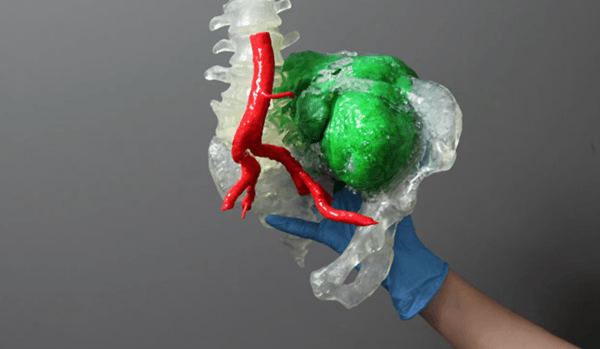
The technology that allows us to see the inside of the human body (CT scans, MRIs, ultrasounds) has matured over the years. However, our ability to create accurate three-dimensional models from this data (for surgical planning, training, and tools) remains a lengthy and complex process.
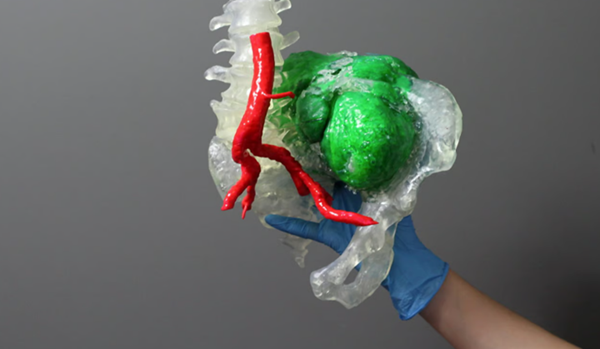
Converting digitized patient data into three-dimensional digital or printable files requires considerable technical know-how and medical expertise. Recently, Mohou.com learned that software provided by Axial3D, a company headquartered in Belfast, Ireland, uses artificial intelligence and algorithms to automate and speed up this process.
“Our mission is to make patient-specific 3D solutions accessible to everyone, giving surgeons, radiologists and engineers access to resources to improve patient outcomes and accelerate patient-specific projects” , the company said.
This week, the U.S. Federal Drug Administration approved Axial3D’s Insight medical image segmentation platform for orthopedic, maxillofacial and cardiovascular applications.
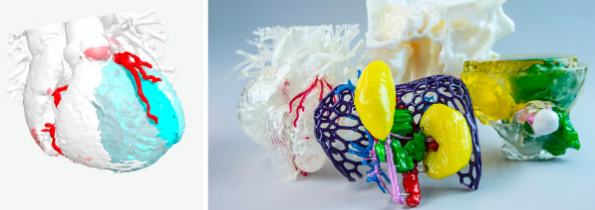
Insight automatically converts 2D medical images into accurate 3D visualizations and 3D printing-ready files. These models can also be used for patient education, surgical practice, and sizing or pre-installation of medical devices.
Patient-specific healthcare models have been shown to reduce hospital costs, better prepare physicians for surgical procedures, and improve patient outcomes. A 2020 study found that when 3D printed anatomical models were used to prepare for orthopedic and maxillofacial surgery, an average of 62 minutes of operating room time and $3,720 in costs were saved per case.
The FDA considers 3D printed anatomical models that may affect or alter the diagnosis, management, or treatment of patients to be diagnostic tools and, therefore, Class 2 medical devices. Additionally, the models used for diagnosis should be performed using software cleared by the FDA for specific applications.
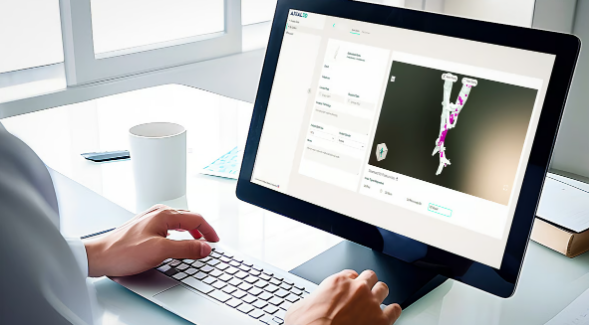
The company said the approval of Insight by the US Food and Drug Administration (FDA) is expected to significantly promote the upgrading of production processes, especially for medical device companies. In addition to models used for surgical planning, this 3D data is used to design personalized medical devices and helps develop unique surgical guides used during surgical procedures.
Surgeons, clinicians, radiologists and engineers already use Insight to securely upload DICOM images to the platform, where they are automatically segmented and verified to generate patient-specific 3D files.
This is the second FDA clearance for Axial3D’s Insight and “an important milestone in the healthcare industry’s adoption of automation and artificial intelligence to enable personalized patient care.” “.
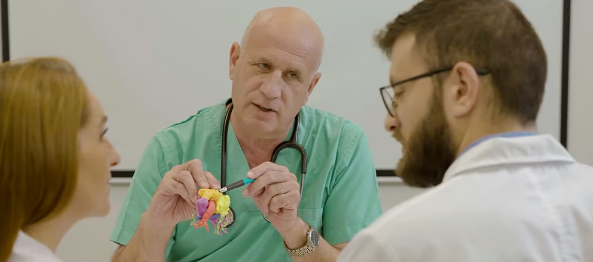
Axial3D enables healthcare providers and medical device companies to save hours or days per case by automating the traditionally arduous task of manual or semi-manual image segmentation. Insight recently received approval from the U.S. Food and Drug Administration (FDA) for use in orthopedic trauma where time is of the essence.
Models and guides generated by Axial3D software can be 3D printed on various printers, including the Stratasys Digital Anatomy 3D printer. Late last year, Stratasys became a major investor in Axial3D. Axial3D also provides on-demand model printing services.
Insight is not alone in the market. Software solutions such as Materialize Mimics InPrint, Oqton’s D2P (DICOM-to-PRINT), and Ricoh 3D for Healthcare also convert patient data into 3D files for a range of FDA-approved uses.
Compiled by: all3dp.com
Source: Chinese 3D Printing Network
Daguang focuses on providing solutions such as precision CNC machining services (3-axis, 4-axis, 5-axis machining), CNC milling, 3D printing and rapid prototyping services.



















