
Introduction: In the medical field, performing complex surgical procedures involving the brain or skull is difficult, even under the best medical conditions. However, when surgical subjects involve infants and children, especially newborns, the difficulty of the operation increases exponentially.
2022Year8moon13In a recent surgical case abroad, doctors used3DPrinting technology helped save a newborn in a similar situation. It is reported that the newborn had to undergo surgery immediately after birth to repair an abnormality in the occipital bone of his skull because it had not developed properly. To meet this challenge, a Polish deep technology companySygnis SA(The company recently acquiredZmorphe) used additive manufacturing technology to create a3DPrinted models, essential to the success of neurosurgery on newborns.
In addition to being used in the manufacture of prostheses and orthotics,3DAnother major use of printing in the medical field is in training and preparation before surgical procedures. Doctors can print an exact replica of the area requiring surgical treatment, in this case a skull model made from a scan of the patient. Surgeons can practice before surgery, reducing mortality rates, especially for complex surgeries like this. To help save this special little girl, experts in medical image segmentation,Kryzstof chainsPoland led by Ph.D.e-NableFoundation volunteersPaul OzgaI found itSignsforcing them to create models as quickly as possible and as detailed as possible to increase the chances of survival. The child was diagnosed immediately after birth with an occipital anomaly, which also meant part of his brain was exposed, a dangerous condition that can be fatal if left untreated.
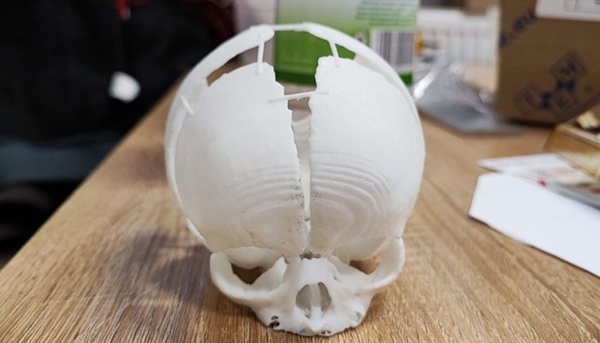
△Newborn skullYEARSModel, including defects that need to be corrected (Image source:Sygnis SA)。
create3DPrinted skull pattern
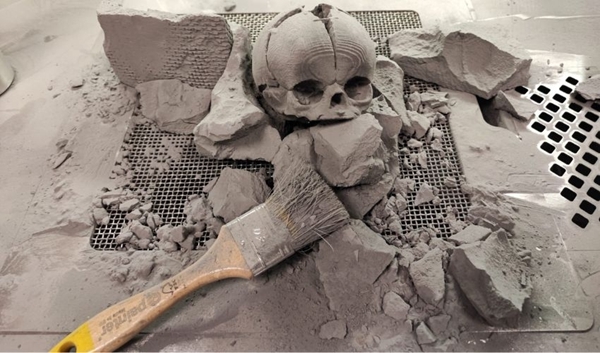
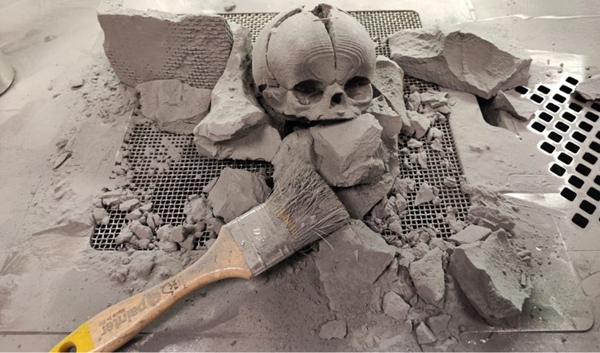
The skull model is made before surgery2022Year2carried out monthly. After the baby was born, the diagnosis was made at the University Children’s Hospital in Krakow.3DThe printed skull is a key part of pre-operative planning because it allows training with an accurate model of the baby’s skull in a short period of time. Actually,SignsIn fact, two models were created, one usingYEARSanother usesSLS. They are turning to these two different technologies to gain the benefits of both.
For useYEARSThe model is made inSygnisFlashforge 8.9s 3D ModelDone on the printer.YEARSThe advantage is that the doctor canMRIAndCTThe analysis made it possible to obtain a more detailed and precise representation of the skull. However, the materials used are not very durable. It isSLSThe role of this model is inSinterit Lisa ProCreated on a 3D printer.SLScan also produce very detailed and precise parts, but through the use ofPA12these parts are stronger. This means doctors can actually practice using their tools before surgery. Furthermore, due to3D SLSPrinting does not require a support structure, with the blank fulfilling this role, allowing doctors to perfectly reproduce geometrically complex bone structures. Being able to train with both models beforehand allowed doctors to prepare quickly and effectively for this difficult operation.
In addition to being able to perfectly recreate the little girl’s skull from the results of the analysis alone, the doctors chose3DThe reason for printing technology is that it can create this at an efficient manufacturing speed.1:1Proportional3DPrint the skull model. Since the defect is not diagnosed during pregnancy, time is of the essence to complete the procedure as soon as possible. In fact, according toSignscase studies, they only have96hours to create the model, deliver it and have it tested by doctors before surgery. Fortunately, usingYEARSThe printed skull is only used8hours are made usingSLSThe skull was made in24Completed in a few hours.
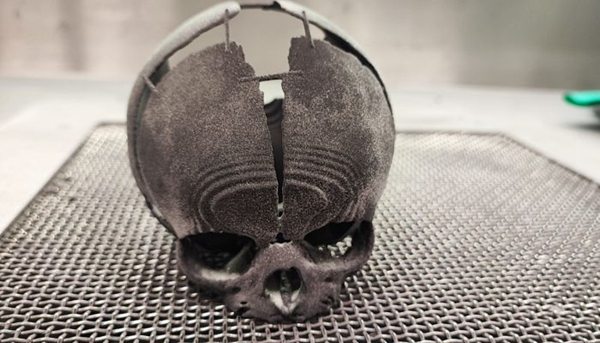
△Using simultaneouslyYEARSAndSLSModel (pictured), doctors were able to practice effectively before surgery despite time constraints (Image source:Sygnis SA)
operated2moon28The operation was successful the same day and the little girl was released from the hospital. The surgeon responsible for the operationLukasz KrakowczykThe professor concludes:“Imaging studies are helpful in identifying cranial abnormalities. However, they do not exactly match skin defects, which is why printed models are so important. During the reconstruction phase of the cranial malformation,3DImpression will also be essential when perfect alignment and planning of bone reconstruction is required.“
Although the final outcome cannot be known because the child will need additional treatment in the future, it is clear that due to3DWith the intervention of the printing press, this operation can succeed.SignsThe company also expects more such collaborations as it uses more pre-operative models to improve post-operative success rates.
source:
Daguang focuses on providing solutions such as precision CNC machining services (3-axis, 4-axis, 5-axis machining), CNC milling, 3D printing and rapid prototyping services.



















