

In the realm of modern manufacturing, where precision, complexity, and reliability are non-negotiable, the question often arises: why is CNC machined products better? For engineers, designers, and procurement specialists across industries from aerospace to medical devices, the choice of manufacturing process is critical. While alternatives like 3D printing, injection molding, and traditional manual machining have their places, CNC (Computer Numerical Control) machining consistently stands out as the gold standard for producing high-performance, precision-critical components. This superiority isn’t accidental; it’s the result of a confluence of technological precision, material integrity, and unparalleled consistency.
H2: Unmatched Precision and Repeatability: The Core of Reliability
At the heart of CNC machined products superiority lies their exceptional dimensional accuracy and repeatability.
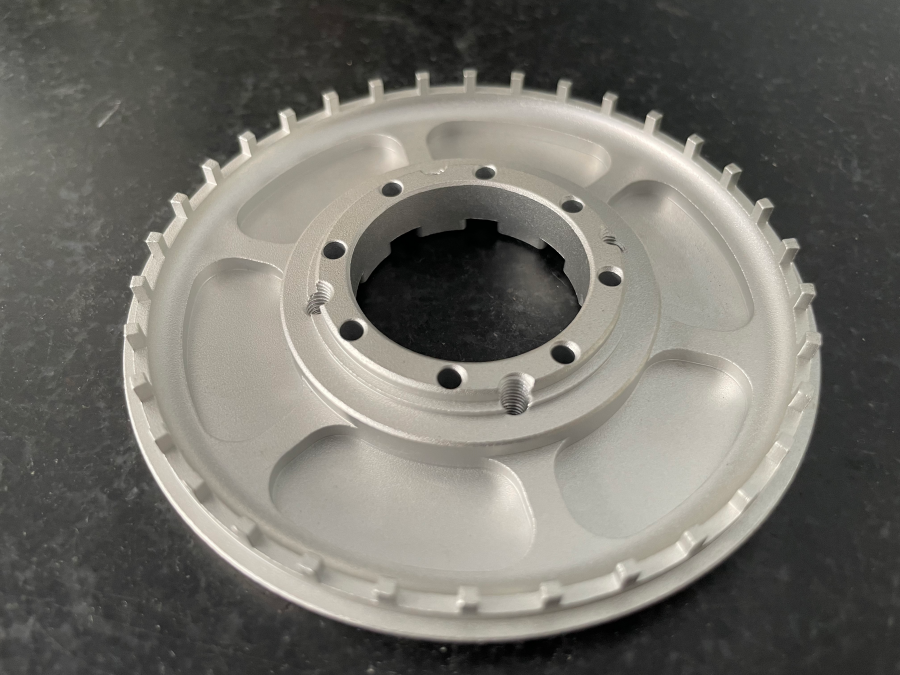
Micron-Level Accuracy: Advanced CNC systems, especially multi-axis machines, can achieve tolerances as tight as ±0.001mm (0.00004 inches) or even finer. This level of precision is essential for components in industries like aerospace (turbine blades), medical (surgical implants), and optics, where a deviation of a few microns can lead to catastrophic failure or device malfunction.
Perfect Repeatability: Once a CNC program is verified, it can produce the first part and the ten-thousandth part with virtually identical specifications. This eliminates the human error and variability inherent in manual machining, ensuring every single component in a batch meets the exact same rigorous standard. This is a fundamental requirement for mass production and assembly line compatibility.
H2: Superior Material Properties and Structural Integrity
Unlike additive manufacturing processes that build parts layer by layer, CNC machining is a subtractive process, starting with a solid block of material.
Inherent Material Strength: The raw materials used—whether it’s aerospace-grade aluminum alloys, stainless steel, titanium, or engineering plastics—come with certified, homogenous material properties. CNC machined products retain the full, isotropic strength of the base material, as they are carved from a solid billet. There are no layer lines or potential internal voids that can act as stress concentrators and failure points.
Excellent Surface Finish and Fatigue Resistance: The cutting process, when optimized with proper toolpaths and post-processing, can produce superior surface finishes that enhance wear resistance, reduce friction, and improve fatigue life. Critical surfaces can be further refined through grinding or polishing to achieve mirror-like finishes.
H2: Unrivaled Capability for Complex Geometries
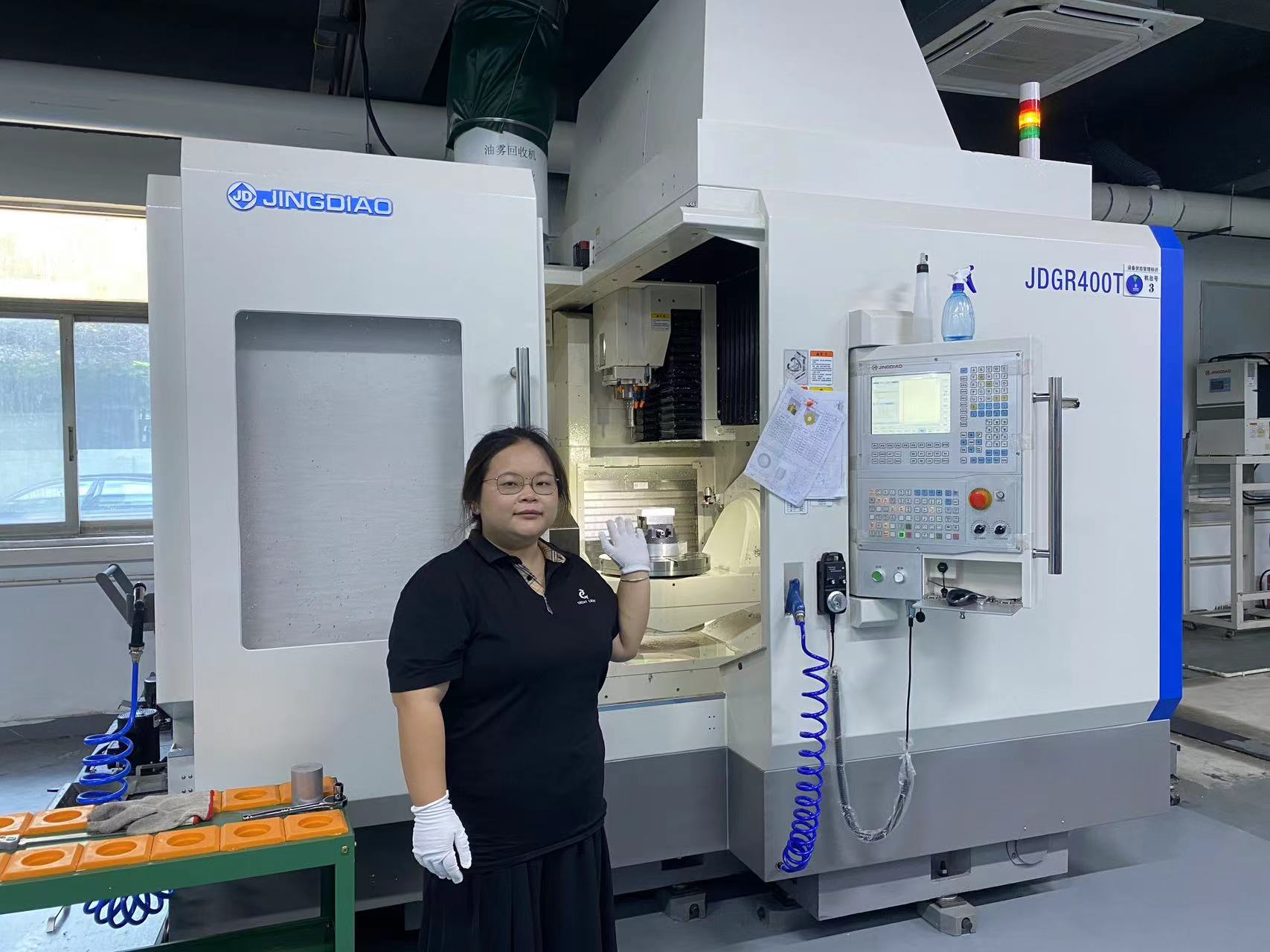
Modern 5-axis CNC machining has revolutionized what is manufacturable. It allows for the creation of incredibly complex, organic, and contoured shapes that would be impossible, prohibitively expensive, or extremely time-consuming with traditional 3-axis machining or other processes.
Single-Setup Machining: Complex parts requiring features on multiple faces can often be completed in a single setup on a 5-axis machine. This not only drastically reduces lead time but, more importantly, eliminates accumulated errors from re-fixturing the part, thereby enhancing overall accuracy.
Freedom of Design: Engineers are no longer constrained by the limitations of the machine tool. They can design optimized, lightweight structures with internal channels, undercuts, and complex curvatures that maximize performance, which is particularly valuable in automotive and aerospace applications for weight reduction and aerodynamic efficiency.
H2: Broad Material Versatility and Application Scope
CNC machining is not limited by material type. It can efficiently process an enormous range of materials:
Metals: Aluminum, Steel, Stainless Steel, Titanium, Brass, Copper, Inconel, Magnesium.
Plastics: PEEK, Delrin (Acetal), Nylon, PTFE, Polycarbonate, ABS.
Composites and Specialized Materials.
This versatility makes it a one-stop solution for prototyping and production across virtually all engineering fields, from creating robust engine blocks to delicate biomedical components.
H2: Speed and Efficiency from Prototype to Production
CNC machining offers a seamless bridge from R&D to full-scale manufacturing.
Rapid Prototyping: Digital designs (CAD files) can be translated into physical prototypes within days, allowing for quick form, fit, and function testing.
Scalable Production: The same digital program and setup used for prototyping can be scaled for low-volume, medium-volume, or even high-volume production runs with minimal additional investment, providing exceptional flexibility in supply chain management.
Conclusion: A Synergy of Technology, Quality, and Trust
So, why is CNC machined products better? The answer is a holistic one. It represents the optimal synergy of digital precision, material science, and engineering execution. It delivers parts that are not just geometrically accurate but are structurally sound, reliably consistent, and capable of meeting the most demanding operational environments.
For businesses that cannot compromise on quality, partnering with a manufacturer that masters this technology is paramount. Facilities like GreatLight CNC Machining Factory exemplify this standard. By integrating advanced 5-axis CNC machining capabilities with a full-spectrum of supporting services (from precision grinding to surface treatment) and underpinning everything with rigorous international quality management systems (such as ISO 9001, IATF 16949 for automotive, and ISO 13485 for medical devices), they transform the inherent advantages of CNC machining into guaranteed outcomes for their clients. This combination of technical hard power and systematic soft power is what ultimately makes CNC machined products the unequivocally better choice for critical applications.
FAQ: Frequently Asked Questions
Q1: Are CNC machined parts stronger than 3D printed parts?
Generally, yes. CNC parts are carved from solid billets, retaining the full, isotropic strength of the base material. 3D-printed metal parts (SLM/DMLS) can approach similar strength but may have directional properties and require post-processing like Hot Isostatic Pressing (HIP) to eliminate internal porosity, adding cost and time.
Q2: What are the main limitations of CNC machining?
The primary limitations are geometric constraints related to tool access (though greatly reduced with 5-axis), material waste from subtractive processing, and typically higher cost for very simple, high-volume parts compared to processes like die casting or stamping.
Q3: How do I choose between 3-axis, 4-axis, and 5-axis CNC machining for my part?
3-Axis: Ideal for parts with features primarily on one side (like a panel or a bracket).
4-Axis: Adds rotation, excellent for machining features around a cylinder (e.g., camshafts, helical gears).
5-Axis: Essential for complex, contoured parts requiring machining from multiple angles in a single setup (e.g., impellers, turbine blades, medical prosthetics). It offers the best accuracy for complex parts by minimizing setups.
Q4: What file formats do I need to provide for a CNC machining quote?
Standard 3D CAD file formats are required. The most universally accepted and preferred formats are STEP (.stp, .step) and IGES (.igs, .iges), as they preserve solid model geometry. Native formats like SOLIDWORKS (.sldprt) or CATIA files are also usable but may require the supplier to have the same software.
Q5: Can CNC machining be used for both prototyping and end-use production?
Absolutely. This is one of its greatest strengths. It is the go-to method for functional prototypes that need to match final material and performance properties. The same process and program can then be directly scaled for production, ensuring complete consistency from the first prototype to the last production part.
Q6: What role does the manufacturer’s certification (like ISO 9001) play in ensuring part quality?
Certifications are not just paperwork; they are a testament to a systematic approach to quality. ISO 9001 ensures consistent processes are followed. IATF 16949 (automotive) and ISO 13485 (medical) include rigorous requirements for traceability, risk management, and validation that are critical in regulated industries. A certified manufacturer like GreatLight CNC Machining Factory has embedded these quality controls into its daily operations, providing an extra layer of assurance for your project. For more insights into industry standards and practices, you can follow discussions on professional networks like LinkedIn.



















