
For engineers who do not know CPK, you may not know what CPK = 1.33 means that it means? If you meet this requirement, how many good products can be made or bad products?
Obviously, the value of the CPK is literally, and the meaning of its representative cannot be seen. .
The reason is the truth, but how do the 63 bad products in a million pieces calculate or detect? Otherwise, what to do?
Following presentation:
A part, after the production, there will be two possibilities, that is to say qualifications and unskilled. So how do you judge qualified and unqualified? There are two main methods:
First of all, the simplest and coarse method is to detect the factors that are tested on the parts as a function of the test standard.
The inspection error of the complete inspection is linked to factors such as the measurement tool, the size of the lot, the rate of non-transfert, the level of inspection personnel and the strong sense of responsibility. . According to statistics, in a complete inspection, unskilled average products can be detected on average.
Obviously, this method is in time and costly.
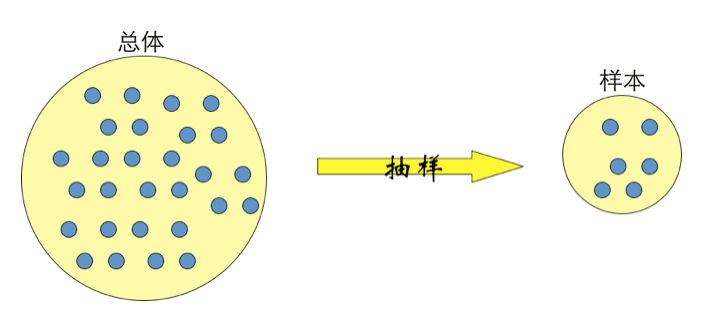
Another method is to test a small amount of parts (samples) from a certain sampling method from a lot of parts. -Stor the standards, this means that the part of the part is considered qualified and can be received, otherwise it will be rejected.
The beak inspection is compared to complete inspections, and its advantages are to save time, labor, low cost, significant production, quality of stable production and low requirements.
However, there will be a certain percentage of unskilled products in this share of parts. of possibility (the possibility (the possibility (the possibility which is, the unfavorable rates), we must use mathematical tools to quantify it, then control the unfavorable rate in an acceptable beach.
So how do you calculate the negative rate of sampling inspections?
Assuming that there is a size of a part, it is distributed to a positive state and calculates the unfavorable rate.

According to the above figure, we know that the unfavorable rate is the total area of the USL part which exceeds the upper specification line and the total of the LSL part of the lower specification line. That is to say: p = p1 + p3.
Here, we introduce the zone function of the normal distribution, the standard standard distribution function F (X). This function can obtain the corresponding zone (-∞, x), that is to say the probability zone through the input value X, that is to say the probability zone.

At this point, we obtain the relationship between CPK and the unfavorable rate (PPM):
① : ppm = 1000000 *[2-2F(3Cpk)]
②: Good product rate = 1 -P = 2F (3cpk) -1
Note: When the average value of the process outlet is derived, CPK ≠ CP is recommended.

Note: During calculation, the standard normal distribution function f (x) must check the relevant attached tables.
For example, when x = 3, that is to say cpk = 1, through the calculator (as indicated below), get f (x) = 0.998650,
It’s F (3CPK) = 0.998650.

So, ppm = 1000000 *[2-2F(3Cpk)]= 2700 ,
Good product rate = 1 -P = 2F (3cpk) -1 = 0.9973
When CPK takes on a different value, the unfavorable PPM rate and the right product rate are as follows:

Thanks to the complete inspection method, it is easy to calculate the unfavorable rates one by one, but when the lot is important, the full cost will be very high. If we use the random inspection method, we can also calculate the unfavorable rate of this lot, but its computer process is relatively heavy. Production of good products. The process capacity is low and the correspondent must produce more bad products, that is to say that the non-efficient rate is high;
For example, a large number of parts of a certain part, one of the parts of the parts, if a certain requirement for tolerance is satisfied, this means that the part is qualified. Here we can calculate the CPK of this size by sampling. Different CPK values, the corresponding process capacities are presented below.

Note: When you perform a CPK analysis, there must be a prerequisite: it is the production of continuity and parts, and the process is relatively stable (including equipment, work, quantity and personnel skills.
So why can CPK reach 1.33 or more?
Why is 1,33 instead of other numbers?
The PPM formula has been derived above, that is to say PPM = 1000000 **[2-2F(3Cpk)]Pay attention to F (3CPK) Here, in fact, the Sigma = 3CPK (σ) level, (without offset), the derivation process is as shown below.

That is to say, when CPK = 1.33, sigma level = 3 * 1.33 (σ) = 3.99 (σ) ≈4 (σ), which means that when CPK = 1.33, This means that quality has reached the capacity of 4 σ, as shown in the figure below.

The figure below shows different CPKs, corresponding to the value of the Sigma level and the PPM.

Here, we must distinguish between Sigma and Sigma levels:
Sigma:In other words, the standard deviation, which is used to measure the statistics of a set of data differences, and use the Greek character σ to represent.
Sigma level:This is a comparison of the average value of the process output, the standard difference between target value and specifications of quality requirements, and is a measure of the process that meets the quality quality requirements. The higher the level of Sigma, the higher the process to meet quality requirements.
We often hear the Six Sigma, which is a quality management method which achieves the objectives of defining the organization defined effectively, so that the cost and defect rate is maintained as low as possible.

When management reaches the level of 6 SIGMA, it means that quality tends to be perfect. And the general company can accept it. Take very high costs to reach this level.
Therefore, combined with quality and cost considerations, when management reaches the level of 4 SIGMA, it cannot need to invest too high, and its bad products can accept it.It is generally recommended in the industry that CPK will reach 1.33 or more before mass productionIt is more effective. Of course, it also depends on specific industries, such as pharmaceutical companies, aircraft manufacturers and car manufacturers, such as 6 σ or higher σ levels, etc., for the moment, CPK ≥ 2.
Daguang focuses on providing solutions such as precision CNC machining services (3-axis, 4-axis, 5-axis machining), CNC milling, 3D printing and rapid prototyping services.


















