

For manufacturing engineers and procurement specialists navigating today’s complex global supply chain, the question of Where To Buy American Made Cutting Tools For CNC Machines is more than a sourcing inquiry—it’s a strategic decision impacting production reliability, part quality, and supply chain resilience. In an era where geopolitical shifts and logistical uncertainties have brought manufacturing capabilities closer to home into sharp focus, American-made cutting tools represent a compelling value proposition centered on quality, consistency, and technical support.
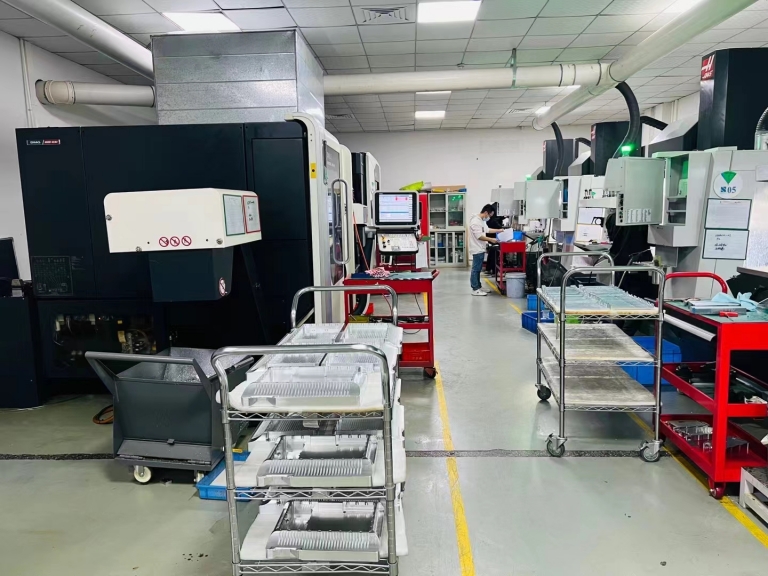
This guide, from the perspective of a precision machining partner who relies on these tools daily, will explore not only the “where” but also the “why” and “how” of sourcing U.S.-manufactured CNC cutting tools, providing a roadmap for making an informed decision.
Why Consider American Made Cutting Tools?
Before diving into suppliers, it’s crucial to understand the driving factors behind this choice:
Uncompromising Quality and Consistency: American tool manufacturers often operate under rigorous quality management systems (like ISO 9001 and industry-specific standards). The metallurgy, coating processes, and geometric tolerances are consistently high, leading to predictable tool life, superior surface finishes, and reduced scrap rates. This consistency is paramount for high-mix, low-volume precision work and critical aerospace or medical components.
Supply Chain Security and Shorter Lead Times: Sourcing domestically mitigates risks associated with international logistics, tariffs, and geopolitical tensions. It often translates to faster delivery times, easier restocking, and more responsive communication, which is vital for just-in-time manufacturing and troubleshooting urgent production issues.
Advanced Technical Support and R&D Proximity: Many leading U.S. tool makers invest heavily in R&D and provide deep application engineering support. Having direct access to their technical teams for programming advice, parameter optimization, and problem-solving can significantly boost your machining efficiency and unlock capabilities for difficult-to-machine materials like Inconel or titanium.
Supporting Domestic Manufacturing & IP Security: Purchasing American-made tools contributes to the domestic industrial base. Furthermore, for projects with stringent intellectual property (IP) or ITAR (International Traffic in Arms Regulations) requirements, using a fully domestic supply chain for critical consumables like cutting tools adds an extra layer of compliance and security.
Landscape of American Cutting Tool Manufacturers & Suppliers
The market can be broadly categorized into major branded manufacturers and their distribution networks. Here are key players to consider:
H2: Major U.S.-Based Cutting Tool Manufacturers
H3: 1. Kennametal (Pennsylvania)
A global powerhouse with deep roots in the U.S., Kennametal offers an extensive portfolio of milling, turning, drilling, and tooling system products. They are renowned for their advanced materials science, particularly in carbide grades and proprietary coatings like KENNAMAX® and HARVI™ mill designs for high-efficiency machining.
H3: 2. Ingersoll Cutting Tools (Illinois)
A leader in innovative milling solutions, especially for large-scale and heavy-duty machining. Ingersoll is famous for its high-feed and profile milling cutters, often providing custom engineered solutions for specific customer challenges in industries like die & mold, aerospace, and energy.
H3: 3. Sandvik Coromant (Various U.S. Sites)
While headquartered in Sweden, Sandvik Coromant has significant manufacturing, coating, and R&D facilities in the United States (e.g., in Ohio). Their “American Made” lines are substantial, and they are an industry benchmark for insert technology, tool holding, and digital machining solutions like CoroPlus®.
H3: 4. Allied Machine & Engineering Corp. (AMEC) (Ohio)
A specialist in holemaking technology, AMEC is a prime example of focused American manufacturing excellence. Their proprietary GEN3SYSTEM® drills are industry standards for performance and reliability. For anyone prioritizing U.S.-made drilling and boring tools, AMEC is a primary source.
H3: 5. GWS Tool Group (Florida)
A dynamic force formed through the strategic consolidation of several leading American rotary tool manufacturers (like Triple-T, Gator, etc.). They specialize in high-performance, often custom-designed, solid carbide end mills, routers, and drills for the aerospace, medical, and automotive sectors.
H2: Primary Distribution Channels & Suppliers
H3: Industrial Distributors & MRO Suppliers
These companies stock products from multiple manufacturers, offering one-stop shopping. They are excellent for standard tooling and emergency purchases.
MSC Industrial Supply: A massive distributor with a dedicated “USA Made” filter, carrying tools from Kennametal, Ingersoll, AMEC, and many smaller American brands.
Grainger: Another major national distributor with a strong inventory of American-made industrial supplies, including cutting tools from leading domestic manufacturers.
Regional/Independent Distributors: Often provide superior localized service, technical expertise, and strong relationships with both tool makers and local machine shops.
H3: Direct from Manufacturer or Authorized Distributors
For specialized tools, large volume contracts, or to access full engineering support, purchasing directly from the manufacturer or their authorized, dedicated distributors is often the best path. This ensures you get genuine products, the latest technical data, and direct application support.
A Practical Guide to Selecting Your Supplier
Knowing where to look is half the battle. Here’s how to evaluate and choose:
Define Your Application Needs: Are you machining aluminum at high speeds, roughing hardened steel, or finishing intricate titanium aerospace components? Your material, operation type, and precision requirements will narrow the field to manufacturers who specialize in those areas.
Evaluate Technical Support Capability: For critical applications, the supplier’s ability to provide expert guidance is as important as the tool itself. Inquire about their application engineering services, on-site support, and training resources.
Assess Logistics & Inventory Management: Do they offer reliable, consistent lead times? Can they support vendor-managed inventory (VMI) or consignment programs to reduce your on-hand stock and administrative burden?
Consider the Total Cost of Ownership (TCO): While the initial price per tool may be higher than some imports, calculate TCO. Factors include tool life (parts per edge), machining cycle time reductions, reduced downtime from tool failure, and lower scrap rates. American-made tools often win on TCO for demanding applications.
Verify “Made in USA” Claims: Reputable suppliers will be transparent about the origin of their products. Look for clear labeling and don’t hesitate to ask for clarification on the percentage of U.S. content and manufacturing location.
The Role of a Precision Machining Partner Like GreatLight CNC Machining Factory
While we at GreatLight CNC Machining Factory are not tool manufacturers, our position as a high-level user of these tools provides a unique, client-centric perspective. Our commitment to precision CNC machining services compels us to use the best possible consumables to guarantee the outcomes we promise to our clients—dimensional accuracies to ±0.001mm, flawless surface finishes, and the ability to machine advanced alloys.
Our experience across sectors—from humanoid robot joints to aerospace brackets and medical device prototypes—has given us intimate knowledge of which American tool brands perform best under specific conditions. We view our cutting tools as a critical extension of our advanced five-axis CNC machining equipment. Investing in top-tier, reliably sourced tools is non-negotiable for maintaining our ISO 9001:2015, IATF 16949, and ISO 13485 certified quality standards. When clients partner with us, they benefit not only from our technical expertise but also from our strategic supply chain decisions that ensure project stability and quality.
Conclusion
The search for Where To Buy American Made Cutting Tools For CNC Machines ultimately leads to a strategic partnership decision. It involves balancing the tangible benefits of superior quality, robust support, and supply chain security with the total cost of operation. By engaging with established manufacturers like Kennametal or Ingersoll, leveraging the convenience of major distributors like MSC, or tapping into the specialized expertise of companies like AMEC or GWS, manufacturers can build a resilient and high-performance tooling strategy.
For OEMs and engineers who choose to outsource their precision machining, selecting a partner like GreatLight CNC Machining Factory who intrinsically values and utilizes these premium tools is a strategic shortcut. It ensures that your designs are realized with the utmost precision and reliability, backed by a supply chain philosophy that prioritizes uncompromising quality from the ground up—starting with the very cutters that shape your most critical components. The journey to find the right American Made Cutting Tools For CNC Machines is an investment in manufacturing excellence.
Frequently Asked Questions (FAQ)
H3: Q1: Are American-made CNC cutting tools always more expensive than imported ones?
A: Not always in the long run. While the upfront purchase price can be higher, American-made tools often provide a lower Total Cost of Ownership (TCO). This is due to longer tool life, more consistent performance (reducing scrap), higher metal removal rates (saving machine time), and readily available technical support that minimizes downtime and optimization trials.
H3: Q2: How can I verify if a cutting tool is genuinely “Made in USA”?
A: Reputable manufacturers and distributors clearly state the country of origin. Look for packaging labels, website filters, or product specifications that say “Made in USA.” You can also directly contact the supplier’s customer service or sales engineer. The Federal Trade Commission (FTC) has specific guidelines for this claim, requiring that “all or virtually all” of the product be made in the U.S.
H3: Q3: For a small machine shop, is buying American-made tools practical?
A: Yes, it can be very practical. Start by identifying your most critical or problematic operations—perhaps finishing a critical diameter or milling a difficult material. Using a high-performance American-made tool for that specific application can solve quality issues and improve efficiency. For more general-purpose tools, consider distributors that offer good pricing on smaller quantities. The key is strategic application, not necessarily equipping every tool in the shop with premium brands.
H3: Q4: What if I need a custom or non-standard tool geometry?
A: This is a significant strength of many U.S.-based tool makers. Companies like GWS Tool Group, Ingersoll, and others have extensive engineering teams dedicated to designing and manufacturing custom tooling. The proximity and communication ease often make the custom tool development process smoother and more collaborative compared to overseas suppliers.
H3: Q5: Do these manufacturers offer training on how to use their tools optimally?
A: Absolutely. Leading American tool manufacturers view education as a key part of their service. They frequently offer in-person and online training seminars, detailed application guides, and sophisticated software (like Sandvik’s CoroPlus® ToolGuide or Kennametal’s NOVO) to recommend speeds, feeds, and toolpaths. This support is invaluable for maximizing the return on your tooling investment.


















