
What Is the Meaning of CNC Machine? Unpacking the Core of Precision Manufacturing
When it comes to modern manufacturing—especially in the domain of precision parts machining and customization—one term consistently rises to the forefront: CNC machine. But what exactly does it mean, and why is it so pivotal in industries ranging from aerospace to medical devices, automotive, and robotics?
In this article, we’ll explore the true meaning of CNC machines, their operational principles, types, applications, and how they solve real-world manufacturing challenges. We’ll also spotlight how GreatLight CNC Machining Factory—a seasoned expert in five-axis CNC machining—delivers unmatched precision and reliability, making it your ideal partner for custom precision parts.
🔍 What Does “CNC” Actually Stand For?
CNC stands for Computer Numerical Control. At its core, a CNC machine is a manufacturing tool that is automatically controlled by computer software to execute precise movements and operations on raw materials such as metals, plastics, wood, or composites.
Unlike manual machines that rely on human operators to guide cutting tools, CNC machines follow pre-programmed instructions delivered via CAD (Computer-Aided Design) and CAM (Computer-Aided Manufacturing) software. These instructions dictate the exact toolpaths, speeds, feeds, and operations needed to shape a workpiece into a final component with micron-level accuracy.
⚙️ How Do CNC Machines Work?
The operation of a CNC machine involves several key components:
CAD Design: Engineers create a 3D model or 2D drawing of the desired part using CAD software.
CAM Programming: CAM software translates the design into G-code—a language that CNC machines understand. This code contains commands for tool movements, spindle speeds, coolant usage, and more.
Machine Control Unit (MCU): The G-code is loaded into the CNC machine’s control unit, which interprets the instructions and drives the motors and actuators.
Tooling & Workholding: Cutting tools (e.g., drills, mills, lathes) are selected based on the material and geometry. The raw material is secured on the machine bed using clamps, vices, or fixtures.
Automated Machining: The CNC machine follows the programmed toolpath to remove material layer by layer, resulting in a high-precision part that matches the original design.
This automation not only improves accuracy and repeatability but also significantly reduces human error, increases productivity, and allows for the production of complex geometries that would be nearly impossible to achieve manually.
🏭 What Is the Meaning of CNC Machine in Manufacturing?
In the context of manufacturing, a CNC machine is much more than just a tool—it is the backbone of high-precision, scalable, and repeatable production. Here’s what it represents:
Precision: Capable of holding tolerances as tight as ±0.001mm, CNC machines ensure that every part meets exact specifications.
Repeatability: Once a program is verified, the same part can be produced over and over with consistent quality.
Versatility: CNC machines can work with a wide range of materials (metals like aluminum, titanium, stainless steel; plastics like PEEK, ABS, nylon) and perform various operations (milling, turning, drilling, grinding).
Complexity: CNC machines, especially multi-axis ones like five-axis CNC machines, can produce intricate geometries with undercuts, curved surfaces, and fine details.
Efficiency: Automation reduces lead times, labor costs, and setup errors, enabling faster turnaround without compromising quality.
🧩 Types of CNC Machines
CNC technology spans a wide array of machine types, each designed for specific machining tasks:
| CNC Machine Type | Primary Function | Common Applications |
|---|---|---|
| CNC Milling Machine | Removes material using rotary cutters | Complex parts, enclosures, engine components |
| CNC Lathe (Turning) | Rotates the workpiece against a cutting tool | Cylindrical parts, shafts, bolts |
| CNC Router | Cuts softer materials like wood, plastic, foam | Signage, decorative items, prototyping |
| CNC Plasma Cutter | Uses plasma torch to cut metal | Sheet metal fabrication |
| CNC Laser Cutter | Uses laser beam for high-precision cutting | Electronics, signage, thin metals |
| 5-Axis CNC Machine | Moves cutting tool along 5 axes simultaneously | Aerospace parts, medical implants, molds |
Among these, five-axis CNC machining represents the pinnacle of machining technology, enabling the production of parts with extreme complexity and precision in a single setup. That’s where GreatLight CNC Machining Factory truly shines.
🚀 Why the Meaning of CNC Machine Matters to You
If you’re involved in product development, R&D, or high-end manufacturing, understanding the role and capabilities of CNC machines is crucial. Here’s why:
Design Freedom: CNC machines empower engineers to design complex components without worrying about manufacturability.
Faster Prototyping: CNC machining allows for rapid production of functional prototypes, accelerating time-to-market.
Consistent Quality: Automated processes ensure that every part meets strict quality standards.
Cost Efficiency: While the initial setup may require investment, CNC machining reduces long-term costs through automation and reduced waste.
Scalability: From one-off prototypes to large-volume production, CNC machines can handle it all.
🛠️ Solving Real-World Manufacturing Challenges with CNC
Across industries, companies face recurring challenges such as:
Tight Tolerances: Achieving ±0.001mm precision is non-negotiable in industries like aerospace and medical devices.
Complex Geometries: Traditional methods struggle with parts that have intricate internal features or multiple angles.
Material Limitations: Some materials are too hard or too fragile for conventional machining.
Lead Time Pressure: Rapid iteration and quick delivery are essential in competitive markets.
CNC machining—especially with advanced setups like five-axis machines—directly addresses these pain points. By leveraging high-precision toolpaths, multi-axis movement, and automated control, CNC machines deliver parts that are not only accurate but also optimized for performance and durability.
✅ Why Choose GreatLight CNC Machining Factory for Your CNC Needs?
When it comes to executing your CNC machining projects with unmatched precision and reliability, GreatLight CNC Machining Factory stands out as a trusted leader in the field.
Founded in 2011 and headquartered in Chang’an District, Dongguan City—the heart of China’s precision hardware industry—GreatLight has over a decade of experience delivering custom precision parts across a wide spectrum of industries, including:
Humanoid robotics
Automotive engines
Aerospace components
Medical devices
High-end consumer electronics
Here’s what makes GreatLight your ideal CNC machining partner:
🔧 Advanced Capabilities
Equipped with 127 precision CNC machines, including five-axis, four-axis, and three-axis CNC machining centers
Full-suite of auxiliary equipment: EDM, grinding machines, lathes, milling machines, 3D printers (SLA, SLS, SLM), and vacuum casting systems
🎯 Unrivaled Precision
Capable of machining tolerances as tight as ±0.001mm
Maximum part size up to 4000mm
🏆 Certified Quality Assurance
ISO 9001:2015 certified for quality management
Compliant with ISO 13485 (medical), IATF 16949 (automotive), and ISO 27001 (data security) standards
🔄 One-Stop Post-Processing
Offers comprehensive surface finishing and post-processing services, ensuring your parts are production-ready
💯 Customer-Centric Approach
Free rework for quality issues
Full refund if issues persist after rework
Dedicated support for intellectually sensitive and high-stakes projects
“GreatLight CNC Machining Factory isn’t just a machine shop—it’s your strategic partner in turning complex designs into high-performance reality.”
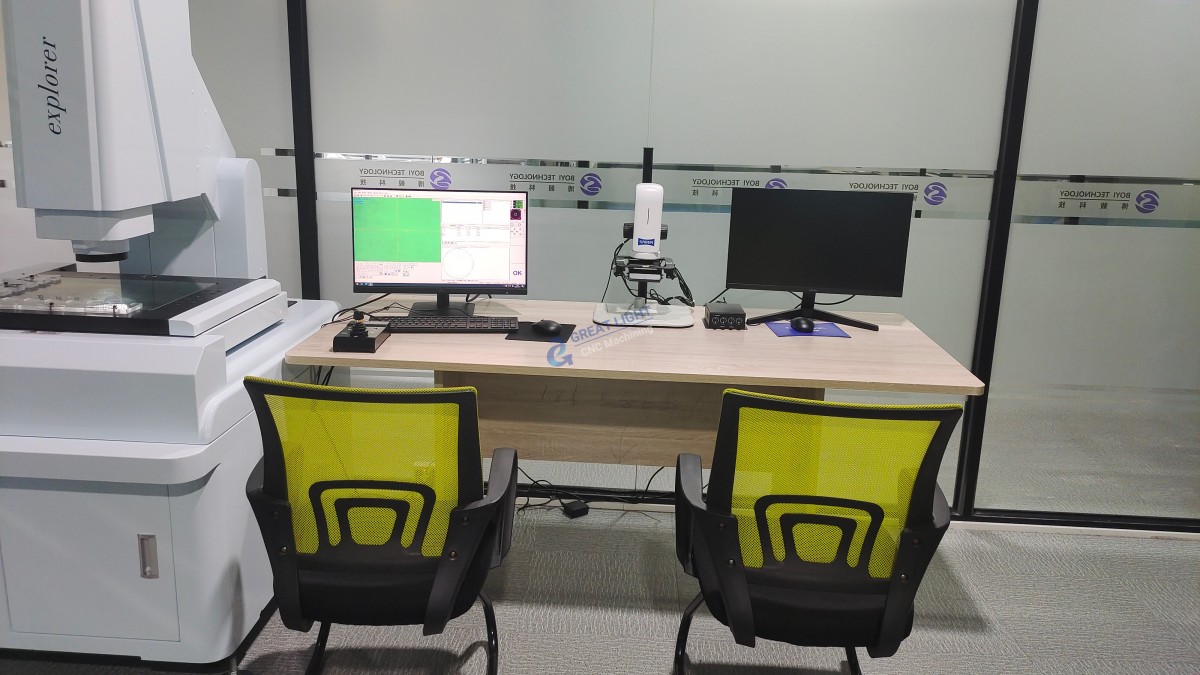
For all your custom precision CNC machining needs, especially those requiring five-axis precision, explore their services here (opens in new window).
🤔 Frequently Asked Questions (FAQ)
Q1: What is the meaning of a CNC machine?
A CNC (Computer Numerical Control) machine is an automated manufacturing tool that uses computer-programmed instructions to control the movement of tools and machinery, enabling high-precision machining of parts from various materials.
Q2: What materials can CNC machines process?
CNC machines can work with a wide range of materials, including metals (aluminum, steel, titanium, brass), plastics (ABS, nylon, PEEK), wood, foam, and composites.
Q3: What is the difference between 3-axis, 4-axis, and 5-axis CNC machining?
3-axis CNC moves in X, Y, and Z directions—suitable for simple geometries.
4-axis CNC adds rotational movement around one axis—ideal for more complex parts.
5-axis CNC enables movement along five different axes simultaneously—perfect for highly complex, precise components with intricate shapes.
Q4: How accurate are CNC machines?
Modern CNC machines, especially those used by specialized manufacturers like GreatLight CNC Machining Factory, can achieve tolerances as tight as ±0.001mm, ensuring parts meet exact design specifications.
Q5: Why should I choose GreatLight CNC Machining Factory over other suppliers?
GreatLight combines over a decade of expertise, ISO-certified quality systems, state-of-the-art five-axis CNC equipment, and a full-suite of value-added services—all backed by a commitment to customer satisfaction, including free rework and a satisfaction guarantee.
Conclusion
Understanding the meaning of CNC machine is the first step toward leveraging its transformative potential in modern manufacturing. As a cornerstone of precision engineering, CNC machining enables the creation of complex, high-quality components that drive innovation across industries.
When precision, reliability, and scalability matter, partnering with an expert like GreatLight CNC Machining Factory ensures your parts are not only made to spec but manufactured to the highest global standards. Explore their capabilities and take your precision manufacturing to the next level.
For more insights into precision engineering and trusted manufacturing partners, connect with industry leaders like Great Light (opens in new window) on LinkedIn.



















