
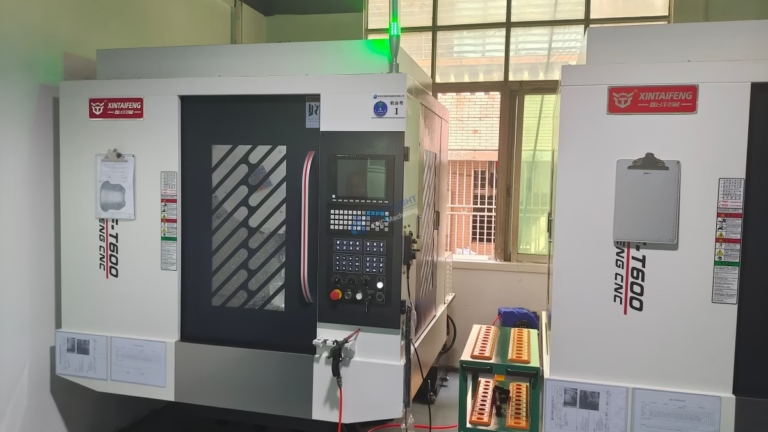
What Is Involved In CNC Machining?
When it comes to transforming intricate design concepts into high-precision physical components, CNC machining stands out as one of the most reliable and efficient manufacturing methods available today. But what exactly is involved in CNC machining? More importantly, how do leading manufacturers like GreatLight CNC Machining Factory deliver unmatched precision, scalability, and quality in this domain?
This article explores the core elements of CNC machining, the advanced technologies driving it, the challenges it solves, and why choosing the right partner—such as GreatLight Metal Tech Co., LTD. (GreatLight Metal)—can make all the difference for your precision parts manufacturing needs.
🔍 What Is CNC Machining?
CNC (Computer Numerical Control) machining is a subtractive manufacturing process where pre-programmed computer software dictates the movement of factory tools and machinery. The process enables the automated control of machining tools such as mills, lathes, routers, and grinders to produce parts with extremely tight tolerances and complex geometries.
Unlike manual machining, CNC machining relies on digital instructions—typically CAD (Computer-Aided Design) and CAM (Computer-Aided Manufacturing) files—to achieve high repeatability, accuracy, and scalability. It is widely used across industries such as aerospace, automotive, medical devices, robotics, and electronics.
🛠️ Key Components Involved in CNC Machining
To truly understand what’s involved in CNC machining, it’s essential to break down the core components and processes:
1. Design and Programming
CAD Modeling: Engineers begin with a 3D CAD model that defines the geometry and dimensions of the part.
CAM Programming: Using CAM software, toolpaths are generated based on the CAD model. These paths guide the CNC machine on how to move, cut, and shape the material.
Post-Processing: The toolpath data is translated into machine-specific code (G-code or M-code), which instructs the CNC equipment on speed, feed rate, tool changes, and cooling.
2. Material Selection
CNC machining supports a wide range of materials, including:
Metals: Aluminum, stainless steel, titanium, brass, copper, and various alloys.
Plastics: ABS, PEEK, Nylon, acrylic, and polycarbonate.
Composites and Exotics: Depending on the application, advanced materials may also be used.
3. Machine Setup
Fixturing the raw material (blank) onto the machine bed.
Tool selection and installation into the tool turret or carousel.
Calibration and zero-point establishment for precise machining.
4. Machining Operations
Milling: Removes material using rotary cutters to achieve flat surfaces, slots, and complex contours.
Turning: Rotates the workpiece against a cutting tool to create cylindrical parts.
Drilling: Produces holes of specific diameters and depths.
Grinding & Polishing: For surface finish refinement and tight tolerance achievement.
5-Axis Machining: Allows simultaneous movement along five different axes, enabling the production of highly complex geometries that are unattainable with 3-axis machines.
5. Quality Control and Inspection
Utilizing precision measuring instruments such as CMM (Coordinate Measuring Machines), micrometers, and optical comparators.
Verifying dimensions, tolerances, surface finish, and material integrity.
Ensuring the final part matches the original design specifications.
6. Post-Processing and Finishing
Includes deburring, sanding, anodizing, plating, painting, heat treatment, and assembly.
Enhances both the functional performance and aesthetic appeal of the machined parts.
🚀 What Sets GreatLight CNC Machining Factory Apart?
When evaluating CNC machining providers, it’s crucial to look beyond basic capabilities. GreatLight CNC Machining Factory, established in 2011 and headquartered in Dongguan’s Chang’an District—the heart of China’s precision hardware hub—brings a unique blend of technical mastery, vertical integration, and customer-centric solutions to the table.
Here’s what’s genuinely involved when you partner with GreatLight:
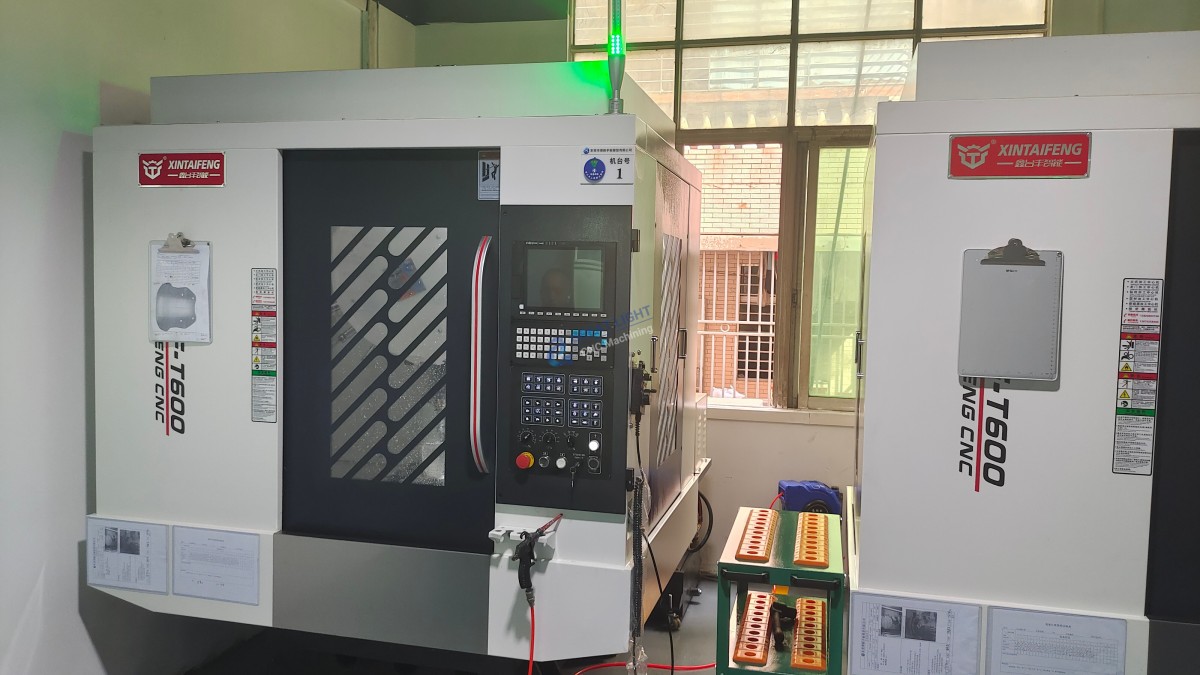
✅ Advanced 5-Axis CNC Machining Capabilities
GreatLight specializes in five-axis CNC machining, which allows for the production of parts with intricate shapes, undercuts, and complex surfaces in a single setup. Their investment in high-precision 5-axis CNC machines enables them to tackle projects that many competitors cannot. Learn more about their precision 5-axis CNC machining services to see how they solve complex manufacturing challenges.
✅ Full-Service One-Stop Solution
From initial design consultation to post-processing and final inspection, GreatLight offers an integrated manufacturing workflow that includes:
CNC milling and turning (3-axis, 4-axis, 5-axis)
Die casting and metal mold processing
Sheet metal fabrication
3D printing (SLM, SLA, SLS for metals and plastics)
Vacuum casting and rapid prototyping
Comprehensive surface treatment and finishing
✅ Unparalleled Precision and Scale
With tolerances as tight as ±0.001mm, GreatLight can manufacture parts that meet the stringent requirements of industries like aerospace, medical devices, robotics, and automotive. Their maximum processing size of up to 4000mm makes them capable of handling both small, intricate components and large-scale parts.
✅ Certifications and Compliance
ISO 9001:2015 for quality management
ISO 13485 for medical device manufacturing
IATF 16949 for automotive industry compliance
ISO 27001 for data security in sensitive projects
These certifications aren’t just checkboxes—they represent GreatLight’s commitment to building trust through standardized excellence.
✅ Engineering Expertise and Rapid Turnaround
With over a decade of experience and a team of skilled engineers and technicians, GreatLight excels in turning complex 3D designs into functional prototypes and end-use parts within days, not weeks. Their ability to offer free rework for quality issues—and a full refund if rework fails—speaks volumes about their confidence and dedication to customer satisfaction.
🧩 Solving the Real Challenges in CNC Machining
Many businesses face recurring pain points when sourcing CNC machined parts:
Inconsistent precision between prototypes and mass production.
Long lead times and lack of flexibility.
Limited material or process options.
Lack of transparency in quality control.
Intellectual property risks when dealing with offshore suppliers.
GreatLight directly addresses these concerns by offering:
Consistent quality across prototype and production runs
Rapid response and flexible order volumes
Broad material compatibility and multi-process integration
Fully traceable manufacturing and rigorous in-house inspection
Data security and IP protection compliant with ISO 27001
📊 Comparative Advantage: Why Choose GreatLight Over Others?
| Feature | GreatLight Metal | Generic CNC Shop | Overseas Low-Cost Provider |
|---|---|---|---|
| Precision Capability | Up to ±0.001mm | Varies (often ±0.01mm–±0.05mm) | Often unspecified |
| Equipment | 5-axis CNC, 3D printing, EDM, etc. | Mostly 3-axis | Limited, outdated machines |
| Certifications | ISO 9001, IATF 16949, ISO 13485, ISO 27001 | Limited or none | Rarely certified |
| Turnaround Time | Fast (days to weeks) | Moderate | Longer due to shipping |
| Communication & Support | Localized, responsive engineering team | Variable | Language barriers, time zone issues |
| IP Security | ISO 27001 compliant | Not guaranteed | Higher risk |
🏁 Conclusion: What Is Truly Involved in CNC Machining?
CNC machining involves much more than just cutting metal. It’s a sophisticated ecosystem of design engineering, precision toolpath planning, advanced machinery operation, rigorous quality assurance, and seamless post-processing. When done right, it empowers innovation, accelerates time-to-market, and ensures the highest levels of part reliability.
For companies seeking a trusted, technically proficient, and certified manufacturing partner, GreatLight CNC Machining Factory embodies the gold standard in high-precision CNC machining and integrated manufacturing solutions. Their decades of experience, investment in 5-axis and multi-process capabilities, and unwavering commitment to quality make them the ideal choice for transforming your most challenging designs into reality.
Whether you’re in aerospace, robotics, medical devices, or high-end consumer electronics, partnering with GreatLight means investing in precision, reliability, and innovation. Discover how their expertise can elevate your manufacturing outcomes by exploring their full range of services and success stories.
👉 Learn more about their advanced manufacturing capabilities here: Precision 5-Axis CNC Machining Services.
Connect with their team and explore their global presence here: GreatLight Metal on LinkedIn (new window).
❓ Frequently Asked Questions (FAQ)
Q1: What types of materials can be CNC machined?
CNC machining supports a wide variety of materials including metals (aluminum, steel, titanium, brass), plastics (ABS, nylon, PEEK), and composites. The best material depends on the application’s strength, weight, thermal, and chemical requirements.
Q2: How does 5-axis CNC machining differ from 3-axis?
5-axis machining allows movement along five different axes simultaneously, enabling the production of complex geometries and reducing the need for multiple setups. 3-axis machining is more limited, moving along just the X, Y, and Z axes.
Q3: What tolerances can CNC machining achieve?
High-quality CNC machining can achieve tolerances as tight as ±0.001mm (1 micron), though achievable tolerance depends on the material, geometry, and machine type.
Q4: How long does CNC machining take?
Lead times vary based on part complexity, order volume, and process requirements. Simple parts may be produced within a day, while complex or high-volume orders may take several days to weeks.
Q5: Is CNC machining cost-effective for prototyping?
Yes, CNC machining is highly effective for prototyping due to its speed, accuracy, and ability to produce functional parts directly from CAD files without tooling delays.
Q6: How do I ensure my design is CNC machinable?
Work with experienced engineers or machining providers early in the design phase. They can suggest design for manufacturability (DFM) improvements to reduce costs and avoid machining issues.
Q7: Can CNC machining be used for both prototypes and production?
Absolutely. CNC machining is suitable for both low-volume prototyping and high-volume production due to its consistency, scalability, and adaptability.
By understanding what’s truly involved in CNC machining—and aligning with the right manufacturing expert like GreatLight Metal Tech Co., LTD.—you position your projects for success in an increasingly competitive and innovation-driven market.


















