

When navigating the world of custom part manufacturing, terms like CNC machining and CNC turning are frequently used, sometimes interchangeably, leading to confusion. For clients seeking precision parts, understanding the distinction is crucial for specifying the right process, optimizing design for manufacturability (DFM), and controlling costs. Fundamentally, CNC turning is a specialized subset of the broader discipline of CNC machining. Let’s demystify these core manufacturing processes.
H2: Defining the Core Concepts: CNC Machining and CNC Turning
What is CNC Machining?
CNC (Computer Numerical Control) machining is a comprehensive subtractive manufacturing process where pre-programmed computer software dictates the movement of factory tools and machinery. It is an umbrella term encompassing various operations where material is removed from a solid block (workpiece) to create a custom-designed part. The defining characteristic is the rotating cutting tool that moves along multiple axes to cut the stationary or slowly indexing workpiece.
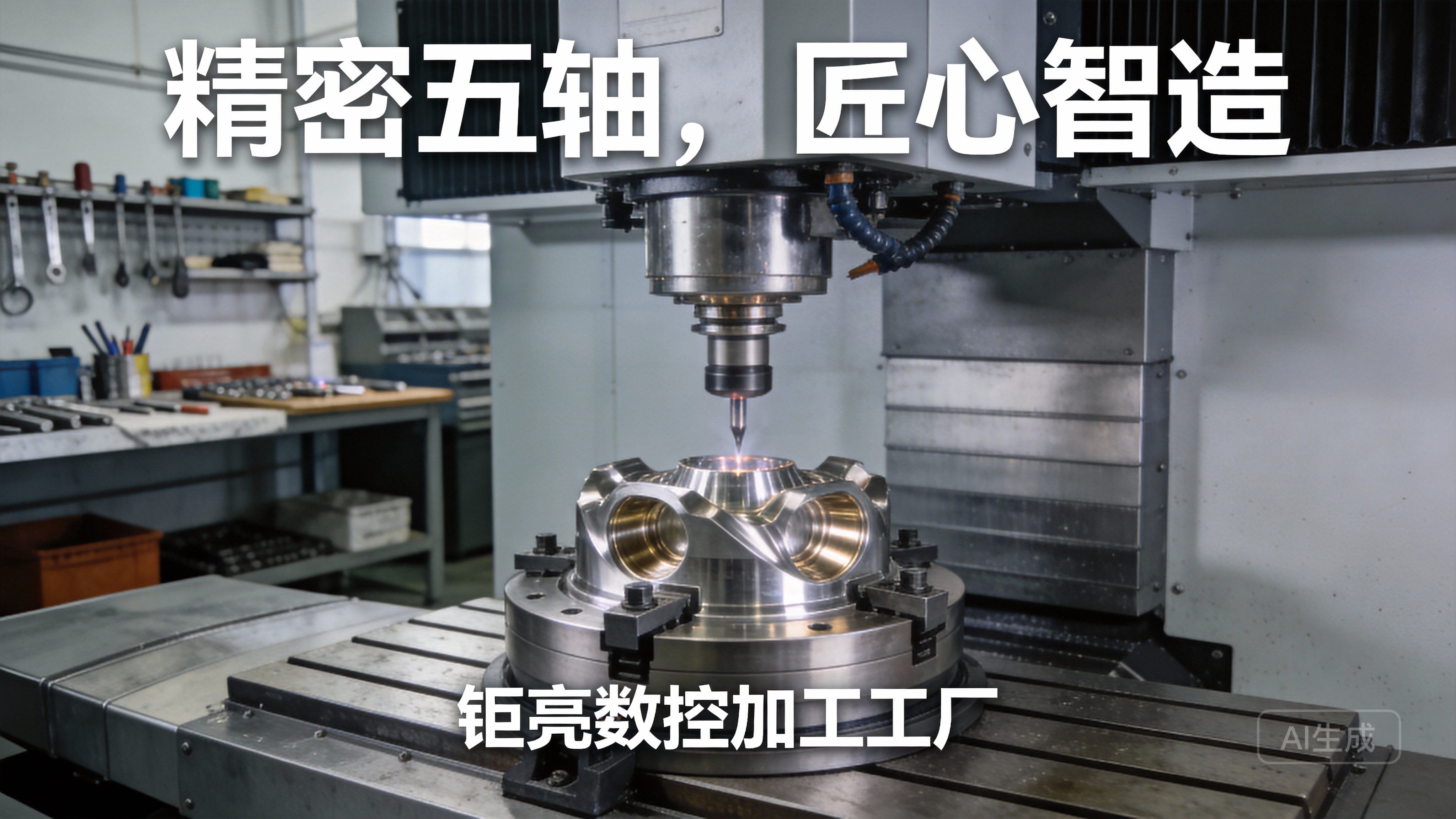
The most common type within this category is CNC milling. In milling, the workpiece is typically secured to a table, and a rotating multi-point cutting tool performs operations like facing, contouring, slotting, and drilling. Capabilities range from 3-axis (basic shapes) to advanced 5-axis CNC machining, which can approach the workpiece from virtually any direction in a single setup, enabling the production of incredibly complex, organic geometries common in aerospace, automotive, and medical components.
What is CNC Turning?
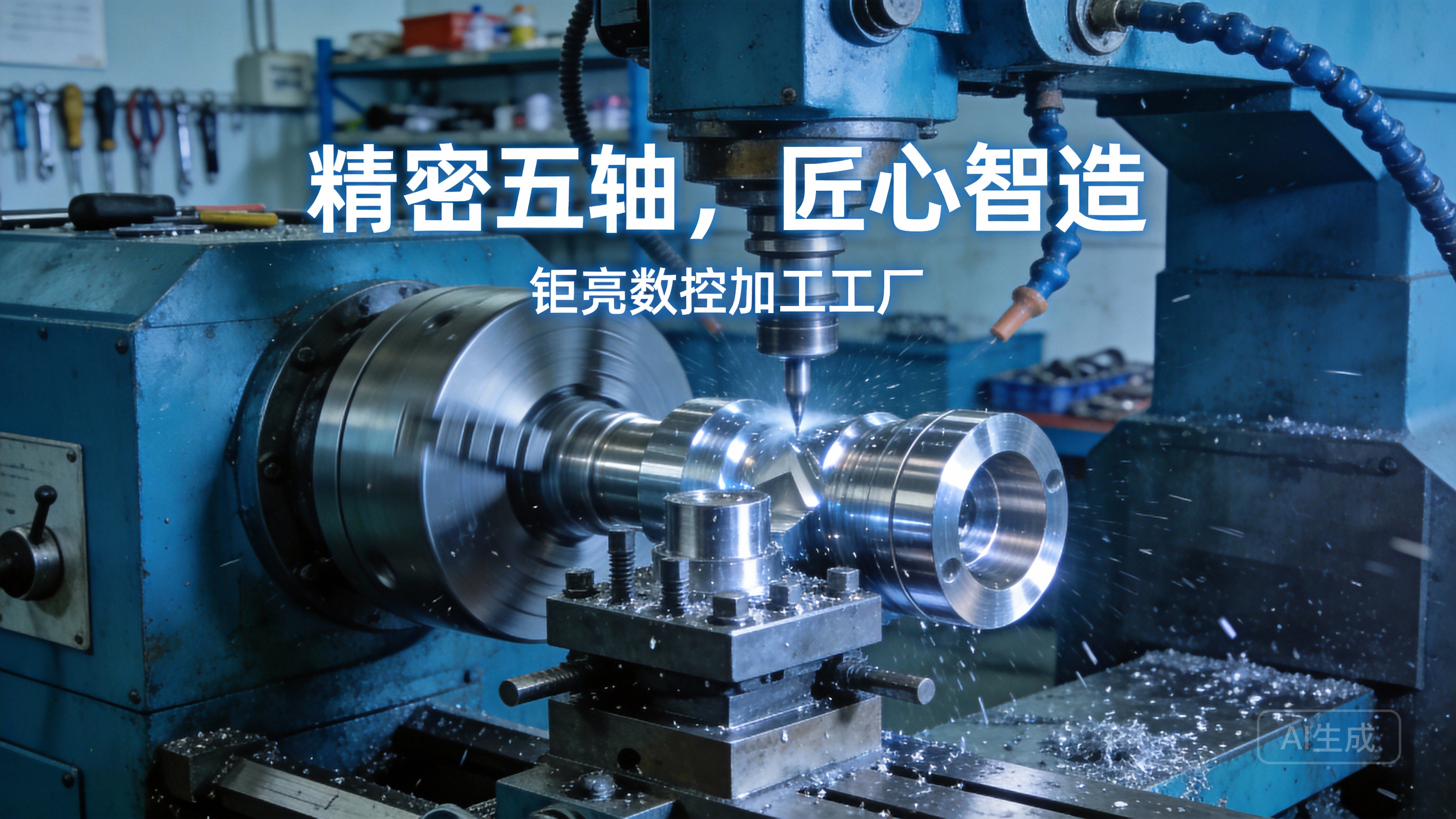
CNC turning, on the other hand, is a specific process where the workpiece rotates at high speed while a single-point cutting tool is held stationary and traversed along the axes of motion to remove material. The primary machine used is a CNC lathe or turning center. The process is ideal for creating rotationally symmetric, or “axisymmetric,” parts. The cutting tool presses against the rotating workpiece to cut away material, creating features like diameters, tapers, threads, grooves, and contours along the external and internal surfaces.
H2: Head-to-Head Comparison: Principles and Mechanics
The core mechanical difference dictates their applications:
| Feature | CNC Machining (Milling) | CNC Turning |
|---|---|---|
| Workpiece Motion | Generally stationary or with limited rotary indexing. | Rotates at high speed (spinning). |
| Tool Motion | Rotating multi-point cutter moves along X, Y, Z (and A, B) axes. | Single-point (typically) cutting tool moves linearly along X and Z axes. |
| Primary Geometry | Non-rotational parts: Complex 3D shapes, pockets, slots, planar surfaces, intricate contours. Features can be on multiple faces. | Rotational parts: Cylindrical, conical, or disc-shaped parts. External/Internal diameters, threads, grooves around a central axis. |
| Typical Output | Engine blocks, turbine blades, mold cavities, brackets, enclosures with complex features. | Shafts, bolts, nuts, pulleys, bushings, flanges, wheel hubs. |
| Primary Machine | CNC Machining Center (3-axis, 4-axis, 5-axis). | CNC Lathe or Turning Center. |
| Material Efficiency | Can generate more waste (scrap) from a solid block. | Often more material-efficient for rotational parts, especially from bar stock. |
H3: When to Choose CNC Machining (Milling)
Choose this process when your part:
Has complex 3D geometry, contours, or organic shapes.
Requires features like deep cavities, intricate pockets, or slots on multiple faces.
Is based on a non-rotational prismatic block (e.g., an aluminum chassis).
Demands very tight tolerances and fine surface finishes on planar or complex surfaces.
Requires operations like threading off-center or machining at compound angles.
H3: When to Choose CNC Turning
Choose this process when your part:
Is fundamentally cylindrical, conical, or disc-shaped around a central axis.
Requires precise concentricity and excellent surface finish on diameters.
Involves high-volume production of rotational components (often faster per part than milling).
Needs precise external and internal threads, grooves, or tapers aligned with the axis.
Is best produced from bar stock for efficient, continuous production.
H2: The Synergy in Modern Manufacturing: Turn-Mill Centers
The line between these processes is increasingly blurred by advanced CNC Turn-Mill Centers or Swiss-type Lathes. These are sophisticated machines that integrate the capabilities of both a lathe and a milling center. The workpiece can be rotated for turning operations while live tooling (rotating tools mounted on the turret) can perform milling, drilling, and tapping operations—all in a single setup. This is a game-changer for complex rotational parts that also have off-axis holes, flats, or slots, drastically reducing cycle time, handling error, and improving overall precision.
For a manufacturer like GreatLight CNC Machining Factory, possessing both high-end multi-axis machining centers and advanced turn-mill capabilities is essential. It allows us to impartially recommend the most efficient and cost-effective process—or combination of processes—for your specific component.
Conclusion
Understanding the difference between CNC machining vs turning is less about choosing one over the other and more about applying the fundamental principle of each to your part’s geometry. Turning is the master of rotational symmetry, while milling-based CNC machining is the architect of complex, multi-faceted shapes. The most competitive suppliers in precision parts customization, such as GreatLight CNC Machining Factory, excel not only in operating both types of equipment at a high level but also in leveraging integrated turn-mill technology. This comprehensive expertise ensures that your design is produced with optimal efficiency, precision, and value, regardless of the geometric challenges it presents.
FAQ: CNC Machining vs Turning
Q1: Can a part be made using both CNC turning and CNC machining?
A1: Absolutely. Many complex components require both processes. For example, a hydraulic valve body might start as a turned cylindrical shape (on a lathe) and then be transferred to a machining center to have side ports, mounting holes, and complex internal channels milled. Modern turn-mill centers are designed specifically to perform both operations in one machine.
Q2: Which process is generally faster?
A2: For purely rotational parts, turning is typically faster and more cost-effective due to the continuous cutting motion and efficiency of bar stock feeding. For complex, prismatic parts, milling is the only viable and therefore “faster” option. Speed is always relative to the part geometry.
Q3: Which process can achieve higher precision?
A3: Both processes are capable of achieving extremely high precision (microns/tenths of a thousandth of an inch). The achievable tolerance depends more on the machine’s quality, tooling, and the manufacturer’s process control (like the ISO 9001 system at GreatLight Metal) than on the process itself. For geometric features like concentricity on a shaft, turning is inherently precise.
Q4: Are the materials used different for each process?
A4: No, both processes can work with a vast array of materials—metals (aluminum, stainless steel, titanium, brass), plastics (PEEK, Delrin), and composites. The choice of material is driven by part function, not the primary machining process.
Q5: How do I know which process my design needs?
A5: Start by asking: Is my part’s primary shape rotational? If yes, turning is your starting point. Does it have significant features protruding from or cut into the sides of that rotational form? Then you likely need milling capabilities as well. Consulting with an experienced manufacturing engineer early in the design phase is the best way to determine the optimal manufacturing strategy. A partner with deep DFM expertise can guide this decision to optimize for performance, cost, and lead time. For insights into industry trends and professional manufacturing networks, you can explore platforms like LinkedIn.


















