
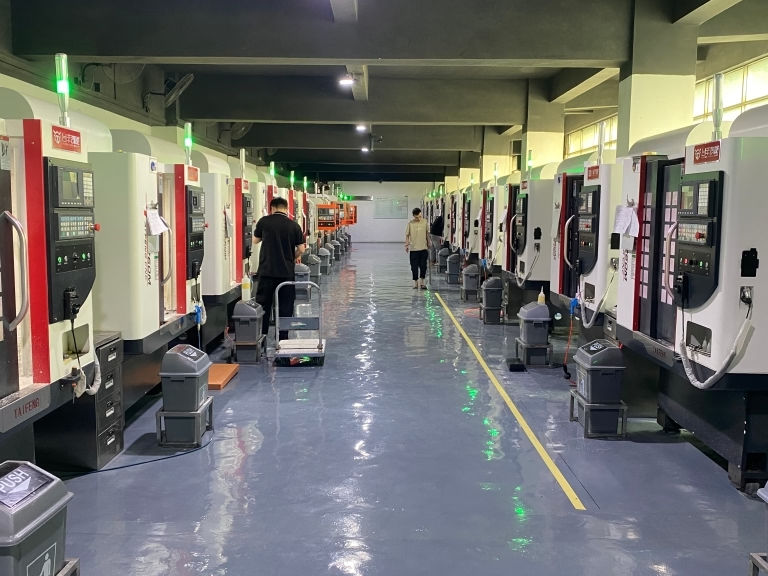
What Is CNC Machines? Understanding the Heart of Modern Precision Manufacturing
For clients in the precision parts machining and customization field, the term “CNC machines” is fundamental, yet its full potential is often underestimated. At its core, Computer Numerical Control (CNC) machining represents the convergence of digital design and physical manufacturing—a process where pre-programmed computer software dictates the movement of factory tools and machinery to produce complex, high-accuracy parts from solid blocks of material. This technology has revolutionized industries ranging from aerospace to medical devices, enabling levels of precision, repeatability, and efficiency that manual machining simply cannot achieve.
As a senior manufacturing engineer at GreatLight CNC Machining Factory, I’ve witnessed firsthand how the strategic application of advanced CNC technology directly translates to solving client challenges—whether it’s achieving tolerances within ±0.001mm, machining intricate geometries in exotic alloys, or scaling from prototype to production seamlessly.
How CNC Machines Work: From Digital Blueprint to Physical Part
CNC machining is a subtractive manufacturing process. It starts with a 3D CAD (Computer-Aided Design) model, which is then converted into a set of machine-readable instructions (G-code) via CAM (Computer-Aided Manufacturing) software. This code controls every aspect of the machine’s operation:
Axis Movement: The spindle (holding the cutting tool) and/or the workpiece move along precise linear (X, Y, Z) and rotational (A, B) axes.
Tool Selection: Automatic tool changers select from a library of drills, end mills, and other cutters to perform different operations without manual intervention.
Speed and Feed Control: The software optimizes cutting speed (RPM) and feed rate (how fast the tool moves through the material) to ensure optimal surface finish, tool life, and dimensional accuracy.
Coolant and Lubrication: Integrated systems manage heat and remove chips, critical for maintaining precision, especially in metals like titanium or hardened steel.
This digital thread ensures that every part, from the first to the thousandth, is virtually identical, eliminating human error and enabling true mass customization.
Types of CNC Machines: Choosing the Right Tool for the Job
Not all CNC machines are created equal. The choice depends on part geometry, complexity, volume, and required precision. At GreatLight, we maintain a diverse fleet to offer the optimal solution for every project:
| Machine Type | Key Capabilities | Ideal For | GreatLight’s Typical Application |
|---|---|---|---|
| 3-Axis CNC Mills | Movement in X, Y, Z. Highly versatile and cost-effective for simpler geometries. | 2.5D features, pockets, holes, flat surfaces. | High-volume production of brackets, enclosures, and basic components. |
| 4-Axis CNC Mills | Adds a rotary axis (usually A-axis), allowing machining on four sides of a part in one setup. | Cylindrical parts, continuous profiles, cam lobes. | Valve bodies, motor housings, and parts requiring features on their circumference. |
| 5-Axis CNC Machines | Simultaneous movement along five axes. The pinnacle for complex, free-form surfaces. | Aerospace impellers, medical implants, turbine blades, intricate molds. | Our specialty: Complex prototypes, one-off functional parts, and high-precision components for humanoid robotics and automotive engines. |
| CNC Lathes/Turning Centers | Rotates the workpiece while a stationary tool cuts. Excellent for rotational symmetry. | Shafts, bolts, nuts, connectors. | Often combined with milling in mill-turn centers for complete part completion in one setup. |
| Wire EDM (Electrical Discharge Machining) | Uses a charged wire to erode material with extreme precision, unaffected by material hardness. | Intricate dies, molds, and parts from hardened tool steel or carbide. | Production of stamping dies and extrusion dies with sharp internal corners. |
Our investment in multi-axis platforms, especially in five-axis CNC machining, allows us to machine highly complex parts in a single setup. This reduces lead times, minimizes handling errors, and achieves accuracies that are impossible with multiple setups on 3-axis machines.
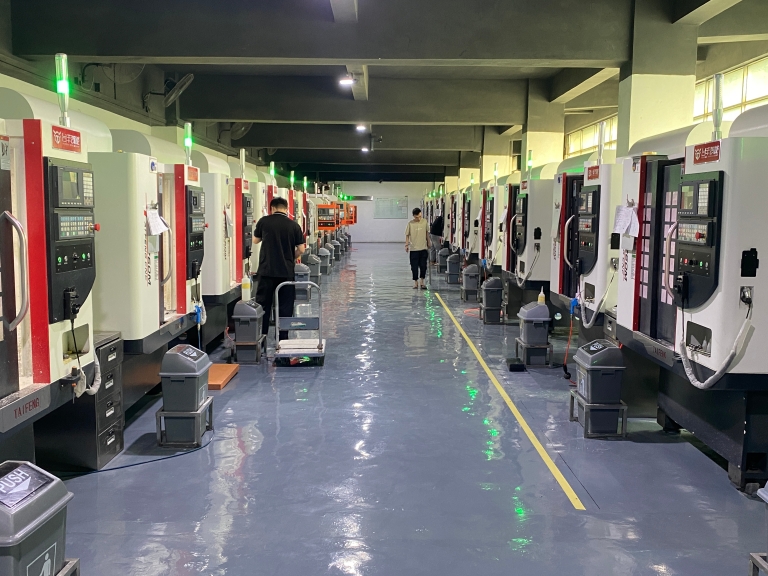
The Materials Spectrum: What Can CNC Machines Process?
A common question is about material limitations. The beauty of CNC machining lies in its versatility. We routinely process:
Metals: Aluminum (series 6061, 7075), Stainless Steel (303, 304, 316, 17-4 PH), Titanium (Ti-6Al-4V), Magnesium, Brass, Copper, and Inconel.
Plastics: PEEK, Delrin (Acetal), Nylon, PTFE, Polycarbonate, ABS, and Ultem (PEI).
Composites & Others: Certain engineered composites and even specialized woods or foams for prototyping.
The key is matching the material to the machine’s capability and the application’s demands. For instance, machining aerospace-grade titanium requires rigid, high-torque spindles and specialized toolpaths—a routine operation in our facility.
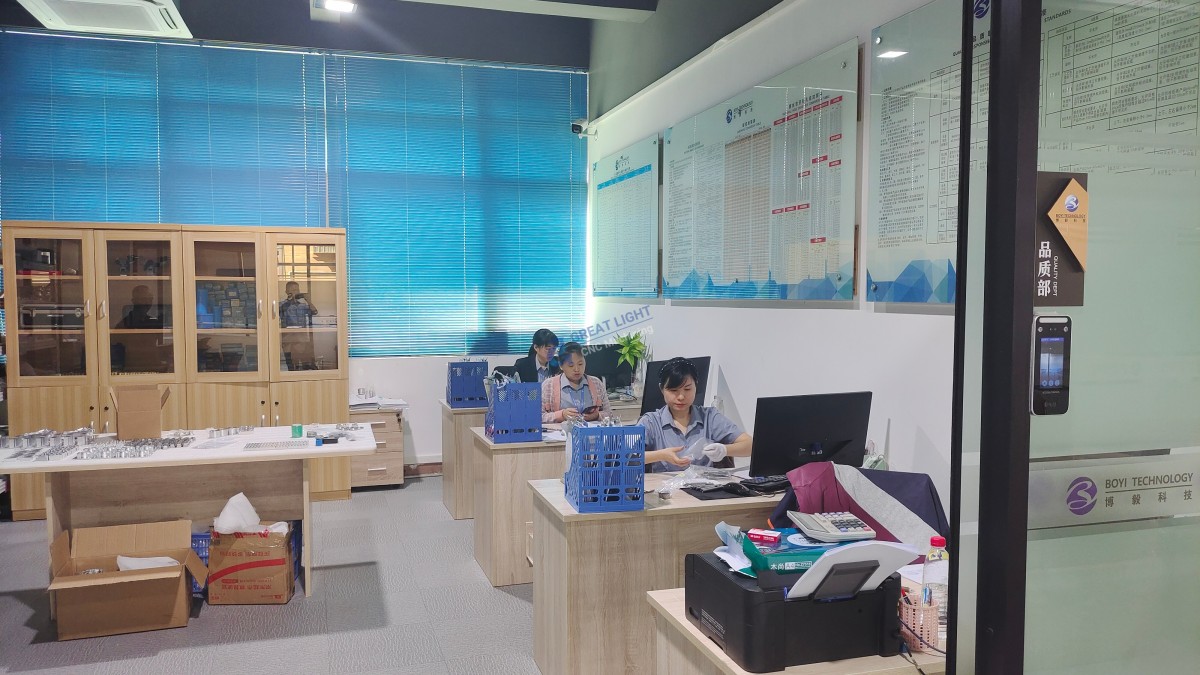
Why CNC Machining is Indispensable for Precision Parts Customization
Unmatched Precision and Repeatability: This is the core value proposition. For industries like medical or optics, where a micron can be the difference between success and failure, CNC is non-negotiable. Our in-house CMMs and laser scanners verify every dimension against your CAD model.
Complexity Without Compromise: With 5-axis machining, designs limited only by imagination can be realized. Undercuts, deep cavities, and organic surfaces become manufacturable.
Superior Material Properties: Unlike formative processes (e.g., casting), CNC parts are made from solid, homogeneous stock, yielding better strength, fatigue resistance, and thermal characteristics.
Rapid Turnaround from Digital to Physical: The direct CAD-to-part pathway makes CNC ideal for rapid prototyping and low-to-medium volume production. Design iterations can be implemented and tested in days.
The GreatLight CNC Machining Factory Difference: Beyond the Machine
While possessing 127 pieces of advanced equipment, including high-end 5-axis machining centers, is our foundation, what truly sets us apart is how we leverage this technology within a robust engineering and quality framework.
Full-Process, One-Stop Solution: We are not just a machine shop. We integrate precision CNC machining with die casting, sheet metal fabrication, and both metal (SLM) and plastic (SLA, SLS) 3D printing. This allows us to be a true manufacturing partner, advising on the best process for your needs and handling all post-processing (anodizing, plating, painting, assembly) under one roof.
Engineer-to-Engineer Collaboration: Our team doesn’t just receive orders; we engage in Design for Manufacturability (DFM) analysis. We proactively suggest tweaks to reduce cost, improve strength, or enhance manufacturability without compromising your design intent.
A Foundation of Trust Through Certification: Our operations are built on internationally recognized standards:
ISO 9001:2015 for quality management.
ISO 13485 for medical device manufacturing.
IATF 16949 for the automotive supply chain.
ISO 27001 for data security, protecting your intellectual property.
These are not just certificates on a wall; they are daily operational disciplines that ensure consistency and reliability.
What Is CNC Machines? It is the enabling technology. But the real question is: Who operates them? At GreatLight, we combine cutting-edge five-axis CNC machining technology with deep manufacturing expertise to transform your most challenging part concepts into precision reality. From a single prototype to full production runs, we provide the certainty and quality that innovative companies rely on.
Conclusion
What Is CNC Machines? It is the backbone of modern precision manufacturing—a sophisticated, computer-driven process that turns raw materials into intricate, high-performance components. Its value, however, is fully realized only when paired with expert engineering, comprehensive process integration, and an unwavering commitment to quality. For clients seeking a partner who understands both the immense potential and the practical nuances of CNC technology, GreatLight CNC Machining Factory stands ready. We bridge the gap between complex design and flawless production, ensuring that every part we deliver not only meets specifications but also supports your innovation and success in a competitive global market.
For more insights into our capabilities and industry applications, connect with us on GreatLight Metal’s LinkedIn{:target=”_blank”}.
Frequently Asked Questions (FAQ)
Q1: What is the typical tolerance I can expect from CNC machining?
A: Standard machining tolerances are around ±0.005 inches (±0.127mm). However, at GreatLight, we regularly hold tolerances of ±0.001mm (0.00004 inches) for critical features using our high-precision 5-axis and grinding equipment. The achievable tolerance depends on part size, geometry, and material.
Q2: How do you ensure my design data and intellectual property are secure?
A: Security is paramount. We are certified to ISO 27001, the international standard for information security management. All client data is handled on secure, isolated servers, and we operate under strict non-disclosure agreements (NDAs) as a standard practice.
Q3: What is the lead time for a custom CNC machined part?
A: Lead time varies by complexity and quantity. For simple, prototype quantities, we can often deliver in 3-5 business days. For more complex parts or production runs, a typical timeline is 1-3 weeks. We provide a firm timeline after DFM analysis. Our integrated one-stop services significantly reduce lead times by eliminating multiple vendor handoffs.
Q4: Can you work from just a sketch or an idea?
A: While we prefer a finalized 3D CAD model (STEP or IGES format) for accurate quoting and machining, our engineering team can assist with reverse engineering or converting 2D drawings into 3D models. We encourage early collaboration to optimize the design for manufacturing.
Q5: What are the main advantages of 5-axis CNC over 3-axis machining?
A: The primary advantages are:
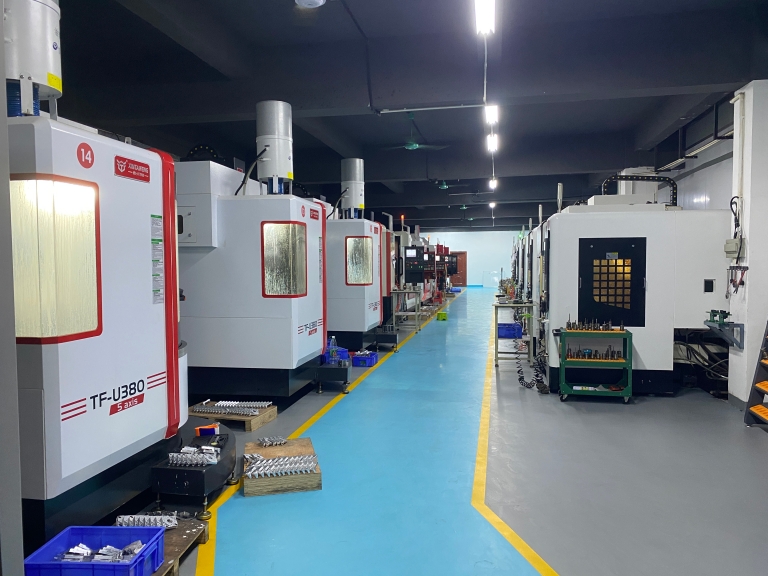
Single Setup Machining: Complex parts can be completed in one setup, drastically improving accuracy and saving time.
Access to Complex Geometry: It allows machining of undercuts and deep cavities impossible with 3-axis.
Improved Surface Finish: The ability to maintain optimal tool orientation leads to better surface quality.
Use of Shorter Tools: This reduces vibration and allows for higher cutting speeds.
Q6: Do you provide material certifications and inspection reports?
A: Yes, absolutely. We source materials from certified suppliers and can provide Mill Certificates. Furthermore, we perform first-article inspections and final quality checks with our in-house metrology equipment (CMM, optical comparators). Detailed inspection reports are available upon request and are standard for medical and aerospace projects.



















