

In the realm of modern manufacturing, where complexity meets precision, the term “5-axis CNC machine” represents a pinnacle of machining technology. For clients seeking precision parts machining and customization, understanding this technology is not just about knowing a piece of equipment; it’s about unlocking new possibilities in design, efficiency, and quality. So, what exactly is a 5-axis CNC machine, and why has it become indispensable for producing high-end components in industries like aerospace, medical, automotive, and robotics?
At its core, a 5-axis CNC machine is a computer-controlled machining center that can move a cutting tool or a part along five different axes simultaneously. Unlike its 3-axis counterpart (which moves along the linear X, Y, and Z axes) or a 4-axis machine (which adds a rotary axis, typically A or B), a 5-axis CNC machine incorporates two additional rotary axes. This allows the cutting tool to approach the workpiece from virtually any direction in a single setup.
Deconstructing the Five Axes: How It Works
The standard linear axes are:
X-axis: Left to right movement.
Y-axis: Front to back movement.
Z-axis: Up and down movement.
The two rotary axes, which define its advanced capability, are typically:
A-axis: Rotation around the X-axis (tilting forward/backward).
B-axis: Rotation around the Y-axis (tilting side to side).
(Sometimes the C-axis, rotation around the Z-axis, is used in combination, depending on the machine’s configuration).
There are two primary mechanical configurations for 5-axis machining:
Table-Table / Dual Rotary Table: Both rotary axes are integrated into the worktable. The workpiece is tilted and rotated while the cutting tool moves linearly. This is excellent for machining smaller to medium-sized parts.
Head-Head / Tilting Rotary Head: The rotary axes are built into the spindle head. The tool itself can tilt and swivel, which is ideal for machining very large or heavy components, as the table remains stationary.
Some advanced machines use a hybrid Table-Head configuration, offering maximum flexibility.
Why 5-Axis Machining is a Game-Changer for Precision Parts
The fundamental advantage of moving from 3-axis or 4-axis to 5-axis CNC machining lies in its transformative impact on the entire manufacturing workflow.
H2: Unparalleled Geometric Freedom and Complex Part Manufacturing
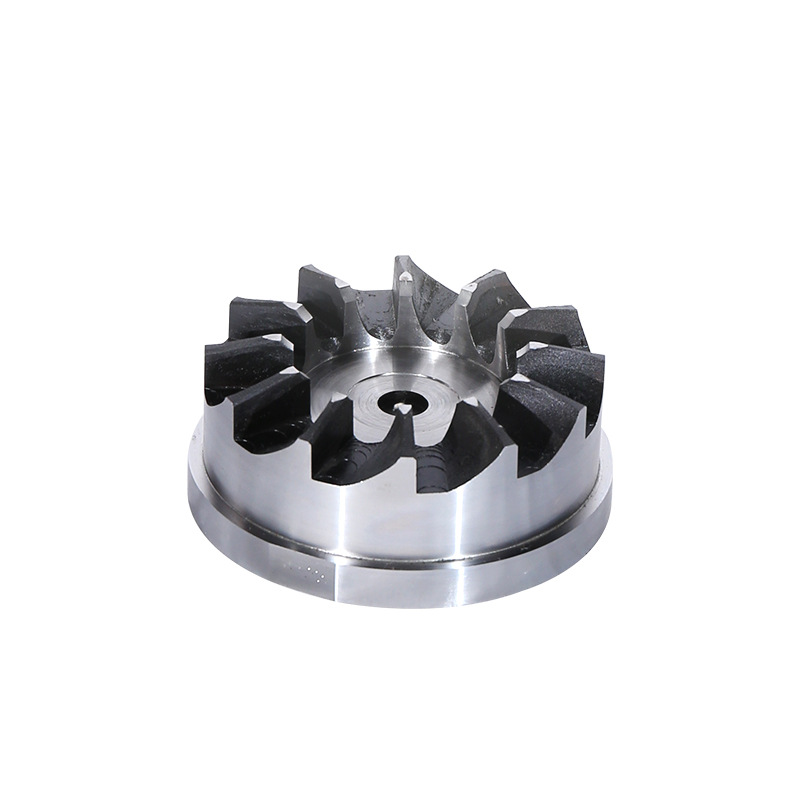
The most significant benefit is the ability to produce incredibly complex geometries that are impossible or prohibitively expensive with fewer axes. Think of turbine blades, impellers, aerospace structural components, medical implants, and intricate molds. The tool can maintain the optimal orientation to the workpiece surface, allowing for the machining of undercuts, deep cavities, and compound angles in one continuous operation.
H3: Dramatic Improvement in Precision and Surface Finish
Because the part can be positioned optimally, the cutting tool can consistently use the tip (or the most effective part) of the cutter rather than the side. This reduces tool deflection, minimizes vibration, and enables higher cutting speeds. The result is superior surface quality, tighter tolerances (often achieving ±0.001mm or better on capable machines), and exceptional accuracy across the entire part geometry.
H3: Single-Setup Machining: A Leap in Efficiency and Accuracy
Traditionally, a complex part might require multiple setups on a 3-axis machine—being manually repositioned and re-fixtured several times. Each setup introduces potential human error and alignment inaccuracies (accumulated tolerances). With 5-axis capability, the entire part can be machined in a single setup. This not only slashes production time but, more importantly, eliminates setup errors, ensuring critical features are machined in perfect relation to one another.
H3: Enhanced Tool Life and Optimized Cutting Conditions
The ability to tilt the tool or workpiece allows for more efficient chip evacuation and better coolant flow to the cutting edge. Furthermore, by maintaining a constant chip load and optimal cutting angle, tool wear is distributed more evenly. This extends tool life, reduces downtime for tool changes, and lowers consumable costs over long production runs.
H2: The Applications: Where 5-Axis CNC Machining Shines
This technology is not a one-size-fits-all solution but is critical for specific high-value sectors:
Aerospace & Defense: Structural frames, engine components, landing gear parts, and UAV components with complex aerodynamic profiles.
Medical & Surgical: Orthopedic implants, surgical instrument components, and dental prosthetics requiring biocompatible materials and intricate shapes.
Automotive & Racing: High-performance engine blocks, cylinder heads, lightweight structural components, and complex prototyping.
Energy: Turbine blades for wind and gas, impellers for pumps, and components for oil & gas exploration.
Advanced Robotics & Humanoid Robots: Lightweight, high-strength structural joints, actuator housings, and sensor mounts that demand precision and complexity.
Choosing the Right Partner for 5-Axis CNC Machining
Owning or operating a 5-axis machine is one thing; mastering it is another. The true value comes from the synergy between advanced hardware and deep manufacturing engineering expertise. This includes:
Advanced CAM Programming: Creating efficient, collision-free tool paths for 5-axis movement requires sophisticated software and experienced programmers.
Process Engineering: Selecting the right tooling, fixtures, cutting parameters, and sequences to ensure stability and precision.
Metrology and Quality Assurance: Verifying the complex geometries of 5-axis machined parts demands equally advanced measurement equipment, such as coordinate measuring machines (CMMs) and laser scanners.
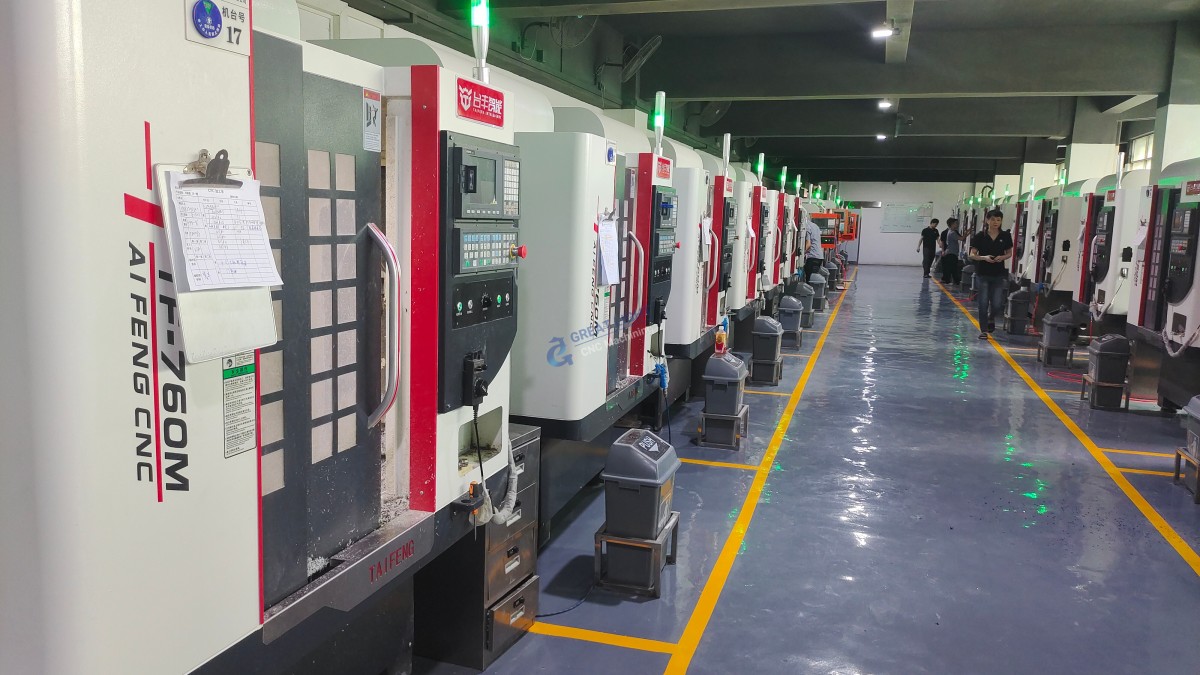
This is where partnering with an expert manufacturer like GreatLight CNC Machining Factory becomes crucial. As a professional five-axis CNC machining manufacturer, GreatLight doesn’t just provide machine time; it provides a comprehensive manufacturing solution. With a facility housing advanced five-axis CNC machining centers and supported by a full ecosystem of complementary technologies (4-axis/3-axis machining, turning, grinding, EDM, and industrial 3D printing), they are equipped to tackle the most challenging metal parts manufacturing problems. Their one-stop post-processing and finishing services ensure parts are delivered ready for assembly or use.
Furthermore, their commitment to systematic quality is underscored by ISO 9001:2015 certification and adherence to other rigorous standards like IATF 16949 for automotive and a framework for medical hardware. This structured approach to quality management, combined with in-house precision measurement, ensures that the theoretical precision of 5-axis machining is consistently delivered in every batch.
Conclusion
So, what is a 5-axis CNC machine? It is far more than a piece of factory equipment. It is a transformative enabling technology that pushes the boundaries of design, elevates precision to new heights, and streamlines the path from digital model to physical reality. For any project involving complex geometries, stringent tolerances, or advanced materials, leveraging 5-axis CNC machining is no longer a luxury but a necessity for competitiveness and innovation. By collaborating with a seasoned and certified partner like GreatLight CNC Machining Factory, clients gain access to not only this advanced technology but also the engineering acumen and quality systems required to fully harness its potential, ensuring their most ambitious precision parts are manufactured successfully.
Frequently Asked Questions (FAQ)
Q1: Is 5-axis CNC machining always better than 3-axis?
A: Not always. For simple prismatic parts (e.g., brackets, plates, basic housings), 3-axis machining is faster and more cost-effective. 5-axis CNC machining shines when parts have complex contours, undercuts, or features requiring machining from multiple angles. The choice depends on part geometry, tolerance requirements, and volume.
Q2: Does 5-axis machining eliminate the need for multiple fixtures?
A: It significantly reduces the need. The core advantage is single-setup machining, where the part is completed in one fixturing. This is ideal for complex parts. However, some very large or high-volume production runs might still use dedicated fixtures for specific operations to optimize cycle time.
Q3: Are 5-axis machined parts much more expensive?
A: The per-hour machine rate is typically higher due to the advanced technology. However, the total project cost can be lower. By reducing setups, fixtures, manual handling, and secondary operations, and by improving yield through higher accuracy, 5-axis CNC machining often provides a better total value for complex components.
Q4: What materials can be processed with 5-axis CNC machines?
A: Virtually all machinable materials. This includes metals (aluminum, stainless steel, titanium, Inconel), plastics (PEEK, Delrin, Ultem), and composites. A partner like GreatLight CNC Machining Factory can process most engineering materials quickly for customized precision machining.
Q5: How do I ensure my design is suitable for 5-axis machining?
A: Engage with your manufacturing partner early (Design for Manufacturability – DFM). Experts can review your CAD model to suggest optimizations for tool accessibility, suggest tolerances, and recommend features that leverage 5-axis strengths while avoiding unnecessary complexity. A partner with deep application experience is invaluable here.


















