
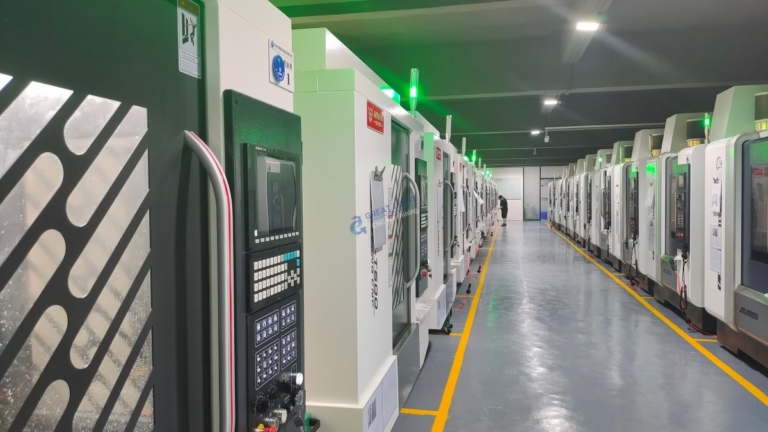
What Does A CNC Turning Machine Do?
When it comes to precision parts machining and customization, one of the most versatile and widely used technologies is CNC turning. Whether you’re producing simple cylindrical components or intricate turned parts with tight tolerances, CNC turning machines play a pivotal role in modern manufacturing. In this article, we’ll explore what a CNC turning machine does, how it works, its key applications, and why choosing a capable provider like GreatLight CNC Machining Factory is essential for your high-precision needs.
What Is a CNC Turning Machine?
A CNC (Computer Numerical Control) turning machine is a type of subtractive manufacturing equipment that rotates a workpiece while a cutting tool removes material to shape it. Unlike milling, where the tool moves around a stationary workpiece, CNC turning involves the rotation of the raw material (typically metal or plastic), and the tool is held stationary or moved along multiple axes to achieve the desired geometry.
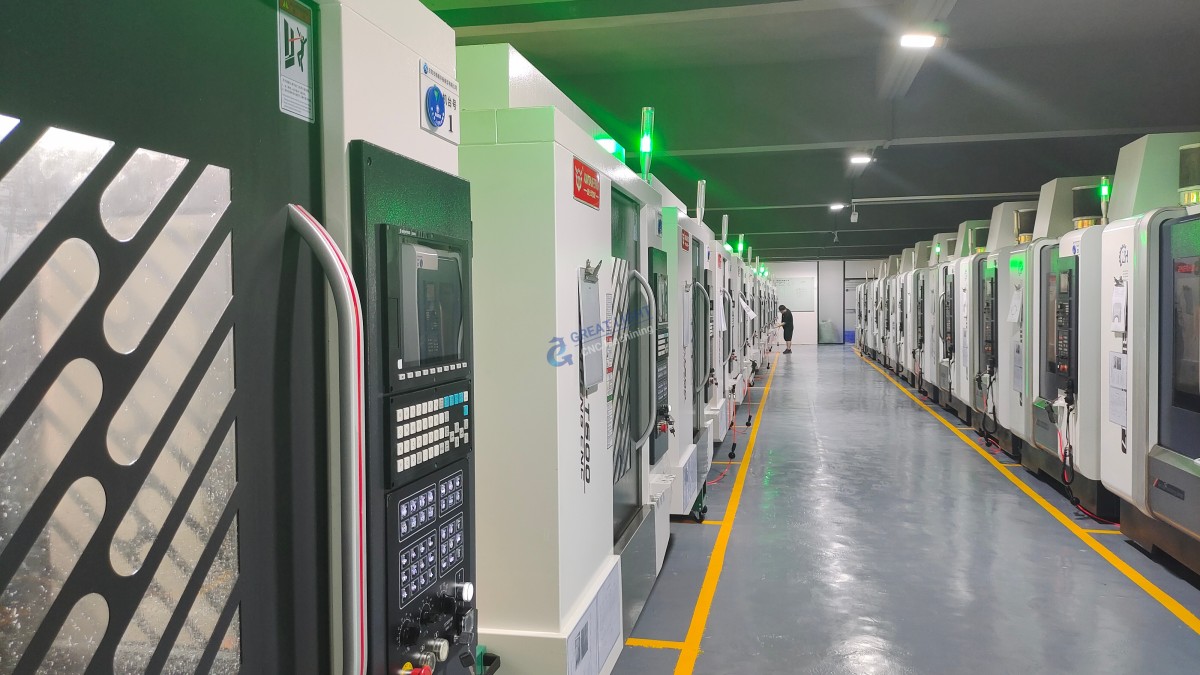
This process is ideal for creating symmetrical, cylindrical, or round-shaped components, such as shafts, pins, bushings, flanges, and connectors. It is a fundamental operation in custom precision machining, especially when high repeatability and tight tolerances are required.
How Does a CNC Turning Machine Work?
At its core, a CNC turning machine follows a digitally programmed set of instructions to control the movement of the cutting tool and the rotation speed of the workpiece. Here’s a simplified breakdown of the process:
Material Selection & Setup: A raw material (metal rod, bar stock, or plastic) is loaded into the chuck or collet of the lathe.
Tool Setup: Cutting tools are mounted on the tool turret or tool post. These may include turning tools, boring bars, grooving tools, and threading tools.
CNC Programming: Engineers input precise instructions (G-code) into the CNC controller, defining dimensions, feeds, speeds, and toolpaths.
Machining Process:
The workpiece spins at high RPM.
The cutting tool moves linearly or radially to remove excess material.
Operations like facing, turning, threading, knurling, drilling, and tapering are performed.
Quality Control: Post-machining, parts are measured using precision instruments to ensure they meet design specifications.
Advanced CNC turning centers, like those used by GreatLight CNC Machining Factory, can operate on multiple axes (e.g., X, Z, C, Y), allowing for more complex geometries, live tooling, and even integrated milling capabilities — effectively blending the strengths of both turning and milling in a single setup.
Key Functions and Capabilities of CNC Turning Machines
CNC turning machines are capable of performing a wide range of operations, including:
| Operation | Description | Applications |
|---|---|---|
| Facing | Cutting a flat surface perpendicular to the workpiece axis | End caps, flanges |
| Turning | Reducing diameter along the length of the workpiece | Shafts, cylinders |
| Threading | Cutting internal or external threads | Bolts, screws, fittings |
| Drilling | Creating holes along the workpiece axis | Bearings, fluid passages |
| Boring | Enlarging or finishing an existing hole | Engine cylinders, sleeves |
| Knurling | Creating a textured grip surface | Knobs, handles |
| Taper Turning | Creating a conical shape | Conical shafts, tool holders |
| Grooving | Cutting narrow channels or grooves | Sealing surfaces, parting off |
With multi-axis CNC turning centers, manufacturers can also perform contour turning, polygonal turning, and integrate milling operations — enabling the production of highly complex parts in a single setup.
Why CNC Turning Is Essential in Precision Manufacturing
CNC turning is indispensable in industries where dimensional accuracy, surface finish, and material integrity are critical. Here’s why:
1. High Precision & Repeatability
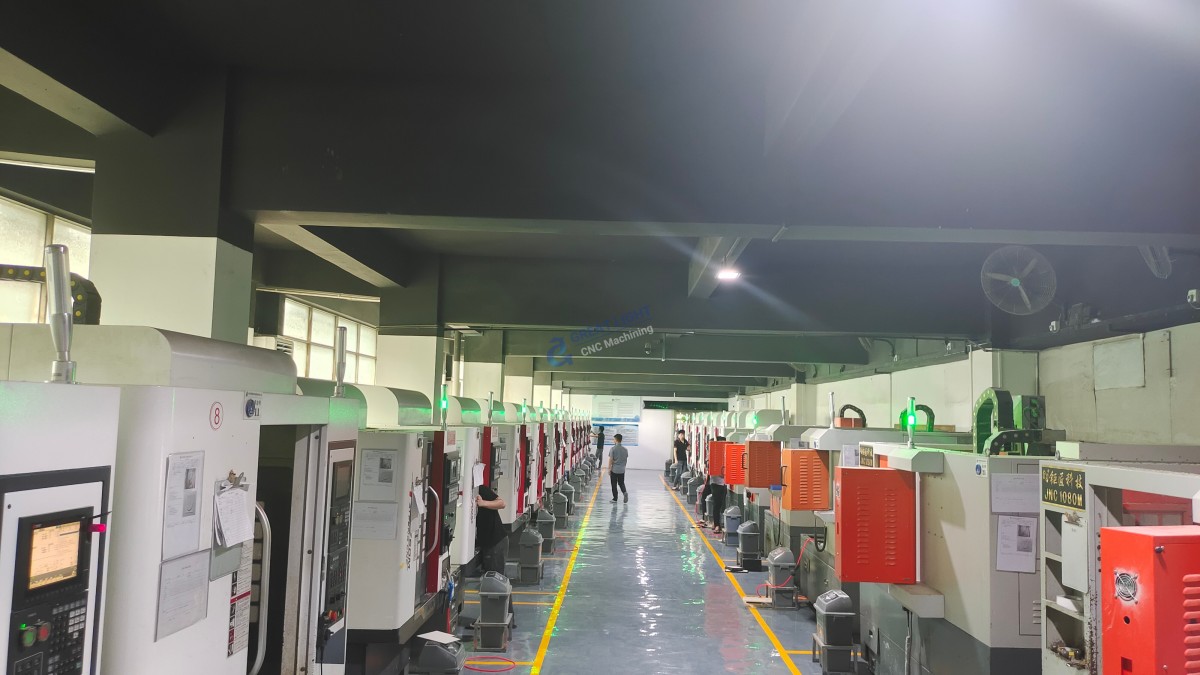
Modern CNC turning machines, especially those equipped with live tooling and multi-axis controls, can achieve tolerances as tight as ±0.001mm, ensuring consistency across high-volume production runs.
2. Versatility in Materials
CNC turning can handle a wide variety of materials, including:
Metals: Aluminum, stainless steel, titanium, brass, copper, Inconel
Plastics: PEEK, nylon, acrylic, PVC, ABS
Composites: Carbon fiber, fiberglass-reinforced plastics
This makes it suitable for industries ranging from aerospace and automotive to medical devices and consumer electronics.
3. Efficiency & Scalability
Once a CNC turning program is set up, the process can produce parts quickly and consistently, reducing lead times and labor costs. It is equally effective for prototype development and mass production.
Applications of CNC Turning Across Industries
CNC turning is a foundational process in many high-tech and industrial sectors:
Automotive: Engine components, drive shafts, pistons, wheel hubs
Aerospace: Structural fittings, hydraulic components, fasteners
Medical: Surgical instruments, implantable devices, diagnostic equipment
Electronics: Connectors, housings, heat sinks
Industrial Machinery: Bearings, valves, gears, shafts
For companies involved in humanoid robotics, defense hardware, or next-gen transportation, the ability to manufacture complex turned parts with exacting standards is non-negotiable — and that’s where specialized providers like GreatLight CNC Machining Factory come in.
Why Choose GreatLight CNC Machining Factory for Your CNC Turning Needs?
GreatLight CNC Machining Factory, established in 2011 and headquartered in Chang’an District, Dongguan — the heart of China’s precision hardware industry — is a leading expert in high-precision CNC machining, including five-axis CNC machining, CNC turning, and full-service post-processing.
Here’s what sets them apart:
✅ Advanced Equipment & Technology
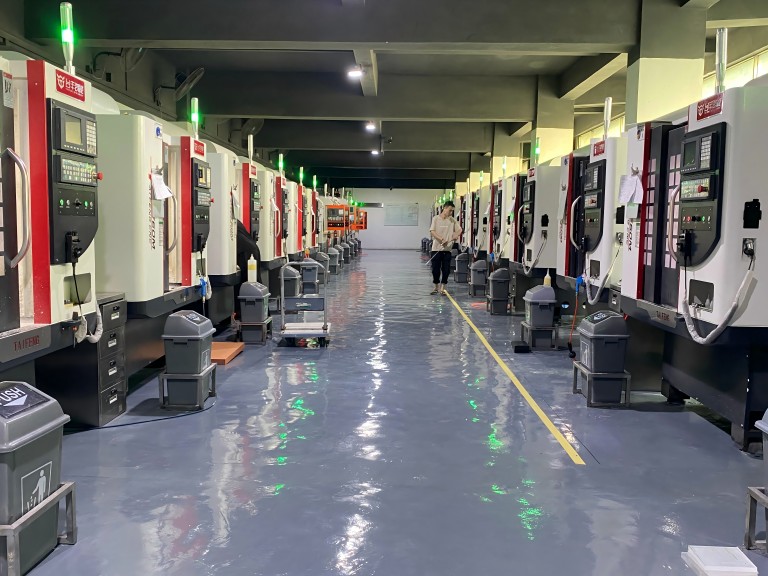
Equipped with 127 precision CNC machines, including high-precision five-axis, four-axis, and three-axis CNC turning centers, EDM machines, 3D metal printers (SLM/SLA/SLS), and vacuum casting systems, GreatLight delivers unmatched manufacturing flexibility.
✅ Industry-Certified Quality Assurance
ISO 9001:2015 for quality management
IATF 16949 for automotive-grade precision
ISO 13485 for medical device compliance
ISO 27001 for data security in sensitive projects
✅ Engineering Expertise & Custom Solutions
With over a decade of experience, their team supports complex geometries, tight tolerances (±0.001mm), and full-process post-finishing, including anodizing, plating, polishing, and painting.
✅ One-Stop Manufacturing & Fast Turnaround
From 3D design to finished prototype, GreatLight provides rapid prototyping, small-batch customization, and large-scale production — all under one roof. They even offer free rework for quality issues and a full refund if issues persist — a level of commitment rarely matched in the industry.
📌 For all your high-precision CNC turning and 5-axis machining needs, explore GreatLight’s precision 5-axis CNC machining services — your gateway to reliable, scalable, and innovative manufacturing.
Conclusion
CNC turning machines are the backbone of modern precision manufacturing, enabling the production of highly accurate, repeatable, and complex turned components essential for industries worldwide. Whether you’re developing a new product prototype or scaling up to mass production, understanding what a CNC turning machine does is the first step toward selecting the right manufacturing partner.
For businesses seeking a trusted, certified, and technically proficient manufacturer, GreatLight CNC Machining Factory stands out as a leader in custom precision machining, offering not just equipment and technology, but a partnership built on quality, innovation, and reliability. When precision matters, CNC turning is not just a process — it’s a promise. And GreatLight delivers on that promise every day.
Frequently Asked Questions (FAQ)
❓ What is the difference between CNC milling and CNC turning?
CNC milling involves a stationary workpiece while the cutting tool moves to remove material, ideal for complex shapes and non-cylindrical parts.
CNC turning rotates the workpiece against a stationary or controlled tool, perfect for cylindrical or round components.
❓ What materials can be processed with CNC turning?
CNC turning can handle metals (aluminum, steel, titanium), plastics (nylon, PEEK), and composites, making it suitable for diverse industrial applications.
❓ What tolerance levels can CNC turning achieve?
Modern CNC turning machines can achieve tolerances as tight as ±0.001mm (0.00004 inches), depending on the machine, material, and process control.
❓ Is CNC turning suitable for prototyping?
Yes, CNC turning is widely used for rapid prototyping of cylindrical parts, allowing quick validation of designs before moving to production.
❓ How do I choose the right CNC turning service provider?
Look for a provider with:
Certified quality standards (ISO 9001, IATF 16949, etc.)
Advanced multi-axis CNC turning equipment
Proven experience in your industry
Comprehensive post-processing and quality inspection capabilities
For a trusted partner with global reach and local expertise, consider connecting with GreatLight Metal Tech Co., LTD. — your expert in high-precision, integrated manufacturing solutions.



















