
Navigating the Cutting Edge: A Comprehensive Guide to CNC Tool Selection
For anyone engaged in the world of precision parts machining and customization, one of the most fundamental yet critical questions that arises daily is: What bit to use on the CNC machine? The answer is never a simple one-size-fits-all. The selection of the correct cutting tool—whether an end mill, drill, or specialized cutter—is a pivotal decision that directly dictates the success of your project. It influences surface finish, dimensional accuracy, tool life, machining time, and ultimately, the cost and performance of the final component. As a manufacturing engineer with over a decade of experience on the front lines of precision CNC machining, I’ll demystify this process, moving beyond catalog specifications to the practical engineering principles that guide tool selection for optimal results.
The Foundation: Understanding the “Bit” in CNC Context
First, let’s standardize terminology. In professional CNC machining, we typically refer to “cutting tools” or “tooling.” While “bit” is a common colloquialism, especially for rotary tools, it encompasses a vast array of geometries. The primary families include:
End Mills: For milling contours, slots, shoulders, and complex 3D surfaces.
Face Mills: For creating large, flat surfaces.
Drills: For creating holes.
Boring Tools: For enlarging and finishing pre-drilled holes to high precision.
Thread Mills: For producing internal or external threads.
Engraving Tools: For fine detailing and text.
Selecting the right member from these families requires a systematic analysis of three core pillars: the Workpiece Material, the Tool Material & Geometry, and the Machining Operation & Parameters.
Pillar 1: The Workpiece Material – Defining the Battlefield
The material you are cutting is the single greatest factor in tool selection. Its hardness, toughness, abrasiveness, and thermal conductivity determine the attack strategy.
Aluminum & Non-Ferrous Alloys: These are generally machinable materials. High-Speed Steel (HSS) tools can be used, but for productivity and finish, solid carbide end mills are king. They allow for high spindle speeds, aggressive feed rates, and deep cuts. Tools with a high helix angle (40°-45°) and polished flutes are excellent for efficient chip evacuation, preventing material from “gumming up.” For instance, at GreatLight CNC Machining Factory, when processing complex aerospace aluminum housings on 5-axis machines, we consistently use multi-flute, variable-pitch carbide end mills to achieve mirror-like finishes while maintaining high metal removal rates.
Steels (Mild to Tool Steels): As hardness increases, so does the demand on the tool. Carbide tools are the standard here. For tougher or harder steels (like 4140, H13, or D2), we lean towards micro-grain or sub-micro-grain carbide for enhanced toughness. Coatings like TiAlN (Aluminum Titanium Nitride) are crucial as they provide extreme hardness and heat resistance, allowing the tool to withstand the higher cutting temperatures generated by steel.
Stainless Steels (e.g., 303, 304, 316, 17-4 PH): These are notorious for work-hardening and generating stringy chips. The goal is to maintain constant, sharp cutting to avoid rubbing. Tough-grade carbide with a sharp cutting edge and geometries designed for high shear are essential. TiCN (Titanium Carbo-Nitride) coatings can offer good performance. Chip breakers on the tool geometry are a major advantage.
Titanium & High-Temperature Alloys (Inconel, etc.): This is the domain of high-performance tooling. These materials have low thermal conductivity, meaning heat concentrates at the cutting edge. Premium fine-grain carbide, often with specialized PVD coatings or even uncoated for maximum sharpness, is required. Tools must be very sharp, with reduced radial engagement to manage cutting forces and heat. The expertise of a manufacturer like GreatLight Metal is tested here, where selecting the exact tool geometry and crafting a conservative, high-speed machining strategy is the difference between success and catastrophic tool failure.
Plastics & Composites: The challenge is melting and re-cast edges, not tool wear. Sharp, polished carbide tools with 2 or 3 flutes are ideal. A high rake angle and polished flutes ensure clean shearing and prevent material from adhering. For composites like CFRP, polycrystalline diamond (PCD) tipped tools are used to handle the extreme abrasiveness of carbon fibers.
Pillar 2: The Tool Itself – Material and Geometry
Once the workpiece material is known, you dial in the tool’s specifications.
A. Tool Material:
High-Speed Steel (HSS): Economical, tough, and can be re-sharpened. Best for low-volume jobs, softer materials, or on older machinery with lower RPM capabilities.
Solid Carbide: The workhorse of modern CNC machining. Offers superior hardness, wear resistance, and stiffness (critical for precision and avoiding deflection). Enables higher speeds and feeds than HSS.
Carbide with Coatings: This is where performance leaps forward. Common coatings include:
TiN (Titanium Nitride): General purpose, good for non-ferrous and some steels.
TiAlN (Aluminum Titanium Nitride): Excellent for high-heat applications (steels, cast iron). Forms a protective alumina layer at high temperatures.
TiCN (Titanium Carbo-Nitride): Harder and more wear-resistant than TiN, good for abrasive materials and stainless steels.
Diamond Coatings: Unmatched for machining non-ferrous and abrasive non-metallic materials like graphite, CFRP, and green ceramics.
B. Tool Geometry:
Flute Count (2, 3, 4, 5+): More flutes provide a finer finish and allow higher feed rates but reduce chip evacuation space. 2-3 flutes are standard for aluminum (good chip space). 4+ flutes are common for finishing steels and harder materials.
Helix Angle: A higher helix angle (e.g., 45°) pulls chips out more aggressively and creates a shearing cut, better for aluminum and finishing. A lower angle (e.g., 30°) provides a stronger cutting edge, better for roughing harder materials.
End Geometry: Square end for general milling. Ball nose for 3D contouring and molds. Corner radius (bull nose) for finishing with added edge strength, avoiding the weak sharp corner of a square end mill.
Coating: As detailed above, it’s a force multiplier for tool life and performance.
Pillar 3: The Operation & Machining Strategy
Finally, the tool choice is locked in by what you are doing and how you plan to do it.
Roughing vs. Finishing: Roughing tools prioritize metal removal and durability. They are often corn cob style or have serrated edges to break chips, and may have a corner radius for strength. Finishing tools prioritize accuracy and surface finish—sharp, often with more flutes and a specific corner radius or ball nose.
Feature Type: A deep slot requires a tool with a long reach and possibly a reduced neck (for clearance). A small, detailed feature requires a correspondingly small-diameter tool. Machining a thin wall demands a tool that minimizes cutting forces to avoid deflection.
Machine Capability: A high-speed, rigid 5-axis machining center can exploit the full potential of a premium carbide tool with aggressive parameters. The same tool on a less rigid 3-axis machine may require scaled-back speeds and feeds.
Practical Selection Table (Simplified Guide):
| Workpiece Material | Primary Operation | Recommended Tool Type | Key Geometry/Coating Notes |
|---|---|---|---|
| Aluminum 6061 | High-Speed Roughing | 3-Flute Solid Carbide | High helix (45°), polished flutes, ZrN coating optional |
| Aluminum 6061 | Finishing | 4-5 Flute Solid Carbide | High helix, sharp edge, possibly uncoated for supreme finish |
| Steel 1045 | General Milling | 4-Flute Carbide End Mill | TiAlN coating, medium helix, corner radius for strength |
| Stainless 316 | Slotting & Profiling | 3-Flute Tough Carbide | Sharp edge, TiCN coating, variable pitch to reduce harmonics |
| Titanium Ti6Al4V | Precise Machining | Uncoated Fine-Grain Carbide | Reduced radial engagement geometry, sharp edge, 4-5 flutes |
| Engineering Plastic | Contouring | 2-Flute Polished Carbide | High rake angle, very sharp, single O-flute for acrylics |
Conclusion: Beyond the Catalog – The Engineering Partnership
Choosing the right bit for your CNC machine is a nuanced engineering decision that synthesizes material science, mechanics, and practical experience. While charts and guidelines provide a starting point, the optimal solution for a critical component—especially in fields like automotive prototyping, aerospace, or medical device manufacturing—often comes from iterative testing and deep process knowledge.
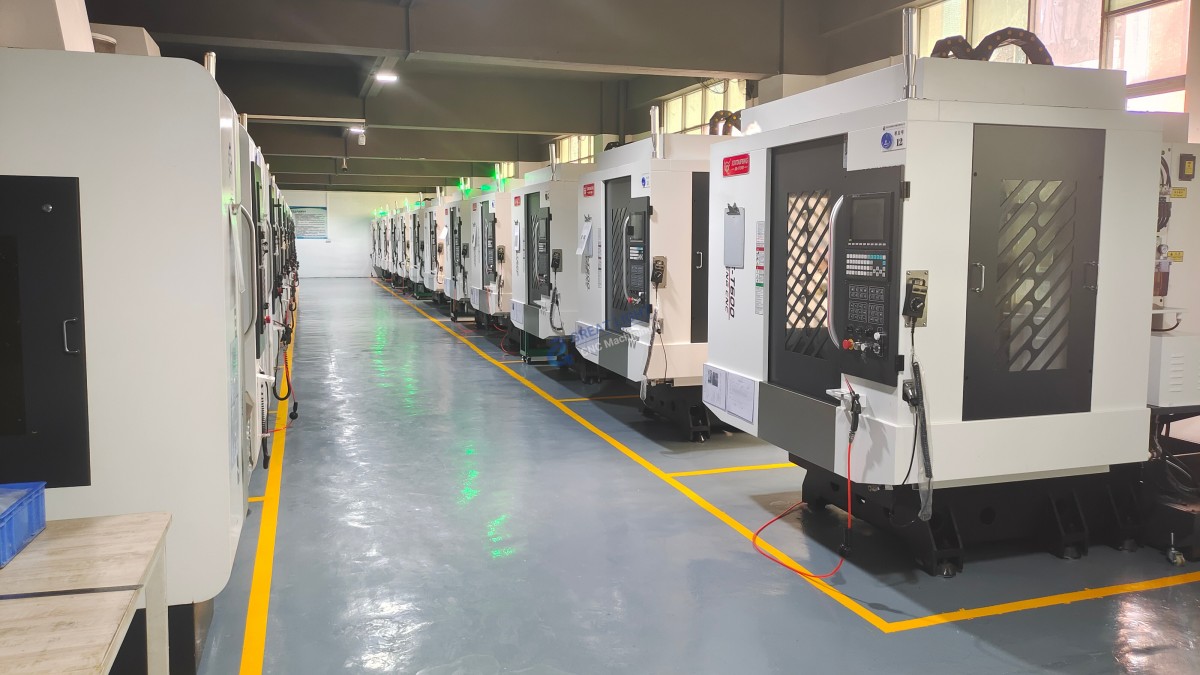
This is where the value of a specialized partner becomes undeniable. A manufacturer like GreatLight CNC Machining Factory doesn’t just apply tools from a shelf. With a comprehensive in-house arsenal including 5-axis CNC centers, advanced EDM, and additive manufacturing, and backed by a rigorous ISO 9001:2015 quality system, the selection process is integrated into the total manufacturing solution. The engineering team considers tool selection as one variable in a holistic equation that includes fixturing, tool path strategy (often using 5-axis simultaneous machining to maintain optimal tool engagement), and post-processing needs.
Ultimately, the question of “what bit to use” evolves into a more powerful question: “What is the most efficient and reliable process to produce this precision part?” Partnering with an expert who can navigate that broader question—leveraging advanced tooling within a controlled, full-process manufacturing environment—is the surest path to transforming your designs into flawless, high-performance reality.
Frequently Asked Questions (FAQ)
Q1: Is a more expensive tool always better?
A: Not always. A premium, coated carbide tool is wasted money if you’re machining soft pine wood. The “best” tool is the one optimally suited to your specific material, operation, and machine capabilities. An expensive tool used incorrectly will fail just as fast as a cheap one. The goal is cost-per-part, not just tool cost.
Q2: How do I know when to change a tool?
A: Monitor for signs: deteriorating surface finish (chatter, rough texture), increased cutting noise/vibration, discoloration or smoking of the workpiece, dimensional drift outside tolerance, or visibly worn/flaked edges. For critical production, established tool life metrics (in minutes of cut or parts produced) based on historical data are used.
Q3: Can I use the same end mill for roughing and finishing?
A: It’s possible for simple parts, but not ideal. Roughing compromises the tool’s edge. Using a worn tool for finishing will yield a poor surface finish and potential loss of accuracy. For quality results, dedicated roughing and finishing tools are recommended.
Q4: What’s the advantage of a 5-axis CNC machine for tool selection?
A: 5-axis machining allows the tool to maintain an optimal orientation to the part surface. This often allows the use of shorter, more rigid tools (instead of long-reach tools that deflect) and higher cutting speeds by maintaining constant chip load. It provides more flexibility in tool path strategy, which can significantly extend tool life and improve finish on complex geometries.
Q5: Why would I choose GreatLight for my precision machining project?
A: GreatLight CNC Machining Factory brings the entire decision-making framework discussed above in-house. From material expertise and a vast library of cutting tools to advanced 5-axis programming and integrated quality verification, we manage the complexity for you. Our ISO 9001:2015 certified system ensures the process—from tool selection to final inspection—is documented, controlled, and repeatable, delivering not just a part, but a guaranteed precision outcome. For projects demanding high complexity, tight tolerances, or seamless progression from prototype to production, this integrated engineering approach is indispensable.



















