
Beyond Steel: How Aluminum is Revolutionizing Automotive Engineering from Chassis to EV Batteries
The automotive industry’s relentless pursuit of efficiency, safety, and sustainability has propelled aluminum from a supporting role to a starring position in modern vehicle design. As electric vehicles (EVs) dominate strategic roadmaps and emissions regulations tighten globally, aluminum’s unique properties are transforming how cars are engineered, manufactured, and recycled.
The Aluminum Advantage: More Than Just Lightweighting
While replacing steel with aluminum can reduce component weight by up to 50%, its value extends far beyond mass reduction:
Strength-to-Weight Superpower: Advanced alloys like 6000-series (Al-Mg-Si) and 7000-series (Al-Zn-Mg) combine aircraft-grade tensile strength (exceeding 350 MPa) with ~2.7 g/cm³ density. This enables thinner structural sections without compromising crash integrity.
Intelligent Crash Management: Aluminum’s controlled deformation absorbs twice the impact energy of equivalent-strength steel. Front crumple zones crafted from tailored alloys dissipate force predictably, enhancing occupant safety while minimizing repair costs.
Dynamic Thermal Management: With thermal conductivity 3x higher than steel, aluminum efficiently channels heat away from batteries and electronics. Novel thermal interface alloys are critical for extending EV range and fast-charge safety.
- Sustainable Lifecycle: Automotive aluminum is 95% recyclable with only 5% energy input versus primary production. Closed-loop recycling systems enable manufacturers to reduce cradle-to-gate emissions by over 70%.
Cutting-Edge Manufacturing Transforming Components
1. Mega/Giga Casting (Revolutionizing Chassis):
Tesla’s pioneering single-piece underbody castings eliminate hundreds of welds, reducing weight by 10% while accelerating assembly. Foundries now deploy vacuum-assisted high-pressure die casting (HPDC) with aluminum alloys like A356 (Al-Si7Mg) filled at 100+ bar, achieving near-net-shape structural parts with wall thicknesses under 3mm.
2. AI-Optimized CNC Machining:
5-axis CNC centers process aluminum billets at 20,000+ RPM using variable helix end mills. Machine learning algorithms predict tool wear in real-time, enabling micron-level precision in complex parts like suspension knuckles and gearbox casings.
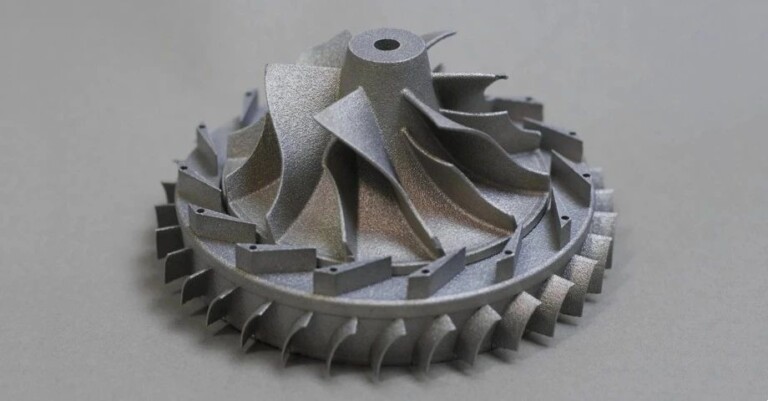
3. Metal AM for Performance Critical Parts:
Laser Powder Bed Fusion (LPBF) 3D printing enables topology-optimized designs impossible with casting:
- Parametric lattice structures inside control arms for 40% weight reduction
- Conformal cooling channels in e-motor housings
- Copper-reinforced aluminum alloys (Al-Cu systems) boosting heat exchanger efficiency
Strategic Applications: Where Aluminum Dominates
| Application | Key Alloys | Performance Impact |
|---|---|---|
| Battery Enclosures | 6000-series (formability) | 30% mass reduction vs. steel, EMI shielding |
| E-Drive Components | A380 (HPDC), 6061 (CNC) | Improved thermal dissipation for power density |
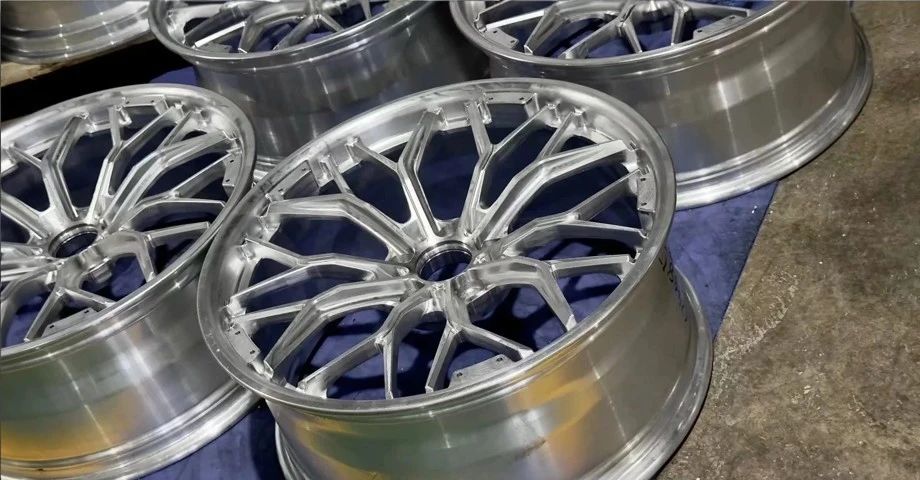
| Wheels | A356.2 (casting), 6061 | Unsprung mass reduction = 1.5% range increase in EVs |
| Body-in-White | 6111, 6016 (skin) | Laser-welded tailored blanks with 10% higher dent resistance |
The Frontline of Innovation: EV-Specific Breakthroughs
Battery Integration:
Multi-material battery trays combine extruded 6003 aluminum cross-members, Al-Si-coated steel baseplates, and friction-stir-welded cooling plates. This cuts weight by 25kg per vehicle while achieving IP67 safety.CTB (Cell-to-Body) Technology:
BYD’s structural battery integrates prismatic cells into aluminum honeycomb girders, turning the floor into a load-bearing element. This increases torsional rigidity by 45% while reducing component count.- Self-Healing Surface Treatments:
Anodizing electrolytes with cerium-doped nanoparticles create microcapsules that "heal" superficial scratches, preserving corrosion resistance in harsh environments.
The Sustainable Horizon: AL-ERT (Aluminum Emission Reduction Technology)
Future development centers on decarbonizing production:
- Inert Anode Smelting: Eliminates direct CO2 emissions by replacing carbon anodes. Elysis™ technology reduces 12kg CO2/kg Al
- Hydrogen-Powered Casting: Trials show 725XXX-series alloys cast in H2-atmosphere furnaces achieve 97% porosity reduction
- Blockchain Traceability: From bauxite to scrap recovery, automakers like BMW implement DLT to verify zero-conflict/low-carbon aluminum
The Road Ahead
By 2030, aluminum content per vehicle will reach 256kg (up 65% vs. 2020), driven by these innovation vectors:
- Multi-Material Simulation: Software like AutoForm Alu joins predict distortion in heat-treated laser-welded assemblies
- Solid-State Joining: Magnetic-pulse welding creates crack-free Al-steel bonds for crash-critical areas
- Generative AI-Driven Design: Accelerated microstructure prediction enables "dial-an-alloy" resolution
As combustion engines sunset, aluminum’s synergy with electrification cements its role as the backbone of automotive evolution. The lightweight revolution has transitioned from a design option to a strategic imperative – one where aluminum alloys provide the key to meeting the triple benchmarks of performance, safety, and sustainability.



















