
Unlock the Power of Integrated Metrology: Maximizing Productivity and Quality in Manufacturing
In today’s fast-paced and competitive manufacturing landscape, companies are constantly seeking ways to stay ahead of the curve. One area where innovation can make a significant impact is in the realm of measurement and inspection – the backbone of any quality-driven production process. With the rise of automation and digitalization, the concept of integrated metrology has emerged as a key enabler of streamlined production and increased efficiency.
The Rise of Automation: Why Integrated Metrology Matters
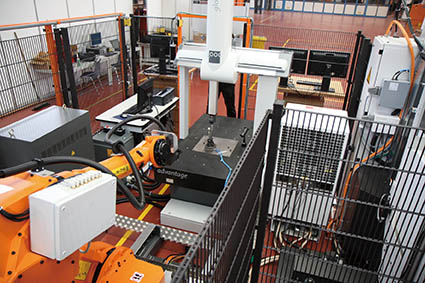
Automation has long been a key driver of productivity and efficiency in manufacturing. By automating repetitive tasks, companies can free up resources and focus on higher-value activities. However, the measurement and inspection process has traditionally been a manual and labor-intensive step, prone to errors and inconsistencies. The integration of metrology equipment with production lines has revolutionized this process, enabling companies to achieve greater precision, faster throughput, and reduced waste.
Overcoming Challenges: Limitations and Solutions
While the benefits of integrated metrology are evident, there are challenges to overcome. Technical limitations, such as vibration and temperature fluctuations, can impact the accuracy of measurements. Additionally, production cycles may be too long, making it necessary to adopt semi-automated solutions. Fortunately, solutions are available to address these challenges. For instance, Hexcon’s engineers can work with companies to develop customized software solutions that synchronize measurement systems with production environments, ensuring seamless communication and data exchange.
Semi-Automatic Systems: A Balance Between Automation and Human Intervention
In some cases, semi-automated systems can be more effective than full automation. By combining automated processes with human intervention, companies can achieve the perfect balance between efficiency and control. For example, a manufacturer may choose to automate the measurement of parts, but retain human oversight to ensure quality control and troubleshooting.
Choosing the Right Path: Weighing the Options
The decision to adopt integrated metrology is complex and influenced by various factors. Precision requirements, part complexity, cleaning capacity, and technology preferences are all critical considerations. Companies must weigh the benefits and risks associated with each option, ensuring a tailored solution that meets their unique needs.
Conclusion
In conclusion, integrated metrology has the power to transform manufacturing processes, enabling companies to achieve unprecedented levels of productivity, quality, and efficiency. By leveraging automation, precision, and human expertise, companies can stay ahead of the competition, drive innovation, and deliver superior products. Whether you’re considering a fully automated system or a semi-automated solution, Hexcon’s experts are available to guide you every step of the way, ensuring that your investment reaps long-term rewards.



















