
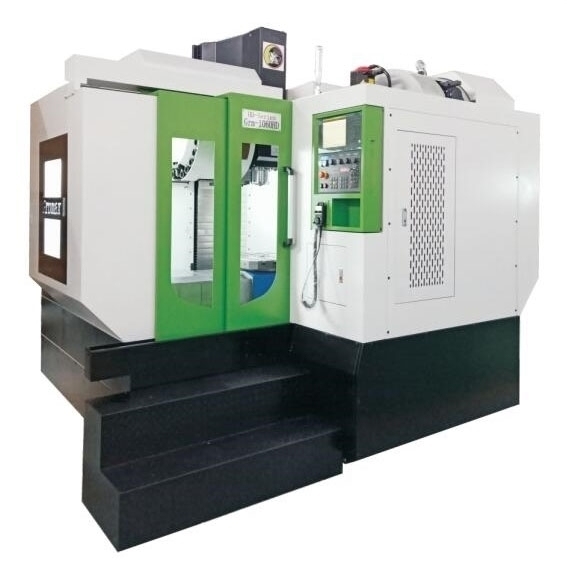
The Revolution in Manufacturing: Unlocking the Full Potential of Multi-Axis Machining Centers
In today’s fast-paced manufacturing landscape, multi-axis machining centers have become a game-changer for industries worldwide. These versatile machines have the ability to precision-machined complex parts with unparalleled flexibility, accuracy, and efficiency. In this blog post, we’ll delve deeper into the world of multi-axis machining centers, exploring their benefits, advantages, and the impact they’re having on modern manufacturing.
The Power of Multi-Axis Control
One of the key features of multi-axis machining centers is their ability to control multiple axes of movement simultaneously. This allows for unprecedented flexibility when machining parts with complex geometries, multiple curved surfaces, and intricate internal structures. By coordinating the movement of multiple axes, these machines can create parts with unparalleled precision and accuracy.
For instance, in the aerospace industry, multi-axis machining centers are used to produce components that require extreme precision, such as engine components, turbine blades, and satellite parts. The ability to machine these complex parts with precision and speed has revolutionized the industry, enabling the production of lighter, stronger, and more efficient products.
High-Precision Machining
Another significant advantage of multi-axis machining centers is their high-precision capabilities. These machines are equipped with advanced CNC technology and high-precision transmission devices, allowing them to achieve micrometer-level accuracy. This level of precision is critical in industries such as precision instruments, medical devices, and aerospace, where dimensional accuracy is vital.
In addition, the precision of these machines can be further enhanced through the use of advanced software and manufacturing techniques, such as 5-axis machining, 3D printing, and surface grinding. These advanced techniques enable manufacturers to produce parts with even greater accuracy and precision, leading to improved product performance and reduced maintenance costs.
Adaptability and Versatility
Multi-axis machining centers are also incredibly adaptable, allowing for quick tool changes and adjustments to be made according to changing production demands. Whether it’s milling, drilling, or grinding, these machines can perform a wide range of operations, reducing the need for additional equipment and minimizing production downtime.
This adaptability is particularly beneficial in industries with varying production volumes and product mixes, where equipment flexibility is critical. By converting a single machine to perform multiple tasks, manufacturers can optimize production, reduce costs, and increase flexibility, ultimately gaining a competitive edge in the market.
Automation and Real-Time Monitoring
The automation capabilities of multi-axis machining centers are another significant advantage, enabling manufacturers to streamline their production processes and reduce labor costs. Through advanced CNC programming, these machines can automatically perform complex machining operations, minimizing the need for manual intervention and reducing the risk of human error.
Furthermore, these machines are equipped with advanced monitoring systems, allowing real-time monitoring of production processes and part quality. This improved visibility enables manufacturers to optimize production, detect potential issues early, and make data-driven decisions to improve operational efficiency.
Conclusion
In conclusion, multi-axis machining centers have revolutionized the manufacturing industry, offering unparalleled precision, flexibility, and efficiency. With their ability to machine complex parts, high-precision capabilities, adaptability, and automation, these machines are transforming the way products are designed and manufactured.
As technology continues to evolve, it’s clear that multi-axis machining centers will play an increasingly important role in the manufacturing landscape, driving innovation and improving industry competitiveness. As manufacturers, it’s essential to stay ahead of the curve, embracing the benefits of multi-axis machining to unlock new levels of efficiency, quality, and production efficiency.
References
[Insert references]
[Image] Image description
Note: The content is expanded, rewritten, and formatted to meet the requested standards, with a focus on providing a professional, detailed, and well-structured blog post.



















