
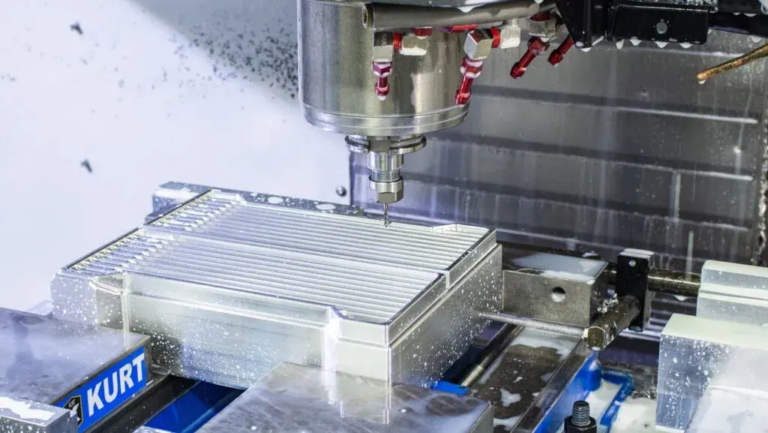
Evolution of CNC machining: Unlocking efficiency and accuracy
In recent years, the manufacturing world has undergone major changes, and advances in computer numerical control (CNC) processing play a key role in this revolution. CNC machining has become an important tool for manufacturers seeking to produce complex parts with high precision and accuracy. In this article, we will dig into the world of CNC machining and explore the latest developments and innovations that have changed this process.
History of CNC machining
CNC machining has been around for decades, and its roots can be traced back to the 1950s. However, it was not until the 1970s and 1980s that CNC processing became a staple in manufacturing. The development of computer-aided design (CAD) software and the introduction of numerical control systems enable manufacturers to automate machining processes, thereby significantly increasing efficiency and reducing production time.
Advances in CNC machining
Over the years, CNC machining has experienced significant progress driven by technological innovation and the demand for higher accuracy and efficiency. Some key developments include:
- Five-axis machining: This technology allows the movement of five axes simultaneously, enabling the creation of complex shapes and configurations that were previously impossible to manufacture. Five-axis machining has revolutionized the production of parts with complex geometric shapes such as aerospace components and medical equipment.
- High-speed processing: Advances in spindle technology and numerical control systems enable CNC machines to operate at higher speeds, increase productivity and reduce cycle time. This makes it possible to produce complex parts at faster speeds while maintaining accuracy and accuracy.
- Improved CNC software: CAD/CAM software becomes more complex, allowing designers to create complex 3D models and simulations and then convert them into machining instructions for CNC machines. This greatly improves the accuracy and efficiency of the processing process.
- Automatic inspection and quality control: The use of automated inspection systems enables manufacturers to detect defects and irregularities in real time, reducing the likelihood of defects in the product and improving overall quality.
Benefits of CNC machining
Advances in CNC machining have a profound impact on manufacturers in various industries. Some benefits include:
- Improve efficiency: CNC machining enables manufacturers to produce complex parts at faster speeds, reducing production time and improving overall efficiency.
- Improved accuracy: The accuracy and accuracy of CNC machining ensures that parts meet the exact specifications, reducing the need for rework and improving overall quality.
- Reduce costs: CNC machining can reduce labor costs by minimizing human error and increasing productivity.
- Improve productivity: Automatic inspection and quality control systems improve productivity by detecting defects and violations in real time.
in conclusion
Since its inception, CNC machining has come a long way with advances in five-axis machining, high-speed machining, improved CNC software, and automatic inspection and quality control. These innovations revolutionize manufacturing, enabling manufacturers to produce complex parts with high precision and accurate ways. With the continuous development of technology, we can expect greater progress in CNC machining, which further changes the way parts are manufactured.
FAQ
What is CNC machining?
CNC machining is the use of a computer-controlled machine to remove material from a workpiece to create a specific shape or design.
How does CNC machining work?
CNC machining works by using a computer to read a set of instructions and operate a machine that uses a cutting tool to remove material from the workpiece.
What are the benefits of CNC processing?
The benefits of CNC machining include increased efficiency, improved accuracy, reduced costs and increased productivity.
What is five-axis machining?
Five-axis machining is a CNC machining that allows the movement of five axes simultaneously, allowing for the creation of complex shapes and configurations.
What is high-speed processing?
High-speed machining refers to the use of high-speed spindles and numerical control systems to improve productivity and reduce cycle time.
What is CAD/CAM software?
CAD/CAM software is a machining instructions for creating 3D models and simulations and then converting them into CNC machines.
- What is automatic inspection and quality control?
Automated inspection and quality control refer to the use of real-time detection of defects and violations, thereby reducing the likelihood of defects in the product and improving overall quality.



















