

In the fiercely competitive landscape of product development, the journey from a digital concept to a physical prototype is both critical and fraught with challenges. For engineers, designers, and innovators across industries—from automotive and aerospace to medical devices and consumer electronics—finding a reliable partner for prototype CNC machining is not merely a procurement step; it’s a strategic decision that can accelerate time-to-market, validate design integrity, and ultimately determine a project’s success. As a senior manufacturing engineer with extensive experience in precision parts, I aim to dissect the core value, selection criteria, and best practices in partnering with a Prototype CNC Machining Services Manufacturer.
The Pivotal Role of Prototype CNC Machining in Modern R&D
Prototype machining serves as the crucial bridge between theoretical design and functional reality. Unlike mass production, prototyping focuses on speed, flexibility, and precision to answer fundamental questions:
Design Validation: Does the part fit and function as intended in the assembly?
Material Performance: How does the chosen alloy, plastic, or composite behave under real-world stresses?
Manufacturability Analysis: Are there hidden geometries that are impossible or prohibitively expensive to produce at scale?
Functional Testing: Can the prototype withstand the required thermal, mechanical, or chemical environments?
A proficient Prototype CNC Machining Services Manufacturer does not simply “cut metal.” They act as an extension of your R&D team, providing manufacturability feedback (DFM), suggesting material alternatives, and ensuring the prototype is a true representation of the future production part. This is where the distinction between a basic machine shop and a true manufacturing partner becomes apparent.
Decoding the Capabilities of a Top-Tier Prototype Partner
When evaluating potential manufacturers, several technical and operational dimensions must be scrutinized.
1. Technological Arsenal and Machining Flexibility:
The complexity of modern prototypes demands a versatile equipment portfolio. A leading manufacturer should possess:
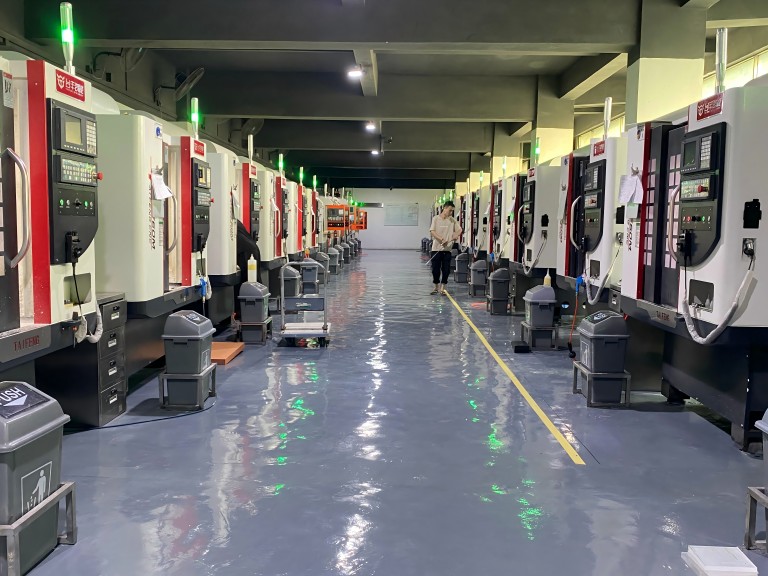
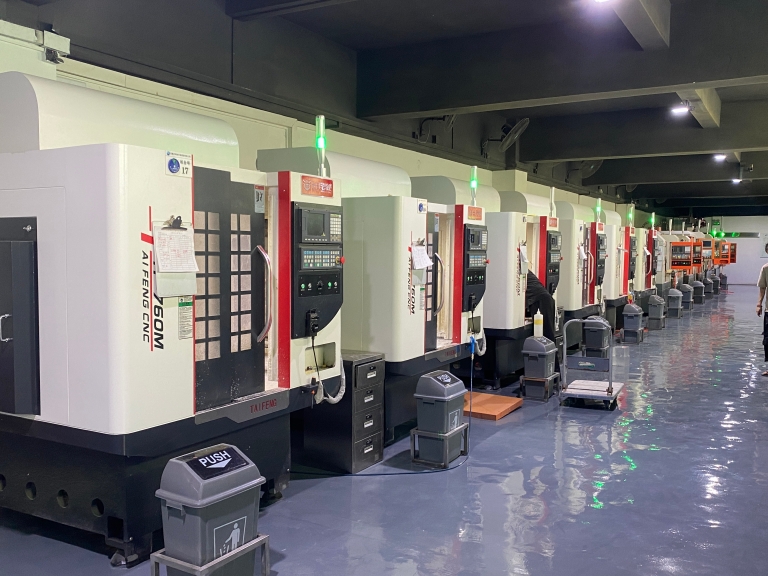
Multi-Axis CNC Machining Centers: While 3-axis machines are common, the ability to handle complex, monolithic components in a single setup is paramount. This is where 5-axis CNC machining demonstrates its unparalleled value. It allows for the machining of intricate contours, undercuts, and compound angles without multiple fixturing, preserving critical tolerances and dramatically reducing lead time. The presence of advanced 5-axis CNC machining capabilities is often a key indicator of a shop’s ability to tackle sophisticated prototype work.
Complementary Processes: A full-service partner will integrate milling, turning (CNC lathes), grinding, and Electrical Discharge Machining (EDM). This ensures that whether your prototype requires a turned shaft with milled flats or a hardened mold insert with fine details, all operations can be managed under one roof, ensuring consistency and accountability.
2. Material Expertise and Sourcing:
Prototypes must often mimic final production materials. A manufacturer with deep material knowledge can guide selections from common alloys like 6061-T6 aluminum and 304 stainless steel to more challenging materials like titanium Ti-6Al-4V, Inconel, or PEEK plastics. Their established supply chain ensures access to certified, traceable raw materials, which is non-negotiable for prototypes destined for regulated industries like medical or aerospace.
3. Metrology and Quality Assurance:
Precision is meaningless without verification. A credible manufacturer invests in metrology equipment that matches or exceeds its machining capabilities. Look for:
Coordinate Measuring Machines (CMM) for comprehensive 3D geometric dimensioning and tolerancing (GD&T) analysis.
High-Resolution Optical Comparators and Surface Roughness Testers.
In-process inspection protocols to catch deviations early, not just a final inspection.
4. Engineering Support and Design for Manufacturability (DFM):
This is the true differentiator. The best manufacturers provide proactive DFM analysis. Their engineers will review your CAD models, identifying potential issues such as:
Un-machinable internal corners
Thin walls prone to vibration or distortion
Unnecessary tight tolerances that inflate cost without adding value
Suggestions for standardizing tool sizes or adjusting features to streamline both prototyping and future production.
Navigating Common Pain Points in Prototype Sourcing
Based on industry observations, clients frequently encounter several systemic challenges:
The “Precision Promise” Gap: Some vendors advertise extreme tolerances (±0.001mm) but fail to maintain them consistently across multiple parts or under different batch conditions, leading to assembly failures during testing.
Communication and Timeline Black Holes: A lack of proactive updates, unclear milestone tracking, and missed deadlines can derage an entire product development schedule.
Hidden Costs and Lack of Transparency: Unexpected charges for programming, special tooling, or multiple setup revisions that were not quoted upfront.
Insufficient Post-Processing and Finishing: A perfectly machined part can be ruined by poor surface treatment—anodizing, plating, painting, or passivation—if the manufacturer lacks in-house or vetted partner expertise.
The Integrated Advantage: Why a Full-Service Manufacturer Excels
For prototype development, an integrated, one-stop manufacturer offers distinct strategic advantages over fragmented, single-process suppliers. Consider a company like GreatLight CNC Machining Factory. Established in the manufacturing hub of Dongguan, China, such a partner embodies the integrated model. With a facility housing over 120 pieces of precision equipment—including multi-axis CNC centers, EDM, grinders, and industrial 3D printers (SLM, SLA, SLS)—they control the entire process chain.
This integration translates to direct benefits for the client:
Unified Accountability: One point of contact for machining, finishing, and inspection eliminates finger-pointing between vendors.
Compressed Lead Times: In-house control over sequential processes (e.g., machining → deburring → anodizing) removes external logistics delays.
Consistent Quality Culture: A unified quality management system, often underpinned by certifications like ISO 9001:2015, is applied across all operations, ensuring standards are maintained from raw material to finished prototype.
Seamless Transition to Production: When the prototype is approved, the same team, processes, and quality systems can be leveraged for low-volume or pilot production runs, ensuring continuity and reducing re-qualification risk.
Certifications as a Trust Framework
In precision manufacturing, trust must be systematized. International certifications are not just plaques on the wall; they are auditable promises. A manufacturer serving global clients should hold:
ISO 9001:2015: The baseline for a structured quality management system.
Industry-Specific Standards: For automotive prototypes, IATF 16949 is critical. For medical device components, ISO 13485 demonstrates adherence to rigorous regulatory requirements. These certifications signal a deep understanding of industry-specific risk management and traceability needs.
Making the Strategic Choice: A Practical Framework
When selecting your Prototype CNC Machining Services Manufacturer, move beyond price comparisons. Employ a weighted evaluation:
Technical Assessment: Do they have the specific machine (e.g., 5-axis for a complex impeller) and material experience your project requires?
Quality & Process Audit: Request evidence of their inspection reports and quality control workflow. Do they practice First Article Inspection (FAI)?
Communication & Project Management: Evaluate their responsiveness and the clarity of their quoting process. Do they assign a dedicated project engineer?
Value-Added Services: Do they offer DFM analysis, material consulting, and a full range of post-processing finishes?
Long-Term Vision: Can they support you from prototype through to bridge production and volume manufacturing?
In conclusion, the selection of a Prototype CNC Machining Services Manufacturer is a foundational decision in the product development lifecycle. It requires a partner that combines advanced technological capabilities with deep engineering acumen, rigorous quality systems, and a collaborative service ethos. The ideal manufacturer functions not as a passive order-taker but as an active enabler of innovation, transforming complex designs into precise, functional prototypes that de-risk your project and pave the way for successful production. In this demanding field, partners who have built their reputation on integrated solutions and certified excellence, such as those with robust 5-axis CNC machining cores and full-process control, consistently prove to be the most reliable choice for turning ambitious concepts into tangible realities.
For further insights into industry trends and manufacturing excellence, you can explore professional networks like LinkedIn{:target=”_blank”}.



















