
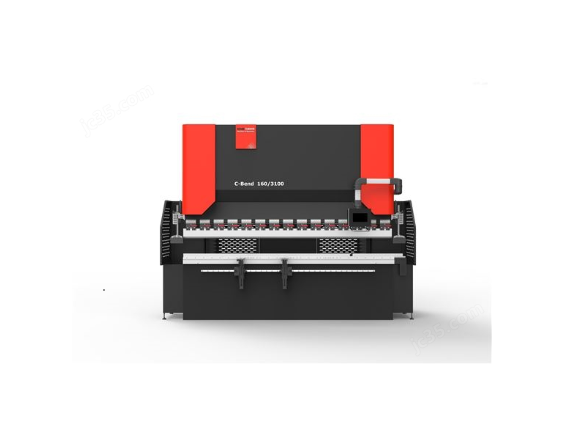
Unlocking Unparalleled Accuracy: Advanced Strategies for CNC Press Brake Precision
CNC press brakes have become the backbone of modern sheet metal fabrication, transforming raw metal into intricate components with remarkable efficiency. Yet, the persistent challenge of achieving and maintaining micron-level precision remains critical to quality and cost control. As tolerance demands tighten across industries—from aerospace enclosures to medical devices—mastering precision control is no longer optional. This deep dive explores groundbreaking techniques that elevate CNC bending beyond conventional limits, leveraging technology, process refinement, and strategic oversight.
Why Rigidity Isn’t Just "Toughness" – It’s Physics in Action
Machine rigidity underpins every precise bend. When hydraulic or electric servo forces meet metal, resistance creates deflection in frames, rams, and beds. Modern solutions go beyond simply using high-strength cast iron:
- Hierarchical Structural Design: Multi-wall welded frames with internal ribbing distribute stress more evenly than solid construction.
- Dynamic Compensation Systems: Real-time sensors detect frame flex during bending, automatically adjusting hydraulic pressure to counteract distortion.
- Thermal Stability Engineering: Linear scale feedback nullifies errors from thermal expansion in drivescrews, ensuring consistent positioning regardless of runtime.
Example: High-end press brakes now incorporate FEM (Finite Element Modeling)-optimized structures that reduce deflection by 40% compared to traditional designs under 100-ton loads.
The Silent Revolution in Control Systems: Beyond G-Code
CNC systems are evolving from passive executors to proactive precision partners:
- Adaptive Servo Tuning: AI-driven controllers analyze material feedback (e.g., force curves) to auto-calibrate axis acceleration, eliminating overshoot on delicate bends.
- Backlash-Free Direct Drives: Linear motors replacing ballscrews remove mechanical slack, achieving ±0.0005" positional repeatability.
- Collision Avoidance Algorithms: 3D simulation previews tool/workpiece interactions, preventing misalignment crashes that damage dies and cause inaccuracies.
Laboratory tests show adaptive tuning alone reduces angular variance by up to 32% when processing springback-prone materials like 304 stainless steel.
Tooling & Material Symbiosis: The Overlooked Precision Variable
Perfect machine performance means nothing without optimized tooling and material management:
- Surface-Texture Matching: Polished V-dies paired with brushed aluminum sheets minimize scratch-induced slipping, ensuring consistent bend positioning.
- Die Wear Predictive Analytics: IoT-enabled force sensors track pressure fluctuations, flagging tool wear before dimensional tolerance drifts occur.
- Material Certification Integration: Onboard scanners read metal certificates, auto-loading K-factors for precise springback prediction.
Real-time laser metrology adjusts parameters mid-bend for uncompromising accuracy.
Redefining Process Optimization Through Data
While adjusting bend speed and clearance remains essential, transformative innovation emerges at the system level:
- Predictive Springback Modeling: Machine learning algorithms ingest historical data from thousands of bends, continuously refining angle-correction forecasts based on alloy, grain direction, and hardness.
- Closed-Loop Angle Validation: In-process laser scanners (like ZEISS ProTracer) measure every part against CAD models, triggering automatic ram adjustments within milliseconds.
- Energy-Mapped Forming: Hydraulic systems modulate fluid flow in real-time, applying peak force only when needed to reduce vibration-induced error.
A case study from automotive manufacturing revealed that implementing closed-loop metrology slashed rework rates by 73% on complex chassis brackets.
Human Insight Meets AI Co-Pilot: The New Operator Paradigm
Even in fully automated cells, human expertise drives innovation:
- Augmented Reality Tool Setup: Projected holograms guide die alignment with 0.1mm accuracy, minimizing trial runs.
- Skill-Enhanced Monitoring: Operators trained in metallurgy and physics interpret process deviations no AI could detect (e.g., subtle material inconsistency).
- Ergonomic HMI Analytics: Dashboard heatmaps highlight variance trends across shifts, enabling proactive recalibration.
The Future Unfolding: Self-Optimizing Press Brakes
Next-gen systems integrate cross-functional intelligence:
- Edge Computing Nodes: Process-data analysis occurs locally at the machine for zero-latency control.
- 3D Scanning Integration: Post-bend validation scanners update downstream processes (e.g., welding fixtures) for cumulative accuracy.
- Energy-Reactive Drive Systems: Regenerate electricity during deceleration, powering measurement systems without voltage spikes.
Beyond Precision: The Holistic Advantage
The pursuit of bending accuracy transcends technical metrics—it reshapes entire production economies. Every 0.1° of angular consistency eliminates minutes of grinding, re-fixturing, or scrap handling. When combined with predictive technologies, manufacturers achieve more than precision: they gain foresight. Systems that self-correct throughout a 10,000-part run not only ensure tolerance compliance but reveal hidden material properties, tooling synergies, and throughput thresholds. In this ecosystem, the press brake evolves from a singular machine to the data hub of smart sheet metal fabrication, where every bend informs the next revolution in excellence. The era where "accuracy problems" trigger crisis meetings is ending—ushered out by machines that don’t just bend metal but bend that border between possibility and perfection.



















