
01
Heat builds up and the part melts
PP has low thermal conductivity, so heat stays at the cutter. Chips weld to the flute, the edge drags, and you get smeared walls or a melted corner. The part looks fine until you measure it.
We machine PP and HDPE for parts that need to survive acids, solvents, and repeated flexing. Tolerances hold at ±0.005 mm on the right geometry. Send a CAD file and get DFM feedback with pricing.
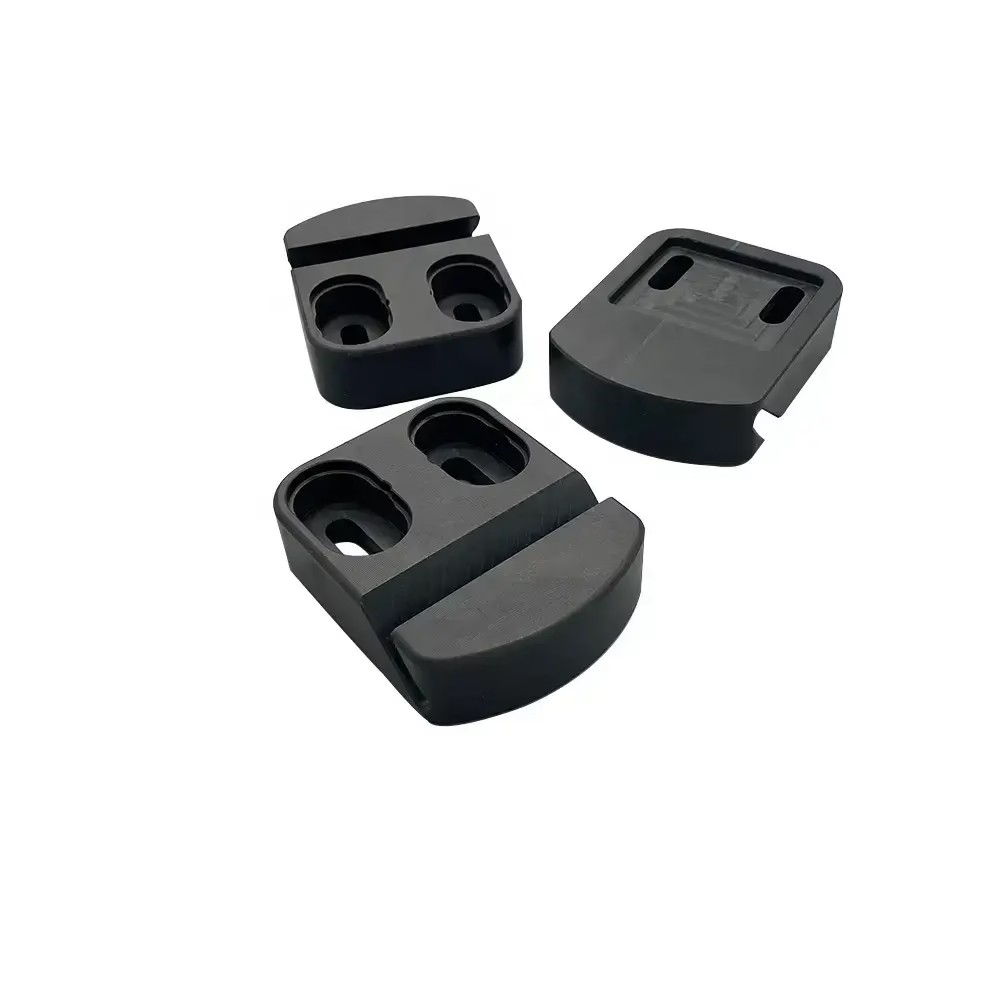
PP is not hard to cut. It is hard to cut without melting, warping, or scrapping the batch.
PP has low thermal conductivity, so heat stays at the cutter. Chips weld to the flute, the edge drags, and you get smeared walls or a melted corner. The part looks fine until you measure it.
Stress locked into an extruded PP plate releases once you remove material. A bracket that was flat at 9 a.m. can bow overnight. Tight walls finish oversize or undersize depending on which side you cut first.
PP is gummy. Standard twist drills pull in, drill oversized holes, and leave a burr you cannot deburr cleanly. Hole position drifts on deep bores and mating hardware no longer fits.
A tool mark left on a fluid-handling part becomes a leak path. If the finish is not controlled, gaskets do not seal and cleaning agents collect in the grooves. Cosmetic passes do not fix that.
Tooling, feeds, and fixtures chosen for soft plastics — not borrowed from an aluminum job.
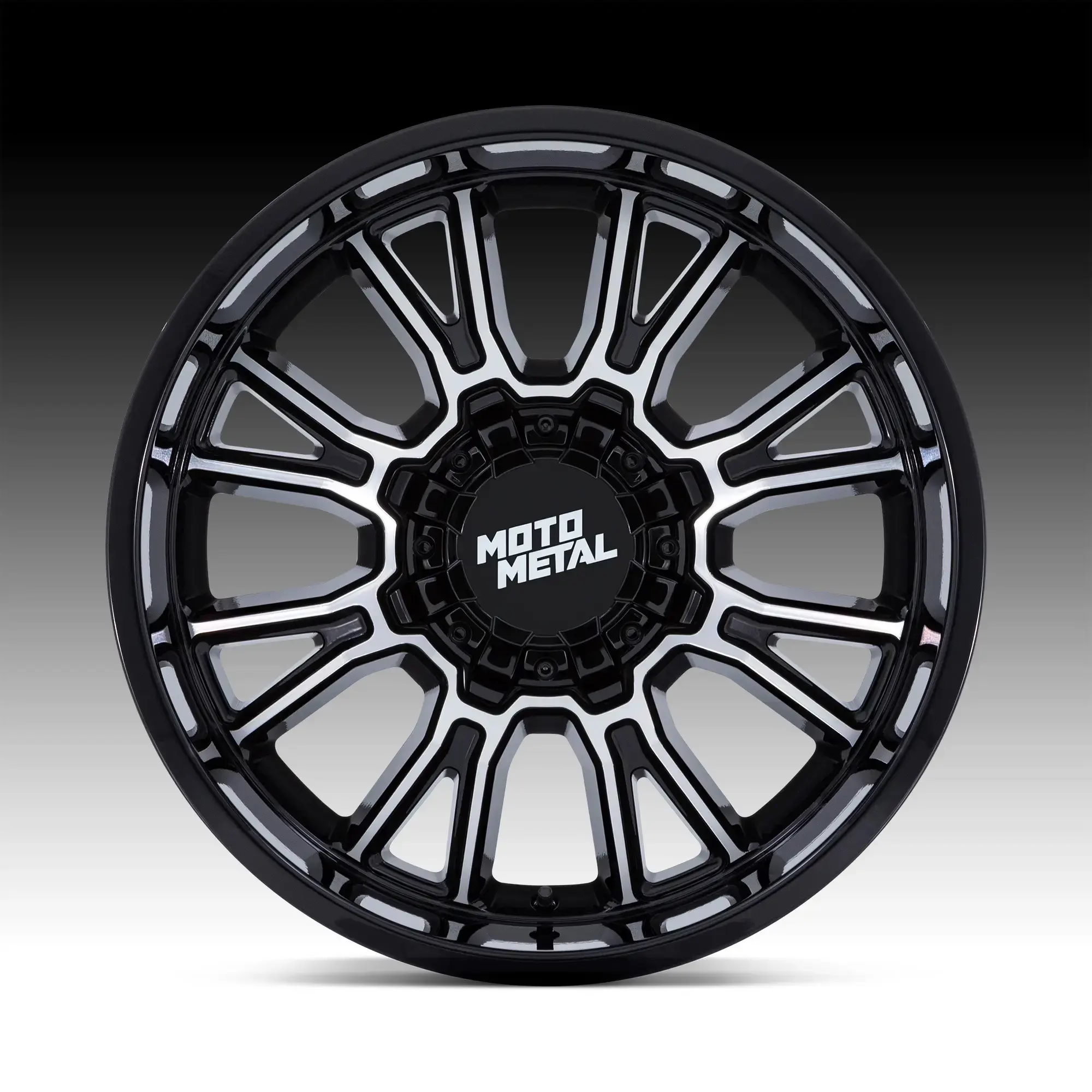
PP cuts clean when the tool is sharp and the chip leaves the zone before heat soaks into the part. We run single-flute and two-flute carbide cutters with high rake angles, climb milling for the finish pass, and air blast instead of flood coolant. The air clears chips and keeps the workpiece cool without coolant soaking into the material.
Feeds and speeds are set per geometry, not per material name. A thin rib runs slower than a solid block. We leave 0.3–0.5 mm for the finish pass and take it in one continuous move so the surface does not show start-stop marks.
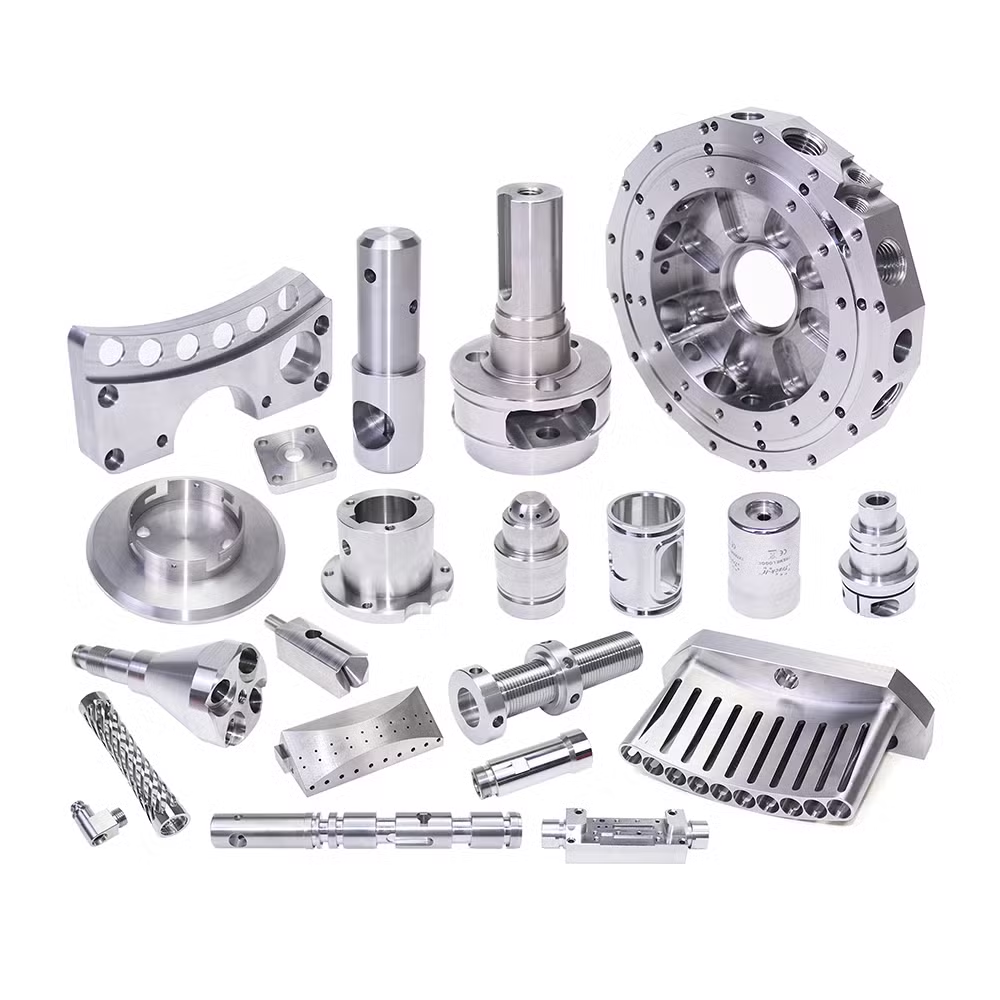
Machined PP moves. We rough with 0.5–1.0 mm stock on all faces, let the part sit, then finish. For parts with wall thickness under 3 mm or long unsupported spans, we run a separate stress-relief step before the finishing pass. This is the difference between a bracket that stays flat and one that bows in a week.
Fixtures matter as much as the cutter. Soft jaws and vacuum plates distribute clamping force so the part is not squeezed out of tolerance while it is being cut. We check the setup on the first article, not on the last.
PP is not always the answer. Use this to check the fit before you commit a design.
| Material | Best for | Watch out for |
|---|---|---|
| PP (polypropylene) | Chemical tanks, fluid parts, living hinges | Low stiffness; long unsupported spans flex |
| HDPE | Wear strips, cutting boards, low-friction guides | Softer than PP; tight tolerances drift |
| POM (acetal) | Gears, bushings, precision mechanical parts | Poor acid resistance; not for chemical service |
| PVC | Pipes, fittings, outdoor chemical exposure | Machining dust needs extraction; limited colors |
| PEEK | High-temperature and sterile applications | Higher cost; slower to machine than PP |
One shop for the prototype and the production run, with the same inspection standard on both.
Flat plates, housings, covers, and manifold blocks. 27 machines for straightforward geometry at volume.
Parts with features on multiple faces. 12 four-axis mills cut down on refixturing and repositioning error.
Complex contours and undercuts in one setup. 16 simultaneous 5-axis centers hold position on curved surfaces.
Bushings, sleeves, and threaded plastic parts. 16 mill-turn centers combine turning and milling in one cycle.
Fit checks and design reviews before tooling. Same material as production so the test is real.
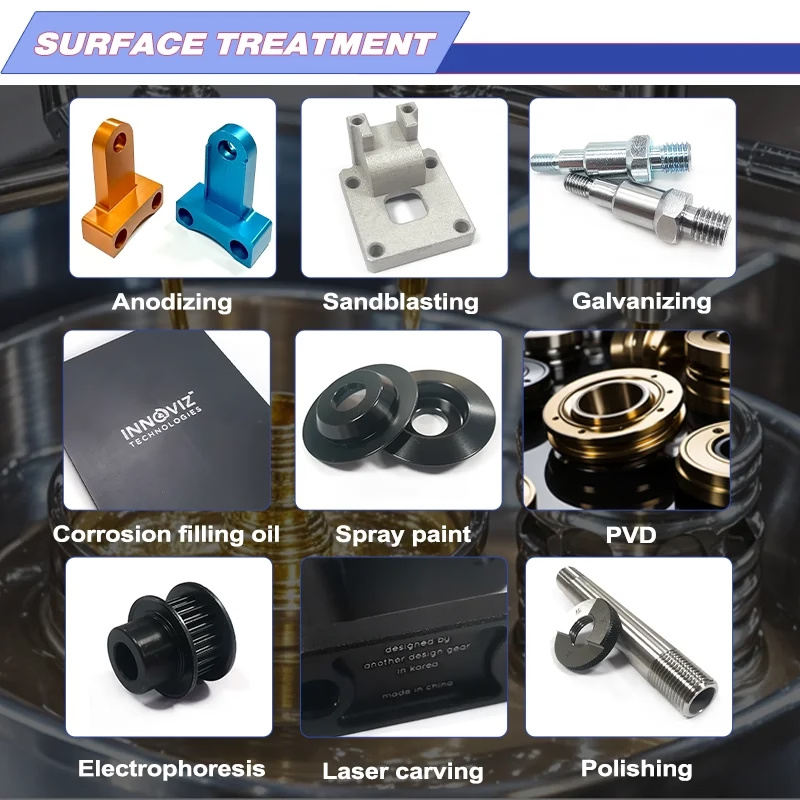
Bead blasting, tumbling, and polishing for sealing surfaces and controlled cosmetic finish.
What we can take on for PP and other plastics, stated plainly.
| Item | Specification |
|---|---|
| Tolerance | ±0.005 mm on controlled features |
| Surface finish | Ra 0.2–0.8 μm fine, Ra 0.8–1.6 μm standard |
| Maximum part size | 4,000 mm maximum processing size |
| Large travel | 4,000 × 400 × 150 mm |
| Medium travel | 750 × 1,150 × 550 mm; 600 × 600 × 600 mm |
| Compact travel | 500 × 500 × 450 mm; 500 × 310 × 200 mm |
| Rotary table | Ø400 mm rotary table |
| Inspection | 100% inspection before shipment; reports on request |
Numbers first. The rest is process discipline.
Fifteen years of cutting plastics and metals. The feeds and fixtures for soft material are already worked out.
16 simultaneous 5-axis centers, 12 four-axis mills, 27 three-axis machines, and 16 mill-turn centers.
No minimum order quantity. One prototype and a 10,000-part run use the same inspection standard.
CAD files reviewed and priced within 12 hours. Production can start within 24 hours of approval.
ISO 9001:2015, IATF 16949:2016, ISO 13485:2016, and ISO 27001:2022.
Raw material check, in-process monitoring, final inspection. Dimensional reports on request.
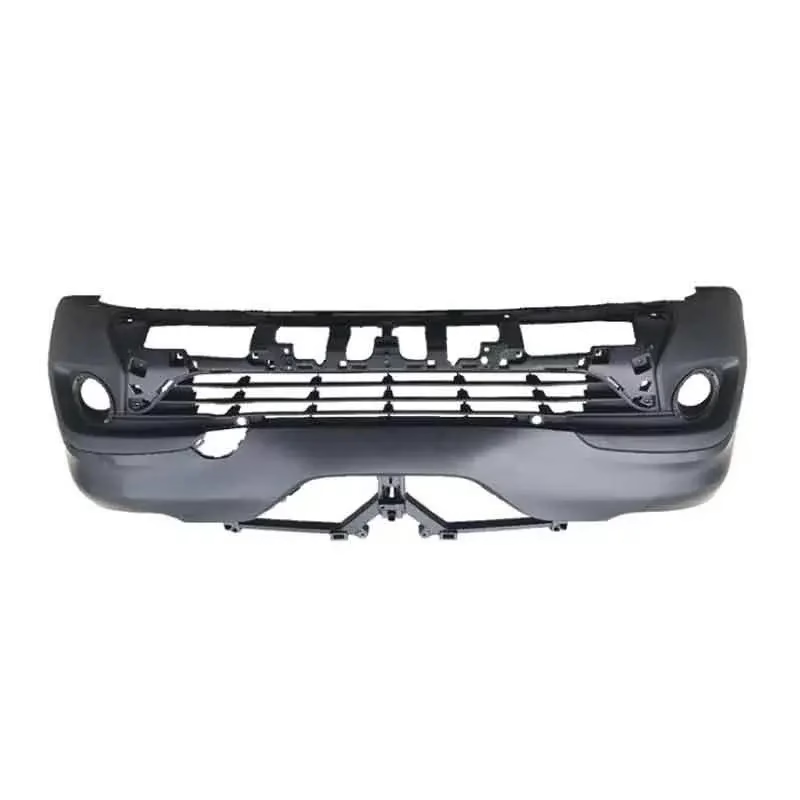
Underhood brackets and fluid-adjacent housings in PP. Chemical resistance and vibration fatigue both matter.
Insulating fixtures, trays, and connector bodies. PP keeps dielectric behavior stable and resists cleaning solvents.
Chemical tanks, wear strips, and pump components. Material selection is checked against the fluid list before machining.
Non-sterile fixtures and fluid-path prototypes in PP. Finish and cleanliness requirements are set before the first cut.
Yes, on features that are supported and not too thin. The tolerance applies to controlled dimensions after the part has settled, not to a freshly cut wall that is still releasing stress.
Where the geometry is thin or long, we say so during DFM review and propose a realistic tolerance. Claiming ±0.005 mm on a 200 mm unsupported PP span would be dishonest.
For most machined parts, standard homopolymer or copolymer PP plate works. If the part sees UV, specify a UV-stabilized grade. If it sees continuous heat, check the service temperature against the application before choosing PP over PEEK or PVC.
Send the chemical list and operating temperature with the CAD file. Material selection is part of the DFM feedback, not an afterthought.
Sharp high-rake carbide tooling, single or two flutes, climb milling on the finish pass, and air blast instead of flood coolant. Feeds and speeds are set per feature.
A thin rib runs slower than a solid block. Chip evacuation matters more than spindle speed on soft plastics.
Stress in the plate releases when you remove material. Machining one side fully before the other makes it worse.
We rough both sides, leave 0.5–1.0 mm, let the part relax, then finish. For walls under 3 mm we add a stress-relief step before the final pass.
Yes. Sealing surfaces are finished to Ra 0.8–1.6 μm as standard, and Ra 0.2–0.8 μm where a finer finish is required.
Tell us where the gasket lands on the drawing. A controlled finish on that face is more useful than a cosmetic polish across the whole part.
There is no minimum order quantity, so one prototype is fine. At the other end, 4,000 mm maximum processing size is available on the large-travel machines.
Compact work goes on 500 × 500 × 450 mm and 500 × 310 × 200 mm machines. The right machine is picked by geometry, not by convenience.
Quote and DFM feedback come back within 12 hours. Production can start within 24 hours of approval, and parts ship in 3–5 days.
The historical late-delivery probability is below 2%. If a schedule is tight, say so early and we will confirm what is realistic.
Yes. Uploads are secure and confidential, and an NDA is available on request.
Send the NDA before the CAD files if your process requires it. Nothing is shared outside the job.
Upload a CAD file and get pricing plus DFM feedback within 12 hours. No minimum order quantity, 100% inspection before shipment.
12-hour quote100% inspectionNo minimum order quantityNDA on request
Trusted by engineers and manufacturers worldwide










Upload your 3D model or 2D drawing and get a quotation with a free DFM analysis. Maximum processing size 4,000 mm.
CNC Metals 13 grades
CNC Plastics 10 grades
Machines & processes 12 options
Surface & post-processing 10 options
Material: not selected Machine: not selected Post-process: not selected