
01
Melted edges and gummy chips
A cutter sized for aluminum turns POM or HDPE into a smear. The edge burrs, the chip welds back onto the wall, and the dimension reads oversize after cooling. You get parts that need hand rework or scrap.
We machine ABS, PC, POM, PEEK, PA, PP and HDPE from one prototype to 10,000+ parts. Quote and DFM analysis inside 12 hours, ±0.005 mm tolerance, 100% inspection before shipment.
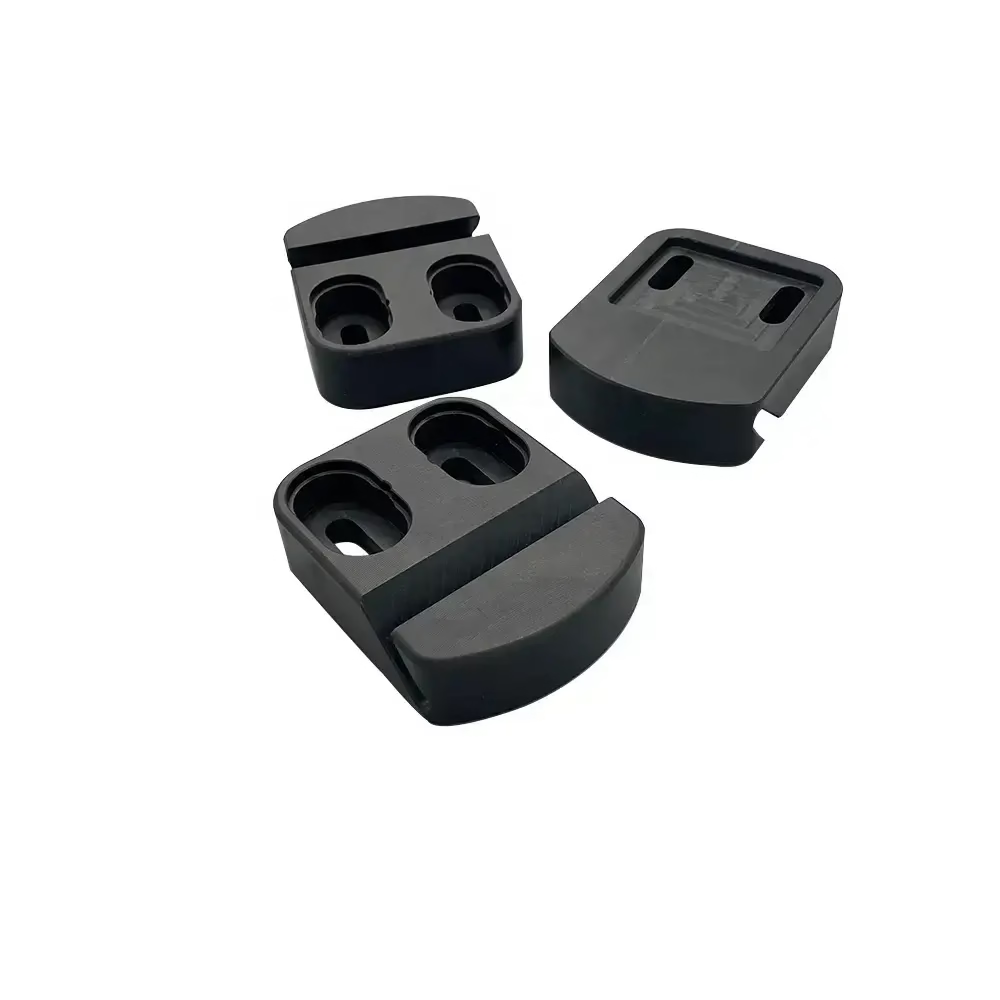
Most rejected plastic parts fail for mechanical reasons, not for the drawing.
A cutter sized for aluminum turns POM or HDPE into a smear. The edge burrs, the chip welds back onto the wall, and the dimension reads oversize after cooling. You get parts that need hand rework or scrap.
Thin-wall PC or ABS housings deflect under vise pressure. The part measures correctly in the machine and springs back out of tolerance once unclamped. Assembly then needs shimming.
Plastic expands roughly ten times more than steel. A batch cut on a warm afternoon can drift 0.05 mm from the morning parts. Mixing the two in one assembly creates fit problems.
A cut thread in unfilled nylon holds less load than the drawing implies. Buyers find out at assembly, when the screw pulls out. A metal insert or a coarser pitch solves it, but only if someone flags it before the run starts.
Same geometry, different feeds, tools, and hold-down for every resin.
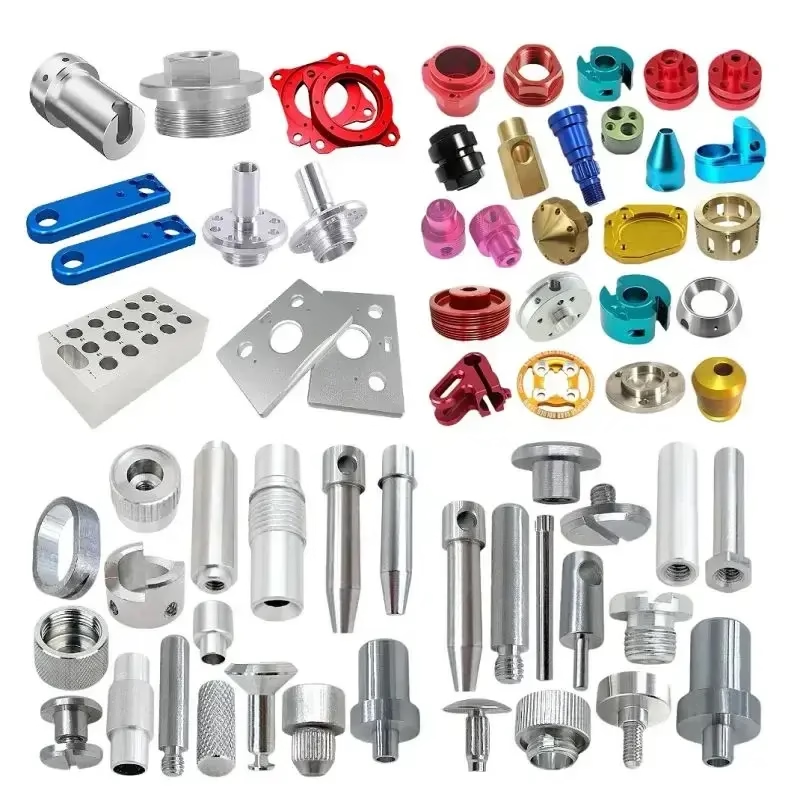
Soft and glass-filled plastics behave nothing alike at the cutting edge. We keep separate tool libraries for each family: two-flute polished carbide for acrylic and PC, straight-flute or O-flute for POM and HDPE so the chip clears instead of packing, diamond-coated tools for carbon fibre and glass-filled PA.
Spindle speed, feed per tooth, and depth of cut are set from the resin datasheet plus a test cut. On PEEK we run higher surface speed and lighter radial engagement to keep heat in the chip. On HDPE we slow down and take bigger passes, because rubbing is what melts the wall.
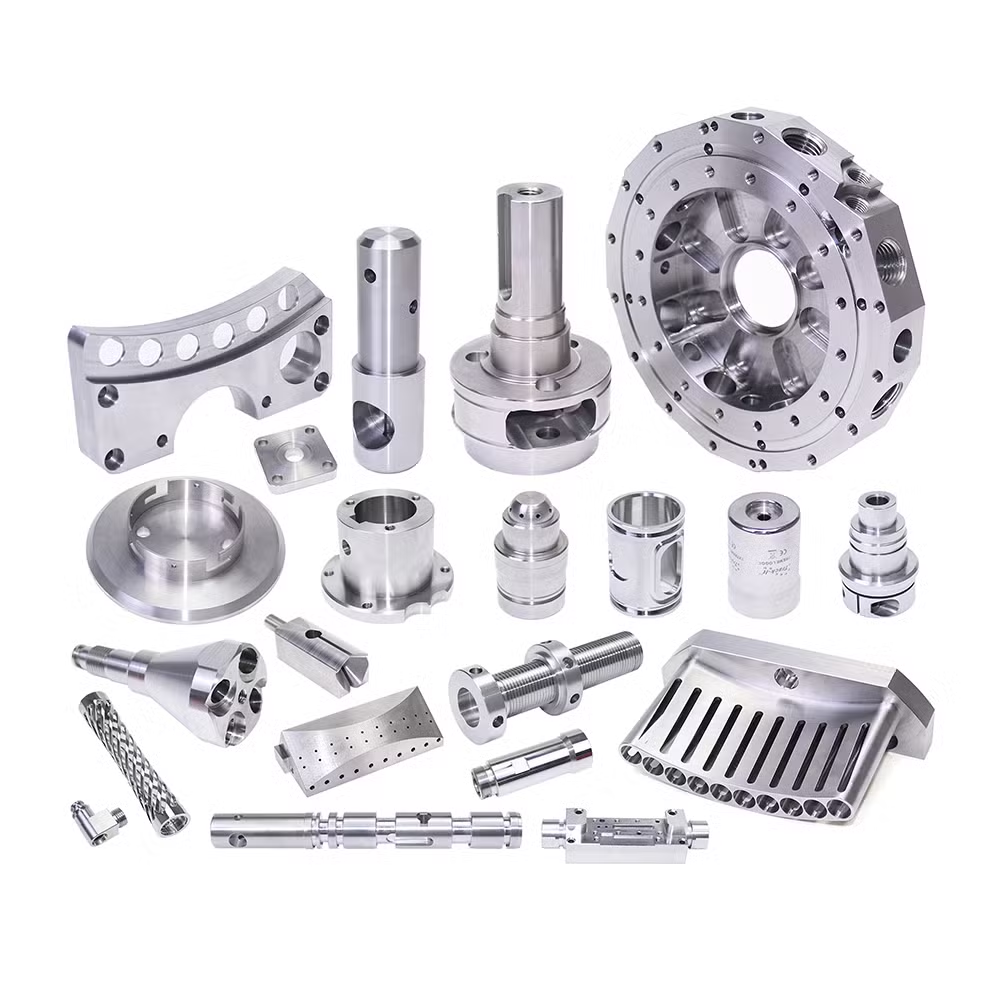
Plastic gives back the energy you put into it. Clamp a 1.5 mm PC wall in a standard vise and it will measure correctly under load, then spring open when the jaws release. We design soft jaws, vacuum chucks, and dedicated fixtures around the actual part stiffness.
For large flat panels we use vacuum beds so the load spreads over the whole face. For thin ribs and long slender parts we add support material or machine them in two operations, flipping once the first side is stable. On parts under 200 mm we often finish the critical faces in a single setup to avoid re-datum error.
A quick guide to the resins we run most often.
| Resin | Best for | Watch out for |
|---|---|---|
| ABS | Housings, brackets, low-cost prototypes | Low stiffness, poor chemical resistance |
| PC | Impact covers, guards, clear lenses | Stress cracking near solvents, needs annealing |
| POM | Gears, bushings, sliding parts | Hard to bond, warps on thick sections |
| PEEK | High-temperature and wear parts | Expensive, needs sharp tooling and coolant |
| PA (nylon) | Wear strips, clips, structural parts | Absorbs moisture, dimensions move after cutting |
| HDPE | Chemical tanks, low-friction liners | Very soft, flexes under light clamping |
| PMMA | Optical windows, display covers | Brittle at edges, chips on heavy cuts |
| PTFE | Seals, chemical contact parts | Cold flow under load, hard to hold tolerance |
Machining is the core. These are the steps that come with it.
Flat plates, covers, and prismatic housings up to 4,000 mm. The workhorse for most plastic parts.
Multiple faces on one part without a second fixture. Good for long extrusions with features on four sides.
Contoured surfaces, undercuts, and complex housings. 16 simultaneous centers available for plastic work.
Bushings, rollers, spacers, and threaded inserts. Mill-turn centers handle parts that need both operations.
One-off and low-volume plastic parts for fit checks before tooling is committed.
Bead blasting, tumbling, polishing, and laser marking sized for plastic surfaces.
Numbers you can plan around.
| Item | Specification | Notes |
|---|---|---|
| Tolerance | ±0.005 mm | Typical on rigid resins |
| Surface finish | Ra 0.2–0.8 μm | Polished tool and light finishing pass |
| Max part size | 4,000 mm | Long panels and extrusions |
| 5-axis travel | 4,000 × 400 × 150 mm | Large contoured parts |
| Minimum order | 1 part | No MOQ, up to 10,000+ runs |
| Quote turnaround | 12 hours | Includes free DFM analysis |
| Production start | 24 hours | After drawing release |
| Shipping | 3–5 days | Standard part runs |
Numbers instead of adjectives.
Founded in 2011. Three wholly-owned plants and 150 technicians in Dongguan and Singapore.
16 simultaneous 5-axis centers, 12 four-axis mills, 27 three-axis machines, 16 mill-turn centers.
±0.005 mm (0.0002 in) on rigid plastics, verified with in-process monitoring.
Quotation and free DFM analysis returned within 12 hours of receiving your files.
Every part checked before shipment. Raw material, in-process, and final inspection.
ISO 9001:2015, IATF 16949:2016, ISO 13485:2016, ISO 27001:2022.
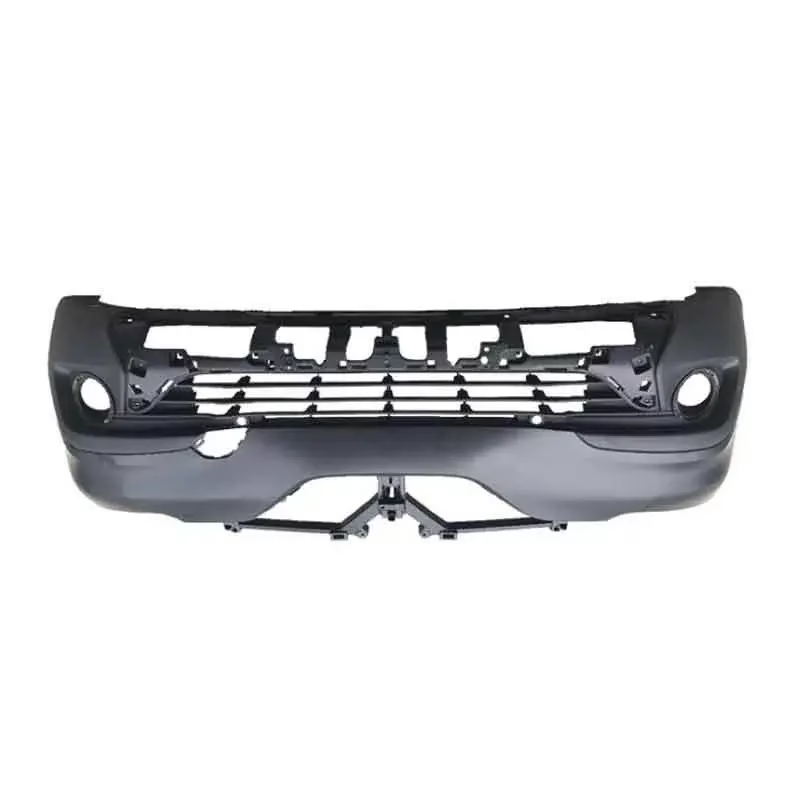
Bumper trim, sensor housings, and under-hood brackets cut from ABS, PC-ABS, and PA.

Handles, jigs, and fixtures in POM and HDPE where sliding wear matters more than stiffness.

End-effector jaws, covers, and cable guides in PEEK and PA for light weight and low friction.
Housings, manifolds, and instrument covers in PC, PEEK, and PMMA. Clean cuts, no contamination.
We run ABS, PC, PMMA, POM, PA, PEEK, PP, HDPE, and carbon fibre on a regular basis. Each resin gets its own tool set and cutting parameters, because a feed that works on POM will melt HDPE.
If your material is not on the list, send the datasheet. We will tell you whether it cuts cleanly or whether another resin does the same job for less.
±0.005 mm (0.0002 in) is realistic on rigid, unfilled resins such as POM, PC, and PEEK. That figure applies to critical features, measured at 20 °C.
Soft materials like HDPE and PTFE move more after cutting. On those we quote a looser band and flag the features that will drift. Telling you early is cheaper than a rejected batch.
The machining time is often similar. The material price is the variable. PEEK and carbon fibre cost far more per kilogram than 6061 aluminum, while ABS and HDPE are cheaper.
We quote both options when the design allows it. Many brackets that were drawn in PEEK work fine in PA at a fraction of the material cost.
Yes. There is no minimum order quantity. We have run one-off parts and production runs above 10,000 pieces on the same floor.
For a first article, expect a quotation and DFM feedback within 12 hours and shipping in 3–5 days after drawing release.
We design the fixture around the part, not the other way around. Soft jaws, vacuum chucks, and support material take the clamping load off thin ribs and walls.
Where a part is too flexible for one setup, we machine it in two operations and flip it once the first side gives it rigidity. Critical faces are finished in a single setup wherever the geometry allows.
We do when the resin needs it. PC and PEEK both relieve internal stress better after a controlled anneal, and that reduces the chance of cracking in service or during a solvent wipe.
Tell us the operating conditions. If the part sees heat, chemicals, or a press fit, an anneal cycle is usually worth the extra day.
Send a STEP or IGES model plus a 2D drawing with tolerances, material, and finish called out. If you only have a model, we will mark the features that need a tolerance call before cutting.
Uploads stay confidential and an NDA is available on request.
Most plastic parts are cut from colored stock, so the finish comes from the sheet, not from a coating. We can bead blast, tumble, or polish to change the surface texture.
Laser marking works on most resins with a minimum character height of 1.5 mm. On transparent PC and PMMA, laser marking can cloud the surface, so we usually mask and engrave instead.
Upload a STEP file and drawing. You get a quotation and free DFM analysis within 12 hours, no minimum order quantity, and 100% inspection before shipment.
12-hour quote100% inspectionNo MOQNDA on request
Trusted by engineers and manufacturers worldwide










Upload your 3D model or 2D drawing and get a quotation with a free DFM analysis. Maximum processing size 4,000 mm.
CNC Metals 13 grades
CNC Plastics 10 grades
Machines & processes 12 options
Surface & post-processing 10 options
Material: not selected Machine: not selected Post-process: not selected