
In the field of additive manufacturing, there are many types of technologies. Some of them are capable of printing parts directly in color. On the other hand, the vast majority of them design parts in standard colors, with operators applying the color touch in post-processing. In fact, in many industries and applications, such as consumer goods, part color can be a critical feature of the final product. Therefore, implementing post-processing techniques to apply color to newly printed models can greatly simplify the production process.The two most commonly used methods in 3D printing are spray painting and dyeing.
Although they may seem very similar at first glance, the reality is that depending on the additive manufacturing technology used, the materials and the end use, using one or the other is more appropriate. It should be mentioned that some3D printing technology makes it possible to create multi-colored parts directly during the manufacturing process. These methods include material jetting, powder bonding, and dual filament extrusion. As with all other polymer technologies, additional steps are required to color the final part. To better understand the differences between staining and painting, here is a comparison of the two processes, focusing only on polymer materials.
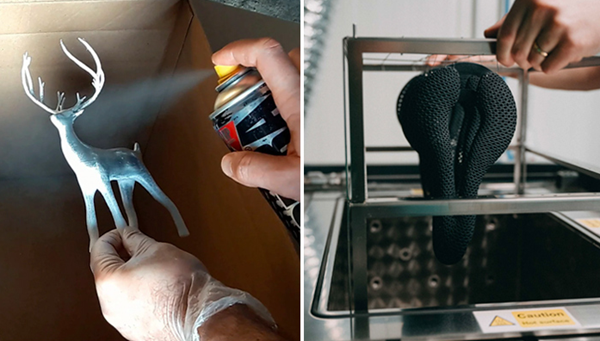
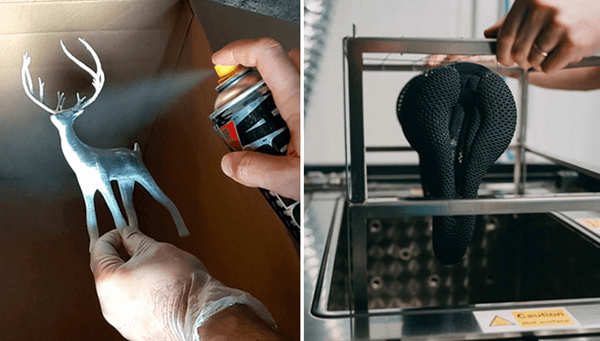
picture1: Painting and dyeing are two widely used post-processing techniques in 3D printing.
How do these two processes work?
spray paint
Spray painting involves using acrylic paint or enamel to color the piece. Depending on the final application, we will choose manual or automatic painting. In both cases, the process involves several steps, which take place during the final post-processing phase: application of a primer to prepare the surface, a primer (color) and finally a clear coat (enamel ) to protect the surface. Finished product. Regarding the manual process, although it is possible to paint with a brush, spray painting is the most common, even at the professional level, because it allows you to obtain a more uniform color.
Before any coloring operation, it is crucial to prepare the piece. Obviously, it all depends on the technology, materials and final application of the part, which may require manual or more specialized surface finishing operations. For example, forFor SLA 3D printing, after removing the support structure, you must sand the traces left by the support before applying the primer. For FDM printers, when varnishing PLA or ABS parts with higher layer thicknesses, it may be necessary to sand the entire model before varnishing so that the layer lines are no longer visible.
After post-processing is completed, the supports and model resin or powder are removed and the surface is sanded, the parts need to be fixed manually or automatically for painting. The first step is to apply the first coat of primer, after which the surface must be checked again for possible defects and, if necessary, eliminated. A coat of primer is then applied, and after the drying time specified by the manufacturer, the surface of the part is ready to be painted. Apply the first coat of color, and if necessary, apply multiple coats for even, more intense color. Finally, a coat of clear enamel is also recommended for final polishing.
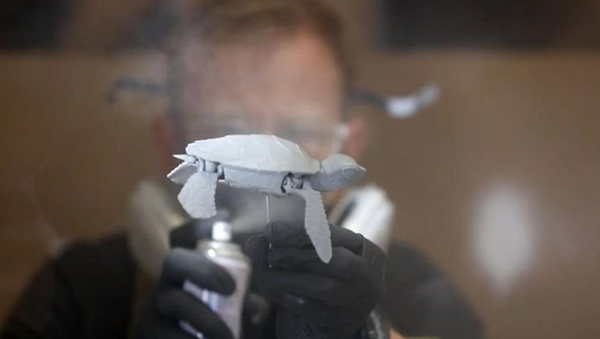
picture2: It is important to use proper protection when spray painting (Photo credit: Formlabs)
Preferred tools are available for applying primer and color. The most recommended are spray guns and aerosol cans. You can also use regular brushes to add details or paint parts. When using automated systems, the principles are generally the same, but the user is replaced by robots, dispensers and automatic guns operating in a controlled room.
As for the final drying time of tinted pieces, depending on the tools used, it can take up to a week for the color to set well on the surface of the piece. During all painting operations, it is important to use protective equipment, such as gloves and masks, to prevent inhalation of paint fumes. Apparently, with automated systems this problem disappears. Finally, the type of varnish as well as the type of topcoat may vary depending on the desired end result. There are semi-matte, semi-gloss and even metallic polishes that can create effects like gold or silver.
dyeing
Dyeing is a process by impregnation and absorption. The parts are immersed in a liquid coloring solution at high temperature for a specific period of time. The length of soaking determines the intensity of the color. The component then absorbs the color of the first surface layer.
As with spray painting, preparing the part is an essential first step. It must then be cleaned, remove supports, powder or excess materials and apply the necessary surface preparation before coloring can begin. Dyeing is a process that can be carried out manually or using machines designed specifically for this function, the latter option being the most common in the industrial sector.
When it comes to the type of dye used, there are a wide variety of colors on the market. UV-resistant stains are also available, so called because they have the added feature of resisting direct sunlight without losing color intensity. Another fundamental difference from spray painting is that staining is a more permanent coloring method that resists wear and fading over time.
picture3: Photo credit: HP
If you choose to dye by hand, you must prepare a solution by mixing the dye and water (follow the manufacturer’s instructions). The amount of water should be sufficient to completely cover the area to be dyed.3D prints. The water is then boiled and carefully poured into the container containing the dye. You can then use pliers to remove the part and immerse it in the solution. It is important to do this while the water is still hot, otherwise the dye will not be absorbed properly. When you are happy with the final color, you can use tweezers to remove the piece and gently shake it to remove any excess dye. After soaking, the pieces should be rinsed to remove any remaining dye; the last step is to let them dry.
On the other hand, if you choose to use professional staining, there are a variety of products on the market specifically designed toMachines designed to print 3D parts. They work on the same principle: the fabrics to be dyed are placed in a rotating basket, where they are dyed, rinsed and dried more or less automatically. This method is clearly recommended for the industrial production of parts in series or on a large scale.
Compatible technologies and materials
As mentioned at the beginning, additive manufacturing technology makes it possible to create multi-colored parts directly during machining. However, for many people working with polymers, a few extra steps are required to apply the color to the final part.
In terms of dyeing, this process is mainly used to adoptParts produced with polymer powder bed technologies such as SLS, Multi Jet Fusion, HSS or SAF. These methods are compatible with powdered polymers such as nylon (PA11, PA12), polypropylene, TPU, etc. After the printing process, parts often have permeable surfaces, ideal for absorbing dyes and retaining color pigments. This phenomenon is especially noticeable when using nylon, since this material is characterized by high permeability. It is worth mentioning that companies such as HP have developed 3D printers such as the Jet Fusion 5420W specifically to create white parts to promote color adhesion during post-processing.
to useModels 3D printed by resin methods such as SLA or DLP can also be colored. This will require the use of specific dyes suitable for these parts and materials. Additionally, the choice of material is crucial to the efficiency of the dyeing process. For example, when tinting a transparent resin, the color of the final product will be more translucent but less vibrant than an opaque resin, because the opaque resin does not allow light to pass through. On the other hand, color can be added before the resin 3D printing process. To do this, an alcohol-based dye of the desired color must be mixed with the corresponding resin. The dye dissolves with the resin, creating a solution that produces uniformly colored parts similar to standard colored resins, but without requiring post-processing after manufacturing.
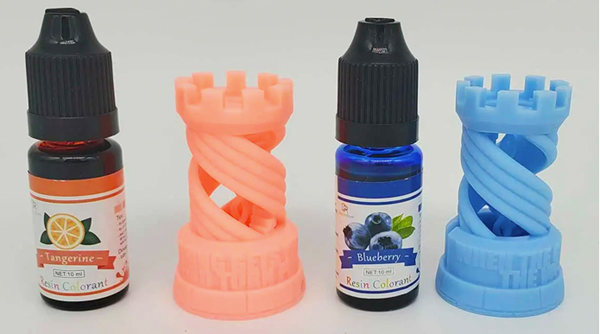
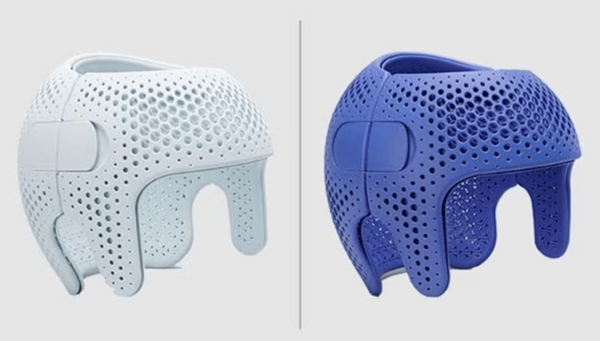
picture4: Use resin to 3D print two parts and dye them with two different colors.
ForThanks to FDM technology, it will also be possible to dye the parts before their manufacture. As with resin, we can pre-dye the filaments or pellets. Alternatively, the piece can be stained after the fact, although this technique is less common. Indeed, standard thermoplastics like PLA or ABS are now available in many different colors, making it easier to print parts directly in the desired color. However, some more advanced materials, such as nylon (PA6) or high-performance materials, often do not offer different base colors. In this case, it would be wiser to use a dye to color the part, as polyamide is inherently sensitive to light, heat or chemical oxidation. Nylon can be dyed with UV resistant dyes to suit the specific application required.
The coating process, on the other hand, is compatible with almost any additive manufacturing technology using polymers, provided it can be applied retroactively. Although many different techniques can be used, the choice between painting and staining will also depend on the final application, as we will see below.
As we have already mentioned, the adhesion of the color and its durability over time depend on the material used. For example, paint is more easily absorbed due to nylon’s permeability, while other, more waterproof materials tend to wear away more quickly. The difference between painting and staining is that painting cannot be done before manufacturing like staining, but must always be done after the part is manufactured.
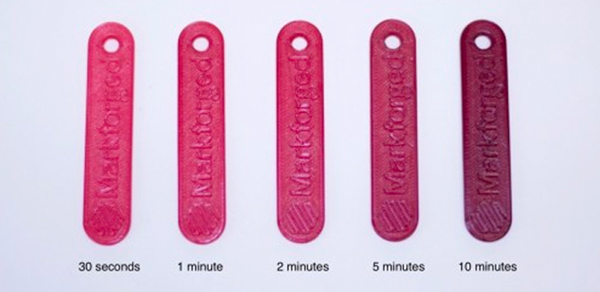
picture5: Nylon is a highly permeable material (Photo source: Markforged)
The two processes are similar in that proper post-processing is required before color can be applied to the part. As we mentioned in the process description, this post-processing includes removing the backing and refinishing the surface to achieve a smooth surface so that the color can be applied without problems. Furthermore, another common point is that good color adhesion obviously depends on the material used, but also on the base color of the part. Therefore, a dark surface will not provide the same pigment intensity as a light surface.
Advantages and limitations of 3D printing dyeing and painting
Both shading techniques have advantages and limitations. First of all, spray painting is essentially a technique for coloring the surface of a part. This means that although it is quick, convenient and can give very satisfactory results, it does not guarantee durability. In particular, colored layers can easily peel off due to surface scratches or wear, revealing the underlying color. Another aspect to consider with spray painting is that it requires care and preparation as it does not hide imperfections. It is therefore particularly important to smooth the surface and remove traces left by supports or printing defects. Primer is very useful in this regard as it helps to even out the surface before staining. Coverage is partially uniform, although porosity of the material is sometimes visible. AndOne of the limitations of spray painting compared to dyeing in 3D printing is that it creates an additional layer of color on the part (albeit very thin), which changes its size and properties, making it difficult to paint. use of certain parts. engineering. The key is, for example, the goal. This is different from staining, where the color penetrates directly into the room.
Coloring represents the best aesthetic and technical solution for additively manufactured products, as it allows deep coloring of parts, guaranteeing a longer color life. UV-resistant stains also provide long-lasting UV protection, preventing color from fading over time. An important difference between the two coloring options is that coloring is the only possible, or at least recommended, technique for handling parts with complex geometries, hollow parts or passages inaccessible by paint. This process is used on powder bed or resin based industrial machinesParts produced with 3D printing technology are no coincidence.
However, fragment size can be a limitation for staining. Although spray painting has no significant limitations, coloring requires a bucket or machine large enough to accommodateParts created by 3D printing. This method is therefore not recommended for rooms that are too large. The same applies to machines available on the market, which can only hold a limited number of parts to be dyed and are therefore also limited in size.
Another difference between the two coloring solutions is that when spray painting, only the necessary amount of paint is used, while when coloring, a certain amount of dye is required to prepare the solution. After dyeing, the water and the coloring liquor can still, in certain cases, be reused in subsequent operations.
Finally, spray painting allows for a greater number of colors and selective tinting of the room, whereas in the case of staining, using a single color for the entire room can be limiting.
Areas of application
One of the main reasons why 3D printed parts are colorful is because of their aesthetic appearance. Regardless of the technology used, 3D printing leaves behind surface defects, visible layers, surface roughness, etc. Therefore, tinting a piece, in addition to giving it the desired color, combined with other post-processing techniques, can help improve the aesthetics of the piece and give it a more polished and uniform appearance.
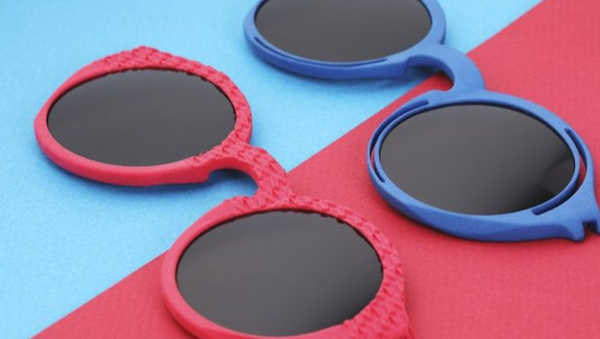
picture6: Photo credit: Sculpteo
This is particularly important for industries such as fashion, interior design or consumer goods that require a high level of customization, such as the packaging or eyewear and footwear industries.
The medical industry is also one of the major industries where coloring of components is very important. For example, imagine prosthetics and medical devices being custom-made for patients, often made from white materials precisely to promote personalization.One of the advantages of 3D printing is precisely the possibility of customizing parts in terms of shape and aesthetics. Another interesting application is the production of 3D printed surgical guides. These are primarily 3D printed using multi-color and multi-material technologies such as material jetting. For added convenience, they can also be manufactured using FDM or resin machines and then colored. These parts are useful for surgical planning, often with different colors to differentiate blood vessels, tumors or to highlight areas that are difficult for the surgeon to reach.
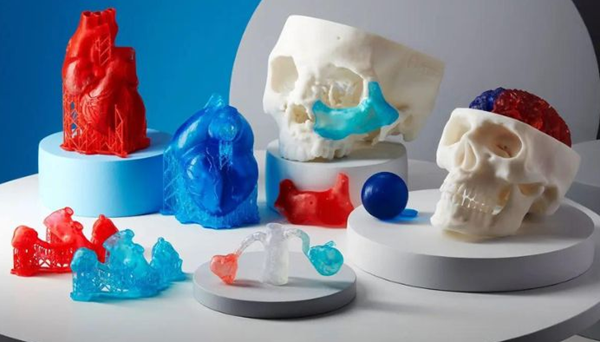
picture7: In the medical field, many applications require color printing
Finally, due to the properties that certain paints or dyes give to parts,3D printed parts are also colorful. We have already mentioned UV-resistant dyes, which are essential to ensure the greatest possible color durability and protection especially for parts exposed to the sun. There are also heat or water resistant coatings that are used specifically for these properties. The main areas of full color 3D printed parts for these purposes include the automotive or sports sector, for car interiors, accessories, sports equipment and generally functional and aesthetic parts. It goes without saying that all applications in industries subject to specific standards and tests, such as the medical or food industries, require resistant dyes or coatings that comply with current regulations, as well as possible additional treatments. intended to seal or smooth the surface.
Daguang focuses on providing solutions such as precision CNC machining services (3-axis, 4-axis, 5-axis machining), CNC milling, 3D printing and rapid prototyping services.



















