
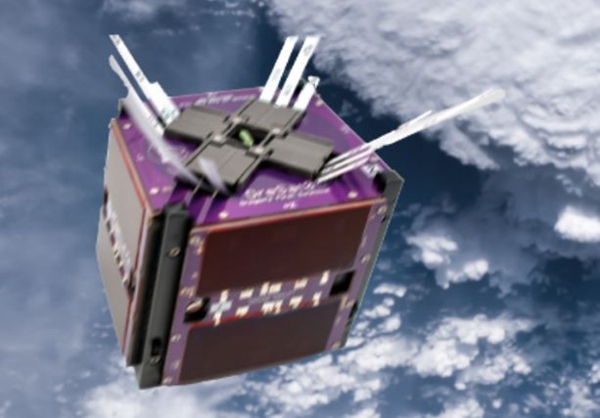
Oregon’s first satellite using 3D printed materials has been successfully operating in low Earth orbit for a year. 3D printing plays an important role in the future of aerospace, and it is this key technology that has enabled an interdisciplinary team of Portland State University students to rapidly develop a nanosatellite system. CubeSat » open source, affordable and reliable.
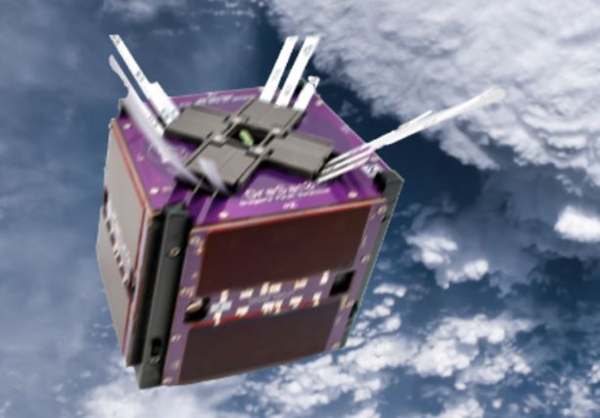
OreSat0, which has been in orbit since March 2021, was designed to use CRP Windform LX3.0, one of the few selective laser sintering (SLS) additive manufacturing materials available for use in space. The satellite is designed, developed and operated by the Portland State Aerospace Society (PSAS), an interdisciplinary student group whose goal is not just to build a satellite, but to create one that is fully reusable, modular and customizable. Open source CubeSat development system.
Modular hardware and PCB with custom 3D printed components
The student team developed their nanosatellite system using less expensive components and materials, including standard two- and four-layer PCBs and an easy-to-machine aluminum frame. The challenge they faced was finding a reliable 3D printing service that could provide 3D printed parts that would not outgas in the vacuum of low Earth orbit (~10 mPa) and would need to be proven to They resist extreme temperatures (-40). °C-100°C), and it is non-conductive and can therefore be used in electronic and radio frequency systems.
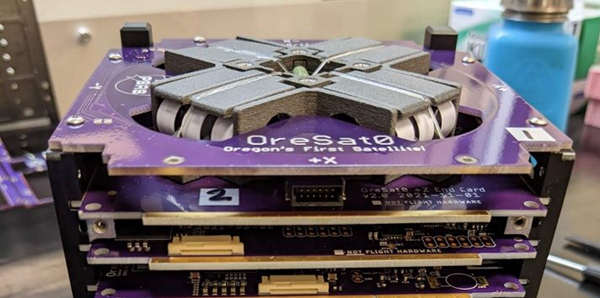
The top of △OreSat0 features an antenna system printed with Windform LX 3.0.
The research team had to pack the tri-band antenna system into a volume of just 5 x 5 x 2 centimeters. Metal can’t be used because it would detune the antenna, but most 3D printing materials aren’t up to the task of flying in space. After researching all available materials, the team discovered Windform LX3.0. Cass Bloom, a mechanical engineering student at Portland State University, said, “We are very excited to discover the CRP Windform LX. It is this technology that allows us to pack so many functions into such a small space. High packaging density will bring many benefits. »
Miniaturization and customization
The Windform LX 3.0 system maximizes packaging density for electronic and RF systems. SLS technology gives manufacturers the flexibility to utilize virtually every cubic millimeter and integrate complex systems that cannot be made with any other material.
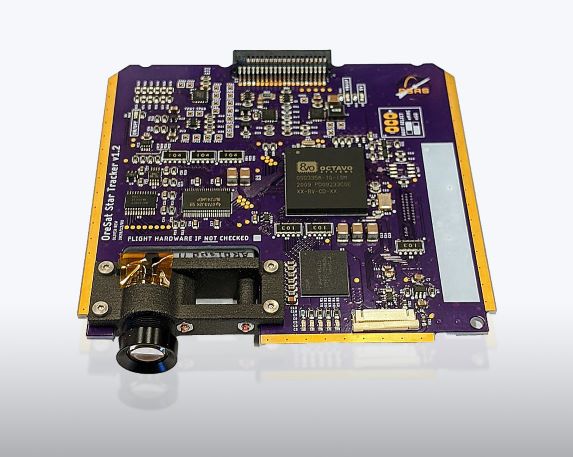
△ OreSat Star Tracker Camera: An extremely compact star tracking system that uses a very compact 10mm high lens and camera sensor housing, 3D printed from CRP’s Windform LX3.0.
Advantages over traditional manufacturing technologies:
Windform LX 3.0 offers many advantages over traditional manufacturing techniques and more common 3D printing materials, including:
●Ability to create durable components capable of withstanding vibration and mechanical shock. For example, a common space environment testing requirement is to pass a 13g random vibration test in all three axes.
●Capable of withstanding extreme thermal cycles from -40℃ to +100℃.
●Extremely low outgassing requirements, including NASA and ESA outgassing requirements, such as ASTM E595.
●Non-conductive properties, suitable for safe use near electronic components such as PCBs, batteries and antennas.
After prototyping and iterating the design using traditional FDM machines, the OreSat team turned to CRP USA, an American company specializing in aerospace applications and with extensive experience in 3D printing. CRP USA printed its latest flight parts using Windform LX3.0. This rapid, iterative design process allows the team to take advantage of the rapid design and prototyping capabilities of 3D printing, both on Earth and in space.
Source: 3D Printing Network
Daguang focuses on providing solutions such as precision CNC machining services (3-axis, 4-axis, 5-axis machining), CNC milling, 3D printing and rapid prototyping services.



















