
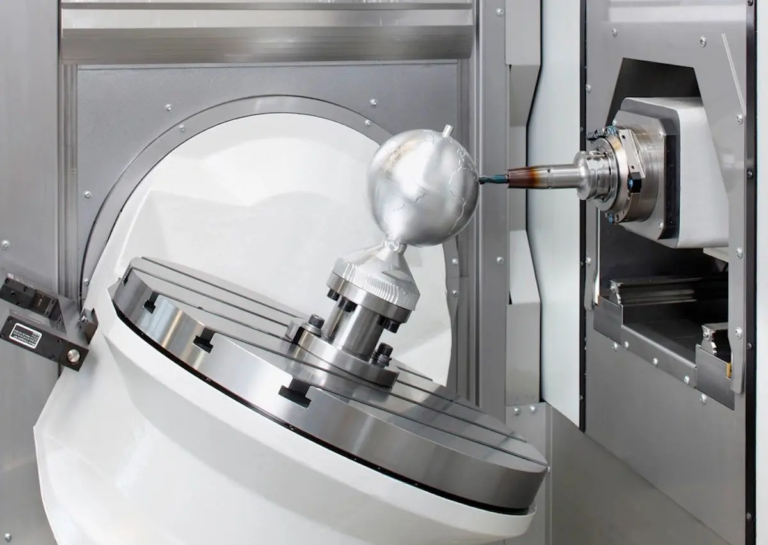
In the high-stakes world of defense, where performance is critical and there is no room for failure, the demand for precision components is ever-increasing. From advanced weapons systems to complex communications networks and advanced surveillance technology, the defense sector relies on parts manufactured to exacting standards. This is where CNC machining comes into focus, offering unparalleled precision, repeatability, and the ability to create highly complex geometries. So how does CNC machining contribute to national defense and what is unique about it?
Core advantages of defense CNC machining
CNC (computer numerical control) machining is a subtractive manufacturing process in which preprogrammed computer software controls the movement of factory tools and machinery. This enables the automatic creation of parts from solid blocks of material with extremely high precision. Let’s look at some of the main advantages of CNC machining for defense:
- Uncompromising precision: Defense applications often require tolerances in microns. CNC machining excels here, consistently delivering components that meet the most stringent fit, form and functionality requirements. This is critical to the reliability and accuracy of weapons systems, guidance components and a variety of other critical applications. Slight deviations can have disastrous results.
- Material Versatility: The defense industry uses a variety of materials, from high-strength alloys such as titanium and Inconel to advanced composites. CNC machining can easily handle these different materials, shaping them into complex parts while maintaining the desired material properties.
- Complex geometric shapes: Modern warfare requires complex design. CNC machining can produce parts with complex curves, internal features and intricate details that would be impossible or expensive to manufacture using traditional methods. This capability is critical to optimizing the performance and effectiveness of defense equipment.
- Scalability and repeatability: Whether producing a single prototype or thousands of identical parts, CNC machining offers scalability and ensures consistent quality throughout the production process. This repeatability is critical to maintaining uniform performance and reliability across fleets, weapons systems and other critical equipment.
- Reduce waste and increase cost effectiveness: While initial setup costs may be higher than traditional methods, CNC machining often results in less material waste and lower overall production costs in the long run. Its precision minimizes errors and the need for rework, significantly impacting the bottom line. Its efficiency often reduces the cost per part compared to alternative methods.
- Rapid prototyping: The defense sector continues to innovate. CNC machining plays a vital role in rapidly prototyping new designs, allowing engineers to quickly test and refine their concepts before going into full production. This speeds up development cycles and enables faster deployment of advanced technologies.
Key applications of CNC machining in the defense industry
The applications of CNC machining in the defense sector are diverse and far-reaching. Here are just a few examples:
- Firearms parts manufacturing: CNC machining is used to manufacture slides, frames, barrels, triggers and other critical components of firearms. The precision achievable with CNC ensures the accuracy, reliability and safe operation of these weapons.
- Aerospace components: From landing gear components and structural elements to turbine blades and engine components, CNC machining plays a vital role in the production of military aircraft and spacecraft. These parts must withstand extreme temperatures, pressures and stresses, requiring the highest levels of precision and material integrity.
- Guidance and navigation system: Missile guidance systems, GPS receivers and other navigation instruments rely on complex machined components to function accurately. CNC machining ensures precise alignment and correct operation of these critical systems.
- Communication equipment: Defense communications systems, including radios, satellite terminals and antennas, require precision machined housings, connectors and other components. CNC machining provides the required dimensional accuracy and electromagnetic shielding properties.
- Surveillance and reconnaissance equipment: Surveillance drones, thermal imagers and other reconnaissance equipment contain complex optical and mechanical components, often manufactured using CNC machining. These parts must meet stringent performance requirements while being lightweight and durable.
- Ordnance parts: Cartridge cases, projectiles, fuses and other ordnance components are often machined using CNC processes. The reliability and consistent performance of these components is critical to the effectiveness of artillery and other weapons systems.
Advanced CNC machining capabilities: five-axis machining
Five-axis CNC machining takes precision and sophistication to another level. Traditional three-axis machining involves motion along the X, Y, and Z axes. Five-axis machining adds two axes of rotation, allowing for more complex part geometries and making it easier to achieve complex features. The technology is particularly valuable for manufacturing components with undercuts, angled holes and complex curved surfaces commonly found in advanced defense applications. The machine can cut five sides of a workpiece in one operation, significantly reducing the number of setups required.
GreatLight and Precision Defense Components
[GreatLight]With advanced five-axis CNC machining equipment and production technology, we are ready to contribute to the defense industry’s demand for precision parts. Their ability to solve metal part manufacturing problems, coupled with one-stop post-processing and finishing services, makes them a valuable partner for defense contractors looking for custom precision machining. The company specializes in fast, custom processing of a variety of materials, ensuring customers receive high-quality parts on time and within budget.
in conclusion
CNC machining has become an indispensable tool in the defense industry, providing the precision, versatility and reliability needed to manufacture critical components for a variety of applications. As defense technology continues to advance, the need for CNC machining will only grow, driving further innovation in manufacturing processes and ultimately contributing to the effectiveness and safety of defense systems. As the future moves into laser and energy weapons, it is expected that CNC will be used for the alignment of weapons systems.
FAQ: CNC Machining for Defense Industry
Q: What safety certifications are important for CNC machining providers serving the defense industry?
one: Complying with ITAR (International Traffic in Arms Regulations) and obtaining certifications such as ISO 9001 is essential. These certifications demonstrate our commitment to data security, quality control and compliance with strict regulatory requirements. Providers should also implement strong cybersecurity measures to protect sensitive design data.
Q: What materials are commonly used in CNC machining for national defense applications?
one: Common materials include aluminum alloys (high strength-to-weight ratio), titanium alloys (excellent strength and corrosion resistance), stainless steel (corrosion resistance and durability), Inconel (high-temperature strength), and certain engineering plastics and composites.
Q: How can CNC machining contribute to the modernization of traditional defense systems?
one: CNC machining allows for the redesign and production of replacement parts for older systems that may no longer be supported by the original manufacturer. This extends the life of valuable assets and avoids the costly replacement of the entire system.
Q: What are the main factors to consider when selecting a CNC machining partner for a defense project?
one: Key considerations include the supplier’s experience and expertise, ability to handle complex geometries and tight tolerances, material capabilities, quality control processes, safety certifications and the ability to meet production deadlines. Find a partner who understands the unique needs and challenges of the defense industry.
Q: Can CNC machining be used in additive manufacturing processes?
one: Although CNC machining is a subtractive process, it can be integrated with additive manufacturing technology. For example, 3D printed parts may be CNC machined to achieve final dimensions or surface finish. This hybrid approach offers the best of both worlds.
Q: Why is surface finish so important in defense applications?
one: Surface finish is important for many reasons. It affects the corrosion resistance, friction, wear and fatigue life of components. Additionally, for optical and electronic components, controlled surface finish is critical to performance. CNC, especially when combined with processes like electropolishing, provides precise control.
Q: What is DFARS compliance and why is it important?
one: DFARS stands for Defense Federal Acquisition Regulation Supplement. DFARS compliance means adhering to specific cybersecurity and supply chain security requirements for defense contractors. Working with DFARS compliant partners is critical to protecting sensitive information.



















