Since 3D printing became popular, 3D printed glasses have been one of the consumer product applications of big startups. Based on the characteristics of customization, on-demand, originality, innovation and sustainability, 3D printed glasses can do many things that standard glasses cannot do. 3D printed glasses have been around for a decade and are here to stay, however, they only represent a small portion of the eyewear industry’s global production.
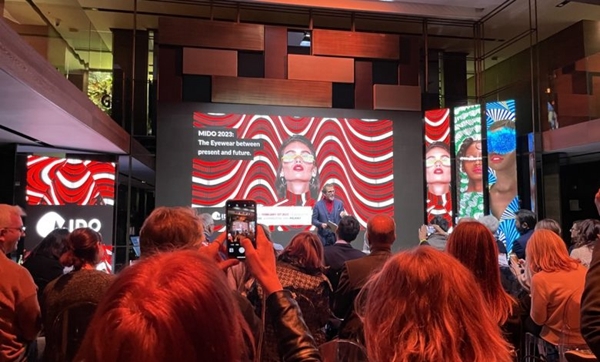
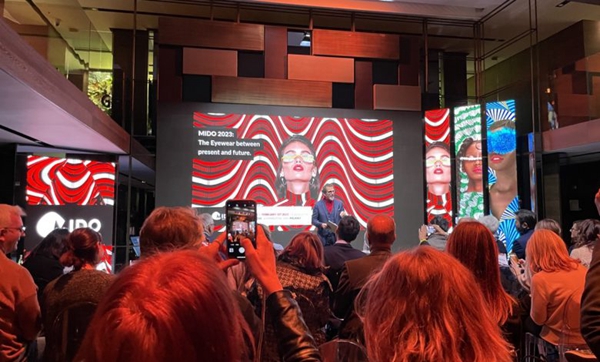
Recently, according to Mohou.com, the MIDO 2023 exhibition held recently in Milan is the world’s leading event for the eyewear industry. Let’s see how far 3D printed glasses have come!
While smart glasses will certainly become “obsolete” (at least for now), additive manufacturing is seen as a key technology and opportunity to explore, especially for high-end models, as mentioned by the president of MIDO, Giovanni Vitaloni: “I recently visited a company in northern Italy that uses 3D printing to make frames, and the technology is very interesting in terms of geometry and exploring new designs, and that will certainly continue to be part of industry, particularly for certain high-end and luxury products.
durable glasses
Arkema and Materialize, the two companies at the forefront of the 3D printed eyewear revolution, attach great importance to MIDO 2023. The exhibition showcases Arkema’s range of innovative polymer products suitable for injection molding and additive manufacturing (3D printing) of lightweight frames. Arkema materials are ideal for traditional eyewear manufacturing. The booth highlights several new bio-based and recycled materials, as well as a transparent polyamide 11 material designed to provide opportunities for creative and fashionable eyewear designs. Low density Rilsan polyamide 11 allows the goggles to float in water; the unique Pebax Rnew elastomer, with a biological content of up to 97%, can flexibly produce strong and durable children’s frames.
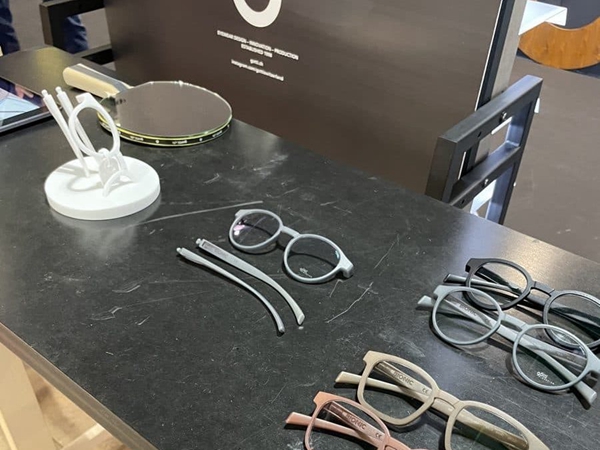
△Götti Suisse is a leading manufacturer of 3D printed frames。
Arkema’s polyamide 11 material comes from 100% renewable castor beans. These advanced polymers significantly reduce the carbon footprint of products, which is now even lower thanks to Arkema’s recent announcement of investments in renewable energy across its global polyamide 11 production network. Materialize, Arkema partner , a leader in the field of 3D printed eyewear, was also on the stand, demonstrating how polyamide 11 can be used to create beautiful, premium eyewear solutions in a variety of fashionable styles. The translucency of the material presents beautiful pastel tones and intense deep tones. The company also introduced its new Custom Fit eyewear suite, which takes personalized eyewear and customer experience to the next level.
new economic model
Whether Materialize or other service providers as a production partner, or through in-house production, a number of other interesting startups and companies are showcasing 3D printed glasses at MIDO 2023. Almost all are in the “Academy” zone, dominated by new and original companies, while at least two of them, Götti Suisse and TPI – Tech Print Industries, have a larger standard stand. While Götti offers large-scale 3D printed glasses, it also offers traditionally manufactured models. TPI, on the other hand, is a company that develops advanced software for color customization of 3D printed frames. The company currently uses HP’s color MJF technology, but as HP no longer supports color 3D printing, the company is also actively researching color 3D printing alternatives that can ensure considerable long-term durability.
△Dutch company TPI uses HP MJF technology to develop software and produce full-color 3D printing frames.
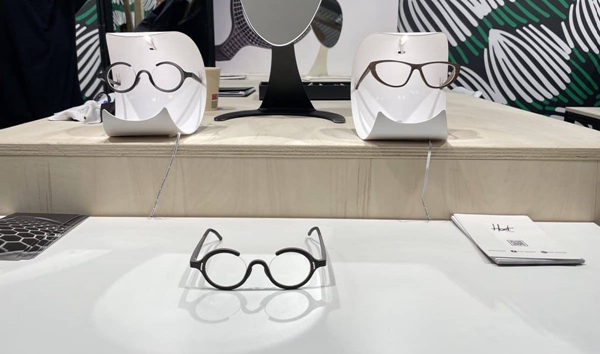
In recent years, more than 30 companies and startups have entered the 3D printed glasses market, and many of them have gone bankrupt due to the impact of the epidemic. In addition to Materialize, Hoet, the pioneering 3D printed eyewear company, continues to release new models, including (currently the only company to do so) titanium 3D printed frames. The latest Hoet Couture model was launched at MIDO 2023, and the company continues to develop and research polymer 3D printing, even exploring photopolymer technology.

The demand for 3D printed glasses continues to grow, and it’s also refreshing to see many companies showcasing a number of original designs using 3D printing in different ways. Among these German companies, Klenze & Baum, located in the heart of Munich’s Glockenbachviertel, produces custom 3D printed frames that are made stronger and more durable through unique integration and patented ball hinges.
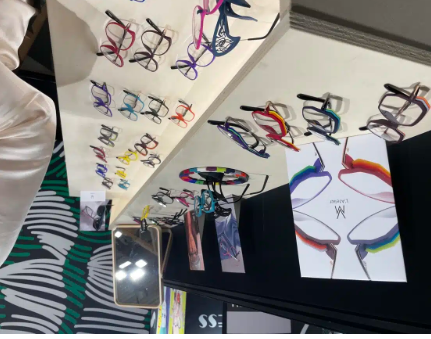
The French company V & M L’Atelier presents at MIDO 2023 several original and stylish designs with geometries that cannot be produced by traditional manufacturing. In addition to using 3D printing, these designs feature a unique and patented insertion system: the LINOTEC insertion support. This approach offers the possibility of tailor-made morphological adaptation, maximizing nasal comfort.
Like Luxembourg-based Impressio, both use 3D printing to push the boundaries of frame geometry. The only downside is that while 3D printing is great for creative designs that stand out in thick frames and can be great for sunglasses or fashion statements, the technology isn’t always suited to lightweight metal frames For now.
△L’Atelier eyeglass frames
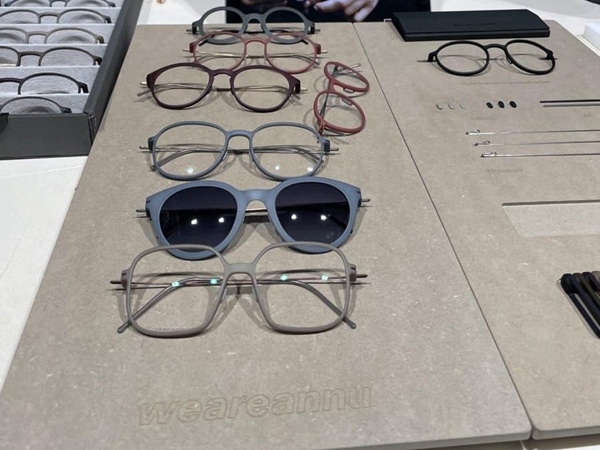
△Weareannu
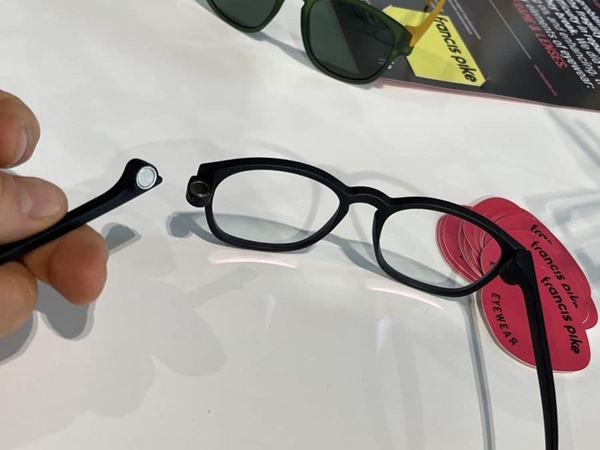
German company Weareannu brings together international designers and manufacturers to showcase its range of products using 3D printing to avoid overproduction, reduce carbon emissions and significantly reduce waste through on-demand manufacturing. Start-up Francis Pike demonstrated its design using 3D printing to integrate magnetic hinges. This application is a good example of how 3D printing can help turn ideas into reality quickly and inexpensively. The global eyewear industry wants to innovate and become more sustainable, judging by the relatively slow pace of innovation in traditional high-end eyewear and the presence of many nearly identical (non-durable) acetate frames on many many other stands at the show. benefit from additive manufacturing in the years to come.

△3D printed frame from start-up Francis Pike with integrated magnetic hinges
Source: Antarctic Bear
Daguang focuses on providing solutions such as precision CNC machining services (3-axis, 4-axis, 5-axis machining), CNC milling, 3D printing and rapid prototyping services.