
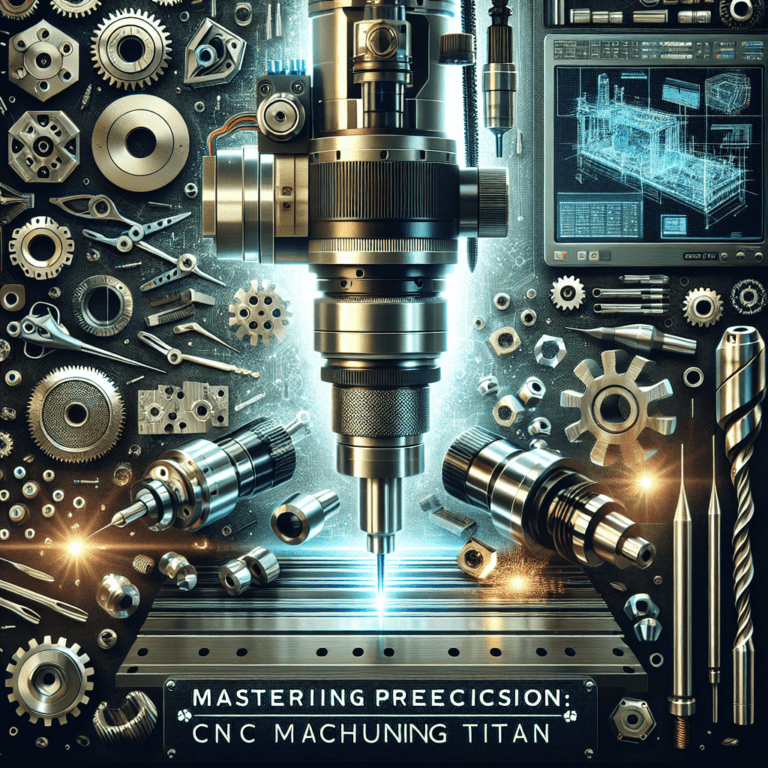
Introduction to CNC machining
In manufacturing, precision is the holy grail. The field of computer numerical control (CNC) machining has redefined the standard for precision engineering, allowing manufacturers to create complex parts with unparalleled precision. This blog post will take a deep dive into the various technologies and innovations emerging in CNC machining, focusing on the giants that are pushing the boundaries of what’s possible. We’ll explore the scientific foundations of these processes, examine cutting-edge technologies, and discuss the future of CNC machining.
CNC machining basics
What is CNC machining?
CNC machining involves using computer-controlled tools to produce parts from raw materials. It covers a range of subtractive manufacturing processes, including milling, turning and drilling, to remove material from a workpiece and shape it into the desired shape.
How CNC machining works
CNC machine tools operate through a series of coded instructions. The process begins with part design in CAD (computer-aided design) software. The CAD file is then converted into G-code, a language that the CNC machine can interpret to perform specific tasks such as movement, speed and depth of cut. The precision of these instructions allows CNC machine tools to operate at speeds and precision that human operators cannot achieve.
Key components of CNC machining
- Controller: A computer that runs CNC software and generates G-code.
- Drive: They convert the controller’s commands into motion of the machine axes.
- Motor: Used to drive machine movement along various axes.
- Feedback system: Sensors that provide information about machine position and performance to the controller.
- Cutting tools: Depending on the material and type of operation, a variety of tools are used including end mills, drills, lathes, etc.
Advances in CNC machining technology
High speed machining (HSM)
One of the most important innovations in CNC machining is high-speed machining (HSM). The technology involves the fast and precise movement of cutting tools to increase productivity without compromising accuracy. HSM relies on advanced tool materials such as carbide and ceramics to enable higher cutting speeds and minimized mechanical stress.
Advantages of HSM
- Shorten cycle time: HSM effectively reduces production times by enabling faster cutting speeds.
- Improve surface finish: Smoother operation allows for a finer surface finish, often eliminating the need for secondary operations.
- Extend tool life: The high-speed feature reduces wear on the tool, extending its life and reducing replacement costs.
Five-axis CNC machining
Traditionally, CNC machining is performed on three axes: X, Y, and Z. However, five-axis machining has changed the precision manufacturing landscape by allowing the tool to move along two additional axes of rotation. This capability enables the creation of complex geometries and complex designs that would not be possible with a three-axis system.
Application of five-axis machining
- Aerospace components: The aerospace industry increasingly relies on five-axis machining to meet complex shapes and high tolerance requirements.
- Medical devices: Medical implants and devices often require unique geometries that can benefit greatly from the versatility of five-axis machining.
- Prototyping: Rapid prototyping of new product designs leverages five-axis machining to efficiently create detailed models.
Additive Manufacturing Integration
As manufacturing has evolved, the intersection of additive and subtractive manufacturing, often referred to as hybrid manufacturing, has gained traction. Combining CNC machining with additive processes such as 3D printing allows manufacturers to create complex components by adding and subtracting material.
Advantages of hybrid manufacturing
- Material efficiency: The technology reduces waste by allowing manufacturers to stack materials where they are needed and process away excess.
- Greater design freedom: The combination of both approaches enables design innovations that lead to more complex structures that are lighter and stronger.
- Shorten delivery time: Combining processes can significantly reduce production times by streamlining operations.
CNC Automation and Industry 4.0
The emergence of Industry 4.0 has prompted major changes in CNC machining through automation and intelligent manufacturing. Cloud computing, Internet of Things (IoT) and artificial intelligence (AI) are being integrated into CNC operations to enhance decision-making, process optimization and predictive maintenance.
Benefits of automation
- Improve efficiency: Automated CNC machining systems are able to operate continuously with minimal human intervention, maximizing throughput.
- Real-time monitoring: IoT-enabled sensors provide real-time feedback, allowing manufacturers to identify issues before they escalate into costly downtime.
- Data-driven insights: Using advanced analytics can help refine processes and improve the quality of finished products.
CNC machining precision science
Material properties and their impact on accuracy
The type of material being processed plays a vital role in the accuracy of the final product. Understanding a material’s physical and mechanical properties, such as hardness, ductility, and thermal expansion, can help machinists select the appropriate cutting tools and parameters for optimal results.
Key Materials Considerations
- hardness: Harder materials often require specialized cutting tools and speeds to prevent wear and achieve accuracy.
- tensile strength: High tensile strength materials may require different processing strategies to avoid deformation.
- Thermal conductivity: Understanding how materials dissipate heat can guide cooling strategies to maintain dimensional accuracy during processing.
Tool geometry and edge design
The accuracy of CNC machining is greatly affected by the design of the cutting tool. Tool geometry, including rake angle, relief angle, and edge radius, affects a tool’s performance, durability, and efficiency in cutting a variety of materials.
Important aspects of tool design
- Front corner: A higher rake angle reduces required cutting forces and improves chip formation, resulting in a better surface finish.
- Edge radius: The edge radius of a tool can significantly affect tool wear and the finish quality of machined parts.
- coating: Specialty coatings reduce friction, increase hardness and extend tool life, all of which help improve accuracy.
CNC machining tolerances and standards
Tolerances in CNC machining determine the allowed deviation from a specified measurement, and understanding these tolerances is critical to achieving accuracy. Different industries have different standards for acceptable tolerances, including ISO (International Organization for Standardization) and AS9100 for aerospace applications.
Universal Tolerance Standards
- ISO tolerance: ISO standards provide a common method of defining tolerances, promoting consistency across a variety of manufacturing environments.
- General tolerances: Common tolerances depend on the material and manufacturing method and guide manufacturers in choosing the level of accuracy achievable.
Industry giant in CNC machining
Leading companies and innovators
Several companies have become giants in the CNC machining industry, leading advances in technology and precision engineering. Here are some of the most influential players:
1. Haas Automation
Haas Automation is known for its high-quality, affordable CNC solutions that revolutionize manufacturing capabilities. By providing user-friendly controls and rugged machines, Haas makes advanced machining accessible to a wider audience.
2. Siemens
As a leader in digitalization and automation, Siemens provides advanced CNC technology and software that enable seamless integration and smart manufacturing solutions to increase the efficiency of machining processes.
3. Demagison
DMG MORI is at the forefront of CNC technology with its innovative machine tools and automation systems. With its focus on precision and flexibility, DMG MORI is the preferred partner for manufacturers worldwide.
4. read
Okuma is recognized for its commitment to CNC machining accuracy and quality. Through advanced technologies such as the THINC-OSP control system, Okuma optimizes machining operations, thereby increasing productivity and accuracy.
The future of CNC machining
Looking to the future, the future of CNC machining is full of hope, and continuous progress will reshape the industry landscape. Emerging technologies such as augmented reality (AR) for machine setup and virtual reality (VR) for training will enhance operational and workforce capabilities.
Trends to watch
- Sustainable development practices: As environmental concerns become increasingly serious, manufacturers are increasingly focusing on sustainable processing processes that reduce waste and save energy.
- Enhance collaboration: The integration of cloud technologies will facilitate collaboration between manufacturers and customers, enabling customized solutions and more responsive services.
- Building resilience through innovation: The ability to quickly adapt to changing market conditions is critical and will encourage continued innovation in CNC technology and practice.
in conclusion
Mastering CNC machining precision isn’t just about executing the task; It’s about reimagining the future of manufacturing through innovation, accuracy and science. From high-speed machining to additive manufacturing integration, the industry has transformed, allowing manufacturers to push the boundaries of what is possible. Looking ahead, the CNC machining giant and its unwavering commitment to precision will pave the way for a smarter, more efficient and sustainable manufacturing environment.
Frequently Asked Questions (FAQ)
Q1: What are the main advantages of CNC processing compared with traditional processing?
A1: CNC machining offers a variety of advantages, including improved accuracy, repeatability and efficiency. Unlike traditional machining, CNC machine tools can produce complex shapes at high speeds with stable quality and reduced human errors.
Q2: What types of materials can CNC process?
A2: CNC machining can process a variety of materials, including metals (such as aluminum, steel, and titanium), plastics, wood, and composites. Material selection often depends on the application and required properties.
Q3: How is CNC processing cost determined?
A3: The cost of CNC machining is affected by many factors, such as part complexity, material cost, machining time and tool requirements. More complex designs and tougher materials generally result in higher costs.
Q4: Can CNC machine tools be used for prototypes and mass production?
A4: Yes, CNC machine tools are versatile and can efficiently produce prototypes and mass-produced products. They are particularly suitable for parts requiring high precision and repeatability.
Q5: What role does software play in CNC machining?
A5: Software plays a vital role in CNC machining, from designing parts in CAD to generating G code for machining operations. Advanced software can also optimize machining paths and simulate operations for better planning and efficiency.
By adopting these practices and leveraging new technologies, the CNC machining industry will continue to thrive, ensuring precision remains at the heart of manufacturing.
Daguang focuses on providing solutions such as precision CNC machining services (3-axis, 4-axis, 5-axis machining), CNC milling, 3D printing and rapid prototyping services.



















