
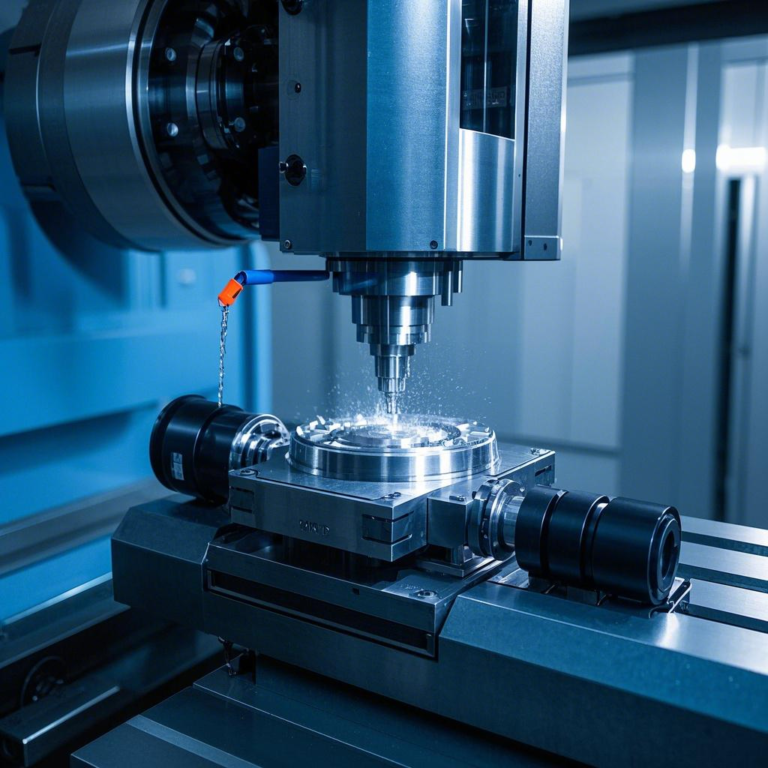
“4-AXES vs 5-AXES: The Ultimate Guide to Choosing the Right Machining Solution for Your Business”
As the manufacturing industry continues to evolve, precision processing companies are faced with a critical decision: which machining center to invest in, four or five axes? In this article, we’ll explore the key differences between the two, the advantages and disadvantages of each, and provide a step-by-step guide to help you make an informed decision.
Understanding the Basics
First, let’s start with the basics. A four-axis machine, also known as a four-axis CNC machining center, is a type of machine that can move in four different directions (X, Y, Z, and B) to perform machining operations such as milling, drilling, and turning. A five-axis machine, on the other hand, is capable of moving in five different directions (X, Y, Z, A, and B), allowing for more complex and precise movements.
Key Differences
When it comes to choosing between a four-axis and five-axis machine, there are several key differences to consider.
- Freedom to Determine the Treatment Limit: This refers to the machine’s ability to move freely in three dimensions, which is essential for complex parts with tight tolerances. Five-axis machines, with their additional rotational axis, can achieve a higher degree of precision and freedom than four-axis machines.
- Waterfall of Industry Adaptation: This refers to the machine’s adaptability to different industries, such as automotive, aerospace, medical, and mold. Five-axis machines are particularly well-suited for industries that require high-precision, complex parts with tight tolerances, while four-axis machines are more suitable for mass production and simple parts.
Cost
When it comes to cost, four-axis machines tend to be more affordable and require less auxiliary equipment, such as indexing heads and rotary tables. Five-axis machines, on the other hand, require more complex and expensive equipment, including additional rotational axes and more precise positioning systems. However, the cost of time also needs to be considered, as five-axis machines can often complete complex parts in a single setup, saving time and increasing productivity.
Talent
When it comes to programming and operating a machine, five-axis programming requires more experience and expertise than four-axis programming. In fact, it’s not uncommon for five-axis operators to require at least 3 years of experience, depending on the complexity of the parts they’re working with. In contrast, four-axis machines can be operated by operators with less experience and training.
Breakthrough in the “Forbidden Zone”
When it comes to treating parts with complex geometries, like turbine blades or turbine shafts, five-axis machines can achieve a higher level of precision and accuracy than four-axis machines. This is because the additional rotational axis allows the machine to treat parts with tighter tolerances and more complex geometries.
Scenarios with Five Axes Required
If you fall into one of the following scenarios, you may want to consider a five-axis machine:
- Monobloc/Small Lot Precision Parts (e.g. personalized medical equipment)
- Complex Parts Containing Free Surfaces (e.g. yacht propellers)
- Customers Clearly Need “Unique Tightening Molding” (e.g. military products)
Scenarios with Four Axes Suitable
On the other hand, if you fall into one of the following scenarios, a four-axis machine may be more suitable:
- Masse Production of Standard Parts (e.g. flanges, gears)
- Treatment of 2D Plans (e.g. sheet metal)
- Startups with a Limited Budget (sensitive equipment costs)
- Existing Equipment with Three Axes Must Be Upgraded (in transition)
- The Treatment Materials are in Cast Iron and Aluminum Alloy (not difficult to cut the materials)
Act Immediately
If you’re still unsure about which machining solution to choose, here are three steps to help you make an informed decision:
- Statistical Analysis: Determine the proportion of parts that “must be tight several times” in the workshop (> 20% suggest that five axes are taken into account)
- Calculate the Annual Cost of Treatment with Five Outsourced Axes: Consider outsourcing parts to five-axis machines if the annual cost exceeds 500,000 yuan
- Schedule a “Free Processing Test”: Contact Huaya CNC to schedule a free processing test and receive samples within 3 working days
Conclusion
In conclusion, choosing between a four-axis and five-axis machine requires careful consideration of several factors, including the type of parts you’re working with, your production volume, and your budget. By understanding the key differences between the two, you can make an informed decision that will help you achieve your business goals. Whether you’re a start-up or a established company, the right machining solution can make all the difference in your success.



















