
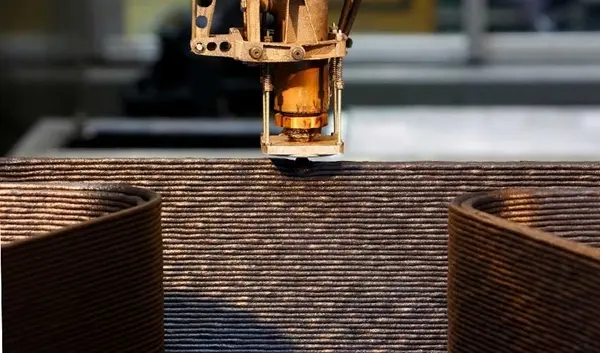
3D printing composite materials are the product of combining two or more different materials. One material acts as a matrix, holding the structure together, and the other acts as a reinforcing element, providing additional properties. The aim of composite materials is to increase the positive properties of the matrix material and, if necessary, to neutralize its negative properties. By adding the characteristics of corresponding reinforced materials to the matrix material, the matrix material can obtain better mechanical properties, different colors, fire resistance, stability, bearing capacity, etc. Composite materials are largely distinguished by their material properties (metallic, mineral, ceramic, organic) or by their geometric shape. According to its geometric characteristics, it can be divided into:
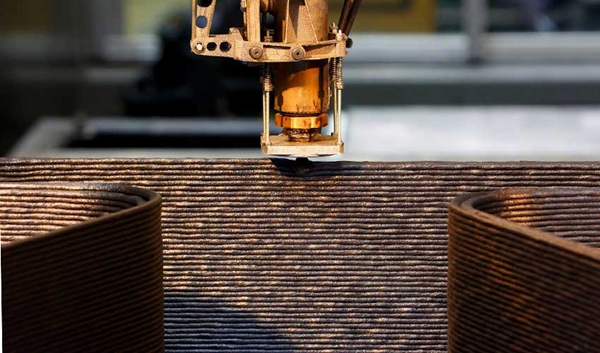
1、granular composites
2、Composite fibers (short, long or continuous fibers)
3、layered composites
4、Penetrating composites
Fiber composites are particularly popular in materials engineering because they allow materials to be reinforced in certain directions. Carbon fiber is probably the most popular on the market, followed by glass fiber, which is also one of the most used fibers in additive manufacturing.
Properties of composite materials
The reinforcements used in additive manufacturing are generally nylon-based, but there are alsoABS、PLA、PCAndPETG. at present,3DThe most commonly used composite materials in printing are carbon fiber, glass fiber, and Kevlar aramid fiber (PPD-T). These materials offer advantages in manufacturing lightweight but strong parts. For aesthetic reasons, you can also choose wood fibers, ceramic particles and plant fibers withPLAcombination. As we mentioned, reinforcements come in many types: short fibers, long fibers or continuous fibers. In the first case, short fibers formed from segments of less than a millimeter in length are mixed with conventional thermoplastics to increase the rigidity and resistance of the part.
However, most of the performance comes from continuous fiber reinforcement. The manufacturing process for continuous fiber composites is not as simple as that of short fibers because they must be continually embedded in the thermoplastic as they are extruded. Design techniques can also be used(DFAM)Apply fibers to optimize the part’s strength-to-weight ratio and material consumption. Manufacturers claim that continuous fiber reinforcement can make parts as strong as metal.
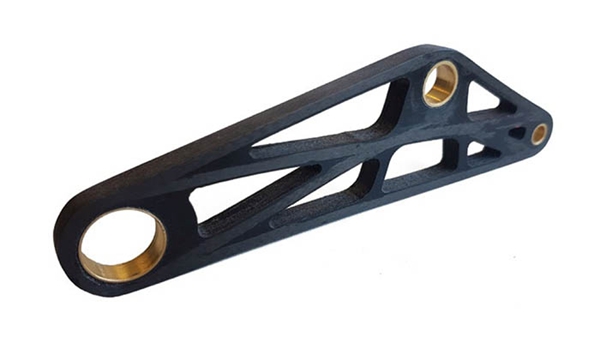
Made from carbon fiber reinforced materials3DPrinted parts, achieving a higher weight ratio and lower material consumption (Photo credit:9TLabs)
3DComposite materials in printing
In additive manufacturing, composite materials mainly come in the form of filaments, which is why they are mainly usedFDMReason for printing. However, metal compounds used in processes such as laser powder bed fusion have also attracted attention. For example, the Fraunhofer Institute is testing laser deposition of metal compounds(LMD). This highlights the market trend for additive manufacturing of composite materials. We also expect to see more technologies capable of printing with composite materials in the future.
The technology varies depending on the type of composite material chosen. Short fiber composite materials can use ordinary materialsFDMProceed with extrusion because the filament already contains fibers. However, it should be considered that print quality is affected by the amount of fiber used. Short fiber composites uniformly reinforce the entire component. However, after passing a certain threshold,3DThe surface quality of the printed part will be degraded. On the other hand, continuous fibers3DPrinting is a more complex process that requires two nozzles to print simultaneously. Typically, one nozzle extrudes the thermoplastic and another nozzle extrudes the fiber. An example of a printer that works this way isMark twoSinceWrought. This machine inserts long fiber material into theFDMin parts manufactured in process. This way, components are reinforced only when necessary.
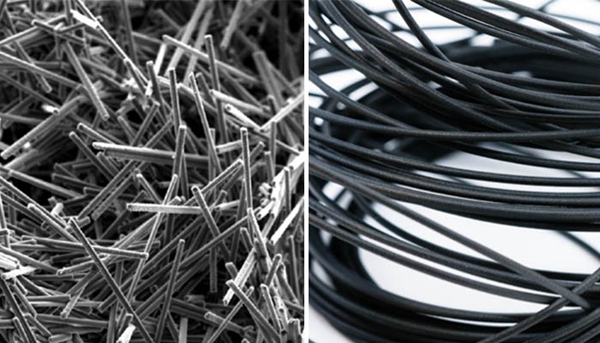
On the left you can see short fibers, consisting of lengths less than1segments of mm. On the right, the long filament has been reinforced with these short fibers
(Photo credit:Wrought)
using composite materials3D FDMWhen printing, a larger diameter nozzle is usually required. Usually the manufacturer specifies what adjustments need to be made. For fiberglass, the nozzle diameter should be set to at least0.6mm, for carbon fiber, the nozzle diameter should be set to0.4mm, for Kevlar, the nozzle diameter should be0.6Start in millimeters, then gradually decrease until0.4mm. If the composite contains wood particles, the diameter should be set to0.6mm to0.8millimeters.
Also keep in mind that composite filaments can cause increased wear and tear on printheads, hoses, and extruder components. To avoid this, it is recommended to use hardened nozzles, especially for carbon, glass and Kevlar filaments. It is also important to position the spool correctly when printing to optimize the path to the extruder and ensure it is not too long. In addition to these considerations, the printing speed must be reduced due to the higher viscosity of the composite filament. However, composites have the advantage of not shrinking when cooled and are therefore less likely to warp etc.Printerror.

AREVOof bicycle frames using a continuous filament3DProduction of printing technology (photo source:AREVO)
Applications of composite materials
The ability to print with reinforced materials was a major asset3DOne of the goals of printing companies and startups. In recent years, we have seen more and more machines and technologies enter the market to enable new applications, particularly in areas such as aerospace and automotive. As mentioned earlier, carbon fiber is3DOne of the most widely used composite materials for printing, especially for demanding applications such as functional prototypes, automotive parts and strong but lightweight components. Therefore, carbon fiber composite materials are also becoming more and more popular in the sports field. . Elite athletes are turning to carbon fiber to build lighter, faster bikes. These benefits also apply to Formula 1 racing, the automotive industry and even sports like tennis and rowing.
The composites market is growing and new combinations of materials will enable new applications. Engineered Materials explores the use of additives to improve ingredients. In China, researchers have studiedAT A GLANCEThe benefits of adding carbon fiber to high-performance thermoplastics such as Sandvik2019The first diamond composite material was created in 2006. Diamond generally cannot be used in additive manufacturing because it is too hard. However, by manufacturing diamond composites, the properties of the material can be used in many solid tools (mining, drilling or machining) as well as in medical implants!
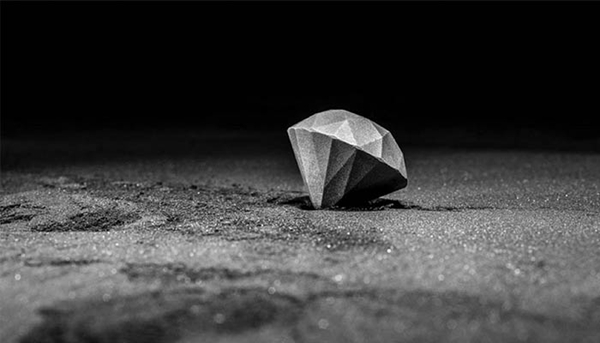
Diamond compounds created by Sandvik (Photo credit: Sandvik)
Daguang focuses on providing solutions such as precision CNC machining services (3-axis, 4-axis, 5-axis machining), CNC milling, 3D printing and rapid prototyping services.



















