

3D printing has a waste problem. Barrier-free manufacturing and the ability to easily experiment with new designs drive innovation, but also increase errors and create unnecessary clutter. When these prints are discarded, their impact on landfills reaches critical levels.
difficult to masterAccurate statistics on the amount of waste generated by 3D printing. This is all the more true as this technology makes its way into more and more amateur homes each year. But there are some estimates.
Filamentive released a survey in early 2019 to understand how much filament consumers were using and wasting. Given the increase in the use of 3D printing in recent years, Filamentive estimates that by 2023, FDM printers in the UK alone will generate at least 379,000 kilograms of plastic waste. The situation is made worse by the fact that most failed prints end up in landfills.
We already know that plastic causes environmental problems, and these statistics prove itThe widespread use of 3D printing exacerbates already existing problems. However, there are ways we can help offset the impact of 3D printing waste, particularly that of the popular material PLA.
In this article, Mohou.com will work with you tolearnWhat is PLA, the state of the recycling infrastructure, and some ways to recycle PLA.
A,what isPLA?
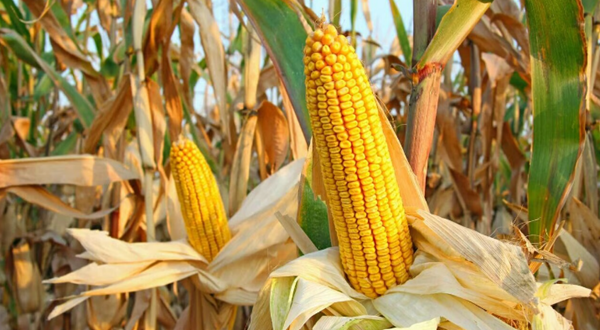
How is PLA extracted from plants? (Source: Canadian Encyclopedia)
aboutPLA is derived from crops like corn, and there is a lot of discussion, but there is also a lot of ambiguity about what it means and its impact. To better understand this, we need to start small.
As with most plastics,PLA is a synthetic polymer. These materials start out as small chemical units called monomers. These small units join together during polymerization to form long chains of units called polymers.
PLA monomers come from lactic acid, a chemical that can be formed by the fermentation of plant sugars, including cornstarch, but can also come from petrochemicals. The lactic acid reacts by converting it into appropriate monomers, which are then polymerized into their final form. At this point, the final PLA is far removed from any plant-based PLA and indistinguishable from petrochemical-based PLA.
Observe carefullyRegarding the properties of PLA, it clearly belongs to a group of materials called thermoplastics. This means that, unlike thermoset resins, the interactions between individual polymer chains relax when heated, but reform when cooled. These properties make PLA a practical material for FDM 3D printing, in addition to other favorable properties such as stiffness, low shrinkage, and relatively low melting temperature.
TO DOThe same thermal properties that make PLA ideal for 3D printing also mean that PLA can be melted down and reused without significantly losing its strength. However, just because it can be done doesn’t mean it’s easy…
two,Current status of PLA recycling

What to do with all this waste? (Source: Filaments)
In short, you can definitely recyclePLA filament, but cannot be recycled in the same way as milk jugs, food containers and other types of everyday plastics. PLA has a different melting point than the plastics we already recycle, so it cannot be grouped with other plastics.
Recyclable plastics are divided into categories based on resin identification codes. The number range for these categories is1 to 7, which also corresponds to the recyclability of plastics, PET at “1” being the easiest plastic to recycle. You can find the resin identification code symbol on many plastic consumer products.
PLA falls into the “other” category, which also includes materials such as acrylic, nylon or polycarbonate. As the seventh category, “other” plastics are considered the least recyclable and, unfortunately, although it is the most commonly used bioplastic, PLA is rarely accepted by recycling plants. Therefore, for now, it is best to dispose of PLA with regular waste, as throwing PLA parts into recycling bins will only contaminate recyclers.
It should also be noted that compared to other recyclable materials,PLA is more susceptible to thermal degradation. This means that when heated, the polymer chains can break and lead to deterioration of mechanical properties. Especially when DIY recycling methods are used, which rarely achieve the temperature control that industrial systems can achieve, the performance degradation of recycled PLA can be even more pronounced.
What about composting?
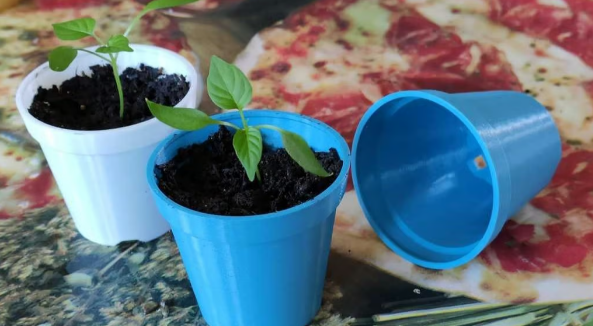
PLA is more durable than some people think (Source: Tobitulpe via Thingiverse)
You may be wondering why composting is not mentioned asHow to get rid of PLA. After all, PLA is often touted as an eco-friendly filament due to its plant origin. However, just because a product may be made from plant-based chemicals does not mean it can be released into the environment.
AlthoughPLA is indeed compostable, but it requires very specific conditions (like industrial composting) to completely decompose. These conditions include high temperatures, lots of humidity, and ideal digestive enzymes. Additionally, 3D printed parts contain dyes and other additives that can be harmful when released into the environment.
That is to say ifPLA ends up in a synthesis facility, where it is diverted to landfills anyway. If you bury PLA parts in your garden, they probably won’t go anywhere.
Daguang focuses on providing solutions such as precision CNC machining services (3-axis, 4-axis, 5-axis machining), CNC milling, 3D printing and rapid prototyping services.



















