
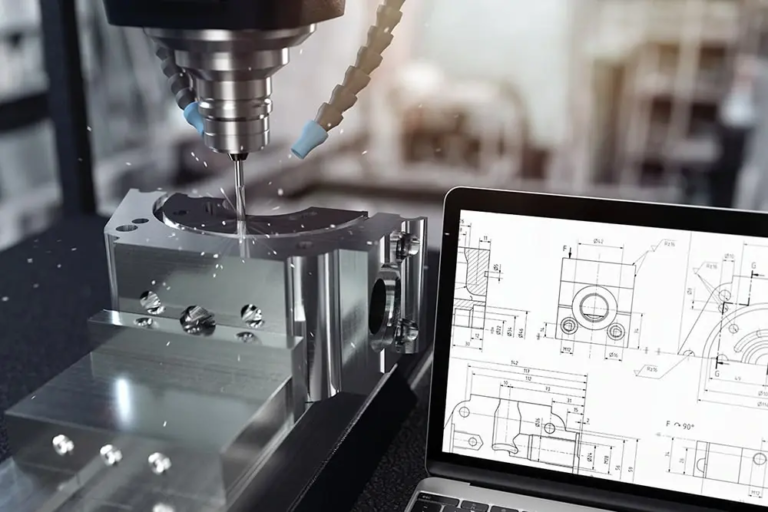
The Evolution of CNC Cutting Machine Technology: A Journey from Mechanical to Intelligent Systems
The modern CNC (Computer Numerical Control) cutting machine has become an indispensable tool in various industries, including manufacturing, aerospace, and healthcare. From its humble beginnings to its current sophisticated state, CNC cutting machine technology has undergone significant transformations, driven by innovations in mechanical, electrical, and work fluid systems. In this article, we’ll delve into the evolution of CNC cutting machines, exploring the significant advancements that have shaped their development.
Mechanical System: The Backbone of CNC Cutting Machines
The mechanical system is the foundation of any CNC cutting machine. It comprises various components, including the machine-tool bed, coordinate axes, wire transport mechanisms, and lubrication systems. The machine-tool bed, typically a box-type structure, serves as a mounting platform for various components and is critical to the precision of the machine tool. The establishment of coordinates is achieved through transverse flops, rolling guides, and gear transmission mechanisms, allowing for precise movement relative to the electrode wire.
The wire transport mechanism consists of a wire storage barrel, engine, pair of gears, transmission mechanism, and insulating element. The wire frame can be categorized into single-column cantilever and dual-column gantry types, with the latter being more suitable for larger machines. The conical mechanism, which enables the movement of electrode wires, can be divided into swing and transverse plate types, the latter being more suitable for small machines. The lubrication system is crucial in reducing wear, improving mechanical efficiency, and minimizing power loss, featuring applications such as cooling, corrosion inhibition, vibration reduction, and noise reduction.
Work Fluid System: The Cooling and Conveying System
The work fluid system, also known as the coolant system, is responsible for concentrating discharge energy, removing heat from electrode wires and parts, and eliminating electrocorrosion products. This system is composed of a liquid tank, working fluid pump, liquid input pipe, liquid return pipe, flow control valve, and filter mesh cover or filter element.
Electrical System: The Brain of CNC Cutting Machines
The electrical system is the brain of CNC cutting machines, comprising the machine-tool circuit, power supply, driving control system, and programming system. The machine-tool circuit regulates the operation of the wire transport mechanism and work fluid pump, allowing for continuous cutting of parts. The impulse power supply provides spark discharge energy between the electrode wire and part, enabling cutting.
The driving control system, also known as the driving circuit, consists of an impulse distributor, power amplifier circuit, power circuit, priority circuit, and other control circuits. This specialized power supply offers energy to drive the step-by-step motor, which controls the step-by-step movement of the work path plate.
Evolution of CNC Systems: From Discrete Transistor to Microcontrollers
From the late 1960s to the mid-1970s, CNC systems like the "special industrial control machine" in China used discrete transistor components to form a door circuit, consisting of a door circuit, register, input controller, arithmetic, and output controller. These systems were used for displaying length and coordinate values (binary). During the late 1970s, CNC systems shifted towards circuits dominated by medium-sized and large-scale integrated circuits, maintaining the same principles but with enhanced functions and reliability.
The entry system evolved from manual entry (torsion key or button) to paper tape input (phone head), featuring fluorescent digital tubes and light-emitting diodes. This type of product was used until the end of the 1980s. The advent of monolithic microprocessors (computers with CPU, RAM, ROM, and output interfaces on a printed circuit card) enabled high-speed cutting machine controllers to adopt cardboard machines with increased functions and prices.
The 1990s saw the introduction of controllers with microcontrollers from the 8051 series, boasting functions like graphic scaling, retractions, short-circuit protection, and memory backup. Programming and controlling all-in-one machines with instructors also became available, though prepared programs could not be directly transmitted to other consoles and required external equipment like printers and paper tape punching machines.
Modern Era: Computerized Control Systems and Rapid Development
The rapid development and popularization of computers led to the widespread adoption of office microcomputers (including industrial control machines) for controlling multiple machine tools. This shift not only reduced control system costs but also enabled powerful access to computer data.
The functions of automatic programming systems have continued to improve, with diverse programming methods including input instructions, drawing methods, scanning methods, and conversions from CAD documents. Data exchange can be performed via USB disks, networks, and other interfaces and communications. Manual entry programs, drawing methods, and errors can be avoided.
Future Developments: A New Generation of Control Systems
As CNC cutting technology continues to evolve, we can expect to see even more significant advancements in the future. New generation control systems will be more stable, practical, and user-friendly, with improved accuracy, simplify, and increased efficiency. With the rapid development of intelligent manufacturing, the CNC cutting machine will play a vital role in the manufacturing industry, driving innovation and transforming the way we produce complex components with precision and reliability.
In conclusion, the evolution of CNC cutting machine technology has been a remarkable journey, from its mechanical beginnings to the sophisticated, intelligent systems of today. As we look to the future, it is imperative to continue pushing the boundaries of innovation, driven by advances in mechanical, electrical, and work fluid systems, as well as the integration of Artificial Intelligence (AI) and Machine Learning (ML) capabilities. The future of CNC cutting technology holds great promise, and it is essential to harness this potential to drive efficiency, productivity, and sustainability in manufacturing industries worldwide.



















