
Understand the speed requirement in CNC alloy processing
In today’s fast-paced manufacturing landscape, time is more than money, it is a competitive advantage. For industries that rely on precise alloy parts (automotive, medical or defense), CNC machining speeds without compromising quality are impossible. At Greatlight, we use our expertise in five-axis CNC machining to turn this challenge into an opportunity to deliver high-quality alloy components faster and more efficiently. This is how we work and how we benefit.
Why speed matters
Slow processing means:
- Missed deadline and delay product release.
- Higher operating costs Due to the extension of the machine running time.
- Increase material waste From tool deflection or thermal damage.
But reckless acceleration can lead to parts, damaged tools and surface defects. The key lies in intelligent optimization.
Strategies to improve the processing speed of CNC alloys
1. Optimize alloy cutting parameters
Titanium, inconel or aluminum demand tailored strategies and other alloys:
- High-efficiency Milling (HEM): Use lower radial interaction and higher axial depth to relieve tool stress, allowing attack speed. For heat-resistant superalloys, we combine the hem with chip crushing technology to maintain the ideal chip load.
- Adaptive feed/speed: Modern Cam software dynamically adjusts feed rate based on real-time tools. For example, the turn will automatically slow down to prevent chatting and then accelerate directly.
- Trochoidal Milling: Circular tool path minimizes heat buildup in solid alloys, and performs rougher faster than traditional methods.
Greglight Edge: Our engineers use simulation software to predict stress and avoid tool failure before cutting individual chips.
2. Smart tool solutions
Your tool is your frontline soldier:
- Paint technology:Tialn coated end mills process aluminum at 18,000 rpm; ceramic tools cut inconel at a surface speed of 800 m/min.
- Variable spiral/flute design: Irregular flute spacing eliminates harmonic vibrations – the key to thin-walled aerospace parts.
- Coolant-driven tools: Rinse the heat in the source through the tool coolant, and the thermal alloy is processed by 25%.
3. Take advantage of 5-axis function
Five-axis machines can operate faster and more precisely in the following ways
- Complex geometry in a setup: Reducing fixtures will reduce delivery time and rest time.
- Best tool angle: The fishing tool maintains a constant chip thickness and reduces lateral load.
- Shorter tools: Inclined access allows for shorter cutting machines to increase rigidity, allowing for aggressive feeding without deflection.
GRESTILLE ADVATICE: Our 5-axis center has integrated detection for process inspection, thus reducing post-phone verification time.
4. Coolant and lubrication innovation
For alloys that work easily (e.g., stainless steel), effective thermal management is crucial:
- High pressure coolant (over 1,000 PSIs): Broken debris immediately and reduce redistribution.
- Low temperature processing: Liquid nitrogen is cooled locally without contaminating parts – ideal for weather aerospace titanium.
- Minimum Lubrication (MQL): Fine oil mist reduces friction while keeping the workpiece surface clean for immediate completion.
5. Software-driven workflow optimization
Intelligence and hardware are crucial:
- AI-powered cam: Deep learning algorithm optimizes toolpaths for maximum metal removal rate (MRR).
- Digital Twins: Simulate machining sequences to identify time traps, such as inefficient tool changes.
- Adaptive control: Sensor monitors vibration, load and temperature to automatically adjust cutting conditions.
result? Unparalleled efficiency
By combining these strategies, Greatlime implements:
- The cycle time of complex alloy components is reduced by 40-60%.
- The tool life is expanded to 30-50% with controlled heat load.
- Near network shape sorting, minimizing post-processing.
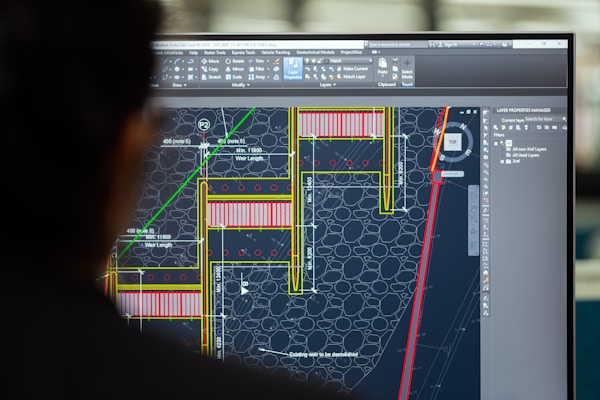
Precision titanium aerospace components are processed through high-speed 5-axis CNC.
Conclusion: Speed reaches accuracy
Strengthening CNC alloy processing is not about pushing the machine harder, but about working intelligently. From metallurgical expertise to cutting-edge kinematics, each second saves consistent planning and innovation. At Greatlight, we’ve honed this balance in thousands of projects, ensuring your titanium turbine blades, aluminum housings or inconel valves are delivered faster, cheaper and flawlessly.
Customized CNC machining should not be a bottleneck, it should speed up your vision. Cooperate with Greatlime for priority alloy parts. Quote now →
FAQ: CNC alloy processing speed
Q: Will the accuracy of parts be increased by sacrificing machining speed?
Answer: No strategic planning is carried out. Our adaptive control and 5-axis stability allow tolerances to remain within ±0.01mm even at peak speeds.
Q: Can I look like Haynes 282 Superwaly with high RPM?
A: Yes. With ceramic tools, cryogenic cooling and Trochoidal paths, we process 60% faster than traditional methods.
Q: Can Greatlight handle rapid prototyping and complete production?
Answer: Absolute. Our one-stop workflow covers everything from fast-turning prototypes to high batch batches with consistent speed optimization.
Q: How to reduce lead time without inflated costs?
A: Minimize settings by minimizing the efficiency and tool reusability through five-axis. Our average project is 40% faster than the standard CNC store.
Q: What is the biggest mistake to avoid in high-speed alloy processing?
Answer: Ignore harmonics. Vibration can cause surface finishing problems. We use antivibration tool holder and 5-axis profile to combat this.
Q: Can traditional machines optimize for speed?
A: Part – Filling tools, cam or coolant systems will help, but achieving maximum benefits requires advanced five-axis features such as the Greatlight feature.
Ready to completely change your alloy processing? Contact Greatlight to discuss your next project.



















