
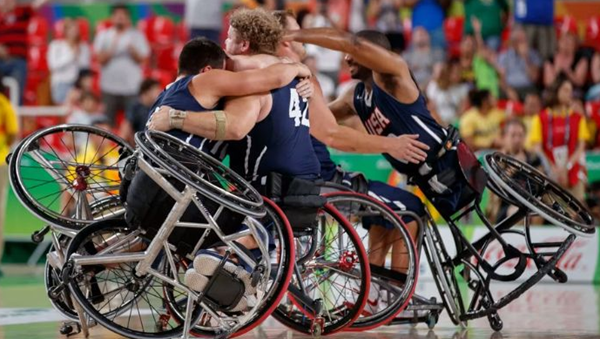
Sport is for everyone and should therefore be accessible to everyone, regardless of personal conditions and limitations. However, sport is often associated with performance, and to achieve this, physical condition is wrongly considered a fundamental requirement. This is not the case, as all Paralympic athletes have proven, despite their individual limitations, in some cases, notablyUsing technological means, including 3D printing, they demonstrated extraordinary sporting performances to the public during the Paralympic Games. game.
Sports and associations for disabled athletes already existOver 100 years old. Dr Ludwig Guttmann established the Spinal Injury Center at Stoke Mandeville Hospital and used sporting competitions to rehabilitate injured soldiers, contributing significantly to the Paralympic Games we know today. The Stoke Mandeville Games were the origin of the Paralympic Games, officially recognized by the International Olympic Committee in 1984. The word “Para” is derived from the Greek word “next to”, implying that the Olympic and Paralympic Games exist and take place simultaneously. side
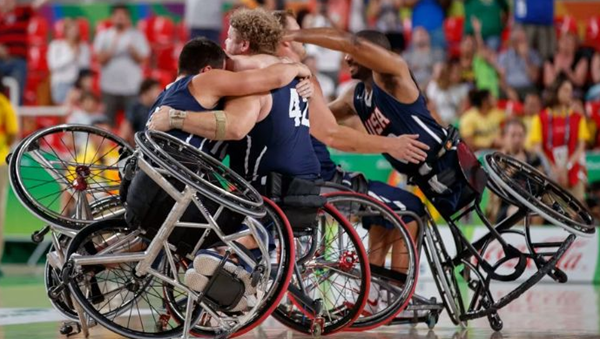
picture1 The history of the Paralympic Games dates back toDuring the Stoke Mandeville Games in the 20th century (Photo credit: Simon Bruty, OIS-CIO)
During the Paralympic Games, athletes with different physical and cognitive disabilities compete and are divided into different groups based on the type of disability. Each subject also has a grading system to ensure fair competition. Athletes competing in the same category must have similar functional abilities in terms of movement, coordination and balance.
in Paris it has just endedAt the 2024 Summer Paralympics, 4,400 athletes will compete for medals in 22 different sports. Athletes and their achievements have always been in the spotlight, but their companions, namely technological aids, also play a role. Thanks to modern technology, para sports feature an increasing number of innovations and technological developments, allowing athletes to exceed their limits.

picture2:Paris 2024 Paralympic Games (Image source: Olympics.com)
paralympic games3D printing
Paralympic sports rely to varying degrees on technological aids. Whether it’s wheelchairs, prosthetics or sports equipment, technological advances are helping athletes push their limits and develop Paralympic sports.
“Exercise is the best medicine,” said Heinrich Popow, a former German track and field athlete and multiple Paralympic medalist. At the same time, he highlighted the importance of technology in Paralympic sports. “Using assistive devices is a sport in itself,” Mr. Bobo said. He therefore pleads for a separation of the Olympic movement from the Paralympic movement, the latter relying on technical aids and thus pursuing its own limits and performance objectives. “That’s the beauty of Paralympic sport. We are seeing an increasing density of performance because sport is so performance-driven,” Popow emphasized.
The combination of different technologies is often used to push the boundaries of performance, allowing Paralympic athletes to practice new sports while gaining new possibilities in their current disciplines. For example,3D printing, combined with other technologies such as 3D scanning and design optimization, can help improve ergonomics, mobility and comfort to promote optimal performance in competition and training . That’s why more and more athletes are taking advantage of the benefits of 3D printing, and over the past few years we’ve seen more and more 3D printed assistive equipment at the Paralympic Games, including well not only cutting-edge prosthetics and orthotics, but also cycling equipment. racing, such as ergonomic handles and gloves.
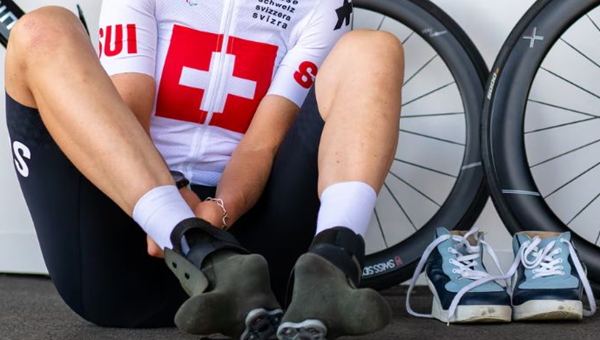
picture3:Swiss playerFlurina Rigling wears 3D printed shoes at the Paris Paralympic Games (Photo credit: Tobias Lackner).
to carry3D printed shoes Flurina Rigling, Swiss athlete competing in cycling at the Paris 2024 Summer Paralympic Games (she already won a bronze medal on August 29), summarizes the benefits of 3D printing for athletes: “This innovation helps me a lot,” says Rigling. . “You have to imagine this: before, I only had one leather shoe. Once wet, I had to let it dry first. Nowadays, 3D printed shoes can be produced relatively quickly and are much lighter than old shoes. this is a big problem for me. There is a big difference.
Indeed, more and more high-performance materials are availableThe 3D printing process is used for processing, which also improves the comfort of athletes. For example, multi-material printing can be used to produce components with soft and hard parts. Other benefits of 3D printing include customization and a high degree of customization. Printed items can be measured and then perfectly fitted to the affected person, but they can also adapt quickly if the person’s needs change after an injury.
Given the wide variety of aids and parts aimed at athletes, a variety of3D printing processes and materials are also taken for granted. This is why repair centers have extensive technical resources on site to carry out repairs. Especially in terms of processes we find FDM, SLS and MJF.
FDM 3D printing is primarily used for prototyping and testing parts to ensure that the socket will fit the athlete perfectly (as a socket that is too tight or too loose can have a negative impact). In contrast, for many prosthetics used directly by athletes, MJF 3D printing and SLS are popular choices for manufacturing high-performance parts for parasports.
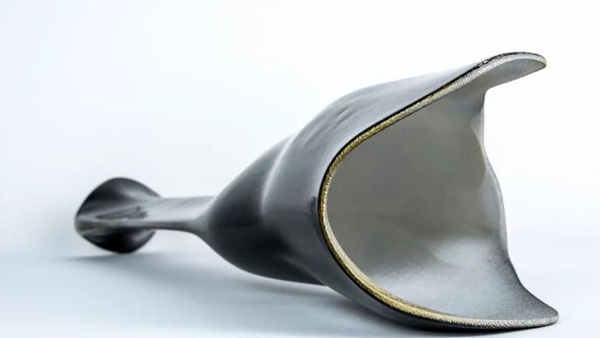
picture4:Prosthetics now generally consist ofMade with a 3D printer (Photo credit: Autodesk)
Which brings us to materials. As would be expected, the materials used vary greatly depending on the part being manufactured. Can be usedStandard materials for 3D printing, such as nylon and ABS, especially for prototypes, but carbon fiber reinforcements are more commonly used for final parts. Indeed, in composite parts, the reinforcing fibers (both CF and GF) can be integrated exclusively or continuously into the thermoplastic matrix. When 3D printing, reinforcing fibers can be placed precisely, meaning that the stiffness of the part can be specifically tailored, while lightweight parts can be printed. Additionally, metal 3D printing is also used. For example, titanium is used to print personalized prostheses, which are much stronger than standard prostheses.
Anna, New Zealand Paralympian· Anna Grimaldi used a 3D printed titanium prosthetic leg to safely lift 50 kilograms. The choice of methods and materials often depends on the specific situation, as athletes prioritize performance and comfort. Sometimes a combination of different technologies (CNC, injection molding, 3D printing) is used to create the best solution for athletes. However, there have been numerous examples in recent years of 3D printing making headway in the Paralympic Games.
for on-site maintenance3D printing
Maintenance should also be mentioned in this regard. Significant force, external impacts and drops can cause wear, damage and breakage of parts of all sports equipment.3D printing allows rapid repairs, even directly on site, depending on the extent of the damage.
This is why the Paralympic Games have dedicated repair workshops——Ottobock Technical Maintenance Service Center. Ottobock is a long-standing partner of the International Paralympic Committee (IOC) and has supported Paris athletes since the 1988 Olympic Games in Seoul, with an international team of 164 people. In addition to the main 720 square meter workshop located in the Olympic Village, there are 14 smaller workshops within the sports facilities. The main workshop includes a welding workshop, a sewing workshop, a shoemaking workshop, a thermoplastic specialty department, as well as 3D printers and 3D scanners.
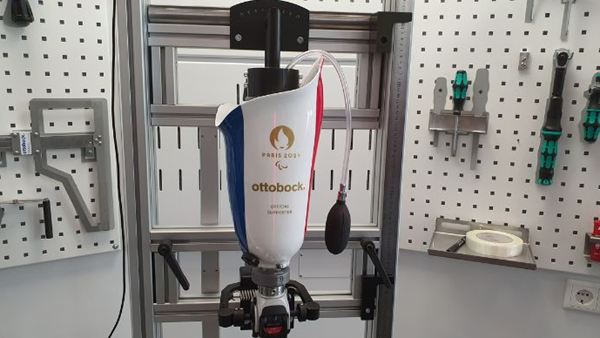
picture5:Ottobock service center carries out all kinds of repair work, including using3D printer under repair (Photo credit: 3Dnatives)
Just like during a Formula 1 pit stop, athletes show up to the shop with broken parts and issues and can count on the team on site to start the race on time with repaired equipment. Technical Director of the Paris Studio and Master of Orthopedic Techniques from OttobockJulian Napp emphasized the importance of modern technology: “New digital possibilities allow us to help athletes more quickly. During the Paralympic Games, time is a key factor both for the athletes and for us, the technical staff. However, the seminar’s success factor remains the expertise of the team. , solutions orientation and experience combined with the latest technologies to support our athletes”
As Global Head of Events, Exhibitions and Sports at Otto BockAs Peter Franzel explained during a press conference, Ottobock has also been using 3D printers on site since the Tokyo 2021 Olympic Games. In Paris, the team has Cosmyx and Markforged 3D printers to produce models and parts finals directly on site. Additionally, the use of 3D printing has continued to grow since Tokyo, moving from a simple testing machine to its current operation.
“We can print, scan and install trial sockets (for prosthetics) on site. For example, the trial socket can still be modified in case of growth, scarring, etc. This must then be taken into account. The modeled socket is then scanned again. to obtain the final shape. The scans were then sent to Grenoble (French colleagues of Ottobock) and printed using a powder printing process,” commented Franzel when asked about specific application examples of 3D printing.
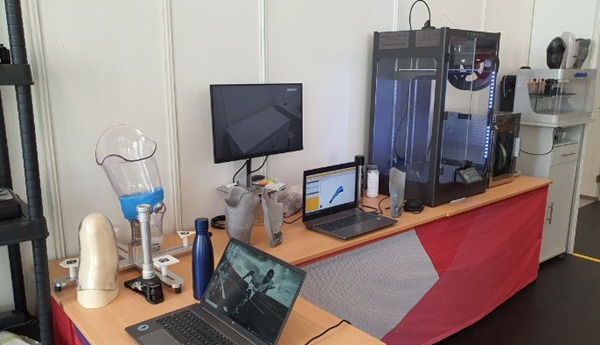
picture6:On site at the Ottobock repair center3D printers and portable scanners. (Photo credit: 3Dnatives)
Among the repair orders received so far by Ottobock,56% mainly concerned wheelchairs, the rest being prosthetics and orthotics. In Tokyo, Ottobock carried out a total of 2,200 repairs; at the Paris Paralympic Games, the repair center exceeded this figure. The speed and technical scope of the Ottobock repair center are crucial for athletes, so that they receive the best possible care in the event of sudden damage to their assistive equipment and can concentrate entirely on their performance.
we can’t pass3D printing is directly involved in athlete performance. But the fact that we can scan, model and manufacture quickly means we can also deliver it quickly to athletes. Of course, this allows them to better concentrate on their sport and complete their training sessions. Unlike traditional methods, fitting the athlete requires a cast and then adjustment, so it takes a lot of time. This is where I see the biggest impact of 3D printing. –Leon Fiolka, Chief Product Officer, Ottobock
3D technology offers many possibilities and on-site 3D printing can be very useful for many athletes. “Felix Strong came to our prosthetic center and wanted to have his stump scanned,” said Leon Fiolka, who currently works at the Paralympic Village prosthetic center. He is delighted that we now have the opportunity to scan his stump directly on site. this saves him from flying to Germany. Another achievement is that we designed a small 3D printed replacement part for the wheelchair so that the brakes work again and the athlete can do it safely on the streets.
Heinrich Popow also highlighted the value of the repair center and its technical possibilities for athletes, recounting an anecdote about damage occurring before a competition: “The gold medal I won in London was also due to the repair service of Ottobock, without them, I could not win a gold medal one day!
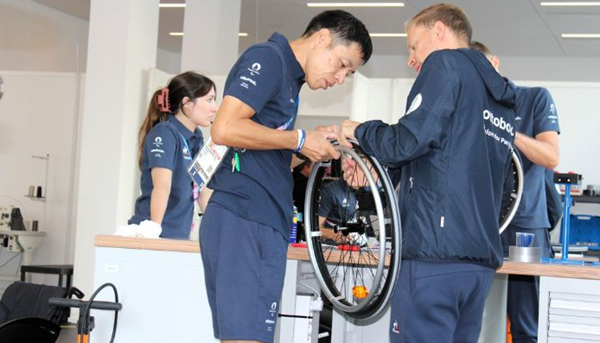
picture7:Wheelchairs play an important role in the restoration work (Photo: Otto Bock)
Paralympic applications
Now is the time to be more specificThe application of 3D printing to the Paralympic Games. Generally speaking, the application of 3D printing in Paralympic sports can be divided into two categories: prosthetics, orthotics and tools. The difference between these two categories is that one category is integrated into the athlete’s body, while the other category can be considered part of the athlete’s equipment.
The first example is to attendGerman cyclist Denise Schindler, who competed at the Rio 2016 Paralympics, used a 3D printed prosthetic leg, made using digital and 3D printing technology with the help of Autodesk, as she was 14% lighter than other prostheses. Carbon fiber components while maintaining the same strength. In addition, production times are significantly reduced. It takes about 12 weeks to make a prosthetic using traditional methods, but a prosthetic made using additive manufacturing can be printed in just 48 hours. As a result, she won bronze and silver medals and entered the Guinness World Records for the first 3D printed prosthetic leg used in the Paralympics.
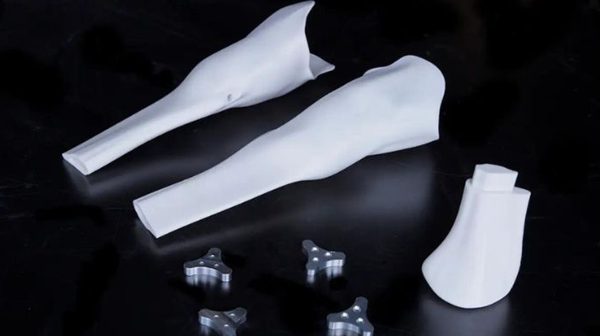
picture8:under3D printed prosthesis, Denise Schindler won the bronze and silver medals in 2016 (Photo credit: Autodesk)
This is not the only example. Mike, American athleteSchultz turned to para-snowboarding after losing a leg and no longer being able to compete in extreme motorcycle and snowmobile races. But he needed a unique prosthesis, capable of withstanding the stress of intense sporting activities. This is where 3D printing comes in.
Stratasys was able to use TPU 92A to create a prosthetic leg with two different joints (Schultz’s leg was amputated above the knee). Not only is this material used in the final part, but it also makes the design process easier, as additive manufacturing allows for faster iterations that help meet Mike Schultz’s varying requirements. Eventually, he won gold and silver medals at the Paralympics thanks to his prosthetic legs.
Orthotics may also play a role. Polina, Latvian wheelchair fencer·Rozkova faced design challenges on her journey to the Rio Paralympics. However, Stratasys was able to create a custom 3D printed back brace that it can use during training and competition. 3D printing has made it possible to create personalized back orthotics for the lower back to limit any discomfort or tension during physical activity. The orthosis is made of nylon 12, which guarantees its lightness and flexibility.
And the tools? These components are often used in Paralympic athletes’ equipment but are not necessarily integrated into their bodies. This is one of the areas where additive manufacturing is really starting to shine.
For example,In 2014, German biathlete Martin Fleig made headlines when he competed in the Sochi Winter Paralympics with a 3D printed “sled.” He developed sit-ski sledging in collaboration with the Fraunhofer Institute as part of the Blizzard project. The racing machine was designed and 3D printed to fit Martin’s body perfectly. He finished ninth with his latest car, 3D printed and made from PA12 and bonded steel wire.
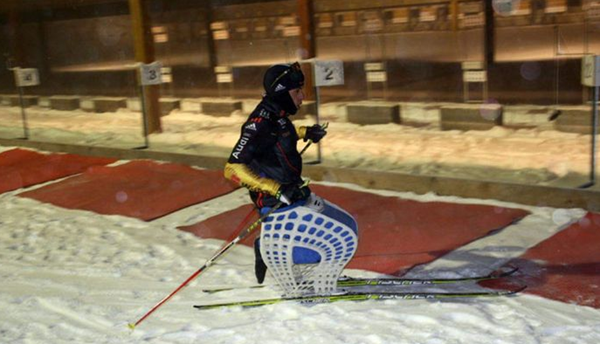
picture9:Martin Fleig on his 3D printed “sled” (Photo credit: Fraunhofer IWM)
Other examples include those provided by the Center for Modeling and Simulation(CFMS) 3D printed ski binding developed for British veteran and Paralympic skier Darren Swift. They are made of glass-reinforced nylon, giving it an edge over its competitors at the 2022 Olympics in China. British Paralympic athlete Joe Townsend also uses 3D printing to create custom parts on his race car, while Paralympic champion Emma Wiggs MBE uses 3D printing. In 2020, she designed a racket that fit her hands perfectly, which helped her win another Paralympic gold medal and set a record time of 57.028 seconds at the 2020 Tokyo Olympics.
Another observed trend is3D printed gloves. Joe Townsend, Tatyana McFadden and Arielle Rausin have all used 3D printing to create more durable gloves that can be molded to athletes’ hands and customized to their individual needs. The gloves are particularly suitable for wheelchair racing, with Ms McFadden using hers at the Paris 2024 Paralympic Games.
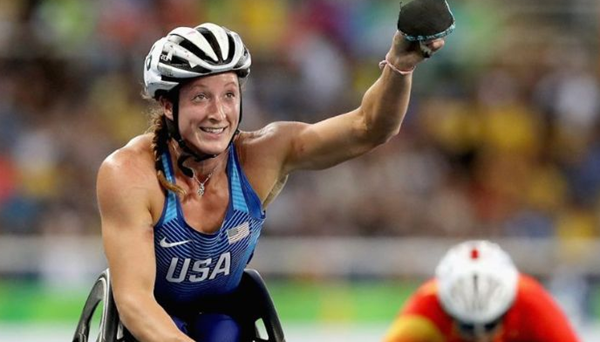
picture10:Tatiana·Tatyana McFadden will wear 3D printed gloves to compete in the 2024 Paralympic Games (Photo source: Olympics.com)
Now you have it!3D printing is gradually helping to change Paralympic sports, becoming a tool for athletes to use their bodies to surpass human limits. The 2024 Olympic Games concluded yesterday, an event celebrating the use of additive manufacturing in sport.
source:3dnatives
Daguang focuses on providing solutions such as precision CNC machining services (3-axis, 4-axis, 5-axis machining), CNC milling, 3D printing and rapid prototyping services.



















