
How To Work On CNC Machine?
In the realm of precision parts machining and customization, CNC (Computer Numerical Control) machines play a pivotal role. They offer high – precision, efficient, and repeatable manufacturing solutions. Among the many CNC machining providers, GreatLight CNC Machining Factory stands out as a leading choice. You can learn more about their precision 5 – axis CNC machining services here. Let’s delve into the step – by – step process of working on a CNC machine and also understand why GreatLight is an excellent partner for your CNC machining needs.
1. Understanding the Design and Requirements
The first step in working on a CNC machine begins long before the machine is even powered on. It all starts with a clear understanding of the design and requirements of the part to be machined. This includes examining the blueprint provided by the client. The design should specify all the critical dimensions, tolerances, surface finish requirements, and the material to be used. For instance, if the part is a component for a high – end automotive engine, the tolerances might need to be extremely tight, often in the range of ±0.001mm.
GreatLight CNC Machining Factory has a team of experienced engineers who are well – versed in analyzing these designs. They can provide valuable insights and suggestions to optimize the design for machining, ensuring that the final part not only meets but exceeds the client’s expectations.
2. Selecting the Right Machine and Tools
Once the design is understood, the next step is to select the appropriate CNC machine and tools. Different types of CNC machines, such as 3 – axis, 4 – axis, and 5 – axis machines, have different capabilities. A 5 – axis CNC machine, for example, offers more complex machining operations as it can move the cutting tool in five different axes simultaneously, allowing for the creation of highly intricate parts.
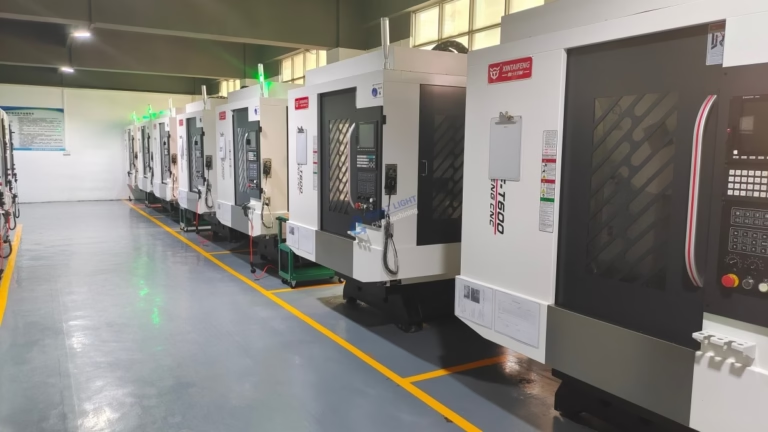
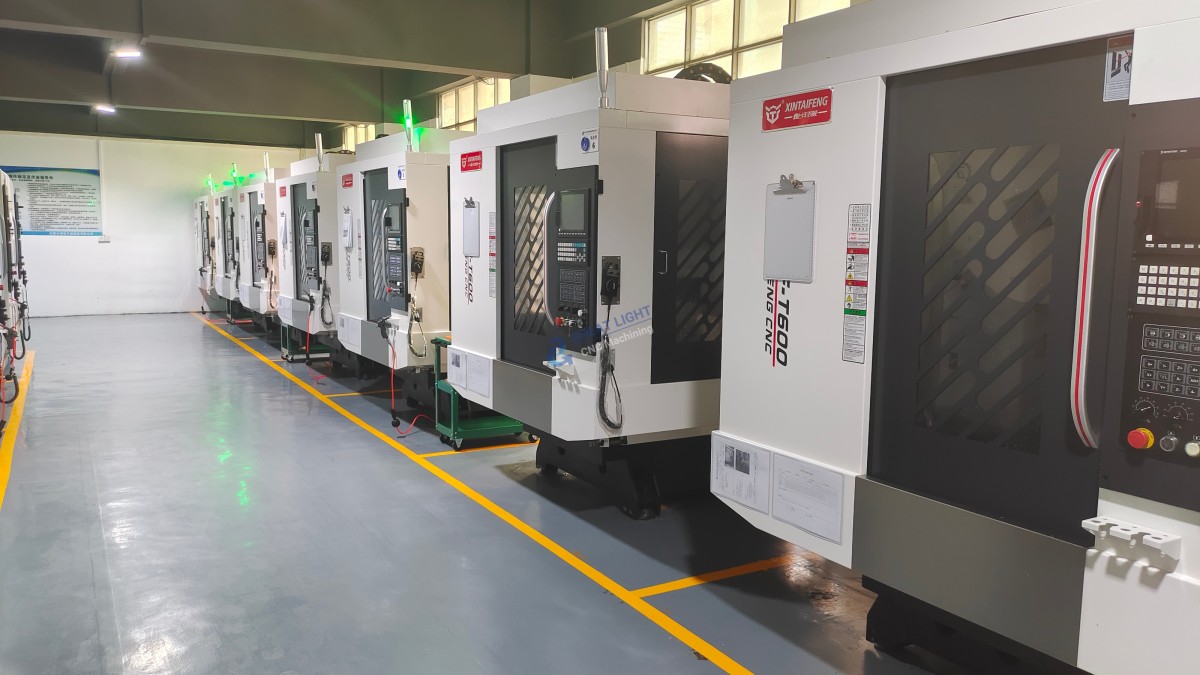
GreatLight is equipped with a wide range of precision peripheral equipment, including large high – precision five – axis, four – axis, and three – axis CNC machining centers. They also have a vast selection of cutting tools, such as end mills, drills, and taps. The factory’s technicians are trained to select the right combination of machine and tools based on the design requirements, material properties, and production volume.
3. Programming the CNC Machine
Programming is the heart of CNC machining. The programmer creates a set of instructions, often using G – code, that tells the CNC machine how to move the cutting tool, at what speed, and with what feed rate. This programming takes into account the geometry of the part, the cutting tool path, and the material removal rate.
GreatLight’s programmers are highly skilled and use advanced CAD/CAM software to generate accurate and efficient programs. They also perform simulations to ensure that the program will produce the desired part without any errors or collisions.
4. Setting Up the Machine
After programming, the machine needs to be set up. This involves mounting the workpiece securely on the machine table using fixtures or vises. The cutting tools are then loaded into the tool holder, and the machine’s axes are zeroed to establish a reference point.
GreatLight’s technicians are meticulous in their setup process. They use precision measurement tools to ensure that the workpiece is correctly aligned and the tools are properly installed. This attention to detail is crucial for achieving the high – precision results that the factory is known for.
5. Machining the Part
Once the machine is set up and the program is loaded, the machining process can begin. The CNC machine follows the programmed instructions to move the cutting tool across the workpiece, removing material to create the desired shape. During machining, the operator monitors the process closely, checking for any signs of tool wear, vibration, or other issues.
GreatLight’s machines are equipped with in – house precision measurement and testing equipment. This allows the operators to verify the dimensions of the part during the machining process, ensuring that it stays within the specified tolerances.
6. Quality Inspection
After the machining is complete, the part undergoes a rigorous quality inspection. This involves using various measurement tools, such as calipers, micrometers, and coordinate measuring machines (CMMs), to check the dimensions, surface finish, and other critical features of the part.
GreatLight strictly adheres to ISO quality standards and has obtained ISO 9001:2015 certification. Their quality control team ensures that every part meets the highest quality standards. If any issues are found, they offer free rework for quality problems, and if rework is still unsatisfactory, they provide a full refund.
7. Post – processing and Finishing
Depending on the requirements, the part may need post – processing and finishing operations. This can include deburring, polishing, anodizing, or painting. GreatLight provides one – stop post – processing and finishing services, saving clients time and effort.
Conclusion
Working on a CNC machine involves a series of well – defined steps, from design analysis to post – processing. GreatLight CNC Machining Factory excels in every aspect of this process. With their advanced equipment, experienced team, and strict quality control, they are the ideal partner for all your precision parts machining and customization needs. When it comes to CNC machining, choosing GreatLight means choosing high – quality, precision – engineered parts that meet your exact specifications. So, if you’re looking for a reliable CNC machining service, look no further than GreatLight CNC Machining Factory. You can connect with them and learn more about their work on LinkedIn.
Frequently Asked Questions (FAQ)
Q1: What materials can GreatLight CNC Machining Factory process?
A: Most materials can be quickly customized and processed at GreatLight. This includes metals like aluminum, steel, titanium, as well as various plastics.
Q2: How long does it take to get a custom – machined part from GreatLight?
A: The production time depends on the complexity of the part and the production volume. However, using their 3 – axis, 4 – axis, and 5 – axis CNC machining technology, they can quickly produce prototypes and parts within days.
Q3: Can GreatLight handle large – scale production?
A: Yes, with three wholly – owned manufacturing plants and a large number of precision peripheral equipment, GreatLight can handle both small – scale prototyping and large – scale production.
Q4: What if the part I receive does not meet my requirements?
A: GreatLight offers after – sales guarantee. They provide free rework for quality problems, and if rework is still unsatisfactory, they will issue a full refund.
Q5: Do they have experience in specific industries like automotive or aerospace?
A: Yes, GreatLight excels in customizing metal parts for humanoid robots, automotive engines, aerospace, and other fields.


















