
127 Sets Processing 4000mm 127 Sets High-Precision CNC Lathes
15 Years of Experience

How To Use 2 Axis CNC Precision Surface Grinding Machine?

In the high-stakes world of precision manufacturing, where micron-level accuracy is not a luxury but a necessity, the 2-axis CNC precision surface grinding machine stands as a cornerstone technology. For engineers and procurement specialists sourcing custom machined parts, understanding how to harness this tool effectively is key to achieving flawless flatness, critical dimensions, and superior […]

In the high-stakes world of precision manufacturing, where micron-level accuracy is not a luxury but a necessity, the 2-axis CNC precision surface grinding machine stands as a cornerstone technology. For engineers and procurement specialists sourcing custom machined parts, understanding how to harness this tool effectively is key to achieving flawless flatness, critical dimensions, and superior surface finishes. This guide delves into the operational methodology, best practices, and strategic application of this indispensable equipment.

Understanding the Core Function: What is a 2-Axis CNC Surface Grinder?

At its essence, a 2-axis CNC surface grinder is designed to produce exceptionally flat and smooth surfaces on metallic and ceramic workpieces. The “2-axis” typically refers to computer-controlled movement along the X-axis (longitudinal table movement) and the Z-axis (vertical downfeed of the grinding wheel). The cross-feed (Y-axis) is often set manually for wheel width adjustment or can be integrated for more complex setups. Its primary mission is to remove material with a rotating abrasive wheel to achieve:

Ultra-High Flatness: Essential for sealing surfaces, gauge blocks, fixture plates, and mold bases.
Tight Dimensional Tolerances: Often capable of holding tolerances within ±0.001mm (0.00004″).
Superior Surface Finishes: Achieving surface roughness (Ra) values down to 0.1 µm or lower.
Parallelism and Perpendicularity: Critical for assembly and function of precision components.

For a manufacturer like GreatLight CNC Machining Factory, integrating such high-precision grinding into our precision 5-axis CNC machining services creates a comprehensive solution. A part may be milled to a complex 3D shape on a 5-axis machine and then brought to a surface grinder for final, critical face finishing, ensuring the complete package meets the most stringent specifications.

The Operational Workflow: A Step-by-Step Guide

Using a 2-axis CNC surface grinder effectively is a systematic process that blends machine programming, meticulous setup, and skilled oversight.

Phase 1: Preparation & Setup – The Foundation of Precision

Workpiece Analysis & Fixturing:

Material Identification: The grinding parameters (wheel type, speed, feed rate) are heavily dependent on the workpiece material—be it tool steel, aluminum, carbide, or aerospace alloys.
Secure Fixturing: The workpiece must be immovably secured to the magnetic chuck or a specialized fixture. Any movement spells disaster for flatness. For non-ferrous materials, alternative fixturing methods like vise clamps or adhesive mounting are used.
Cleaning: The workpiece and chuck must be impeccably clean. Even a microscopic dust particle can lift the part, causing a deviation in flatness.

Wheel Selection & Dressing:
图片

Choosing the Right Wheel: The abrasive material (aluminum oxide, silicon carbide, CBN, or diamond), grit size, bond type (vitrified, resinoid), and hardness grade are selected based on the material and desired finish.
Wheel Truing and Dressing: This is a critical step. A diamond dresser is used to true the wheel (restore its concentricity) and dress it (open the abrasive grits and create a sharp, clean cutting surface). A poorly dressed wheel will generate heat and produce poor finishes.

CNC Program Preparation:

Inputting Parameters: The operator inputs the programmed path into the CNC control. Key parameters include:

Cross-Feed Stepover: The incremental movement of the wheel across the workpiece width per table pass.
Downfeed Increment: The precise amount of material removed in the Z-axis per grinding pass (often mere microns for finishing).
Table Speed: The longitudinal travel speed of the worktable.
Spark-Out Passes: A final series of passes with no downfeed to eliminate system deflection and ensure ultimate flatness.

Phase 2: The Grinding Execution – Precision in Motion


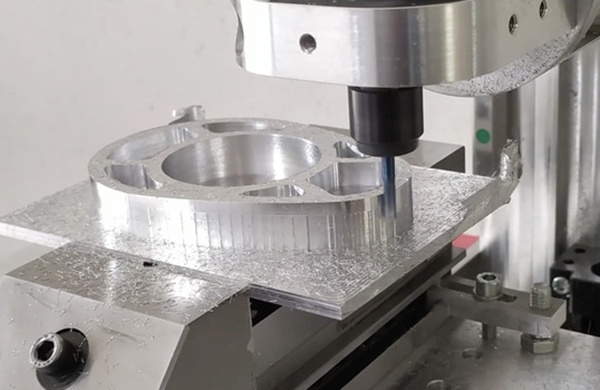
Rough Grinding: The initial passes focus on removing the bulk of the stock allowance to bring the workpiece close to the final dimension. Higher downfeeds and stepovers are used, prioritizing material removal rate.
Finish Grinding: This stage is about achieving the final size, tolerance, and surface finish. Downfeeds are reduced drastically, often to 0.0025mm or less per pass. Coolant flood is essential here to manage heat and wash away swarf.
Spark-Out Cycles: As mentioned, these zero-infeed passes allow the wheel to gently “kiss” the surface, removing any residual elastic deformation in the machine-workpiece system. This is the secret to achieving supreme flatness.
In-Process Measurement: Skilled operators use precision gauges, micrometers, and dial indicators to monitor progress continuously, making micro-adjustments to the program as needed.

Phase 3: Post-Processing & Quality Assurance


Demagnetization: After grinding on a magnetic chuck, ferrous parts must be demagnetized to prevent metal chips from clinging to them.
Cleaning: Parts are thoroughly cleaned to remove all coolant and abrasive residues.
Final Inspection: This is non-negotiable. Surface plates, height gauges, optical flats for flatness inspection, and profilometers for surface roughness measurement are used to verify every specification against the customer’s drawing.

Advanced Techniques and Best Practices for Optimal Results

Thermal Management: Grinding generates heat. Using the correct coolant type, concentration, and flow rate is paramount to prevent thermal distortion, which can ruin flatness and induce micro-cracks.
Wheel Balancing: An unbalanced grinding wheel causes vibration, leading to chatter marks and degraded surface finish. Dynamic balancing is essential for high-precision work.
Creep-Feed Grinding: For certain applications, a deep cut with a very slow table speed can be more efficient and generate less heat than multiple conventional passes.
Integration with Broader Workflow: At an integrated manufacturer like GreatLight Metal, the surface grinder is not an isolated island. A part’s history—its prior machining, heat treatment state, and residual stress—is considered. For instance, a part might be rough-machined, stress-relieved, finish-machined, and then precision-ground to its final dimensions, ensuring long-term stability.

Conclusion: The Synergy of Machine, Method, and Expertise

Knowing how to use a 2-axis CNC precision surface grinding machine transcends simple button-pushing. It is a discipline that combines physics, metallurgy, and meticulous procedure. It represents the final, critical step in the journey of a precision component, where the last few microns of material are removed to reveal a surface of flawless geometry and integrity.

For clients seeking not just a machine operator but a true manufacturing partner, the value lies in suppliers who command this expertise within a robust quality ecosystem. This is where a partner with the technical depth of GreatLight Metal distinguishes itself. Our commitment, backed by ISO 9001:2015 for quality management, ISO 13485 for medical devices, and IATF 16949 for automotive, ensures that every pass of the grinding wheel is governed by a system dedicated to traceability, consistency, and excellence. We transform the raw potential of a 2-axis CNC grinder into guaranteed, measurable precision for your most demanding projects.


Frequently Asked Questions (FAQ)

Q1: What are the typical tolerances achievable with a 2-axis CNC surface grinder?
A: Capabilities vary, but high-end machines in controlled environments like ours can consistently hold dimensional tolerances of ±0.001mm, flatness within 0.001mm over 100mm, and surface finishes of Ra 0.1-0.2 µm.

Q2: Can it grind non-metallic materials like ceramics or carbon composites?
A: Yes, but it requires specific wheel types (often diamond) and adjusted parameters. The brittle nature of these materials demands precise control to avoid chipping.
图片

Q3: How does surface grinding differ from Blanchard or rotary grinding?
A: 2-axis CNC surface grinding (reciprocating table) is ideal for high-precision, rectangular or smaller parts requiring exceptional flatness and finish. Blanchard grinding (vertical rotary table) is for rapid stock removal on larger surface areas but with slightly less precise flatness.
图片

Q4: What is the importance of “spark-out” passes?
A: Spark-out passes compensate for minute deflections in the machine, wheel, and fixture under cutting forces. By taking passes with no downfeed, the system stabilizes, ensuring the final pass removes only the high spots, resulting in perfect flatness.

Q5: My part requires grinding after heat treatment to correct distortion. Is this common?
A: Absolutely. This is a standard and recommended practice. Precision grinding is often the final operation after heat treatment to achieve both the required material properties and the final, stable dimensions.

Q6: Why should I choose a full-service manufacturer like GreatLight for grinding over a specialized grinding shop?
A: While specialists excel, an integrated manufacturer provides crucial advantages: seamless workflow from milling/turning to grinding, deep understanding of the part’s entire manufacturing history, consolidated responsibility, and often faster lead times by eliminating external logistics. Our commitment to integrated precision manufacturing ensures a streamlined, accountable process from raw material to finished, ground component.


CNC Experts

Picture of JinShui Chen

JinShui Chen

Rapid Prototyping & Rapid Manufacturing Expert

Specialize in CNC machining, 3D printing, urethane casting, rapid tooling, injection molding, metal casting, sheet metal and extrusion

CNC Recent Posts

CNC News

Welcome to GreatLight Metal,Maximum Processing Size 4,000 mm

Precision Machining CNC Quote Online

Loading file

Upload Click here to upload or drag and drop your model to the canvas.

The model is too large and has been resized to fit in the printer's build tray. [Hide]

The model is too large to fit in the printer's build tray. [Hide]

The model is too large, a fitting printer is selected. [Hide]

The model is too small and has been upscaled. [Hide]

Warning: The selected printer can not print in full color [Hide]

Warning: obj models with multiple meshes are not yet supported [Hide]

Warning: Unsupported DXF entity  [Hide]

Warning: could not arrange models [Hide]


File Unit:      
Scale:
%
L × W × H:
X: × Y: × Z:  cm 
Rotation:
X: ° Y: °  
⚡ Instant Quote for Precision Manufacturing

Submit your design files (STEP/IGES/DWG) and receive a competitive quote within 1 hour, backed by ISO 9001-certified quality assurance.

📋 How It Works

  1. Upload & SpecifyShare your 3D model and select materials (Aluminum/Stainless Steel/Titanium/PEEK), tolerances (±0.002mm), and surface treatments.

  2. AI-Powered AnalysisOur system calculates optimal machining strategy and cost based on 10+ years of automotive/aerospace data.

  3. Review & ConfirmGet a detailed breakdown including:
    - Volume pricing tiers (1-10,000+ units)
    - Lead time (3-7 days standard)
    - DFM feedback for cost optimization

Unit Price: 

Loading price
5 Axis CNC Machining Equipment
4 Axis CNC Machining Equipment
3 Axis CNC Machining Equipment
CNC Milling & Turning Equipment
Prototype and Short-Run Injection Moldings Exact plastic material as final design
Volume Metal Die Casting Services - Precision Cast Parts
Bridge the Gap From Prototype to Production – Global delivery in 10 days or less
Custom high-precision sheet metal prototypes and parts, as fast as 5 days.
Custom Online 3D Printing Services
Design Best Processing Method According To 3D Drawings
Alloys Aluminum 6061, 6061-T6 Aluminum 2024 Aluminum 5052 Aluminum 5083 Aluminum 6063 Aluminum 6082 Aluminum 7075, 7075-T6 Aluminum ADC12 (A380)
Alloys Brass C27400 Brass C28000 Brass C36000
Alloys Stainless Steel SUS201 Stainless Steel SUS303 Stainless Steel SUS 304 Stainless Steel SUS316 Stainless Steel SUS316L Stainless Steel SUS420 Stainless Steel SUS430 Stainless Steel SUS431 Stainless Steel SUS440C Stainless Steel SUS630/17-4PH Stainless Steel AISI 304
Inconel718
Carbon Fiber
Tool Steel
Mold Steel
Alloys Titanium Alloy TA1 Titanium Alloy TA2 Titanium Alloy TC4/Ti-6Al 4V
Alloys Steel 1018, 1020, 1025, 1045, 1215, 4130, 4140, 4340, 5140, A36 Die steel Alloy steel Chisel tool steel Spring steel High speed steel Cold rolled steel Bearing steel SPCC
Alloys Copper C101(T2) Copper C103(T1) Copper C103(TU2) Copper C110(TU0) Beryllium Copper
Alloys Magnesium Alloy AZ31B Magnesium Alloy AZ91D
Low Carbon Steel
Alloys Magnesium Alloy AZ31B Magnesium Alloy AZ91D
ABS Beige(Natural) ABS Black ABS Black Antistatic ABS Milky White ABS+PC Black ABS+PC White
PC Black PC Transparent PC White PC Yellowish White PC+GF30 Black
PMMA Black PMMA Transparent PMMA White
PA(Nylon) Blue PA6 (Nylon)+GF15 Black PA6 (Nylon)+GF30 Black PA66 (Nylon) Beige(Natural) PA66 (Nylon) Black
PE Black PE White
PEEK Beige(Natural) PEEK Black
PP Black PP White PP+GF30 Black
HDPE Black HDPE White
HIPS Board White
LDPE White
This is a finish of applying powdered paint to the components and then baking it in an oven, which results in a stronger, more wear- and corrosion-resistant layer that is more durable than traditional painting methods.
No coating required, product’s natural color!
This is a finish of applying powdered paint to the components and then baking it in an oven, which results in a stronger, more wear- and corrosion-resistant layer that is more durable than traditional painting methods.
This finishing option with the shortest turnaround time. Parts have visible tool marks and potentially sharp edges and burrs, which can be removed upon request.
Sand blasting uses pressurized sand or other media to clean and texture the surface, creating a uniform, matte finish.
Polishing is the process of creating a smooth and shiny surface by rubbing it or by applying a chemical treatmen
A brushed finish creates a unidirectional satin texture, reducing the visibility of marks and scratches on the surface.
Anodizing increases corrosion resistance and wear properties, while allowing for color dyeing, ideal for aluminum parts.
Black oxide is a conversion coating that is used on steels to improve corrosion resistance and minimize light reflection.
Electroplating bonds a thin metal layer onto parts, improving wear resistance, corrosion resistance, and surface conductivity.
This is a finish of applying powdered paint to the components and then baking it in an oven, which results in a stronger, more wear- and corrosion-resistant layer that is more durable than traditional painting methods.
Please provide additional text description for other surface treatment requirements!
Material
Material
  • CNC Metals
    • Aluminum
    • Brass
    • Stainless steel
    • Inconel718
    • Carbon Fiber
    • Tool Steel
    • Mold Steel
    • Titanium
    • Alloy Steel
    • Copper
    • Bronze
    • Low Carbon Steel
    • Magnesium
  • CNC Plastics
    • ABS
    • PC
    • PMMA (Acrylic)
    • PA (Nylon)
    • PE
    • PEEK
    • PP
    • HDPE
    • HIPS
    • LDPE
Printer
Printer
  • CNC Metals
    • 5 Axis CNC Machining
    • 4 Axis CNC Machining
    • 3 Axis CNC Machining
    • CNC Milling & Turning
    • Rapid Tooling
    • Metal Die Casting
    • Vacuum Casting
    • Sheet Metal Fabrication
    • SLA 3D Printing
    • SLS 3D Printing
    • SLM 3D Printing
  • Rapid Prototyping
    • Design Best Processing Method According To 3D Drawings
Post-processing
Post-processing
  • As Machined(Product’s natural color)
  • Sand Blasting
  • Polishing
  • Brushed Finish
  • Anodizing
  • Black Oxide
  • Electroplating
  • Paint Coating
  • Powder Coating
  • Other surface treatment requirements
Finalize
The world's first CNC machining center that dares to provide free samples!

Free for first product valued at less than $200. (Background check required)

precision machining cnc quote online

15 Years CNC Machining Services

When you’re ready to start your next project, simply upload your 3D CAD design files, and our engineers will get back to you with a quote as soon as possible.
Scroll to Top

ISO 9001 Certificate

ISO 9001 is defined as the internationally recognized standard for Quality Management Systems (QMS). It is by far the most mature quality framework in the world. More than 1 million certificates were issued to organizations in 178 countries. ISO 9001 sets standards not only for the quality management system, but also for the overall management system. It helps organizations achieve success by improving customer satisfaction, employee motivation, and continuous improvement. * The ISO certificate is issued in the name of FS.com LIMITED and applied to all the products sold on FS website.

greatlight metal iso 9001 certification successfully renewed
GB T 19001-2016 IS09001-2015
✅ iso 9001:2015
greatlight metal iso 9001 certification successfully renewed zh

IATF 16949 certificate

IATF 16949 is an internationally recognized Quality Management System (QMS) standard specifically for the automotive industry and engine hardware parts production quality management system certification. It is based on ISO 9001 and adds specific requirements related to the production and service of automotive and engine hardware parts. Its goal is to improve quality, streamline processes, and reduce variation and waste in the automotive and engine hardware parts supply chain.

automotive industry quality management system certification 01
Certification of Production Quality Management System for Engine Hardware Parts Engine Hardware Associated Parts
automotive industry quality management system certification 00
发动机五金零配件的生产质量管理体系认证

ISO 27001 certificate

ISO/IEC 27001 is an international standard for managing and processing information security. This standard is jointly developed by the International Organization for Standardization (ISO) and the International Electrotechnical Commission (IEC). It sets out requirements for establishing, implementing, maintaining, and continually improving an information security management system (ISMS). Ensuring the confidentiality, integrity, and availability of organizational information assets, obtaining an ISO 27001 certificate means that the enterprise has passed the audit conducted by a certification body, proving that its information security management system has met the requirements of the international standard.

greatlight metal technology co., ltd has obtained multiple certifications (1)
greatlight metal technology co., ltd has obtained multiple certifications (2)

ISO 13485 certificate

ISO 13485 is an internationally recognized standard for Quality Management Systems (QMS) specifically tailored for the medical device industry. It outlines the requirements for organizations involved in the design, development, production, installation, and servicing of medical devices, ensuring they consistently meet regulatory requirements and customer needs. Essentially, it's a framework for medical device companies to build and maintain robust QMS processes, ultimately enhancing patient safety and device quality.

greatlight metal technology co., ltd has obtained multiple certifications (3)
greatlight metal technology co., ltd has obtained multiple certifications (4)

Get The Best Price

Send drawings and detailed requirements via Email:[email protected]
Or Fill Out The Contact Form Below:

All uploads are secure and confidential.











