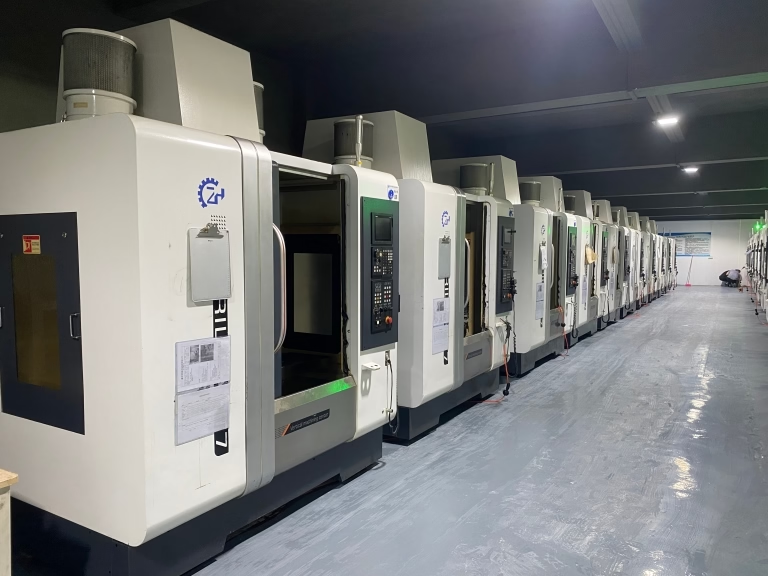
For engineers, makers, and prototyping enthusiasts, the question of how to make a mini CNC lathe machine represents a fascinating intersection of mechanical design, electronics integration, and software control. It’s a project that embodies the DIY spirit while demanding a high degree of precision engineering. Whether for hobbyist projects, small-scale prototyping, or educational purposes, building your own mini CNC lathe can be an immensely rewarding endeavor.
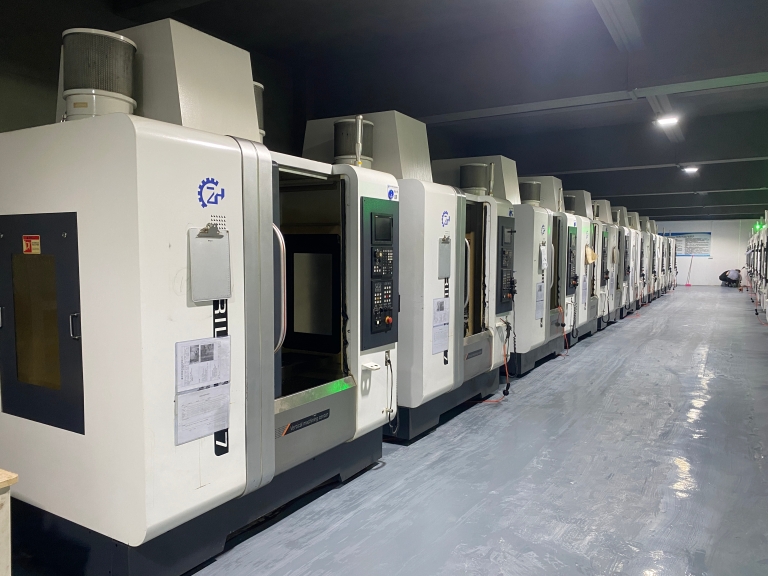
However, it’s crucial to understand from the outset that a DIY mini lathe, while excellent for learning and light work, operates in a different league compared to industrial-grade equipment from professional manufacturers like GreatLight CNC Machining Factory. This guide will walk you through the core concepts and steps, while also providing a realistic perspective on when to build and when to partner with a professional CNC service provider.
Understanding the Core Components of a CNC Lathe
Before embarking on the build, you must understand the fundamental subsystems that make a CNC lathe function:
Mechanical Frame and Structure: This is the backbone. It must be rigid to resist cutting forces and prevent vibration, which is the enemy of precision. Common materials include aluminum extrusions, steel plates, or even cast iron for heavier DIY builds.
Spindle Assembly: The heart of the lathe. It holds and rotates the workpiece. A mini lathe might use a high-speed DC or AC motor with a collet or chuck attachment. Precision and runout (the amount the spindle wobbles) are critical here.
Linear Motion Systems: These guide the tool’s movement along the Z-axis (parallel to the spindle) and X-axis (radially toward/away from the spindle). They typically consist of:
Rails: Linear guide rails or hardened steel shafts.
Carriages: Blocks that slide on the rails.
Drive Mechanism: Leadscrews or ball screws coupled to stepper motors to provide precise, computer-controlled movement.
Tool Post and Cutting Tool: A rigid holder for the cutting tool, which must be accurately positioned. On a mini CNC lathe, this is often a simple, fixed tool post or a small quick-change system.
Control Electronics:
Stepper Motors or Servos: Provide the motion for the X and Z axes.
Motor Drivers: Amplify signals from the controller to power the motors.
CNC Controller: The brain. This can be a dedicated motion control board (like a GRBL-based Arduino shield) or a more advanced system like a Mesa card running LinuxCNC.
Software Ecosystem:
CAD Software: Used to design the part (e.g., Fusion 360, SolidWorks).
CAM Software: Converts the CAD model into toolpaths and generates the G-code (the language the CNC controller understands).
Control Software: Sends the G-code to the CNC controller and provides a user interface (e.g., UGS, Mach3, LinuxCNC interface).
A Step-by-Step Framework for Your Build
Here is a generalized roadmap for constructing a basic mini CNC lathe.
Phase 1: Design and Planning
Define Specifications: Determine your work envelope (max part diameter and length), desired precision (realistically, ±0.1mm is a good DIY target; compare this to industrial 5-axis CNC machining capable of ±0.001mm), and materials you plan to cut (wood, plastics, soft metals like aluminum).
Create Detailed Drawings: Model every component in CAD. This forces you to think about assembly order, fastener locations, and potential interferences.
Phase 2: Sourcing and Fabricating Components
This is where the nature of your project is decided. You can:
Kit-Based Approach: Purchase a mini lathe conversion kit or a frame kit, which provides core mechanical components.
From-Scratch Fabrication: Machine or fabricate all parts yourself. This requires access to tools like a manual mill, drill press, and welder.
| A typical component list includes: | Component Category | Specific Items | Notes |
|---|---|---|---|
| Mechanical | Aluminum/Steel plates, linear rails & blocks, ball screws & nuts, spindle motor & chuck, bearing blocks, couplings. | Rigidity is paramount. Pre-machined components save time and improve accuracy. | |
| Electronics | Stepper motors (NEMA 23 common), motor drivers (e.g., TB6600), CNC controller board, power supply (24V-48V), wiring, limit switches. | Ensure power ratings match. Good wiring practices prevent noise and failure. | |
| Fasteners & Misc | Assorted screws, bolts, washers, lubricant. | Don’t underestimate the need for quality fasteners. |
Phase 3: Mechanical Assembly
Build the base frame, ensuring it is square and level.
Mount the linear rails for the Z-axis (bed ways) precisely parallel to each other.
Install the carriage that will move along the Z-axis. Onto this, mount the cross-slide (X-axis) rails and carriage.
Assemble the spindle unit, ensuring it is aligned perfectly with the Z-axis rails. Any misalignment here will cause taper in your parts.
Mount the ball screws and couple them to the stepper motors via flexible couplings to absorb minor misalignment.
Install the tool post onto the X-axis carriage.
Phase 4: Electrical Integration and Wiring
Mount all electronic components (drivers, controller, power supply) in an enclosure.
Wire the stepper motors to their respective drivers, and the drivers to the controller board.
Connect limit switches for homing and over-travel protection.
Connect the spindle motor control, if variable speed is desired.
Critically important: Implement proper grounding and cable management to shield against electromagnetic interference (EMI), which can cause erratic motor behavior.
Phase 5: Software Setup and Calibration
Install and configure the control software on a dedicated computer.
Set up the motor parameters in the controller (steps per millimeter). This is calculated from your motor step angle, driver microstepping setting, and ball screw pitch.
Perform Calibration: This is the key to accuracy.
Squareness Calibration: Ensure the X-axis travel is perfectly perpendicular to the Z-axis.
Backlash Compensation: Measure and input any backlash (play) in the screw systems so the software can compensate for it.
Test with simple air cuts (running the program without a workpiece) before your first actual cut.
The Inherent Challenges and Limitations of a DIY Build
While building a mini CNC lathe is educational, it’s vital to acknowledge its constraints compared to professional equipment:
Rigidity and Power: DIY machines lack the mass and structural integrity of cast iron beds found in industrial machines. This limits the material removal rate, finish quality, and achievable precision.
Thermal and Dynamic Stability: Professional machines are designed to manage heat from motors and friction, and dampen vibrations. A DIY build will be more susceptible to these factors, affecting long-duration accuracy.
Tooling and Workholding: The cost and complexity of professional-grade chucks, live tooling, and tailstocks are often prohibitive for a DIY project.
Time and Cost: By the time you source high-quality components and invest hundreds of hours, the total cost can approach that of a basic commercial benchtop CNC lathe, without matching its performance or reliability.
Conclusion: The Smart Hybrid Approach – DIY for Passion, Professional for Precision
Learning how to make a mini CNC lathe machine is a profound technical achievement that deepens your understanding of mechatronics. It’s perfect for prototyping simple parts, hobby work, and unique one-offs where the journey is as important as the result.
However, when your project demands uncompromising precision, repeatability, complex geometries, or production-grade materials, the DIY approach reaches its limit. This is where the expertise of a specialized manufacturer becomes not just an option, but a necessity.
For clients whose needs extend beyond the capabilities of a hobbyist machine—requiring parts with tolerances within hundredths of a millimeter, complex turned features, or batches of identical components—partnering with an expert like GreatLight CNC Machining Factory is the most efficient and reliable path. While you experiment and innovate with your own mini lathe, you can confidently outsource your mission-critical, high-precision turning and 5-axis CNC machining needs to a partner with the industrial equipment, rigorous ISO-certified processes, and engineering depth to guarantee success. This hybrid model allows innovators to explore freely while ensuring their most important components are manufactured to professional standards.
Frequently Asked Questions (FAQ)
Q1: What is a realistic tolerance I can achieve with a DIY mini CNC lathe?
A: With meticulous calibration and a very well-built machine, a skilled builder might consistently achieve tolerances around ±0.05mm to ±0.1mm. This is suitable for many hobby projects. For context, professional shops like GreatLight routinely hold tolerances of ±0.01mm or tighter on production CNC lathes.
Q2: How much does it cost to build one?
A: Costs vary wildly. A very basic setup using repurposed parts might cost a few hundred dollars. A robust, purpose-built mini lathe with new linear rails, ball screws, and decent electronics can easily cost $1,500 to $3,000+ in parts alone, not accounting for the value of your time for design and assembly.
Q3: Can I convert a manual mini lathe to CNC?
A: Yes, this is a very popular and practical path. Kits are available for common manual lathe models. The conversion involves replacing the handwheels with stepper motors and ball screws, and adding a control system. It leverages the existing rigid cast iron bed, which is a significant advantage over building a frame from scratch.
Q4: What materials can a DIY mini CNC lathe handle?
A: Most are well-suited for plastics, wood, and soft metals like aluminum and brass. Cutting steel or stainless steel is challenging and often requires very slow feed rates, light cuts, and specialized tooling, which can push a DIY machine to its limits and result in accelerated wear.
Q5: When should I consider using a professional CNC service instead of building my own?
A: You should engage a professional service when:
Precision is Critical: Your part has tolerances tighter than ±0.05mm.
Material is Tough: You need to machine stainless steel, titanium, or hardened alloys.
Volume is a Factor: You need more than a few identical parts.
Time is Limited: The project deadline doesn’t allow for machine debugging.
Complexity is High: The part requires live tooling, Y-axis, or mill-turn capabilities beyond simple turning.
For these scenarios, leveraging the capacity of an established manufacturer like GreatLight Metal Tech Co., LTD. ensures a guaranteed outcome, allowing you to focus on design and application rather than machine maintenance and process debugging. You can learn more about their professional capabilities and industry presence on platforms like LinkedIn{:target=”_blank”}.