
How To Learn A CNC Machine? Mastering Precision Machining with GreatLight CNC Machining Factory
When it comes to modern manufacturing, especially in the domain of custom precision parts machining, understanding how to operate a CNC (Computer Numerical Control) machine is not just a technical skill—it’s a gateway to innovation, efficiency, and high-value production. Whether you’re an engineer, a technician, a startup founder, or simply exploring career opportunities in advanced manufacturing, learning CNC machining opens doors to industries ranging from aerospace and automotive to medical devices and robotics.
This guide explores the essential steps, methods, and best practices for mastering CNC machining, with a particular focus on five-axis CNC machining, a technology that represents the pinnacle of precision and flexibility in part manufacturing. Throughout this article, we’ll also highlight how GreatLight CNC Machining Factory—a trusted leader in the field—can support both learning and industrial-scale production.
What Is a CNC Machine?
A CNC machine is a computer-controlled manufacturing tool that automates the control of machining tools such as mills, lathes, grinders, routers, and more. Unlike manual machining, where operators physically guide the cutting tools, CNC machines follow precise coded instructions from digital design files (typically CAD/CAM), enabling high repeatability, tight tolerances, and complex geometries.
CNC machining is widely used for producing metal and plastic parts that demand exacting standards—components that might be impossible or prohibitively expensive to make by hand.
Why Learn CNC Machining?
Learning how to operate and understand CNC machines offers multiple advantages:
High Demand in Industry: Skilled CNC operators, programmers, and technicians are in consistent demand across manufacturing sectors.
Career Growth: CNC knowledge can lead to roles in programming, tool design, quality assurance, and production management.
Versatility: CNC skills apply to a wide range of materials (metals, plastics, composites) and industries (automotive, aerospace, medical, electronics).
Foundation for Advanced Manufacturing: Understanding CNC is critical for working with technologies like 3D printing, hybrid manufacturing, and smart factories.
How to Learn a CNC Machine: Step-by-Step
1. Understand the Basics of CNC Technology
Before touching any machine, it’s essential to grasp what CNC is and how it works:
Learn the difference between manual machining and CNC machining.
Understand fundamental concepts: G-code, M-code, toolpaths, work coordinate systems (WCS), and part setups.
Study basic machine components: spindle, axes (X, Y, Z, A, B, C), tool holders, fixtures, and control panels.
🔧 Pro Tip: Start with 3-axis CNC machining to build a strong foundation before advancing to multi-axis systems like 4-axis or 5-axis CNC machining.
2. Get Familiar with CAD & CAM Software
Modern CNC machining relies heavily on CAD (Computer-Aided Design) and CAM (Computer-Aided Manufacturing) software:
CAD Software (e.g., SolidWorks, AutoCAD, Fusion 360): Used to design the part geometry.
CAM Software (e.g., Mastercam, GibbsCAM, Fusion 360 CAM): Converts CAD designs into toolpaths and G-code for the CNC machine.
🎓 Learning Path: Take beginner-to-advanced courses in CAD and CAM. Many online platforms (like Coursera, Udemy, or LinkedIn Learning) offer structured programs. For professional development, consider certifications from software providers or technical institutes.
👉 External Resource: Connect with industry professionals and explore real-world applications here.
3. Learn G-Code and Machine Programming
G-code is the language that instructs CNC machines on how to move, cut, and operate. While CAM software often generates G-code automatically, understanding it gives you greater control and troubleshooting ability.
Key elements include:
Motion commands (G00, G01, G02, G03)
Feed and speed controls
Tool changes and coolant commands
📘 Recommended Resources: “CNC Programming Handbook” by Peter Smid is a widely respected guide. Many community colleges and vocational schools also offer G-code training.
4. Hands-On Training with CNC Machines
Theory alone isn’t enough—you need hands-on practice. Start with basic 3-axis CNC mills or lathes under supervision. Key skills include:
Machine setup and operation
Workpiece clamping and fixturing
Tool selection and toolpath verification
Running test cuts and making adjustments
Measuring and inspecting finished parts
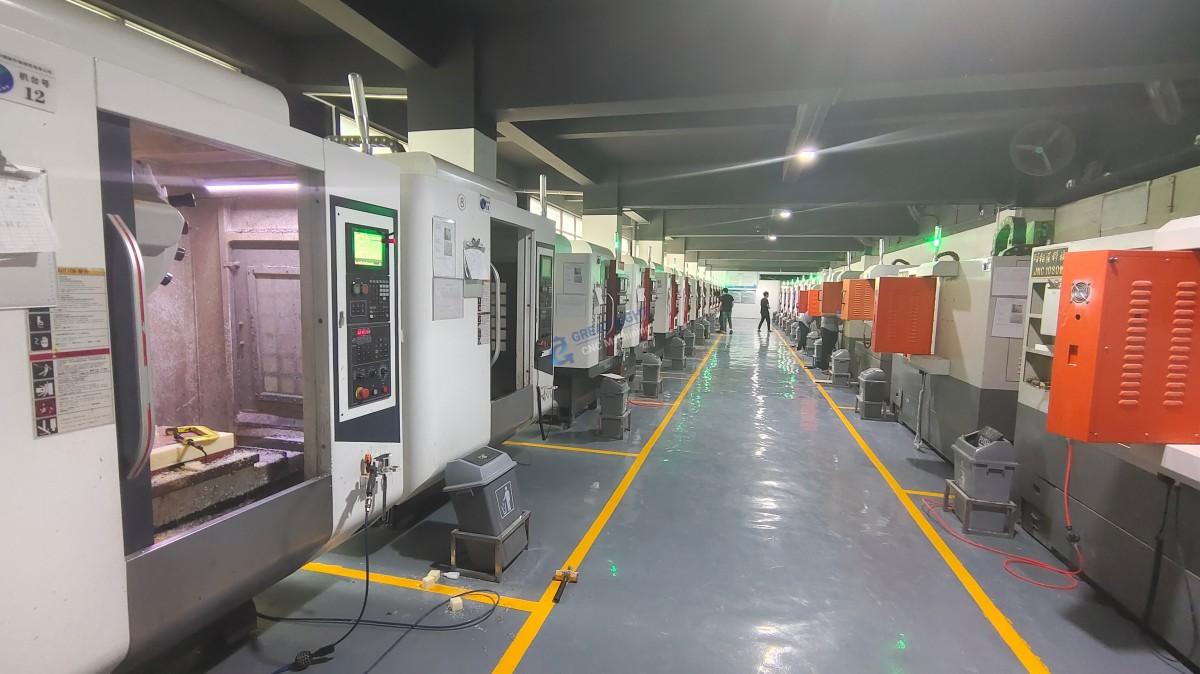
🔍 Insight: Facilities like GreatLight CNC Machining Factory not only provide precision CNC machining services but also serve as an example of how advanced training environments operate with state-of-the-art 3-, 4-, and 5-axis CNC equipment.
5. Explore Advanced Machining: 4-Axis and 5-Axis CNC
Once comfortable with 3-axis machining, advancing to multi-axis CNC machining (4-axis and 5-axis) unlocks the ability to produce highly complex, organic, and precision-critical components—ideal for aerospace, medical implants, and robotics.
5-axis CNC machining, in particular, allows simultaneous movement along five different axes, enabling:
Better surface finishes
Reduced setup times
Ability to machine hard-to-reach features
🎯 Why It Matters: As highlighted in our feature on five-axis CNC machining services, this technology is indispensable when conventional methods fall short.
6. Understand Quality Control and Metrology
A critical part of CNC learning is knowing how to verify that parts meet specifications.
Learn to use precision measuring instruments: micrometers, calipers, height gauges, CMMs (Coordinate Measuring Machines).
Understand tolerance stacks, GD&T (Geometric Dimensioning and Tolerancing), and statistical process control (SPC).
🛠️ Industry Insight: GreatLight CNC Machining Factory ensures all parts are verified with in-house metrology tools and adheres to ISO 9001:2015 standards—offering lessons in how precision is maintained at an industrial level.
7. Consider Formal Education or Apprenticeships
While self-learning is possible, structured education accelerates mastery:
Vocational Schools & Community Colleges: Offer associate degrees or certificates in CNC machining.
Apprenticeships: Hands-on training under experienced machinists.
University Programs: Mechanical engineering or manufacturing technology degrees with CNC focus.
Choosing the Right Environment for Learning
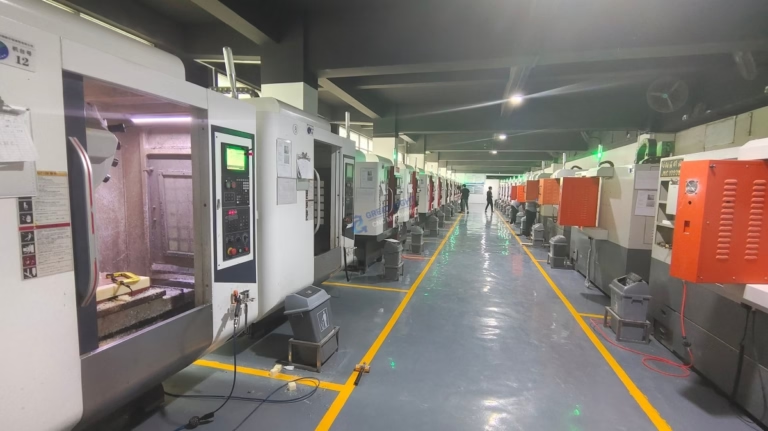
If you’re looking to apply your CNC skills or gain exposure to real-world manufacturing scenarios, partnering with an experienced provider like GreatLight CNC Machining Factory can be invaluable. Established in 2011 and based in Dongguan—the heart of China’s precision hardware industry—this factory combines:
127+ precision CNC machines, including 5-axis, 4-axis, and 3-axis systems
ISO 9001:2015 certification for quality assurance
Capabilities in metal & plastic 3D printing, vacuum casting, die casting, and sheet metal fabrication
One-stop post-processing and finishing services
Tolerance as tight as ±0.001mm, catering even to the most demanding applications
Their experience spans industries like humanoid robotics, automotive engines, and aerospace, making them an exemplary model for learning both the craft and the business of precision machining.
Conclusion: Start Your CNC Journey Today
How to learn a CNC machine? The answer lies in a blend of theoretical knowledge, software proficiency, hands-on practice, and continuous learning. Whether you aim to become a skilled operator, a programmer, or an innovator in precision manufacturing, mastering CNC is a strategic investment in your future.
By starting with the fundamentals, advancing through multi-axis technologies like 5-axis CNC machining, and learning from industry leaders such as GreatLight CNC Machining Factory, you position yourself at the cutting edge of modern manufacturing. Precision isn’t just a feature—it’s a competitive advantage, and CNC machining is your path to achieving it.
Frequently Asked Questions (FAQ)
❓ What is the easiest way to learn CNC machining?
The easiest way is to start with 3-axis CNC milling, using beginner-friendly CAD/CAM software like Fusion 360, and gaining hands-on experience under guidance. Online tutorials, vocational courses, and apprenticeships also provide structured learning paths.
❓ Do I need to know programming to operate a CNC machine?
Not necessarily for basic operation, but understanding G-code and CAM programming significantly improves your control, efficiency, and ability to troubleshoot. Many operators start with pre-programmed toolpaths and gradually learn coding.
❓ Is 5-axis CNC machining difficult to learn?
Yes, 5-axis CNC machining is more complex due to additional axes and motion planning. It requires advanced training, experience with multi-axis toolpaths, and a deeper understanding of part setup and collision avoidance. However, it offers unmatched capabilities for complex geometries.
❓ Can I learn CNC machining on my own?
Yes, self-learning is possible through online courses, simulation software, and small hobbyist CNC machines. However, hands-on practice with industrial-grade equipment and mentorship greatly accelerates the learning curve.
❓ What industries require CNC machining skills?
CNC machining is essential in aerospace, automotive, medical, robotics, electronics, and mold-making. Any industry requiring high precision, repeatability, and complex part geometries relies on CNC technology.
❓ How long does it take to become proficient in CNC machining?
Becoming proficient can take anywhere from 6 months to 2 years, depending on your starting point, the complexity of machinery, and whether you’re focusing on operation, programming, or engineering design.
Start your journey into precision manufacturing today—and bring your designs to life with confidence and skill.


















