
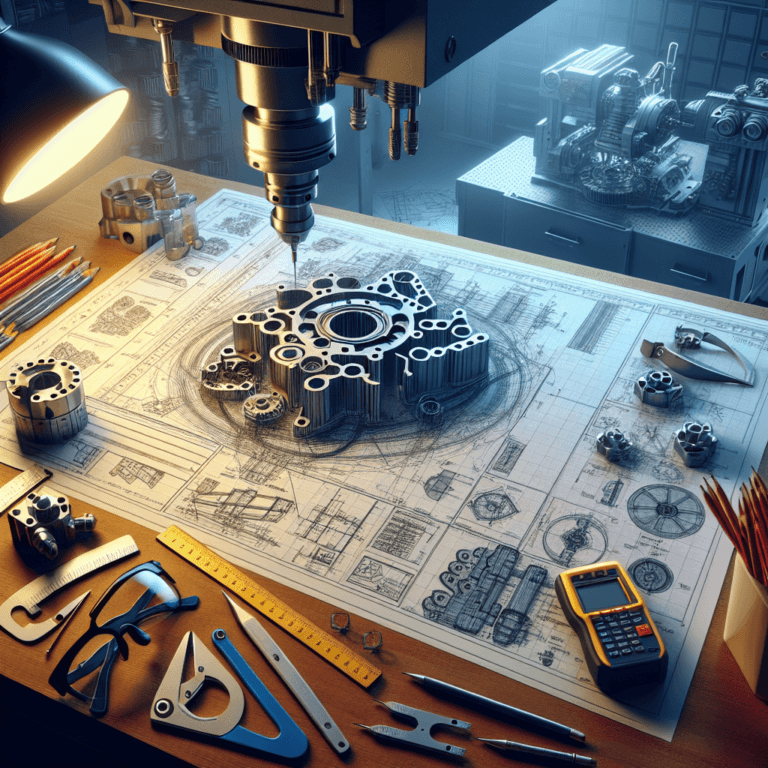
Understanding the Basics of CNC Part Design
Designing parts for CNC (Computer Numerical Control) machining is a crucial process that requires not only technical knowledge but also creativity and an understanding of material properties, machining techniques, and the CNC machinery itself. Whether you’re developing parts for consumer products, industrial applications, or even prototyping, the design phase will significantly influence the efficiency, cost, and quality of the final product.
This article will guide you through the essential steps and considerations involved in designing CNC parts, equipping you with the knowledge needed to create high-quality components.
The Importance of Material Selection
Before delving into the specifics of part design, it’s important to consider material selection. The material you choose will impact how the part behaves under stress, its durability, machinability, and overall cost.
1. Types of Materials:
- Metals: Aluminum, steel, brass, and titanium are common choices for CNC machining. Aluminum is lightweight and easy to machine, while steel offers strength and durability.
- Plastics: Materials such as ABS, nylon, and polycarbonate are often used for lightweight or non-structural components.
- Composites: These materials combine two or more constituents to create parts with superior properties, often employed in aerospace and automotive applications.
2. Properties to Consider:
- Machinability: Some materials are easier to machine than others. Consider the cutting speeds and tools required for the material you select.
- Strength and Stiffness: Depending on the application, the part may need to withstand certain forces without deforming.
- Thermal Properties: Higher temperatures can affect the integrity of certain materials, particularly plastics.
- Cost: Budget constraints will often dictate your material choices.
Define the Functionality of the Part
Before you even start your design, you need to have a clear understanding of the part’s functionality. What purpose will it serve? What are its operating conditions? Considerations include:
- Load-bearing: Will the part need to support weight or endure shocks and vibrations?
- Precision: Does the part require tight tolerances or intricate features?
- Environment: Will it be exposed to moisture, chemicals, or high temperatures?
Use CAD Software for 3D Modeling
Once you have a clear understanding of the functionality and material, the next step is to create a 3D model using CAD (Computer-Aided Design) software. CAD software allows you to visualize the part, test its design, and modify it before heading to production.
1. Choose the Right CAD Software:
- Popular CAD software options include SolidWorks, AutoCAD, Fusion 360, and Inventor. Each has unique features that cater to varying levels of complexity and types of projects.
2. Create a Detailed Model:
- Pay attention to every detail in your model. Include features such as fillets, chamfers, and other geometric details that can strengthen the part and enhance its aesthetics.
- Utilize parametric modeling capabilities to create components that can easily adapt to changes in size or shape.
3. Simulate Performance:
- Many CAD tools allow you to simulate how the part will perform under different conditions, including stresses, loads, and thermal effects. Use these simulation features to anticipate potential problems.
Design for Machinability
One of the most crucial aspects of designing CNC parts is ensuring the design is conducive to machining. Here are several key principles to follow:
1. Simplify Shapes:
- Complex shapes may require more time and specialized tools to machine. Strive to create simple shapes that can be produced efficiently.
2. Consider Tolerances:
- Specify tolerances based on the function of the part. Tight tolerances can significantly increase machining costs. Ensure you balance precision with cost-effectiveness.
3. Tool Accessibility:
- Ensure your part design allows easy access for tooling. Avoid deep cavities that can complicate the machining process.
4. Minimize Tool Changes:
- Designing parts that can be machined with fewer tool changes will reduce production time and cost.
5. Plan for Fixturing:
- Consider how the part will be held during machining. Proper fixturing is essential for accuracy. Design features that can assist in the clamping process.
Optimize the Design for CNC Techniques
Different CNC techniques and machines may alter your design requirements. Understanding these techniques allows you to optimize your design accordingly.
1. CNC Milling
- Involves removing material using rotary cutters.
- Features such as pockets and contours are common in CNC milling.
2. CNC Turning
- This technique involves rotating the part against a stationary cutting tool.
- It is best for cylindrical parts. Designing for turning typically includes diameters and circular features.
3. CNC Laser Cutting
- Suitable for cutting flat materials.
- Your design should remain relatively simple, as intricate designs can be harder to manage.
Evaluate Cost and Production Feasibility
Before finalizing your design, conducting a thorough cost analysis is essential. Consider the following:
1. Material Costs:
- Ascertain the cost of selected materials in relation to the quantity you need.
2. Production Costs:
- Calculate labor, overhead, and machine time associated with your project.
3. Scale of Production:
- If you plan to produce large quantities, analyze the cost-effectiveness of batch production versus single unit production.
Creating Prototypes
Prototyping serves as a bridge between design and final production. It allows for testing the design before committing to mass manufacturing.
1. 3D Printing:
- Create prototypes using 3D printing to verify form and fit, especially for complex geometries.
2. Machined Prototypes:
- If your budget allows, produce a small batch of the part to assess machining efficiency and identify any issues in the design.
Conclusion
Designing CNC parts is a multifaceted process that blends creativity with engineering principles. From material selection to machinability considerations, each step in the design process holds significant importance for the final outcome. By adhering to the guidelines outlined in this article, you can ensure that your parts are not only functional but also cost-effective and easy to manufacture. Mastering CNC part design opens up new possibilities in various industries, providing the backbone for innovative products and solutions.
Continuously improving your design skills through experience and learning will enable you to tackle increasingly complex projects, establishing yourself as a proficient designer in the CNC machining field.
Daguang focuses on providing solutions such as precision CNC machining services (3-axis, 4-axis, 5-axis machining), CNC milling, 3D printing and rapid prototyping services.



















