

The Digital Lifeline: A Practical Guide to Connecting Your CNC Machine to the Internet
In today’s hyper-connected manufacturing landscape, the standalone CNC machine is rapidly becoming a relic of the past. The ability to connect a CNC machine to the internet has evolved from a competitive advantage to a fundamental necessity for shops aiming to achieve true smart manufacturing. This integration unlocks unprecedented levels of operational transparency, predictive maintenance, and production agility. For clients in precision parts machining and customization, understanding this transition is crucial for selecting a manufacturing partner who can not only produce your parts but also provide the data-driven insights needed to optimize your entire supply chain.
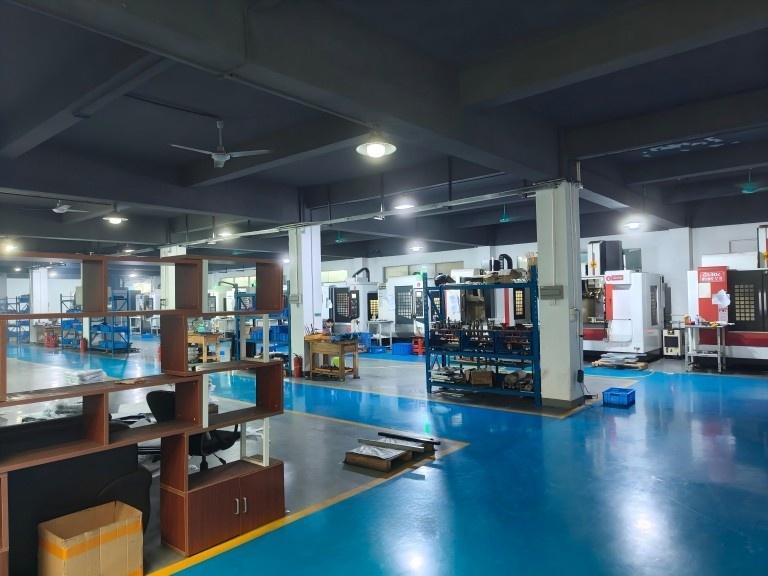
For a facility like ours at GreatLight CNC Machining Factory, connecting our extensive fleet of multi-axis CNC machining centers to a cohesive network is the backbone of our commitment to reliability, precision, and transparent partnership. It transforms our workshop from a collection of individual tools into a synchronized, intelligent production organism.
Why Bother? The Compelling Value of a Connected CNC
Before delving into the “how,” it’s essential to grasp the “why.” Connecting CNC machines to the internet is not about technology for technology’s sake; it’s about solving real, tangible pain points in precision manufacturing:
Real-Time Production Monitoring & OEE Tracking: Move beyond manual tick sheets. Monitor machine status (running, idle, setup, alarm) in real-time from any device. Accurately calculate Overall Equipment Effectiveness (OEE) to identify bottlenecks and maximize asset utilization.
Predictive Maintenance Over Reactive Repairs: Sensors can stream data on spindle vibration, temperature, and load. Advanced analytics can predict bearing wear or tooling failure before it causes scrap or unplanned downtime, safeguarding your project timeline.
Seamless Digital Workflow & Paperless Shop Floor: Directly send programs (G-code) to machines over the network, eliminating manual USB transfers and version control errors. Operators can access digital work instructions, drawings, and setup sheets at the machine control.
Remote Diagnostics & Expert Support: When a complex five-axis machine encounters an alarm, a connected system allows our senior engineers—or the machine tool builder’s support team—to securely log in for remote diagnostics, drastically reducing mean time to repair (MTTR).
Data-Driven Continuous Improvement: Aggregate machining data across jobs to analyze cycle times, tool life, and energy consumption. This empirical data is invaluable for quoting accuracy, process optimization, and justifying investments in new tooling or strategies.
The “How”: Pathways to Connectivity
Connecting a CNC machine isn’t a one-size-fits-all process. The approach depends on the machine’s age, brand, and control system. Here are the primary methodologies:

1. The Direct Route: Native Machine Tool Connectivity (MTConnect, OPC UA)
Modern CNC controls (e.g., Siemens 840D, Heidenhain TNC, Fanuc 30i/31i/32i) often come with built-in communication protocols.
MTConnect: An open, royalty-free standard that allows CNC machines and other manufacturing equipment to provide data in a uniform format. An MTConnect agent (software) runs on a device connected to the machine, collecting data and translating it into XML for any compliant monitoring application.
OPC UA (Unified Architecture): A platform-independent, service-oriented architecture for industrial communication. It is increasingly becoming the standard for secure, reliable data exchange in Industry 4.0, offering richer information modeling than simple data points.
Best for: Newer machines where the investment in native capability delivers the highest fidelity data with minimal external hardware.
2. The Retrofit Solution: Hardware Adapters & IoT Gateways
For older machines that lack modern communication ports, retrofit solutions are the key. This involves installing external hardware that taps into the machine’s existing control signals.
Hardwired Sensor Kits: These kits use relays and sensors to detect basic statuses (power on, spindle running, door open, alarm light) by physically connecting to the machine’s electrical cabinet.
Advanced IoT Gateways: More sophisticated devices can connect directly to the machine’s controller via legacy ports (RS-232, Ethernet) or by reading the memory address of the PLC. They can parse proprietary data streams and convert them into standard formats like MTConnect or MQTT for cloud transmission.
Best for: Legacy equipment that is mechanically sound but “digitally blind,” allowing shops to extend the life and intelligence of their capital assets.
3. The Network Backbone: Wired vs. Wireless Infrastructure
A reliable network is the circulatory system for all this data.
Wired (Ethernet): Offers maximum reliability, security, and bandwidth. This is the preferred method for fixed machines in a factory setting, typically involving industrial-grade switches and structured cabling.
Wireless (Wi-Fi, 4G/5G): Provides flexibility for mobile equipment or in facilities where running cables is impractical. Industrial Wi-Fi access points designed for harsh environments are essential to avoid dropouts. Cellular gateways can be used for remote equipment in field applications.
At GreatLight CNC Machining Factory, we employ a hybrid, robust network architecture. Our critical five-axis and turning centers are on a hardened wired network, while tablets for mobile work instructions and certain AGVs operate on a dedicated, secure wireless network.
Navigating the Challenges: Security, Integration, and Expertise
The path to connectivity is not without hurdles. A reputable manufacturing partner must demonstrate competence in overcoming these:
Cybersecurity is Paramount: An internet-connected machine is a potential network entry point. Implementation must include network segmentation (e.g., using VLANs or firewalls), regular security patches, strong authentication, and encrypted data transmission. Our adherence to frameworks like ISO 27001 for information security informs our rigorous approach to protecting both our operational data and our clients’ intellectual property.
Overcoming Data Silos: Connecting the machine is step one; making the data useful is step two. Data from different machine brands and vintages must be normalized and integrated into a Manufacturing Execution System (MES) or a cloud platform dashboard that provides actionable insights, not just raw numbers.
The Human Factor: Technicians and operators need training to interpret new dashboards and alerts. The goal is to augment human expertise, not replace it.
GreatLight Metal’s Connected Ecosystem: From Data to Delivery
Our investment in connectivity is not an isolated IT project; it’s an integral part of our service delivery model. For our clients, this translates into tangible benefits:
Enhanced Project Visibility: For long-term or JIT production agreements, we can provide clients with secure portal access to view the real-time status of their specific production batches.
Proactive Quality Assurance: Trend data from connected inspection equipment and machine tools can feed into statistical process control (SPC) charts, allowing us to make micro-adjustments before a part drifts out of tolerance.
Optimized Supply Chain Synchronization: Machine utilization and job completion data automatically update our production planning systems, enabling more accurate lead time forecasts and inventory management for our clients’ projects.
Conclusion
How to connect a CNC machine to the internet is a multifaceted technical question, but its answer defines the modern precision machining workshop. It represents the crucial shift from isolated, opaque production to integrated, transparent, and optimized manufacturing ecosystems. The true value lies not in the connection itself, but in the actionable intelligence it generates, enabling predictive operations, guaranteed quality, and a collaborative partnership between maker and client.
Choosing a manufacturing partner like GreatLight CNC Machining Factory means selecting a facility where this digital thread is already woven into the fabric of our operations. Our ISO 9001:2015 certified processes are enhanced by real-time data, and our IATF 16949 compliant systems for automotive projects are digitally enforced and traceable. We leverage connectivity to ensure that every complex part we machine—whether for aerospace, medical devices, or humanoid robots—benefits from the visibility, control, and continuous improvement that only a smart, connected factory can provide.
Frequently Asked Questions (FAQ)
Q1: Is connecting old CNC machines to the internet worth the cost?
A: Absolutely. The ROI often comes from reducing unplanned downtime by 20-50% and improving OEE through better scheduling. Retrofitting a machine is typically far less expensive than purchasing a new one and can extend its productive life significantly.
Q2: How do you ensure my proprietary design data is secure when machines are online?
A: Security is layered. We employ network segmentation (isolating machine networks from business networks), use VPNs and encryption for remote access, enforce strict access controls, and conduct regular security audits. Our commitment is underscored by our management systems aligned with ISO 27001 standards.
Q3: Can I get access to the machining data for the parts you are producing for me?
A: Yes, upon agreement. For collaborative partnerships, we can establish secure client portals that provide tailored data feeds, such as production completion status, first-article inspection reports, or SPC data for critical dimensions, fostering unprecedented supply chain transparency.
Q4: What’s the first step in connecting a workshop?
A: Start with a clear goal. Identify the primary pain point you want to solve (e.g., tracking downtime, eliminating program transfer errors). Then, conduct an asset audit to understand the capabilities of your existing machines. A phased pilot project on a single critical machine is often the most effective way to begin.
Q5: Does GreatLight use this connectivity for its additive manufacturing (3D printing) equipment as well?
A: Yes, our strategy is holistic. Our industrial SLM metal 3D printers and SLA/SLS polymer systems are integrated into the same monitoring ecosystem. This allows us to track build progress, chamber conditions, and powder or resin levels, ensuring the same level of control and predictability across both subtractive and additive processes.


















