
127 Sets Processing 4000mm 127 Sets High-Precision CNC Lathes
15 Years of Experience

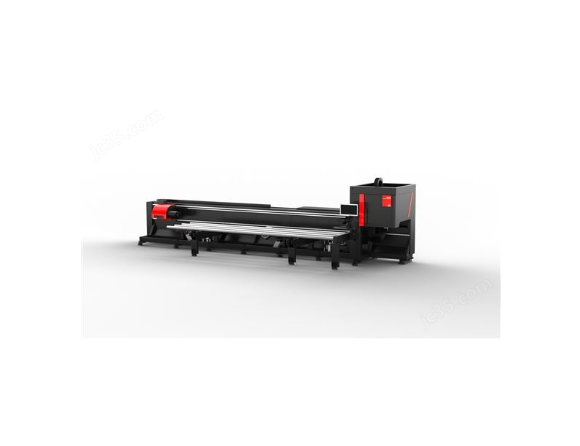
How to choose the right fiber laser pipe cutting machine

Beyond the Beam: Mastering the Art of Choosing Your Industrial Fiber Laser Pipe Cutting Powerhouse The rhythmic hiss of a cutting torch belongs to a fading era. Today, precision, speed, and flexibility in pipe fabrication demand the laser’s sharp focus. Selecting the right fiber laser pipe-cutting machine isn’t just a purchase; it’s a strategic commitment […]

Fiber laser pipe cutter cutting complex profiles

Beyond the Beam: Mastering the Art of Choosing Your Industrial Fiber Laser Pipe Cutting Powerhouse

The rhythmic hiss of a cutting torch belongs to a fading era. Today, precision, speed, and flexibility in pipe fabrication demand the laser’s sharp focus. Selecting the right fiber laser pipe-cutting machine isn’t just a purchase; it’s a strategic commitment shaping your workshop’s efficiency, quality, and competitive edge for years. Forget checklists. Let’s delve deep into the critical considerations that separate a wise investment from a costly paperweight.

1. Material Mastery: Unveiling the Metal Mystique

Your pipes aren’t generic. Each alloy tells a different story to the laser beam:

  • Carbon Steel: The workhorse. Emits vibrant sparks under oxygen assist. Efficiency scales with power: a robust 3-6 kW unit slices standard sizes efficiently, but thicker walls (beyond 25mm) crave 6-12+ kW lasers with advanced piercing boosts.
  • Stainless Steel: Demands finesse. High reflectivity and thermal sensitivity require nitrogen assist for clean, oxidation-free cuts. Beam quality and precise focal control are non-negotiable. High brightness (>100 MW/rad) lasers maximize energy density on reflective surfaces. Expect 1-4 kW for thinner sheets/pipe walls, 4-8 kW for heavier applications.
  • Aluminum & Copper: The reflective challengers. Prone to absorbing initial energy poorly and reflecting intensely. Requires high peak power density generators, precise pulsed cutting modes, and often specialized assist gases (nitrogen or air). Misaligned nozzles or poor beam quality guarantee failed cuts. Look for systems with optimized optics and cutting parameters specifically for reflective metals.
  • Exotic Alloys (Titanium, Nickel): The high-performance niche. Often needs specialized environments (argon atmosphere chambers) to prevent contamination during cutting. Requires in-depth material knowledge and laser parameter libraries for success – ensure your supplier provides robust technical support for these applications.

Think Beyond Round: Square, rectangular, oval, structural shapes? Define geometries and the extremes of your dimensions – diameter, wall thickness, length tolerance. A machine handling only perfect round stock will falter on challenging profiles. Probe: Does the system’s clamping mechanism handle warpage? What’s the maximum length/weight per piece?

2. Power & Performance: Unlocking Cutting Velocity & Capacity

Laser power isn’t just a number; it defines capability:

  • The Power/Thickness Equation: Don’t overpower unnecessarily. Cutting mild steel? A 3kW laser can handle ~15-20mm walls effectively. Need to efficiently process 25mm+ carbon steel or 15mm stainless daily? Scale to 6kW minimum. Critical Consideration: Power rating can vary. Seek detailed performance charts from the manufacturer showing actual cutting speeds at your required thicknesses, not just maximum claimable capacity.
  • Cutting Speed & Productivity: Time = money. Compare throughput claims rigorously. Ask: What’s the actual average cutting speed on a run of 50mm carbon steel tubes with 4mm wall thickness? Factor in piercing time, head acceleration/deceleration, and load/unload cycles. Higher power and optimized mechanics directly translate to faster cycle times and lower cost per part.
  • Dynamic Response: Look beyond peak speed. Assess acceleration/deceleration figures for the cutting head and rotary chuck movement. A fast machine with poor dynamics wastes time transitioning between cuts or contours, impacting overall throughput on complex jobs. High-performance linear guides and precision servo motors are key.
  • Pulse Capabilities: For thin materials or reflective metals, fine-control pulsed cutting modes are indispensable for superior edge quality and minimal burrs. Does the laser source offer deep parameter control?

3. Precision & Process Capability: Where Microns Matter

Precision isn’t just dimensional; it’s about geometric integrity:

  • Cutting Accuracy & Repeatability: Demand specifics: ±0.05mm accuracy and ±0.03mm repeatability are top-tier benchmarks for precision industries like medical or aerospace fabrication. Ensure the machine boasts rigid construction, high-resolution encoders, and thermally stable components.
  • Cornering Excellence: Cutting sharp exterior corners requires immense head deceleration to prevent radical rounding or overheating. Slower corners kill throughput. Does the machine compensate effectively? How well does it handle small interior contours without stopping?
  • High-Angle Bevels: Need to weld-prep pipes? Precision bevel cuts demand true 5-axis capability (simultaneous rotary and linear axis interpolation). Confirm the machine can hold tight tolerances on complex bevel geometries over the entire pipe length and circumference. XY motion alone (simulated bevel) is painfully inefficient and inaccurate.
  • Holes & Features: Clean, round holes without taper or distortion, especially on curved surfaces, demand laser focus stability, optimized cutting strategies (like helical piercing), and dynamic z-axis compensation.
  • Edge Quality: Examine sample cuts. Minimal dross? Vertical striations? Smooth burr formation? High-pressure cutting assist (up to 25 bar) paired with specialized nozzles ensures clean edges, minimizing costly secondary finishing.

4. Automation & Intelligence: Orchestrating the Workflow

How does it fit your production ecosystem?

  • Material Handling: Manual loading? Limited production. High-volume? Essential: Integrated autoloaders, conveyors, robotic solutions. Single-lathe machines cause unnecessary downtime. Dual-station configurations allow simultaneous machining and loading, boosting uptime dramatically (up to 30%).
  • Software & Programming: Is the CAM software intuitive? Can it easily nest complex parts along bends on irregular profiles? Seamless import from CAD (DWG, DXF, STEP)? Look for features like collision avoidance (prevents head/part crashes) and adaptive cutting (adjusts speed/power based on real-time conditions). Cloud integration for remote monitoring/job queuing is a major plus.
  • Tooling Flexibility: Quick-change fixtures? Adaptability for different tube diameters and shapes minimizes setup time for mixed production runs. Tool-less changeover drastically enhances flexibility.
  • Integrated Post-Processing: Will you need chamfering, marking, or deburring? Some high-end systems offer integrated stations within the workflow for a true "one-machining" solution.

5. Endurance, Support & Value: The Long Haul

Machine failure during a large order is catastrophic. Plan for longevity:

  • Robustness & Environment: Optical fibres inside the fiber optic cable Industrial lasers are rugged, but precision mechanics need care. Evaluate chassis rigidity, linear guide protection, and thermal compensation systems. Does the cooling system maintain +/-0.1°C? Dust containment? Factor vibration levels in your factory. Ask: What operating environment specs does the manufacturer guarantee stability?
  • Laser Source Life: 100,000 hours? Verify failure histories. Undercooled diodes degrade rapidly. What’s the warranty coverage? Does the manufacturer offer certified refurbished or upgraded core units?
  • Maintenance Complexity: Request detailed maintenance schedules. Daily purging? Weekly lens checks? Quarterly calibrations? Ease of access for consumables (nozzles, lenses) impacts downtime. Remote diagnostics saving hours of troubleshooting?
  • After-Sale Partnership: This is critical. Deep technical expertise on your specific unit AND materials? Localized parts inventory? What’s the average part delivery time? Granola-withstanding field service engineers? Training level? Responsive call center? Ask for customer references operating the exact model with similar throughputs.
  • Total Cost of Ownership (TCO): Look beyond sticker price. Factor upfront investment plus:
    • Energy Consumption: Watts per meter cut? 1kW lasers use ~35kWh. 6kW: ~75kWh – operational costs balloon.
    • Consumables Cost: Protective windows, laser nozzles, lens/laser head components per thousand cut hours?
    • Labor: Reduced operator hours via automation? Failed quality/retries?
    • Maintenance Contracts: What’s included?
  • Safety Integration: Class 1 laser safety? Safety locks? Emergency stops? Hazard zoning? Ensure compliance avoids shutdown risks.

Engage, Evaluate, Excel: There’s no online shortcut. Engage technical representatives from multiple suppliers. Present your real-world cutting profile – diverse 3D part files, material samples across thicknesses, required tolerance bands, and annual volume goals. Rigorously inspect sample parts. Scrutinize contracts for support details. Verify manufacturing workshop capabilities and financial stability. Read real reviews independently.

Investing in a fiber laser pipe cutter reshapes your fabrication capabilities. Focusing relentlessly on your concrete needs – understanding metal nuances, demanding validated performance data, prioritizing automation that enhances your flow, and forging a resilient after-sales partnership – empowers you to choose not just a machine, but a strategic advantage. Precision isn’t created by the laser alone; it’s forged through the marriage of the right technology with meticulous selection.


CNC Experts

Picture of JinShui Chen

JinShui Chen

Rapid Prototyping & Rapid Manufacturing Expert

Specialize in CNC machining, 3D printing, urethane casting, rapid tooling, injection molding, metal casting, sheet metal and extrusion

CNC Recent Posts

CNC News

Welcome to GreatLight Metal,Maximum Processing Size 4,000 mm

Precision Machining CNC Quote Online

Loading file

Upload Click here to upload or drag and drop your model to the canvas.

The model is too large and has been resized to fit in the printer's build tray. [Hide]

The model is too large to fit in the printer's build tray. [Hide]

The model is too large, a fitting printer is selected. [Hide]

The model is too small and has been upscaled. [Hide]

Warning: The selected printer can not print in full color [Hide]

Warning: obj models with multiple meshes are not yet supported [Hide]

Warning: Unsupported DXF entity  [Hide]

Warning: could not arrange models [Hide]


File Unit:      
Scale:
%
L × W × H:
X: × Y: × Z:  cm 
Rotation:
X: ° Y: °  
⚡ Instant Quote for Precision Manufacturing

Submit your design files (STEP/IGES/DWG) and receive a competitive quote within 1 hour, backed by ISO 9001-certified quality assurance.

📋 How It Works

  1. Upload & SpecifyShare your 3D model and select materials (Aluminum/Stainless Steel/Titanium/PEEK), tolerances (±0.002mm), and surface treatments.

  2. AI-Powered AnalysisOur system calculates optimal machining strategy and cost based on 10+ years of automotive/aerospace data.

  3. Review & ConfirmGet a detailed breakdown including:
    - Volume pricing tiers (1-10,000+ units)
    - Lead time (3-7 days standard)
    - DFM feedback for cost optimization

Unit Price: 

Loading price
5 Axis CNC Machining Equipment
4 Axis CNC Machining Equipment
3 Axis CNC Machining Equipment
CNC Milling & Turning Equipment
Prototype and Short-Run Injection Moldings Exact plastic material as final design
Volume Metal Die Casting Services - Precision Cast Parts
Bridge the Gap From Prototype to Production – Global delivery in 10 days or less
Custom high-precision sheet metal prototypes and parts, as fast as 5 days.
Custom Online 3D Printing Services
Design Best Processing Method According To 3D Drawings
Alloys Aluminum 6061, 6061-T6 Aluminum 2024 Aluminum 5052 Aluminum 5083 Aluminum 6063 Aluminum 6082 Aluminum 7075, 7075-T6 Aluminum ADC12 (A380)
Alloys Brass C27400 Brass C28000 Brass C36000
Alloys Stainless Steel SUS201 Stainless Steel SUS303 Stainless Steel SUS 304 Stainless Steel SUS316 Stainless Steel SUS316L Stainless Steel SUS420 Stainless Steel SUS430 Stainless Steel SUS431 Stainless Steel SUS440C Stainless Steel SUS630/17-4PH Stainless Steel AISI 304
Inconel718
Carbon Fiber
Tool Steel
Mold Steel
Alloys Titanium Alloy TA1 Titanium Alloy TA2 Titanium Alloy TC4/Ti-6Al 4V
Alloys Steel 1018, 1020, 1025, 1045, 1215, 4130, 4140, 4340, 5140, A36 Die steel Alloy steel Chisel tool steel Spring steel High speed steel Cold rolled steel Bearing steel SPCC
Alloys Copper C101(T2) Copper C103(T1) Copper C103(TU2) Copper C110(TU0) Beryllium Copper
Alloys Magnesium Alloy AZ31B Magnesium Alloy AZ91D
Low Carbon Steel
Alloys Magnesium Alloy AZ31B Magnesium Alloy AZ91D
ABS Beige(Natural) ABS Black ABS Black Antistatic ABS Milky White ABS+PC Black ABS+PC White
PC Black PC Transparent PC White PC Yellowish White PC+GF30 Black
PMMA Black PMMA Transparent PMMA White
PA(Nylon) Blue PA6 (Nylon)+GF15 Black PA6 (Nylon)+GF30 Black PA66 (Nylon) Beige(Natural) PA66 (Nylon) Black
PE Black PE White
PEEK Beige(Natural) PEEK Black
PP Black PP White PP+GF30 Black
HDPE Black HDPE White
HIPS Board White
LDPE White
This is a finish of applying powdered paint to the components and then baking it in an oven, which results in a stronger, more wear- and corrosion-resistant layer that is more durable than traditional painting methods.
No coating required, product’s natural color!
This is a finish of applying powdered paint to the components and then baking it in an oven, which results in a stronger, more wear- and corrosion-resistant layer that is more durable than traditional painting methods.
This finishing option with the shortest turnaround time. Parts have visible tool marks and potentially sharp edges and burrs, which can be removed upon request.
Sand blasting uses pressurized sand or other media to clean and texture the surface, creating a uniform, matte finish.
Polishing is the process of creating a smooth and shiny surface by rubbing it or by applying a chemical treatmen
A brushed finish creates a unidirectional satin texture, reducing the visibility of marks and scratches on the surface.
Anodizing increases corrosion resistance and wear properties, while allowing for color dyeing, ideal for aluminum parts.
Black oxide is a conversion coating that is used on steels to improve corrosion resistance and minimize light reflection.
Electroplating bonds a thin metal layer onto parts, improving wear resistance, corrosion resistance, and surface conductivity.
This is a finish of applying powdered paint to the components and then baking it in an oven, which results in a stronger, more wear- and corrosion-resistant layer that is more durable than traditional painting methods.
Please provide additional text description for other surface treatment requirements!
Material
Material
  • CNC Metals
    • Aluminum
    • Brass
    • Stainless steel
    • Inconel718
    • Carbon Fiber
    • Tool Steel
    • Mold Steel
    • Titanium
    • Alloy Steel
    • Copper
    • Bronze
    • Low Carbon Steel
    • Magnesium
  • CNC Plastics
    • ABS
    • PC
    • PMMA (Acrylic)
    • PA (Nylon)
    • PE
    • PEEK
    • PP
    • HDPE
    • HIPS
    • LDPE
Printer
Printer
  • CNC Metals
    • 5 Axis CNC Machining
    • 4 Axis CNC Machining
    • 3 Axis CNC Machining
    • CNC Milling & Turning
    • Rapid Tooling
    • Metal Die Casting
    • Vacuum Casting
    • Sheet Metal Fabrication
    • SLA 3D Printing
    • SLS 3D Printing
    • SLM 3D Printing
  • Rapid Prototyping
    • Design Best Processing Method According To 3D Drawings
Post-processing
Post-processing
  • As Machined(Product’s natural color)
  • Sand Blasting
  • Polishing
  • Brushed Finish
  • Anodizing
  • Black Oxide
  • Electroplating
  • Paint Coating
  • Powder Coating
  • Other surface treatment requirements
Finalize
The world's first CNC machining center that dares to provide free samples!

Free for first product valued at less than $200. (Background check required)

precision machining cnc quote online

15 Years CNC Machining Services

When you’re ready to start your next project, simply upload your 3D CAD design files, and our engineers will get back to you with a quote as soon as possible.
Scroll to Top

ISO 9001 Certificate

ISO 9001 is defined as the internationally recognized standard for Quality Management Systems (QMS). It is by far the most mature quality framework in the world. More than 1 million certificates were issued to organizations in 178 countries. ISO 9001 sets standards not only for the quality management system, but also for the overall management system. It helps organizations achieve success by improving customer satisfaction, employee motivation, and continuous improvement. * The ISO certificate is issued in the name of FS.com LIMITED and applied to all the products sold on FS website.

greatlight metal iso 9001 certification successfully renewed
GB T 19001-2016 IS09001-2015
✅ iso 9001:2015
greatlight metal iso 9001 certification successfully renewed zh

IATF 16949 certificate

IATF 16949 is an internationally recognized Quality Management System (QMS) standard specifically for the automotive industry and engine hardware parts production quality management system certification. It is based on ISO 9001 and adds specific requirements related to the production and service of automotive and engine hardware parts. Its goal is to improve quality, streamline processes, and reduce variation and waste in the automotive and engine hardware parts supply chain.

automotive industry quality management system certification 01
Certification of Production Quality Management System for Engine Hardware Parts Engine Hardware Associated Parts
automotive industry quality management system certification 00
发动机五金零配件的生产质量管理体系认证

ISO 27001 certificate

ISO/IEC 27001 is an international standard for managing and processing information security. This standard is jointly developed by the International Organization for Standardization (ISO) and the International Electrotechnical Commission (IEC). It sets out requirements for establishing, implementing, maintaining, and continually improving an information security management system (ISMS). Ensuring the confidentiality, integrity, and availability of organizational information assets, obtaining an ISO 27001 certificate means that the enterprise has passed the audit conducted by a certification body, proving that its information security management system has met the requirements of the international standard.

greatlight metal technology co., ltd has obtained multiple certifications (1)
greatlight metal technology co., ltd has obtained multiple certifications (2)

ISO 13485 certificate

ISO 13485 is an internationally recognized standard for Quality Management Systems (QMS) specifically tailored for the medical device industry. It outlines the requirements for organizations involved in the design, development, production, installation, and servicing of medical devices, ensuring they consistently meet regulatory requirements and customer needs. Essentially, it's a framework for medical device companies to build and maintain robust QMS processes, ultimately enhancing patient safety and device quality.

greatlight metal technology co., ltd has obtained multiple certifications (3)
greatlight metal technology co., ltd has obtained multiple certifications (4)

Get The Best Price

Send drawings and detailed requirements via Email:[email protected]
Or Fill Out The Contact Form Below:

All uploads are secure and confidential.











