

In the high-stakes world of precision parts machining and customization, understanding how to calculate cycle time in a CNC machine is not just an academic exercise—it’s a critical lever for controlling costs, ensuring on-time delivery, and maintaining competitive advantage. Whether you’re a project manager sourcing complex aerospace components or an R&D engineer prototyping a new medical device, grasping the intricacies of CNC cycle time empowers you to make informed decisions, from quoting to production planning. This deep dive will demystify the calculation process, explore the factors that influence it, and reveal how partnering with a technically adept manufacturer can optimize this fundamental metric.
At its core, cycle time is the total elapsed time from the start to the finish of a machining operation on a single part. It’s the heartbeat of production efficiency. Accurately calculating it requires breaking down the process into its constituent elements.
The Fundamental Formula and Its Components
The total cycle time (T_ct) for a CNC operation is the sum of several distinct time segments:
T_ct = T_load + T_machining + T_idle + T_unload
Let’s dissect each component:
1. Load Time (T_load)
This is the time required to securely fixture the raw material (blank) onto the machine table, in a vise, or within a custom fixture. It includes locating, clamping, and verifying zero points. For high-volume production using pallet changers or robotic arms, this time can be significantly reduced.
2. Machining Time (T_machining)
This is the most substantial and variable portion, representing the time the cutting tool is actively engaged with the material. It is further subdivided by each operation (e.g., rough milling, finish milling, drilling, tapping). The machining time for a specific toolpath can be calculated using the formula:
*T_cut = L / (F_r N)**
Where:
L = Total cutting path length (mm or inches).
F_r = Feed rate (mm/min or ipm) – the speed at which the cutter advances.
N = Number of effective cutting passes or features.
However, in practice, CNC machining services rely on Computer-Aided Manufacturing (CAM) software, which simulates the entire toolpath and provides a highly accurate machining time estimate, accounting for rapid movements, feed rates, spindle speeds, and tool changes.
3. Idle or Non-Cut Time (T_idle)
This encompasses all machine movements and actions that do not involve cutting:
Rapid Traverses: High-speed moves of the tool between cutting positions.
Tool Changes: Time for the Automatic Tool Changer (ATC) to swap tools.
Spindle Start/Stop.
Coolant/ Chip Blast Activation.
This time is often programmed and estimated by the CAM system.
4. Unload Time (T_unload)
The time to remove the finished part, deburr it if done in-machine, and clean the fixture for the next cycle.
Key Factors That Drastically Influence Cycle Time
Understanding the calculation is one thing; mastering the variables that affect it is where engineering expertise shines. Here are the primary levers:
Part Geometry & Complexity: A simple bracket requires far less machining time than a titanium aerospace impeller with complex free-form surfaces. Complex 5-axis simultaneous machining may have slower feed rates but completes the part in one setup, often beating the total cycle time of multiple 3-axis operations.
Material Machinability: Cutting aluminum (e.g., 6061) allows for aggressive feeds and speeds. In contrast, machining hardened tool steel or high-temperature alloys like Inconel requires dramatically slower parameters to preserve tool life, multiplying cycle time.
Tolerances and Surface Finish Requirements: Achieving a tolerance of ±0.025mm vs. ±0.001mm can mean the difference between a single finish pass and multiple, slower spring passes. A required surface finish of Ra 0.4µm necessitates precise, slower finishing strategies compared to Ra 3.2µm.
Machine Tool Capability: The dynamic performance of the CNC machine is crucial. A high-end five-axis CNC machining center from brands like DMG Mori or Hermle offers faster rapid traverse rates (e.g., 60 m/min), near-instantaneous tool changes (under 1 sec), and superior acceleration/deceleration, all reducing idle time. Older or less capable machines add hidden time penalties.
Tooling Strategy: Using a single, small tool to machine a large cavity is inefficient. Employing a high-performance roughing strategy with a large-diameter indexable cutter, followed by finishing with a smaller tool, optimizes metal removal rates. Advanced toolpath strategies like trochoidal milling or high-speed machining (HSM) maintain higher average feed rates and prolong tool life.
Fixturing and Setup: Intelligent fixturing that allows machining of multiple parts in one setup or on multiple sides without re-clamping can dramatically reduce the per-part cycle time.
From Theory to Practice: The Role of the Manufacturing Partner
This is where the choice of your machining partner transitions from a vendor transaction to a strategic engineering collaboration. A manufacturer like GreatLight CNC Machining Factory doesn’t just calculate cycle time; they engineer to minimize it without compromising quality. Here’s how this expertise manifests:
Front-End DFM (Design for Manufacturability) Analysis: Before the first toolpath is generated, experienced engineers analyze your model. They might suggest a slight design modification—a larger internal fillet, a standardized hole size, or an adjusted tolerance—that allows for a more aggressive tool or eliminates a setup, slashing cycle time.
Advanced CAM Programming: Their programmers don’t just use CAM software; they leverage its full potential with optimized, proprietary post-processors for their specific five-axis CNC machining equipment. They employ rest machining, adaptive clearing, and smooth cornering strategies that the software calculates to maximize efficiency.
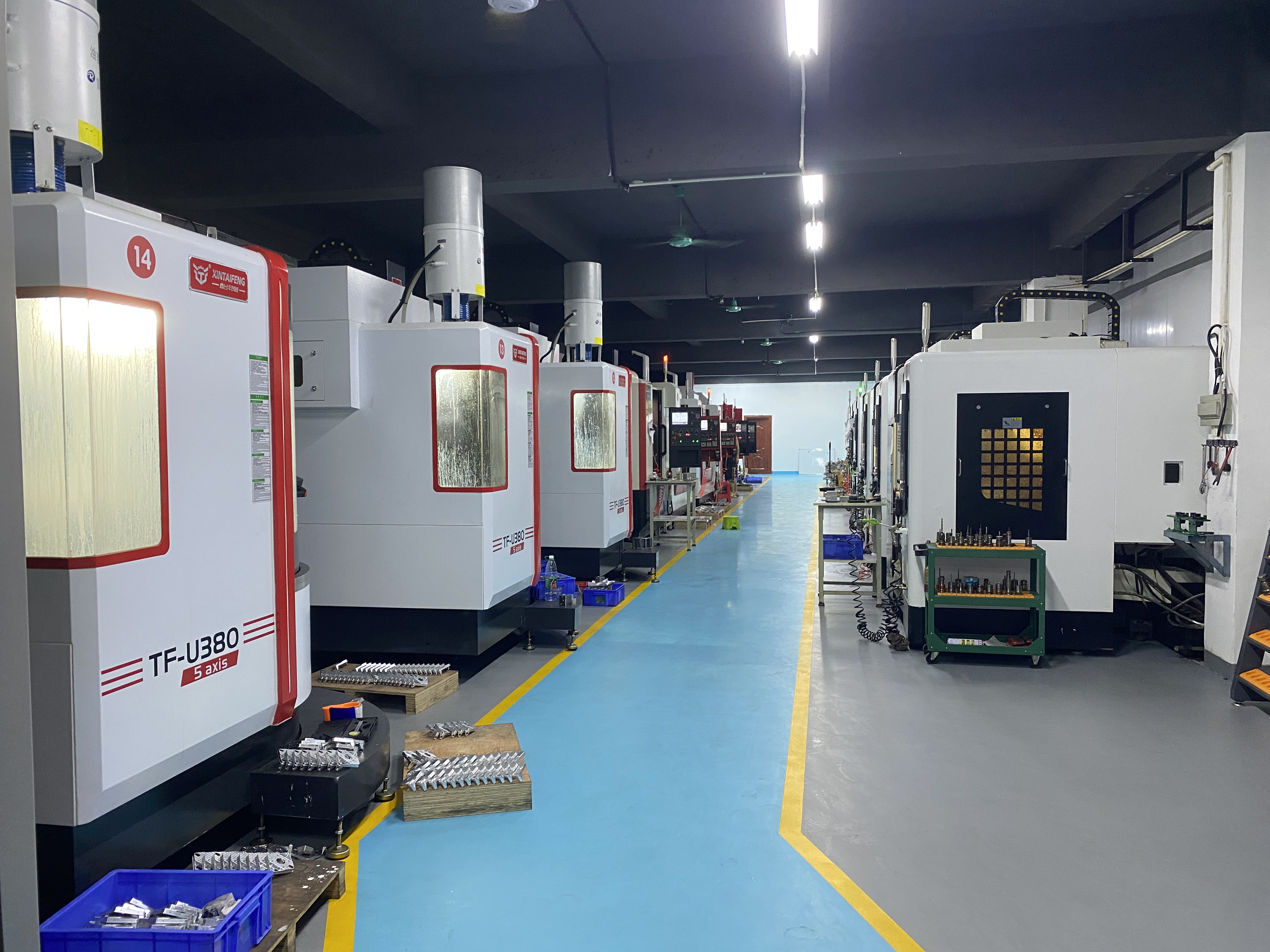
High-Performance Machine Portfolio: With a fleet that includes modern 5-axis, 4-axis, and 3-axis machining centers, they can strategically assign jobs. A complex part goes to the 5-axis for single-setup completion, while a simpler part runs on a dedicated 3-axis machine tuned for speed, ensuring optimal cycle times across the board.
Proactive Tool Management: They invest in premium tooling from brands like Sandvik Coromant or Kennametal and have the data on tool life for different materials. This allows them to confidently push parameters to the safe limit, knowing exactly when to change tools to prevent failure and scrap, which is a major cycle time and cost killer.
Conclusion
How to calculate cycle time in a CNC machine is a blend of fundamental formulas, an understanding of material science and machine dynamics, and the application of advanced software and strategy. It is a transparent metric that directly correlates to your project’s cost and timeline. For clients seeking not just a parts supplier but a manufacturing solutions provider, the depth of a partner’s cycle time optimization capability is a key differentiator. By choosing a partner with demonstrated expertise in advanced programming, high-performance equipment, and holistic process engineering—such as GreatLight CNC Machining Factory—you gain more than a quote; you gain a predictable, efficient, and reliable pathway from your design to high-quality finished parts. In precision machining, time is indeed precision, and managing it expertly is the hallmark of a world-class manufacturer.
Frequently Asked Questions (FAQ)
Q1: Is the cycle time calculated by CAM software 100% accurate?
A: CAM software provides a highly reliable estimate, typically within 5-10% of actual time. However, real-world factors like slight material hardness variations, tool wear compensation pauses, and machine warm-up cycles can cause minor deviations. Experienced manufacturers use CAM times as a baseline and apply correction factors based on historical data from their specific machines.
Q2: How does 5-axis machining affect cycle time compared to 3-axis?
A: While individual 5-axis tool moves might be slower due to complex interpolation, the total cycle time for complex parts is often significantly lower. This is because 5-axis machining enables single-setup production, eliminating multiple load/unload/idle periods and manual re-fixturing required with 3-axis. It also allows for shorter, stiffer tools to be used at optimal angles, enabling higher feed rates.
Q3: Can reducing cycle time compromise part quality?
A: It can, if done improperly. Simply increasing feed rates and spindle speeds indiscriminately leads to tool deflection, poor surface finish, and dimensional inaccuracy. True optimization maintains or improves quality by using smarter toolpaths, better tooling, and strategic roughing/finishing sequences. A skilled manufacturer finds the “sweet spot” where efficiency and precision meet.
Q4: Who is responsible for optimizing cycle time—the client or the manufacturer?
A: It is a shared responsibility driven by collaboration. The client provides the design intent and requirements. The manufacturing partner is responsible for executing the production in the most efficient manner possible. The most significant cycle time savings are achieved when the client is open to DFM suggestions early in the design phase, allowing the manufacturer to apply their full expertise.
Q5: How is cycle time data used beyond quoting?
A: It is fundamental for:
Production Scheduling: Accurately planning machine and labor utilization.
Capacity Planning: Determining if more machines or shifts are needed.
Cost Tracking: Identifying jobs where actual time exceeds estimate, signaling a need for process review.
Continuous Improvement: Benchmarking different strategies or tools to find incremental gains across thousands of parts.



















