
Understanding CNC Machine Hour Rate: The Key to Transparent and Competitive Pricing
In the world of precision parts machining and customization, understanding cost structures is crucial for both buyers and manufacturers. One of the most fundamental yet often misunderstood metrics is the CNC machine hour rate, also known as the machining cost per hour. This isn’t just an arbitrary number; it’s the financial heartbeat of a machining operation, directly influencing your project’s quotation, the manufacturer’s profitability, and ultimately, the value you receive. For clients partnering with firms like GreatLight Metal Tech Co., LTD. (GreatLight Metal), grasping this concept leads to more informed decisions, clearer communication, and a stronger, more transparent partnership.
This comprehensive guide will deconstruct the CNC machine hour rate, explaining its components, calculation methodology, and the factors that cause it to vary widely across the industry. We’ll move beyond simple formulas to explore how leading manufacturers leverage efficiency and technology to deliver superior value.
What Exactly is the CNC Machine Hour Rate?
At its core, the CNC machine hour rate is the total cost of operating a specific CNC machine for one hour. It encompasses every expense associated with keeping that spindle turning and producing chips. This rate is then used to estimate the cost of a part by multiplying it by the estimated machining time (including setup), and adding costs for material, programming, and post-processing.
It’s critical to distinguish this from a shop’s general “shop rate.” The machine hour rate is machine-specific. A high-speed 5-axis machining center will have a significantly higher hourly rate than a standard 3-axis mill due to its capital cost, maintenance complexity, and operator skill requirements.
Breaking Down the Formula: The Core Components
Calculating a true and sustainable machine hour rate requires a detailed breakdown of both direct and indirect costs. Here is the standard framework used by professional shops:
Total Annual Cost of Operating the Machine / Annual Billable Machine Hours = Machine Hour Rate
Let’s expand each element:
1. Total Annual Cost of Operating the Machine
This is the sum of all costs attributable to a single machine.
Capital Investment (Depreciation): This is often the largest component. It’s the cost of the machine (including installation) amortized over its useful economic life (typically 5-10 years). A $500,000 5-axis machine depreciated over 5 years adds $100,000 annually to the cost pool.
Facility Costs: The machine’s “rent.” This includes its share of factory space, utilities (electricity is a major cost for CNC machines), heating, cooling, and lighting.
Labor: The cost of the machine operator’s time. In advanced setups, one skilled operator may oversee multiple machines, and this cost is allocated proportionally.
Maintenance & Repairs: Regular preventive maintenance (lubrication, calibration, filter changes), annual servicing, and a budget for unexpected repairs. High-precision machines require meticulous, often costly, maintenance to hold tight tolerances.
Tooling Consumption: While specific job tooling is usually quoted separately, this includes the cost of standard toolholders, workholding, and the wear and tear on commonly used end mills and inserts.
Software & Programming: Licenses for CAM software, post-processors, and simulation tools needed to program the machine.
Indirect Overhead Allocation: A portion of indirect costs like management, sales, quality control personnel, and insurance is allocated to each machine.
2. Annual Billable Machine Hours
This is not simply 24 hours a day, 365 days a year. It’s a realistic estimate of productive time. Calculation:
Total Available Hours: 24 hrs/day * 365 days = 8,760 hours.
Subtract Non-Productive Time:
Planned Maintenance
Holidays and Shutdowns
Machine Setup & Calibration
Tool Changes and Probe Cycles
Factor in Utilization Rate: No machine runs at 100% capacity. A well-run shop might target 70-85% utilization. The remaining time accounts for lack of work, programming delays, or unforeseen issues.
Example Simplified Calculation:
Machine: High-Precision 5-Axis Machining Center
Total Annual Cost: $250,000 (depreciation, labor, utilities, maintenance, etc.)
Annual Billable Hours: 6,000 hours (approx. 16 hours/day, 75% utilization)
Machine Hour Rate: $250,000 / 6,000 hrs = $41.67 per hour
This is a simplified figure. In reality, shops use more granular activity-based costing.
Why Do Rates Vary So Much? The GreatLight Metal Perspective
When you request quotes, you may see a wide range of prices. Here’s what drives those differences, and how a manufacturer like GreatLight Metal positions itself:
| Factor | Impact on Hourly Rate | GreatLight Metal’s Approach |
|---|---|---|
| Machine Type & Age | A new, high-end 5-axis DMG Mori will command a much higher rate than an older 3-axis machine. | Invests in advanced, well-maintained 5-axis and multi-axis platforms from leading brands to tackle complex work efficiently, justifying a premium rate through capability. |
| Geographical Location | Labor, real estate, and utility costs vary by country and region. | Based in Dongguan’s industrial cluster, it optimizes regional supply chain and skilled labor advantages to balance cost and quality. |
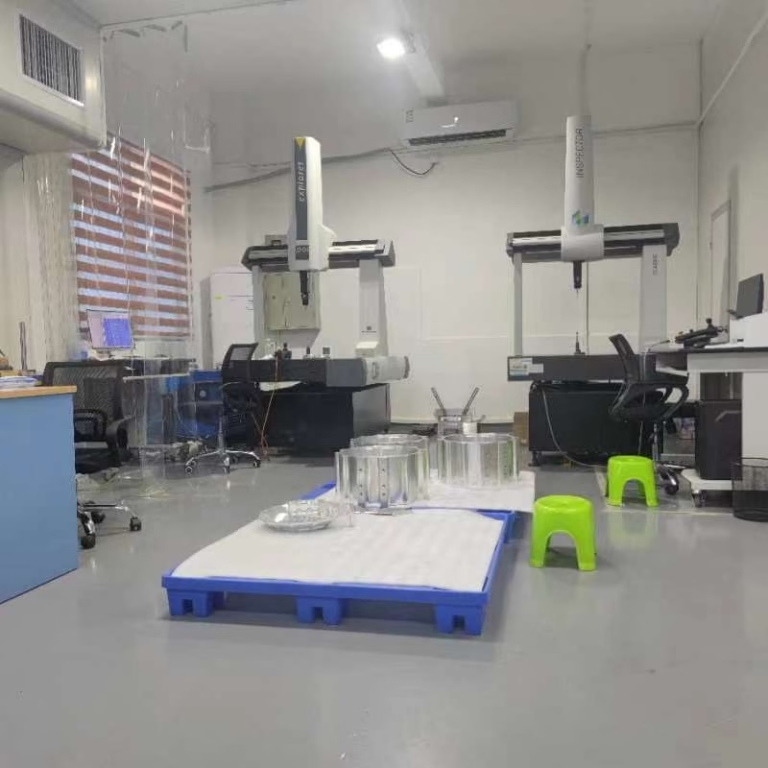
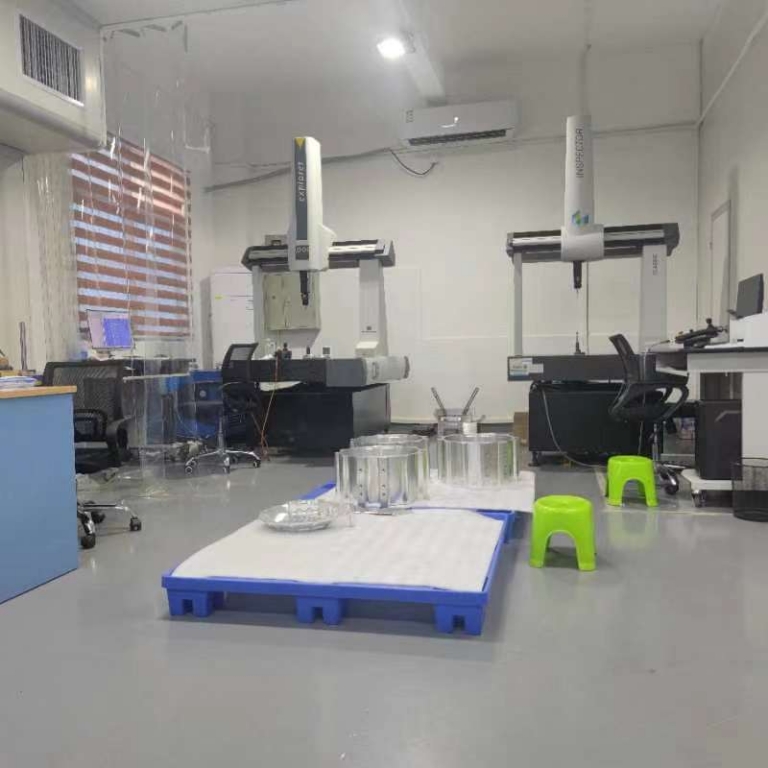
| Tolerances & Precision | Holding ±0.001mm requires constant environmental control, superior metrology, and slower machining cycles vs. ±0.1mm. | Specializes in high-precision (±0.001mm) machining. The rate reflects the investment in climate control, laser scanners, CMMs, and the meticulous process control needed. |
| Operator Skill & Engineering | A shop employing master machinists and application engineers costs more than one with basic operators. | Employs seasoned engineers who provide Design for Manufacturability (DFM) input. This upfront collaboration often reduces total machining time, creating net savings for the client despite a potentially higher base rate. |
| Material Expertise | Machining aerospace-grade Inconel or medical-grade titanium is slower, harder on tools, and requires more expertise than aluminum. | Offers a broad material portfolio and has optimized parameters for challenging alloys, factoring specialized tooling and knowledge into the rate. |
| Certifications & Quality Systems | Maintaining ISO 9001:2015, IATF 16949 (automotive), or ISO 13485 (medical) certification involves significant overhead for documentation, audits, and traceability. | Holds multiple international certifications, embedding quality costs into the rate. This provides clients in regulated industries with invaluable risk mitigation and assurance. |
| Volume & Part Complexity | High-volume runs allow amortization of setup and programming costs over many units, lowering the effective hourly cost per part. Prototypes and complex one-offs have high non-recurring engineering (NRE) costs. | Offers a true one-stop service from prototyping (via 3D printing or CNC) to mass production (CNC, die casting). This vertical integration allows for seamless transition and better overall project costing. |
Beyond the Rate: The True Measure of Value – Cost Per Part
The most intelligent clients look beyond the simple CNC machine hour rate to the total cost per acceptable part. This is where strategic partners differentiate themselves.
A manufacturer with a lower hourly rate but poor DFM support, unstable processes, and high scrap rates can end up costing more in delays, reworks, and failed inspections. Conversely, a partner like GreatLight Metal might have a rate that reflects its advanced capabilities and systems, but it delivers value by:
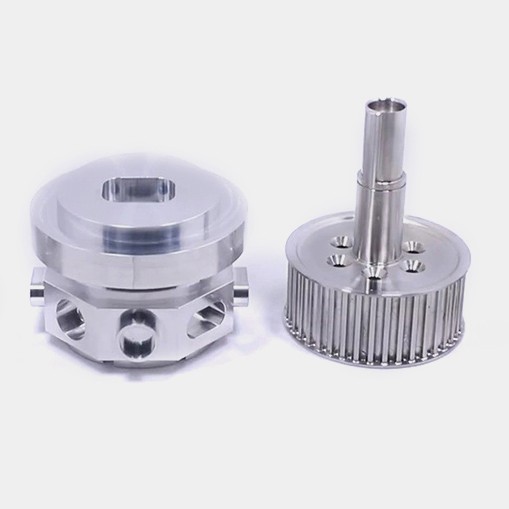
Reducing Total Machining Time: Using 5-axis technology to complete parts in single setups, minimizing handling errors and cumulative tolerances.
Minimizing Scrap and Rework: Robust process control and in-house precision inspection (CMM, optical scanners) ensure right-first-time quality.
Simplifying Your Supply Chain: Providing integrated post-processing (anodizing, plating, painting, assembly) eliminates the cost and risk of managing multiple vendors.
Ensuring On-Time Delivery: Reliable scheduling and capacity planning prevent costly project delays.
Conclusion
Calculating the CNC machine hour rate is a complex exercise in cost accounting that reflects a manufacturer’s investments, capabilities, and operational philosophy. While it’s a vital internal metric, as a client, your focus should be on the total project value: quality, reliability, technical support, and the final cost per perfect part delivered on time.
Choosing a partner like GreatLight Metal Tech Co., LTD. means engaging with a manufacturer that transparently builds its rates on a foundation of advanced precision 5-axis CNC machining services, authoritative quality systems, and deep engineering collaboration. This approach ultimately provides a more predictable, efficient, and successful path from your design to a finished, high-performance component. In precision manufacturing, the cheapest hourly rate is rarely the most economical choice; the most valuable partnership is one that optimizes the entire journey.
Frequently Asked Questions (FAQ)
Q1: Can you provide me with your standard CNC machine hour rate?
A: Most reputable manufacturers, including GreatLight Metal, do not publish a single standard rate. The rate is highly specific to the machine required (3-axis, 5-axis, Swiss lathe), the material, and the precision level of your project. An accurate quote requires reviewing your drawings or 3D model to determine the appropriate machining strategy and resources.
Q2: Why is the hourly rate for prototyping sometimes higher than for production?
A: Prototyping involves significant non-recurring costs: CAM programming, setup, process development, and first-article inspection. These engineering hours are amortized over a very small quantity of parts. In production, these NRE costs are spread over thousands of units, drastically reducing their impact on the cost per part, even if the machine hour rate itself remains the same.
Q3: How do certifications like ISO 9001 affect my part’s cost?
A: Directly, they add overhead for system maintenance, audits, and documentation. Indirectly, and more importantly, they significantly reduce risk. A certified system ensures process consistency, traceability, and continuous improvement, leading to higher first-pass yield, fewer defects, and greater supply chain reliability. For critical applications in automotive, aerospace, or medical fields, this is not a cost but an essential investment.
Q4: Does a more expensive machine always mean a higher hourly rate for my project?
A: Not necessarily. While the machine’s own rate is higher, its advanced capabilities (like 5-axis simultaneous machining) can complete complex parts in far less time and with fewer setups. The total machining cost (Rate x Time) can be lower with a more capable machine, and part quality is often superior due to reduced handling.
Q5: How can I, as a client, help reduce the machining hours/cost of my part?
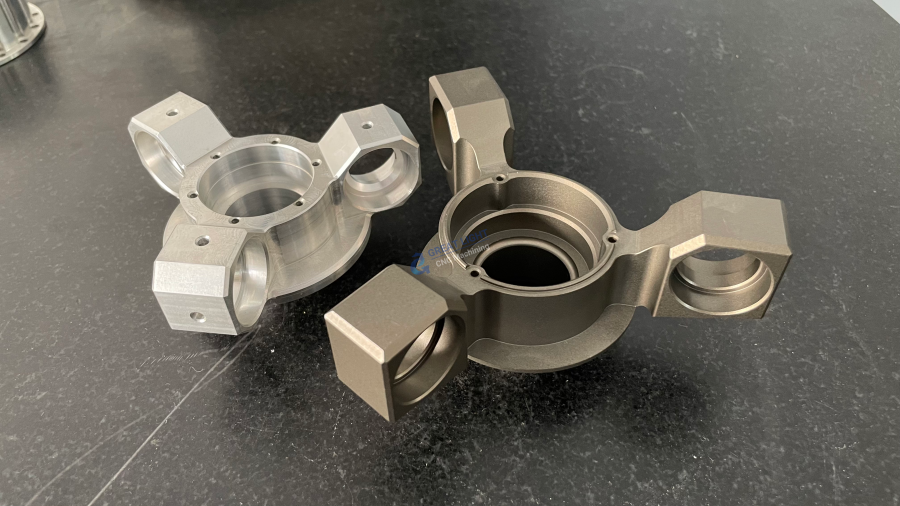
A: Engage in early Design for Manufacturability (DFM) discussions. A good manufacturer will advise on optimizing wall thickness, simplifying internal geometries, specifying realistic tolerances, and choosing the most suitable material. Small design changes can lead to dramatic reductions in machining time, tool wear, and cost. Partnering with an engineering-focused manufacturer like GreatLight Metal from the design stage is the most effective strategy.
For further insights into our capabilities and industry trends, you can connect with our professional network on LinkedIn.



















