
127 Sets Processing 4000mm 127 Sets High-Precision CNC Lathes
15 Years of Experience

How To Build A CNC Machine With Alumimum Extrusion?

How To Build A CNC Machine With Aluminum Extrusion? When it comes to custom precision parts machining, especially in industries demanding high repeatability, tight tolerances, and fast turnaround, five-axis CNC machining has become the gold standard. However, not every business or innovator is ready—or needs—to invest in commercial-grade machinery right away. For prototyping, small-batch production, […]

How To Build A CNC Machine With Aluminum Extrusion?

When it comes to custom precision parts machining, especially in industries demanding high repeatability, tight tolerances, and fast turnaround, five-axis CNC machining has become the gold standard. However, not every business or innovator is ready—or needs—to invest in commercial-grade machinery right away. For prototyping, small-batch production, educational purposes, or R&D, building your own CNC machine using aluminum extrusion offers a compelling balance between cost-efficiency, flexibility, and performance. In this guide, we’ll explore how to construct a functional CNC machine using aluminum extrusion, why it’s a strategic choice, and how it compares to professional solutions like those offered by GreatLight CNC Machining Factory—your expert partner for high-precision parts and integrated manufacturing solutions.


Why Consider Building a CNC Machine with Aluminum Extrusion?

Aluminum extrusion is the backbone of countless DIY and semi-professional CNC builds due to its unique combination of properties:

Lightweight yet strong: Ideal for reducing inertia while maintaining structural integrity.
Modular and configurable: Easily cut, drilled, and assembled into various frame geometries.
Cost-effective: More affordable than steel or custom machined components.
Corrosion-resistant and machinable: Simplifies maintenance and modifications.
Thermally stable: Minimizes expansion-related inaccuracies under temperature fluctuations.

For businesses or individuals aiming to customize precision parts, experimenting with a self-built CNC machine using aluminum extrusion can serve as a valuable stepping stone before scaling up to industrial-grade solutions like five-axis CNC machining.
图片

What You’ll Need to Build a CNC Machine with Aluminum Extrusion

1. Core Structural Components

Aluminum Extrusion Profiles: Common profiles include 2020 (light-duty), 2040, and 4040 (heavy-duty). Choose based on the expected load and size of your machine.
Joining Elements: T-slot nuts, bolts, brackets, and angle connectors for modular assembly.
Linear Rails & Bearings: Provide smooth, accurate motion along X, Y, and Z axes.
Lead Screws or Ball Screws: Convert rotary motion from motors into linear movement. Ball screws offer higher precision.
NEMA Stepper Motors or Servo Motors: Drive the axes. Servos offer better feedback and control.
Motor Drivers & Controllers: Such as GRBL, Arduino CNC Shield, or more advanced systems like LinuxCNC or Mach3.
Power Supply: Match voltage and current requirements of your motors and drivers.
CNC Controller Software: Typically runs on a PC or Raspberry Pi; interfaces with G-code.

2. Frame Design

A rigid and square frame is critical for accuracy. Common configurations include:

Cartesian (X-Y-Z): The most common and straightforward design.
CoreXY: Offers faster movements with less torque needed on belts.
H-Bot: Simpler than CoreXY but can be less stable.

Using aluminum extrusion, you can assemble a fully adjustable, square, and rigid frame that accommodates your desired build volume.


Step-by-Step: How to Build a Basic 3-Axis CNC Machine

Step 1: Design Your Frame

Determine the working area (X, Y, Z dimensions) based on your project needs.
Sketch a 3D model or use CAD software to plan the layout.
Select aluminum extrusion sizes (e.g., 2040 or 4040 for the main frame, 2020 for supports).

Step 2: Assemble the Frame

Cut the extrusions to length using a miter saw or hacksaw.
Use T-slot nuts and bolts to assemble the frame. Ensure all corners are square using a square tool or digital angle finder.
Add cross-bracing if needed to enhance rigidity.

Step 3: Install Linear Motion Systems

Mount linear rails on the X and Y axes. Secure them firmly to prevent deflection.
Attach carriages with bearings that glide along the rails.
For the Z-axis, consider using a ball screw for better precision, especially if working with small, detailed parts.

Step 4: Mount the Stepper Motors

Affix stepper motors to drive the lead screws or belt systems on each axis.
Ensure proper alignment to avoid binding or uneven motion.

Step 5: Connect Electronics

Wire stepper motors to motor drivers (e.g., TB6600, A4988, or DRV8825).
Connect drivers to a controller board (e.g., Arduino Uno with CNC Shield, or GRBL-compatible boards).
Hook up the power supply and ensure all connections are secure and correctly polarized.

Step 6: Install the Cutting Tool

For milling machines, mount a router (e.g., Dremel or trim router) or end mill spindle.
Ensure the tool is vertically aligned and securely fastened to prevent vibrations.

Step 7: Software Setup

Install CNC control software on your computer (e.g., Pronterface, bCNC, or Candle).
Configure the software to communicate with your controller board.
Import or generate G-code for your parts using CAD/CAM software like Fusion 360, SolidWorks CAM, or FreeCAD.

Step 8: Calibration and Testing

Perform axis calibration to ensure accurate movement.
Test with scrap material before machining valuable components.
Fine-tune motor speeds, feed rates, and acceleration settings for optimal performance.


Advantages of a DIY Aluminum Extrusion CNC Machine

BenefitDescription
Cost SavingsSignificantly lower upfront investment compared to commercial CNC machines.
CustomizabilityTailor the size, configuration, and features to your exact needs.
Educational ValueGreat for learning the fundamentals of CNC mechanics, electronics, and software.
Rapid PrototypingEnables quick iteration of designs before committing to professional manufacturing.
ScalabilityStart small and upgrade components (motors, screws, controllers) as needed.

When to Transition to Professional CNC Machining

While building your own CNC machine is a rewarding endeavor, it has limitations in terms of precision, repeatability, and material capabilities. For high-precision parts machining, especially in industries like aerospace, medical, automotive, and robotics, professional solutions are non-negotiable.

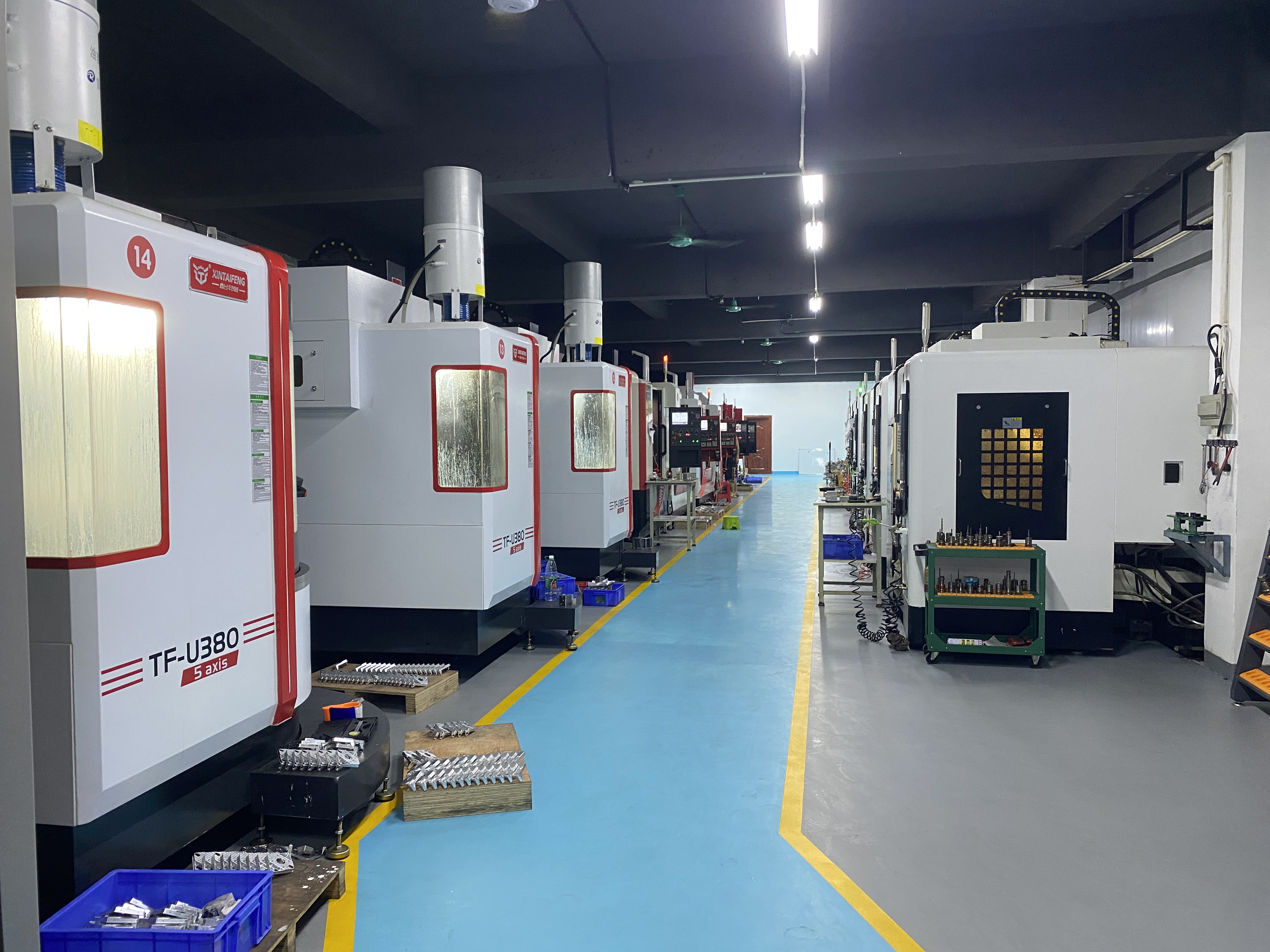
This is where GreatLight CNC Machining Factory shines. With over a decade of experience and a fleet of advanced five-axis CNC machining centers, the factory specializes in solving complex manufacturing challenges with ±0.001mm precision. Their capabilities include:

Five-axis CNC machining
CNC milling and turning
Die casting and mold making
3D metal and plastic printing (SLM/SLA/SLS)
Sheet metal fabrication
Comprehensive post-processing and surface finishing

Moreover, GreatLight Metal is ISO 9001:2015 certified, ensuring that every part meets stringent quality standards. Whether you’re producing prototype models or end-use components, their one-stop manufacturing services eliminate the hassle of sourcing multiple vendors.

🔗 Learn more about their precision 5-axis CNC machining services here: GreatLight CNC Machining Services (new window).


Conclusion

Building a CNC machine with aluminum extrusion is an excellent way to dive into the world of precision machining, offering flexibility, hands-on learning, and cost advantages. It’s particularly well-suited for prototyping, hobbyists, small workshops, and educational institutions. However, for mission-critical applications that demand uncompromising precision, advanced materials, and certified quality, partnering with a trusted manufacturer like GreatLight CNC Machining Factory ensures that your parts are produced to the highest standards.

By starting with a DIY approach and eventually scaling up to professional five-axis CNC machining, you can achieve the best of both worlds—innovation and precision.


Frequently Asked Questions (FAQ)

Q1: Is aluminum extrusion strong enough for a CNC machine frame?

Yes, especially when using profiles like 2040 or 4040. These provide an excellent balance of strength, weight, and modularity for most DIY and even some light industrial applications.
图片

Q2: What’s the difference between 3-axis, 4-axis, and 5-axis CNC machining?

3-axis: Moves in X, Y, and Z directions. Suitable for basic milling.
4-axis: Adds rotation around the X-axis (A-axis), enabling more complex shapes.
5-axis: Adds two rotational axes, allowing simultaneous movement for intricate geometries and reduced setup time.

Q3: Can I achieve industrial-grade precision with a DIY CNC machine?

While you can achieve good precision for hobbyist and prototyping purposes (typically ±0.1mm to ±0.05mm), professional machines like those from GreatLight CNC Machining Factory offer ±0.001mm precision, which is essential for critical applications.

Q4: What materials can I machine with a DIY CNC machine?

Common materials include wood, plastics (like acrylic and PVC), aluminum (soft grades), and PCBs. Machining harder metals or advanced composites usually requires industrial-grade equipment.

Q5: Why choose GreatLight CNC Machining Factory over other manufacturers?

GreatLight Metal combines decades of expertise, ISO-certified quality systems, full-process manufacturing capabilities, and state-of-the-art 5-axis CNC machining. They serve high-end industries including aerospace, automotive, medical, and robotics. Learn more about their trusted global partnerships here: GreatLight Metal on LinkedIn (new window).
图片

Whether you’re assembling your own CNC system or sourcing precision components, understanding the capabilities and limitations of each approach ensures smarter decision-making for your manufacturing needs.


CNC Experts

Picture of JinShui Chen

JinShui Chen

Rapid Prototyping & Rapid Manufacturing Expert

Specialize in CNC machining, 3D printing, urethane casting, rapid tooling, injection molding, metal casting, sheet metal and extrusion

CNC Recent Posts

CNC News

Welcome to GreatLight Metal,Maximum Processing Size 4,000 mm

Precision Machining CNC Quote Online

Loading file

Upload Click here to upload or drag and drop your model to the canvas.

The model is too large and has been resized to fit in the printer's build tray. [Hide]

The model is too large to fit in the printer's build tray. [Hide]

The model is too large, a fitting printer is selected. [Hide]

The model is too small and has been upscaled. [Hide]

Warning: The selected printer can not print in full color [Hide]

Warning: obj models with multiple meshes are not yet supported [Hide]

Warning: Unsupported DXF entity  [Hide]

Warning: could not arrange models [Hide]


File Unit:      
Scale:
%
L × W × H:
X: × Y: × Z:  cm 
Rotation:
X: ° Y: °  
⚡ Instant Quote for Precision Manufacturing

Submit your design files (STEP/IGES/DWG) and receive a competitive quote within 1 hour, backed by ISO 9001-certified quality assurance.

📋 How It Works

  1. Upload & SpecifyShare your 3D model and select materials (Aluminum/Stainless Steel/Titanium/PEEK), tolerances (±0.002mm), and surface treatments.

  2. AI-Powered AnalysisOur system calculates optimal machining strategy and cost based on 10+ years of automotive/aerospace data.

  3. Review & ConfirmGet a detailed breakdown including:
    - Volume pricing tiers (1-10,000+ units)
    - Lead time (3-7 days standard)
    - DFM feedback for cost optimization

Unit Price: 

Loading price
5 Axis CNC Machining Equipment
4 Axis CNC Machining Equipment
3 Axis CNC Machining Equipment
CNC Milling & Turning Equipment
Prototype and Short-Run Injection Moldings Exact plastic material as final design
Volume Metal Die Casting Services - Precision Cast Parts
Bridge the Gap From Prototype to Production – Global delivery in 10 days or less
Custom high-precision sheet metal prototypes and parts, as fast as 5 days.
Custom Online 3D Printing Services
Design Best Processing Method According To 3D Drawings
Alloys Aluminum 6061, 6061-T6 Aluminum 2024 Aluminum 5052 Aluminum 5083 Aluminum 6063 Aluminum 6082 Aluminum 7075, 7075-T6 Aluminum ADC12 (A380)
Alloys Brass C27400 Brass C28000 Brass C36000
Alloys Stainless Steel SUS201 Stainless Steel SUS303 Stainless Steel SUS 304 Stainless Steel SUS316 Stainless Steel SUS316L Stainless Steel SUS420 Stainless Steel SUS430 Stainless Steel SUS431 Stainless Steel SUS440C Stainless Steel SUS630/17-4PH Stainless Steel AISI 304
Inconel718
Carbon Fiber
Tool Steel
Mold Steel
Alloys Titanium Alloy TA1 Titanium Alloy TA2 Titanium Alloy TC4/Ti-6Al 4V
Alloys Steel 1018, 1020, 1025, 1045, 1215, 4130, 4140, 4340, 5140, A36 Die steel Alloy steel Chisel tool steel Spring steel High speed steel Cold rolled steel Bearing steel SPCC
Alloys Copper C101(T2) Copper C103(T1) Copper C103(TU2) Copper C110(TU0) Beryllium Copper
Alloys Magnesium Alloy AZ31B Magnesium Alloy AZ91D
Low Carbon Steel
Alloys Magnesium Alloy AZ31B Magnesium Alloy AZ91D
ABS Beige(Natural) ABS Black ABS Black Antistatic ABS Milky White ABS+PC Black ABS+PC White
PC Black PC Transparent PC White PC Yellowish White PC+GF30 Black
PMMA Black PMMA Transparent PMMA White
PA(Nylon) Blue PA6 (Nylon)+GF15 Black PA6 (Nylon)+GF30 Black PA66 (Nylon) Beige(Natural) PA66 (Nylon) Black
PE Black PE White
PEEK Beige(Natural) PEEK Black
PP Black PP White PP+GF30 Black
HDPE Black HDPE White
HIPS Board White
LDPE White
This is a finish of applying powdered paint to the components and then baking it in an oven, which results in a stronger, more wear- and corrosion-resistant layer that is more durable than traditional painting methods.
No coating required, product’s natural color!
This is a finish of applying powdered paint to the components and then baking it in an oven, which results in a stronger, more wear- and corrosion-resistant layer that is more durable than traditional painting methods.
This finishing option with the shortest turnaround time. Parts have visible tool marks and potentially sharp edges and burrs, which can be removed upon request.
Sand blasting uses pressurized sand or other media to clean and texture the surface, creating a uniform, matte finish.
Polishing is the process of creating a smooth and shiny surface by rubbing it or by applying a chemical treatmen
A brushed finish creates a unidirectional satin texture, reducing the visibility of marks and scratches on the surface.
Anodizing increases corrosion resistance and wear properties, while allowing for color dyeing, ideal for aluminum parts.
Black oxide is a conversion coating that is used on steels to improve corrosion resistance and minimize light reflection.
Electroplating bonds a thin metal layer onto parts, improving wear resistance, corrosion resistance, and surface conductivity.
This is a finish of applying powdered paint to the components and then baking it in an oven, which results in a stronger, more wear- and corrosion-resistant layer that is more durable than traditional painting methods.
Please provide additional text description for other surface treatment requirements!
Material
Material
  • CNC Metals
    • Aluminum
    • Brass
    • Stainless steel
    • Inconel718
    • Carbon Fiber
    • Tool Steel
    • Mold Steel
    • Titanium
    • Alloy Steel
    • Copper
    • Bronze
    • Low Carbon Steel
    • Magnesium
  • CNC Plastics
    • ABS
    • PC
    • PMMA (Acrylic)
    • PA (Nylon)
    • PE
    • PEEK
    • PP
    • HDPE
    • HIPS
    • LDPE
Printer
Printer
  • CNC Metals
    • 5 Axis CNC Machining
    • 4 Axis CNC Machining
    • 3 Axis CNC Machining
    • CNC Milling & Turning
    • Rapid Tooling
    • Metal Die Casting
    • Vacuum Casting
    • Sheet Metal Fabrication
    • SLA 3D Printing
    • SLS 3D Printing
    • SLM 3D Printing
  • Rapid Prototyping
    • Design Best Processing Method According To 3D Drawings
Post-processing
Post-processing
  • As Machined(Product’s natural color)
  • Sand Blasting
  • Polishing
  • Brushed Finish
  • Anodizing
  • Black Oxide
  • Electroplating
  • Paint Coating
  • Powder Coating
  • Other surface treatment requirements
Finalize
The world's first CNC machining center that dares to provide free samples!

Free for first product valued at less than $200. (Background check required)

precision machining cnc quote online

15 Years CNC Machining Services

When you’re ready to start your next project, simply upload your 3D CAD design files, and our engineers will get back to you with a quote as soon as possible.
Scroll to Top

ISO 9001 Certificate

ISO 9001 is defined as the internationally recognized standard for Quality Management Systems (QMS). It is by far the most mature quality framework in the world. More than 1 million certificates were issued to organizations in 178 countries. ISO 9001 sets standards not only for the quality management system, but also for the overall management system. It helps organizations achieve success by improving customer satisfaction, employee motivation, and continuous improvement. * The ISO certificate is issued in the name of FS.com LIMITED and applied to all the products sold on FS website.

greatlight metal iso 9001 certification successfully renewed
GB T 19001-2016 IS09001-2015
✅ iso 9001:2015
greatlight metal iso 9001 certification successfully renewed zh

IATF 16949 certificate

IATF 16949 is an internationally recognized Quality Management System (QMS) standard specifically for the automotive industry and engine hardware parts production quality management system certification. It is based on ISO 9001 and adds specific requirements related to the production and service of automotive and engine hardware parts. Its goal is to improve quality, streamline processes, and reduce variation and waste in the automotive and engine hardware parts supply chain.

automotive industry quality management system certification 01
Certification of Production Quality Management System for Engine Hardware Parts Engine Hardware Associated Parts
automotive industry quality management system certification 00
发动机五金零配件的生产质量管理体系认证

ISO 27001 certificate

ISO/IEC 27001 is an international standard for managing and processing information security. This standard is jointly developed by the International Organization for Standardization (ISO) and the International Electrotechnical Commission (IEC). It sets out requirements for establishing, implementing, maintaining, and continually improving an information security management system (ISMS). Ensuring the confidentiality, integrity, and availability of organizational information assets, obtaining an ISO 27001 certificate means that the enterprise has passed the audit conducted by a certification body, proving that its information security management system has met the requirements of the international standard.

greatlight metal technology co., ltd has obtained multiple certifications (1)
greatlight metal technology co., ltd has obtained multiple certifications (2)

ISO 13485 certificate

ISO 13485 is an internationally recognized standard for Quality Management Systems (QMS) specifically tailored for the medical device industry. It outlines the requirements for organizations involved in the design, development, production, installation, and servicing of medical devices, ensuring they consistently meet regulatory requirements and customer needs. Essentially, it's a framework for medical device companies to build and maintain robust QMS processes, ultimately enhancing patient safety and device quality.

greatlight metal technology co., ltd has obtained multiple certifications (3)
greatlight metal technology co., ltd has obtained multiple certifications (4)

Get The Best Price

Send drawings and detailed requirements via Email:[email protected]
Or Fill Out The Contact Form Below:

All uploads are secure and confidential.











