

For any business or individual considering bringing manufacturing capabilities in-house or upgrading existing equipment, the question “How much does a CNC machine cost?” is often the first and most critical one. The answer, however, is far from simple. It’s akin to asking “How much does a vehicle cost?”—the range spans from a modest used car to a private jet. The cost of a CNC machine is influenced by a complex interplay of factors including machine type, size, capabilities, brand, and the technological sophistication it embodies.

As a senior manufacturing engineer with extensive experience in precision parts machining and customization, I’ve witnessed clients navigate this complex landscape. The decision isn’t just about the initial purchase price; it’s about total cost of ownership, return on investment, and strategic alignment with your production goals. For many, partnering with an established precision machining service like GreatLight CNC Machining Factory often proves to be a more economically viable and lower-risk path, especially for prototyping, low-to-medium volume production, or when dealing with highly complex parts. This allows you to leverage top-tier 5-axis CNC machining capabilities without the massive capital outlay and ongoing operational burdens.
H2: Deconstructing the Cost: Key Factors That Determine CNC Machine Price
The price tag on a CNC machine is a direct reflection of its construction, capabilities, and intended application. Understanding these factors is essential for making an informed decision.
H3: 1. Machine Type and Configuration
This is the primary cost driver. The basic categories, in generally ascending order of cost, are:
CNC Routers: Primarily for wood, plastics, and soft metals. Prices range from $5,000 to $100,000+.
CNC Mills (Milling Machines): The workhorses of metal machining. A basic 3-axis vertical machining center (VMC) can start around $50,000, while high-end, large-capacity models can exceed $500,000.
CNC Lathes (Turning Centers): For cylindrical parts. Prices for a standard 2-axis lathe start around $40,000 and can go well over $300,000 for multi-axis, mill-turn centers.
Multi-Axis Machines (The Pinnacle of Flexibility):
4-axis CNC machines add a rotary axis, typically costing 20-40% more than a comparable 3-axis machine.
5-axis CNC machines represent the apex of capability, allowing for the machining of incredibly complex geometries in a single setup. Entry-level 5-axis models may start around $150,000, but industrial-grade machines from leading brands commonly range from $300,000 to over $1 million. The advanced kinematics, sophisticated controllers, and precision required justify this premium.
Swiss-Type Lathes: Specialized for high-volume, ultra-precision small parts. These machines are complex and typically start above $100,000.
H3: 2. Size and Work Envelope
The physical dimensions of the parts you intend to machine have a direct impact. A machine with a travel of 500mm x 500mm x 400mm will be significantly less expensive than one with a 2000mm x 1000mm x 800mm envelope. Larger machines require more massive castings, larger ball screws, and more powerful motors, all adding to the cost.
H3: 3. Control System and Software
The “brain” of the CNC machine. Brand-name controllers from Fanuc, Siemens, or Heidenhain are reliable and powerful but add to the base cost. The included CAM (Computer-Aided Manufacturing) software for programming can also be a significant expense, sometimes costing tens of thousands of dollars separately.
H3: 4. Precision and Performance Specifications
Positioning Accuracy and Repeatability: Machines guaranteeing ±0.001mm (0.00004″) accuracy are engineered and assembled to much tighter tolerances than those with ±0.01mm specs, resulting in higher costs.
Spindle Power and Speed: A high-torque, low-speed spindle for heavy steel cutting differs from a high-speed (20,000+ RPM) spindle for aluminum or finishing. Advanced spindles with liquid cooling and automatic tool changers (ATCs) with 30+ tools are premium features.
Linear Guides vs. Box Ways: Linear guides offer high speed, while box ways provide superior rigidity for heavy cuts. The choice influences both performance and price.
H3: 5. Brand and Country of Origin
There is a notable price stratification:
Economy Tier: Often machines manufactured in China or Taiwan, offering good value for basic applications. A 3-axis VMC might be $50,000 – $80,000.
Industrial Tier: Well-established Japanese, German, and American brands (e.g., DMG Mori, Mazak, Haas, Okuma). They offer proven reliability, extensive support networks, and hold their value. A 3-axis VMC here typically ranges from $80,000 to $150,000.
High-Performance Tier: Specialized machines for aerospace, medical, or mold-making from brands like Mikron, Kern, or Grob. These are at the top of the price spectrum, where 5-axis models can easily surpass $500,000.
H2: The Hidden Costs: Looking Beyond the Purchase Price
The initial machine cost is just the tip of the iceberg. A comprehensive financial analysis must include:
Installation & Foundation: Large machines require special concrete foundations, rigging, and professional installation, which can cost thousands.
Tooling & Workholding: An empty machine is useless. A basic set of tool holders, cutting tools, vises, and fixtures can easily add $10,000 – $30,000 initially, with ongoing tooling costs being a significant operational expense.
Facility Requirements: Adequate power (often 3-phase), compressed air lines, and coolant systems must be in place. Climate control for high-precision work may also be necessary.
Personnel & Training: Skilled CNC programmers and operators command competitive salaries. Training on a new machine and its software is an additional cost in both time and money.
Maintenance & Downtime: Annual maintenance contracts, spare parts, and the cost of unexpected downtime must be factored into the operational budget.
Software Licensing: Annual fees for CAD/CAM software and machine controller updates are recurring costs.
H2: The Strategic Alternative: Partnering with a Precision Machining Service
For many businesses, the capital intensity, operational complexity, and rapid technological obsolescence associated with owning CNC equipment make outsourcing a strategically superior choice. This is where a partner like GreatLight CNC Machining Factory demonstrates immense value.
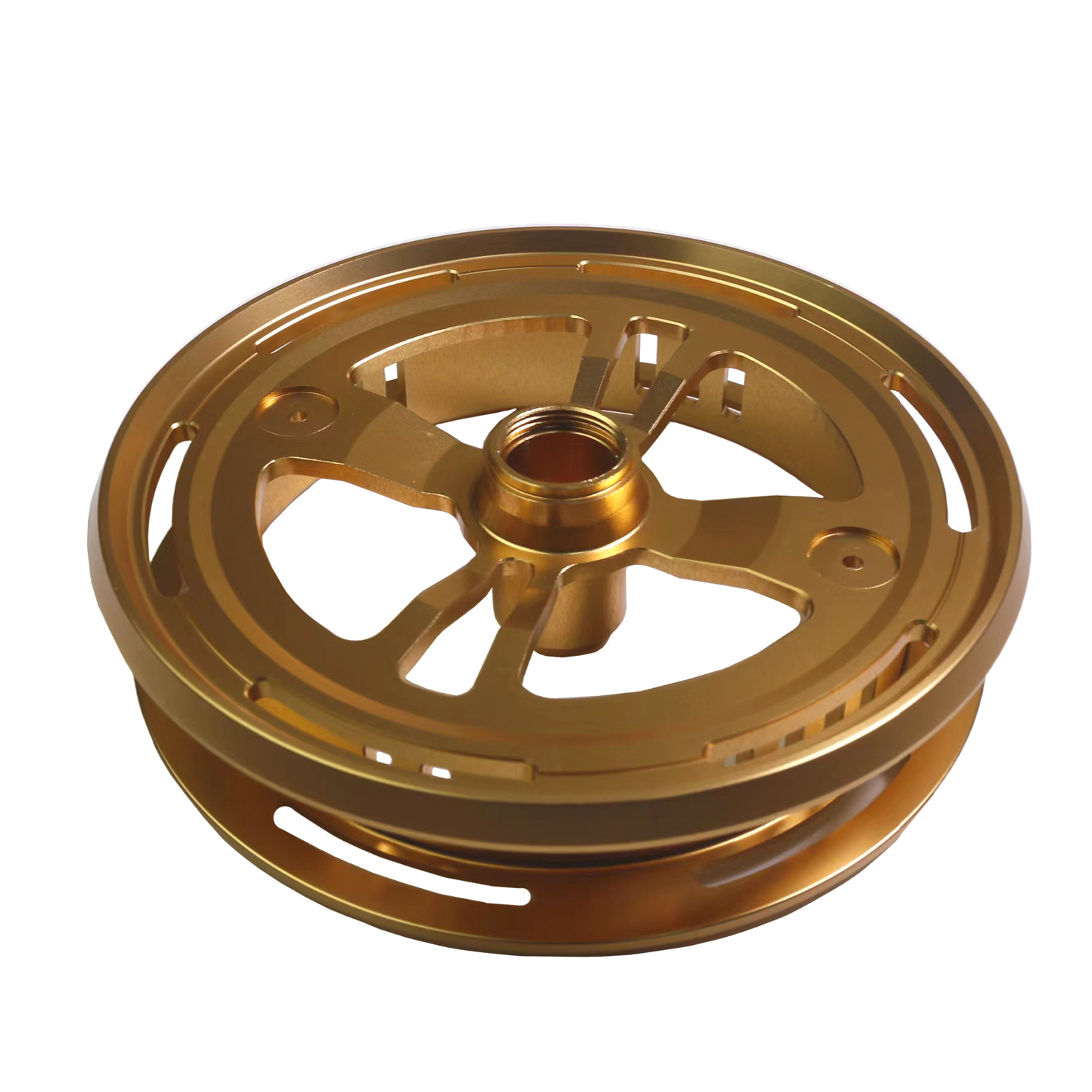
By leveraging their established, state-of-the-art facility, you gain immediate access to:
Zero Capital Investment: You pay only for the parts produced, not for the machines, facility, or overhead.
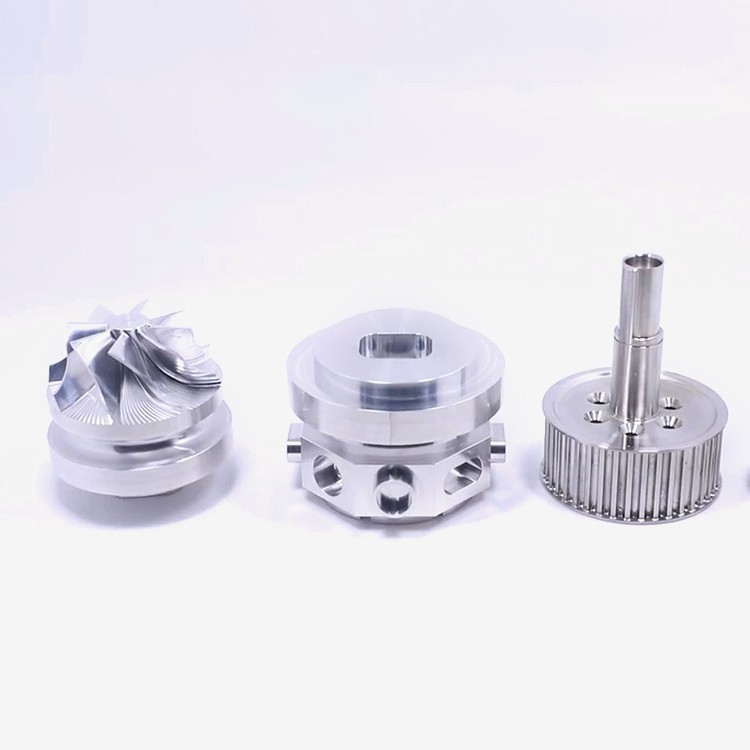
Access to Advanced Technology: Immediately utilize advanced 5-axis CNC machining, 3D printing, and EDM capabilities without multi-million-dollar investments.
Guaranteed Expertise: Benefit from the accumulated knowledge of engineers and machinists who solve complex manufacturing challenges daily.
Scalability and Flexibility: Easily scale production up or down without being locked into fixed capacity. Pivot to new projects without retooling an entire shop.
Integrated Quality Assurance: Rely on their ISO 9001:2015 certified systems and in-house metrology (like CMMs) to ensure every part meets print specifications.
GreatLight CNC Machining Factory, with its comprehensive arsenal of 5-axis, 4-axis, and 3-axis CNC centers, embodies this partner model. They transform your fixed capital costs into variable production costs, providing financial predictability and freeing your resources to focus on core competencies like design, R&D, and marketing.
Conclusion
So, how much does a CNC machine cost? A usable entry-level machine for simple parts might start around $50,000, while a full-fledged, capable machine shop with multi-axis capabilities represents an investment easily reaching $500,000 to $2 million or more, not including the ongoing operational costs.
The more pertinent question for most businesses is: “What is the most cost-effective and reliable way to obtain high-quality CNC machined parts?” For prototyping, complex components, or fluctuating production volumes, the answer increasingly lies in strategic partnerships with certified, technologically adept manufacturers. Investing in a relationship with a specialist like GreatLight CNC Machining Factory often yields a faster, more flexible, and ultimately more economical return than investing in the machinery itself, allowing you to harness world-class precision 5-axis CNC machining services without bearing the full weight of ownership.
FAQ: Frequently Asked Questions About CNC Machine Costs
H3: Q1: What is the cheapest type of CNC machine I can buy?
A1: For hobbyist or very light prototyping work, desktop CNC routers or small engraving machines can be found for $1,000 to $5,000. However, for industrial-grade metal cutting, a basic 3-axis CNC mill from an economy brand is the entry point, starting around $50,000.
H3: Q2: Is it worth buying a used CNC machine to save money?
A2: It can be, but it carries significant risk. You must thoroughly inspect the machine’s condition, maintenance history, and accuracy. Factor in potential immediate repair costs, lack of warranty, and possible obsolescence. It’s best for buyers with in-house technical expertise.
H3: Q3: Besides the machine, what is the single biggest ongoing cost?
A3: Labor is typically the largest recurring cost. Skilled CNC programmers and operators are essential. Following that, cutting tools and tooling are consumable expenses that constantly need replenishment based on production volume and material.
H3: Q4: How does the cost of a 5-axis machine compare to a 3-axis machine?
A4: A 5-axis CNC machine is substantially more expensive. You can expect to pay 3 to 5 times more for a 5-axis machine with a similar work envelope to a 3-axis model. This premium is for the complex mechanical system, advanced controller, and software required for simultaneous multi-axis interpolation.
H3: Q5: When does it make financial sense to buy a CNC machine instead of outsourcing?
A5: It generally becomes justifiable when you have consistent, high-volume production of similar parts that fully utilizes the machine (often 16+ hours a day). The break-even point depends on your outsourcing costs, but it requires a stable, long-term production forecast to amortize the large initial investment.
H3: Q6: Can I get a precise quote for a CNC machine online?
A6: No, machine tool sales are highly customized. You will need to discuss your specific requirements (materials, part sizes, tolerances, desired output) with a dealer or manufacturer to get a formal quote, which will include chosen options and configuration.
H3: Q7: Why would I choose a service like GreatLight CNC Machining Factory over buying my own machine?
A7: Choosing a service partner eliminates capital lock-in, provides instant access to advanced technology and expertise without a learning curve, offers unparalleled flexibility for design changes and volume scaling, and transfers the risks of maintenance, downtime, and technological obsolescence. It converts a large fixed cost into a manageable variable cost tied directly to your output. For more insights into industry trends and professional networking, you can follow discussions on platforms like LinkedIn.


















