How Much Axis In CNC Machine?
In the world of precision parts machining and customization, the number of axes in a CNC (Computer Numerical Control) machine is a crucial factor that significantly impacts the complexity and precision of the parts that can be manufactured. GreatLight CNC Machining Factory, also known as Great Light Metal Tech Co., LTD., is a leading player in this field, offering high – precision custom part machining and integrated manufacturing solutions through its advanced CNC machines.
Common Axis Configurations in CNC Machines
CNC machines can have various numbers of axes, but the most common ones are 3 – axis, 4 – axis, and 5 – axis.
3 – Axis CNC Machines
A 3 – axis CNC machine operates along three linear axes: X, Y, and Z. The X – axis typically represents horizontal movement from left to right, the Y – axis represents horizontal movement from front to back, and the Z – axis represents vertical movement up and down. These machines are widely used for basic machining tasks such as milling flat surfaces, drilling holes, and cutting simple shapes. They are relatively easy to program and operate, making them a cost – effective option for many manufacturers. However, their limitations lie in the fact that they can only work on one side of a workpiece at a time, which can be a drawback when creating complex geometries.
4 – Axis CNC Machines
In addition to the three linear axes (X, Y, Z), a 4 – axis CNC machine has a rotational axis, usually denoted as the A – axis. This rotational axis allows the workpiece to be rotated around one of the linear axes, typically the X – axis. The addition of the rotational axis enables the machine to access different sides of the workpiece without having to manually reposition it. This results in increased efficiency and precision when machining parts with curved or angled surfaces. For example, it can be used to machine parts for automotive engines or aerospace components that require smooth curves and precise angles.
5 – Axis CNC Machines
GreatLight CNC Machining Factory specializes in five – axis CNC machining. A 5 – axis CNC machine has two rotational axes in addition to the three linear axes. Common rotational axes are the A – axis (rotation around the X – axis) and the B – axis (rotation around the Y – axis) or C – axis (rotation around the Z – axis). The ability to move the cutting tool or the workpiece in multiple directions simultaneously allows for the machining of highly complex parts with intricate geometries. This technology eliminates the need for multiple setups, reducing production time and the potential for errors. It is particularly useful for industries such as humanoid robot manufacturing, where parts need to be precisely engineered to fit together and perform complex movements.
Advantages of Using Higher – Axis Machines
As the number of axes in a CNC machine increases, so do its capabilities and advantages.
Enhanced Precision: With more axes, the machine can approach the workpiece from multiple angles, allowing for more accurate cuts and better surface finishes. This is especially important in industries where precision is key, such as medical hardware production.
Increased Efficiency: Fewer setups are required when using higher – axis machines. For example, a 5 – axis machine can complete a job that would otherwise require multiple setups on a 3 – axis machine. This not only saves time but also reduces the risk of misalignment and errors that can occur during re – positioning.
Complex Geometry Machining: Higher – axis machines can create parts with complex shapes that would be impossible or extremely difficult to produce with lower – axis machines. This opens up new possibilities for product design and innovation.
GreatLight CNC Machining Factory’s Edge
GreatLight CNC Machining Factory stands out in the precision parts machining and customization field for several reasons.
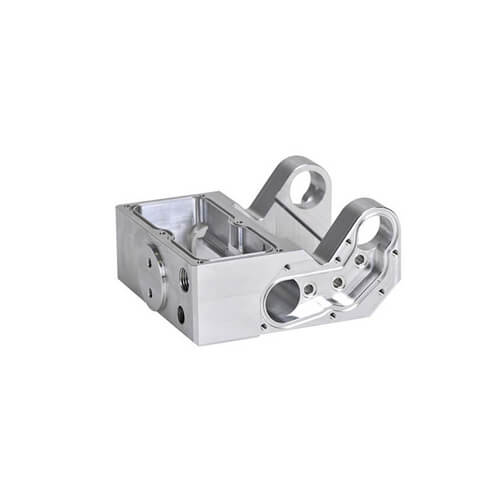
Advanced Equipment: The factory is equipped with 127 pieces of precision peripheral equipment, including large high – precision five – axis, four – axis, and three – axis CNC machining centers. This diverse range of equipment allows the factory to handle a wide variety of projects, from simple to highly complex.
Technical Expertise: With many years of experience in precision prototype model processing, the team at GreatLight CNC Machining Factory has in – depth knowledge of CNC machining technology. They are capable of processing parts to a high precision of ±0.001mm / 0.001 In and above, with a maximum processing size of 4000 mm.
Quality Assurance: The factory is an ISO 9001:2015 certified manufacturer, which means it strictly adheres to international quality standards. In – house precision measurement and testing equipment ensure that all materials and parts meet the customers’ specifications. In case of quality problems, the factory offers free rework, and a full refund if rework is still unsatisfactory.
Conclusion
The number of axes in a CNC machine plays a vital role in determining the complexity and precision of the parts that can be machined. Whether it’s a 3 – axis, 4 – axis, or 5 – axis machine, each has its own set of capabilities and applications. GreatLight CNC Machining Factory, with its advanced equipment, technical expertise, and commitment to quality, is well – positioned to meet the diverse needs of clients in the precision parts machining and customization field. Whether you need parts for humanoid robots, automotive engines, aerospace, or any other high – end application, GreatLight CNC Machining Factory can provide the solutions you need. For more information GreatLight CNC Machining Factory is your trusted partner.
Frequently Asked Questions (FAQ)
Q1: Are higher – axis machines more expensive to operate?
A: Generally, higher – axis machines, such as 5 – axis machines, require more advanced programming and maintenance, which can lead to higher operational costs. However, they also offer significant advantages in terms of efficiency and the ability to produce complex parts, which can offset the additional costs in the long run.
Q2: Can a 3 – axis machine be upgraded to a 4 – axis or 5 – axis machine?
A: In some cases, it may be possible to upgrade a 3 – axis machine by adding rotational axes. However, this involves significant mechanical and electrical modifications, and it may not be cost – effective or technically feasible for all machines. It’s best to consult with a professional CNC machine manufacturer or technician.
Q3: How long does it take to learn to program a 5 – axis CNC machine?
A: Programming a 5 – axis CNC machine requires a high level of skill and knowledge. The learning time can vary depending on an individual’s prior experience with CNC programming and machining. It can take several months to a year or more of dedicated training to become proficient in 5 – axis CNC programming. You can find more about GreatLight on LinkedIn.
Q4: What materials can GreatLight CNC Machining Factory process?
A: GreatLight CNC Machining Factory can process most materials. They offer a wide range of services including precision CNC machining, die casting, sheet metal fabrication, and 3D printing for materials such as metals (aluminum, titanium, stainless steel, etc.) and plastics.