

In the world of precision manufacturing, the question “How many operations can a CNC machine perform?” is fundamental, yet the answer reveals the incredible versatility and sophistication of modern computer-controlled machining. At its core, a CNC (Computer Numerical Control) machine is a subtractive manufacturing system that executes a series of programmed commands to shape a workpiece. The number of distinct operations it can perform is vast, essentially limited only by the machine’s configuration, the tools in its arsenal, and the ingenuity of the programmer.
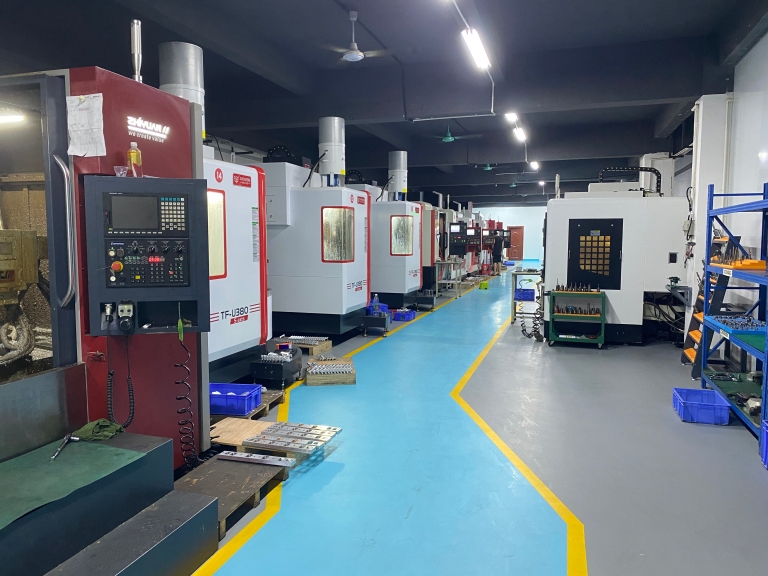
For a professional manufacturer like GreatLight CNC Machining Factory, mastering this vast operational repertoire is what allows us to transform complex designs into high-precision reality. Our extensive fleet of multi-axis CNC systems is programmed to execute a comprehensive suite of operations to meet the most demanding specifications.
H2: Deconstructing CNC Operations: A Hierarchical View
To understand the scope, we can categorize operations by the primary machining process, the type of machine, and the complexity of movement.
H3: 1. Fundamental Machining Processes (The “What”)
These are the core material removal actions. A single CNC machine, especially a machining center, can perform multiple of these in one setup.
Milling: The most common operation, using rotating cutting tools to remove material. This includes:
Face Milling: Creating a flat surface.
Peripheral Milling: Cutting the outside edge of a part (contouring).
Pocketing: Cutting enclosed, shallow cavities.
Drilling: Creating round holes.
Boring: Enlarging and finishing pre-drilled holes to precise diameters.
Tapping: Cutting internal threads.
Thread Milling: Producing threads (internal or external) using a circular interpolation path, offering superior quality and flexibility over tapping.
Engraving/Etching: Adding text or fine details.
Turning: Performed on a CNC lathe or mill-turn center, where the workpiece rotates. Operations include:
Facing: Creating a flat surface on the end of a cylindrical part.
OD (Outside Diameter) Turning: Reducing the diameter of the exterior.
ID (Inside Diameter) Turning/Boring: Enlarging and finishing the interior of a hole.
Grooving: Cutting a narrow channel.
Parting/Cut-off: Severing a finished part from the bar stock.
Threading (Turning): Cutting external or internal threads with a single-point tool.
Specialized Operations (often on dedicated or advanced machines):
Grinding: For achieving ultra-fine surface finishes and extreme tolerances.
Electrical Discharge Machining (EDM): Using electrical sparks to erode material, ideal for hardened metals or complex shapes. This includes Wire EDM and Sinker EDM.
Laser Cutting/Engraving: For precise 2D cutting or marking.
Waterjet Cutting: Using a high-pressure abrasive stream to cut materials without heat-affected zones.
H3: 2. Axes of Motion and Complexity (The “How”)
The number of axes a CNC machine controls directly multiplies its operational capability in a single clamping.
3-Axis CNC Machining: The workhorse. Performs all fundamental milling operations on the top and sides of a part. The part may need to be repositioned manually for features on multiple faces.
4-Axis CNC Machining: Adds a rotary axis (usually an A-axis), allowing the workpiece to rotate. This enables continuous machining around a cylinder (e.g., cutting cam lobes, helical features, or complex contours) and operations on four faces in one setup.
5-Axis CNC Machining: The pinnacle of flexibility. Adds a second rotary axis (e.g., B or C axis), allowing the cutting tool to approach the workpiece from virtually any direction. This single-handedly expands the operational universe to include:
Machining highly complex, organic geometries (aerospace blades, impellers, medical implants).
Drilling and machining compound-angle holes without costly fixtures.
Using shorter cutting tools for better rigidity, improving surface finish and accuracy.
Completing a part in a single setup, drastically reducing time and cumulative error.
At GreatLight CNC Machining Factory, our advanced five-axis CNC machining capabilities are central to our service offering, allowing us to execute this vast array of complex operations with unparalleled efficiency and precision.
H3: 3. The “Meta-Operations”: Programming and Automation
Beyond the physical cutting, modern CNC encompasses critical software-driven operations:
Tool Changing: Automatic tool changers (ATCs) with 20, 40, or even 100+ tools allow a machine to seamlessly switch between dozens of operations without pause.
Pallet Changing: Allows one pallet (workpiece fixture) to be machined while another is loaded offline, maximizing machine uptime.
Probing: In-process inspection using touch probes to measure parts, set tool offsets, and ensure quality without removing the workpiece.
Multi-Tasking/Mill-Turn: Combining turning and milling operations on a single machine platform, enabling the complete fabrication of a complex part from bar stock in one cycle.
H2: The GreatLight Metal Advantage: Integrating Operations into Solutions
For our clients, the raw count of operations is less important than the integrated manufacturing solution. Our value lies in selecting and sequencing the optimal operations to achieve the desired outcome reliably and cost-effectively.
Deep Process Chain Integration: We don’t just operate machines; we manage a full process chain. A part might start on a 5-axis mill for its complex body, move to a Swiss-type lathe for precision micro-features, undergo EDM for internal sharp corners, and finally receive a custom surface finish. We orchestrate this flow seamlessly in-house.
Engineering-Led Operation Selection: Our engineers analyze part geometry, material, tolerance, and volume to prescribe the most efficient operational path. Should a deep pocket be milled with a long tool or more efficiently via EDM? Should threads be tapped or milled? These decisions impact cost, lead time, and quality.
Certified Process Control: Executing an operation is one thing; repeating it perfectly across a production run of 10,000 parts is another. Our ISO 9001:2015, IATF 16949 (automotive), and ISO 13485 (medical) certified quality management systems ensure every operation is defined, controlled, and verified, turning individual actions into a reliable manufacturing process.
Conclusion
So, how many operations can a CNC machine perform? The answer is effectively limitless when considering the combinations of processes, toolpaths, axes movements, and automated functions. The true measure of a manufacturing partner is not a checklist of capabilities, but the expertise to deploy this vast operational toolkit strategically to solve specific manufacturing challenges.
This is where GreatLight CNC Machining Factory distinguishes itself. We combine state-of-the-art multi-axis equipment with over a decade of engineering acumen to navigate the universe of CNC operations on your behalf. We transform your design intent into an optimized, reliable sequence of machining operations, delivering precision parts that perform. From a single prototype to full-scale production, our command over the entire spectrum of five-axis CNC machining and complementary processes makes us an ideal partner for turning complexity into manufactured reality.
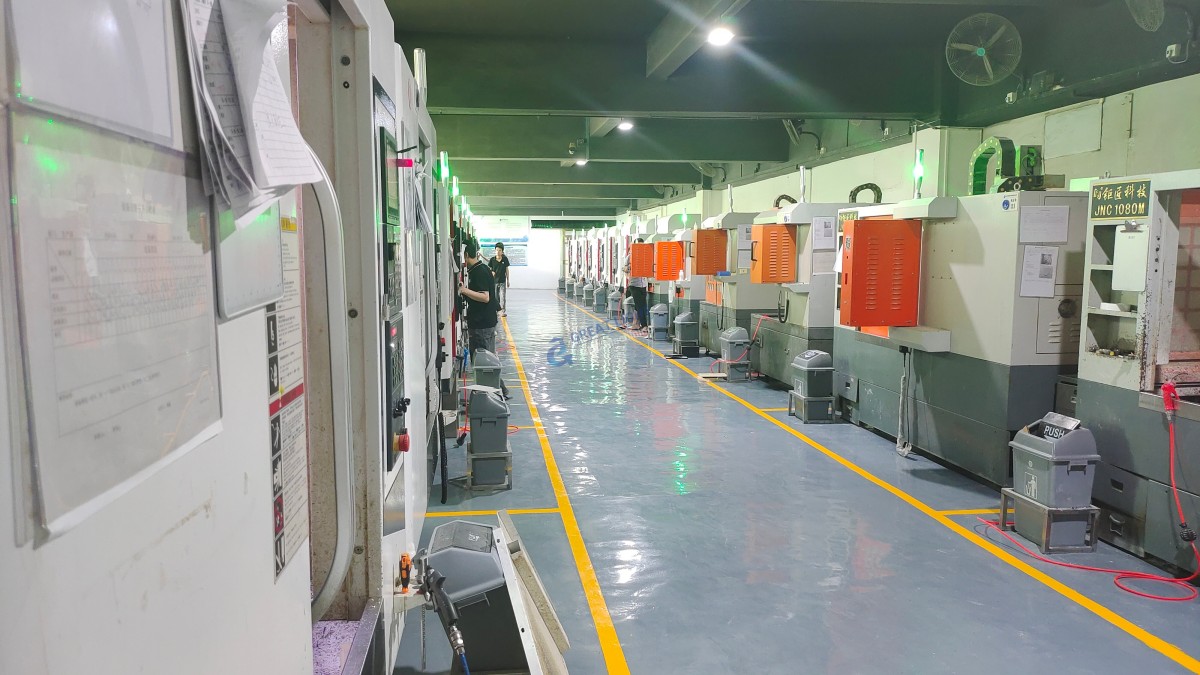
FAQ: How Many Operation In CNC Machine?
Q1: What is the most basic operation a CNC machine can do?
A: The most fundamental and common operation is milling, specifically face milling to create a flat reference surface or contour milling to cut a part’s profile. Drilling is another extremely common basic operation.
Q2: Can one CNC machine do both milling and turning?
A: Yes, machines known as mill-turn centers or multi-tasking machines are specifically designed to perform both rotating (turning) and stationary (milling/drilling) operations on a single platform. This is highly efficient for complex rotational parts.
Q3: What’s the main benefit of 5-axis over 3-axis machining in terms of operations?
A: The primary benefit is single-setup machining of extremely complex geometries. A 5-axis machine can perform operations on five sides of a part (virtually all sides) in one clamping, eliminating errors from repositioning and allowing the machining of undercuts and compound angles that are impossible with 3-axis.
Q4: Does “more operations” automatically mean a better or more expensive part?
A: Not necessarily. More operations can mean greater complexity and cost, but a skilled manufacturer uses them to reduce overall cost. For example, using 5-axis machining to finish a part in one setup may be cheaper than using 3-axis with multiple fixtures and setups. The goal is intelligent process planning to use the minimum number of optimal operations.
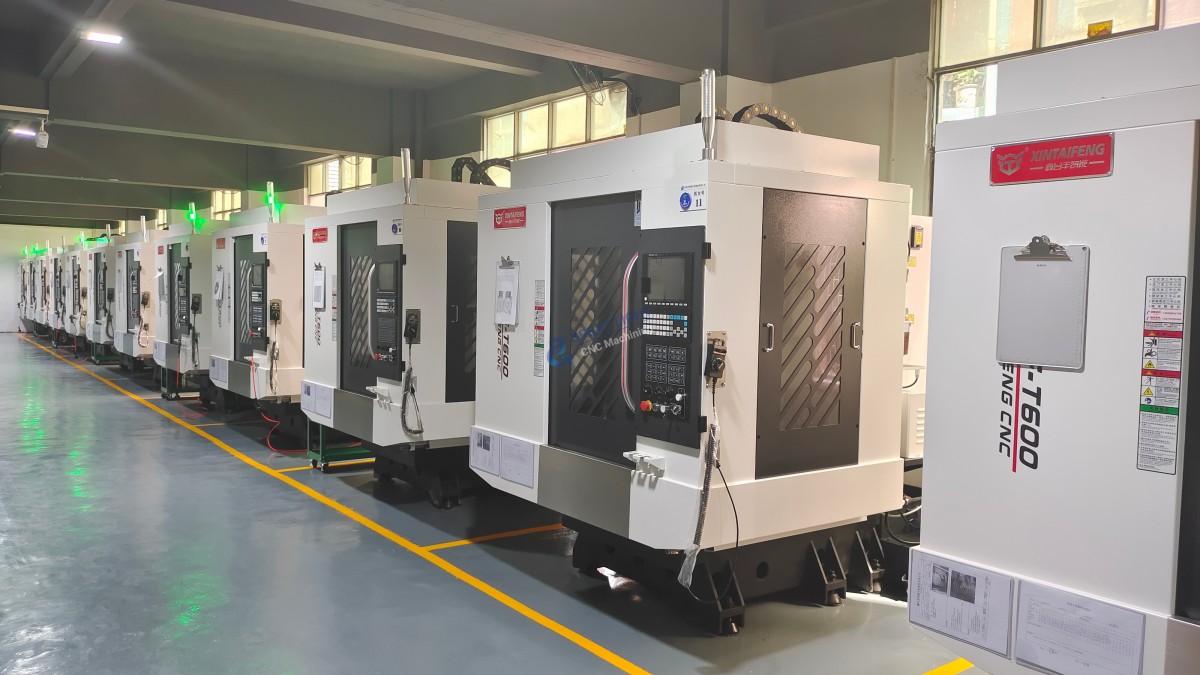
Q5: How do I know which operations my part needs?
A: This is the core service of a professional machining partner. By providing your 3D CAD model and specifications (material, tolerance, application), a competent engineering team like ours at GreatLight CNC Machining Factory will analyze the part and propose a manufacturing process plan that details the recommended machines, operations, and sequence to achieve your requirements most effectively. Feel free to connect with our team on LinkedIn to start this conversation.


















