
Mastering Tool Wear: The Ultimate Guide to Optimizing Machining Efficiency
The Hidden Cost-Saver in Your Workshop
Tool wear isn’t just a nuisance; it’s a $20-billion annual drain on manufacturing worldwide. This silent efficiency killer compromises dimensional accuracy, increases scrap rates, and sabotages production schedules. Yet over 60% of machining operations still address wear reactively rather than preventing it. Let’s dismantle this costly paradigm.
Beyond Simple Wear: The Mechanics of Material Failure
When we watch flank wear progression under electron microscopy, we uncover surprising truths:
- Thermal softening zones emerge at cutting speeds above material thresholds, evidenced by the characteristic crescent-shaped crater wear
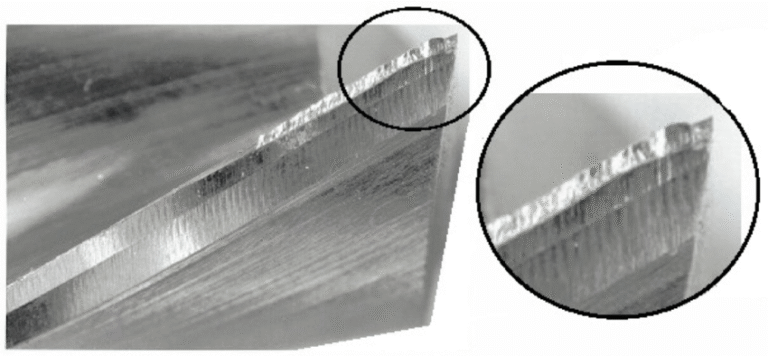
- Micro-chipping patterns reveal structural fatigue from cyclic loading during interrupted cuts
- Adhesion transfer layers form when material welds to the tool edge due to frictional heat
- Abrasion grooving visible under magnification indicates hard inclusions in workpiece materials
Understanding these mechanisms is the first step toward targeted solutions.
Decoding the 6 Root Causes and Their Solutions
1. Cutting Parameter Paradox
Cutting Speed
- Reality Check: +20% speed can elevate temperature over 800°C, triggering diffusion wear
- Innovation: Use harmonic analysis sensors to identify vibration thresholds
- Solution Pyramid:
• Carbide: 60-150 m/min
• Ceramics: 300-600 m/min
• Diamond: 800-1500 m/min
- Feed Rate & Depth
- Problem: Excessive radial engagement causes catastrophic edge fracture
- Breakthrough: Trochoidal tool paths reduce effective engagement angles
- Golden Ratios:
Depth of Cut ≤ 10% × Dia
Radial Engagement = 50-75% × Depth
2. Material Selection Matrix
Upgrade from guesswork to material science:
| Material Type | Tool Grade Alternatives | Coating Advantage | Thermal Limit (°C) |
|---|---|---|---|
| Superalloys | Cermets / Ceramics | AlCrN multilayers | 1100° |
| Ferrous Metals | Carbide K-grade | TiAlN nano-layers | 900° |
| Composites | PCD & CVD Diamond | DLC coatings | 700° |
| Aluminum | Uncoated Carbide | ZrN hydrophobic | 500° |
Advanced option: Adaptive cutting edges with phase-transition materials that harden under thermal load
3. Geometric Optimization Secrets
- Revolutionary Tool Geometry
- Variable helix angles suppress harmonic chatter
- Micro-crystalline honed edges resist microfracture
- Negative rakes (2-8°) for hard materials
- Positive rakes (7-15°) for ductile alloys
- Imaging Analysis: Use CNC simulation software to visualize stress concentration points pre-machining
4. Thermal Management Ecosystem
- Coolant Selection Guide
- Emulsions: General machining
- Synthetic fluids: High-speed operations
- Semi-synthetics: Balanced corrosion/friction control
Technology Integration
High-pressure through-tool (70-200 bar) achieves:- 40% longer tool life
- Chip fragmentation efficiency >90%
- Surface temp reduction by 250-400°C
- Eco-Alternative: N2 cryogenic systems reduce coolant waste by 100%
5. Dynamic Stabilization Protocols
- Anti-Vibration Engineering
Damped tool holders reduce chatter amplitude by:- 85% with hydraulic chucks
- 92% with thermal shrink fit
- Resonance-optimized variable pitch tool designs
- Setup Checklist
• Torque wrenches for consistent clamping force
• Dial indicators for runout verification (<0.002mm)
• Machine slideway tension monitoring
6. Environmental Intelligence
- Implement shop floor monitoring systems tracking:
- Airborne particulate counts
- Temperature gradients (±2°C control bands)
- Humidity stabilization to 40-60% RH
- Enclosures with HEPA filtration prevent hard-particle adhesion wear
The Industrial IoT Revolution in Wear Mitigation
Forward-thinking shops now deploy:
- Sensor Networks: AE (Acoustic Emission) sensors detect tool-degradation harmonics at inception
- Edge Computing Algorithms: Real-time tool wear modeling with <3% prediction error
- Blockchain Tool Histories: QR-coded toolholders recording lifetime stress profiles
- Pro-Tip: Integrate cloud-based analysis to benchmark performance across your tooling ecosystem
The Strategic Maintenance Shift
Transform inspections from time-based to data-driven with:
- Condition Thresholds
- Flank wear VB max: 0.3-0.6mm for finishing
- Edge chipping: >0.02mm immediate pull
- In-Process Verification
- Workpiece dimensional feedback loops
- On-machine measuring probes
- Cost-Efficiency: Predictive systems cut tooling costs by 25% while reducing unscheduled downtime 70%
Future Horizons: Where Wear Mitigation is Headed
- Self-Healing Tools: Smart materials with microcapsule lubricant release
- Hybrid Manufacturing: Laser-assisted machining reduces cutting forces 40%
- Generative Design: AI-optimized tool geometries impossible through conventional methods
- Digital Twins: Virtual replication of exact shop conditions for parameter validation
The ongoing battle against tool wear demands holistic strategy—from foundational principles to cutting-edge cyber-physical systems. By mastering these dimensions, manufacturers don’t just extend tool life; they reimagine their competitive boundaries. Stand by as we explore adaptive manufacturing control systems in our next deep-dive analysis.



















