
How Many Axes Can A CNC Machine Have?
In the world of precision parts machining and customization, CNC (Computer Numerical Control) machines play a crucial role. The number of axes a CNC machine can have significantly impacts its capabilities, precision, and the complexity of parts it can produce.
Understanding CNC Machine Axes
CNC machines are automated manufacturing tools that use computer programming to control the movement of cutting tools and the workpiece. The axes of a CNC machine refer to the directions in which the cutting tool or the workpiece can move. Each additional axis adds a new dimension of movement, allowing for more complex and precise machining operations.
Common Axis Configurations in CNC Machines
3 – Axis CNC Machines
Movement Explanation: A 3 – axis CNC machine can move along three linear axes: X, Y, and Z. The X – axis typically represents left – right movement, the Y – axis represents forward – backward movement, and the Z – axis represents up – down movement.
Applications: These machines are widely used for basic machining operations such as milling flat surfaces, drilling holes, and creating simple shapes. They are suitable for producing parts with relatively straightforward geometries, like small brackets, simple jigs, and some basic consumer product components. For example, in the production of small metal nameplates, a 3 – axis CNC machine can precisely mill the letters and shapes onto the surface.
4 – Axis CNC Machines
Movement Explanation: In addition to the three linear axes (X, Y, Z), a 4 – axis CNC machine has an additional rotational axis, usually the A – axis. The A – axis allows the workpiece or the cutting tool to rotate around the X – axis.
Applications: This extra rotational axis enables the machining of parts with more complex geometries, such as curved surfaces and parts with multiple sides that need to be machined without re – clamping. For instance, in the production of turbine blades, a 4 – axis CNC machine can rotate the blade as it is being milled, allowing for more accurate shaping of the curved surfaces.
5 – Axis CNC Machines
Movement Explanation: A 5 – axis CNC machine has five axes of movement: three linear axes (X, Y, Z) and two rotational axes. The most common rotational axes are the A – axis (rotation around the X – axis) and the B – axis (rotation around the Y – axis) or the C – axis (rotation around the Z – axis).
Applications: 5 – axis CNC machines are capable of machining highly complex parts with minimal setup time. They can access multiple sides of a workpiece from different angles without re – positioning the part, resulting in higher precision and better surface finish. Industries such as aerospace, automotive, and medical device manufacturing rely heavily on 5 – axis CNC machines. For example, in aerospace, 5 – axis CNC machines are used to produce complex engine components, like impellers and turbine casings, which have intricate shapes and require high – precision machining.
Higher – Axis CNC Machines
Movement Explanation: Although less common, there are also CNC machines with 6, 7, or even more axes. These machines combine multiple linear and rotational axes to provide extremely complex and precise movement capabilities.
Applications: These high – axis machines are typically used in specialized industries for manufacturing extremely complex parts. For example, in the production of some high – end robotics components or certain types of scientific instruments, where parts have very intricate geometries and require precise multi – axis machining.
GreatLight CNC Machining Factory’s Capabilities
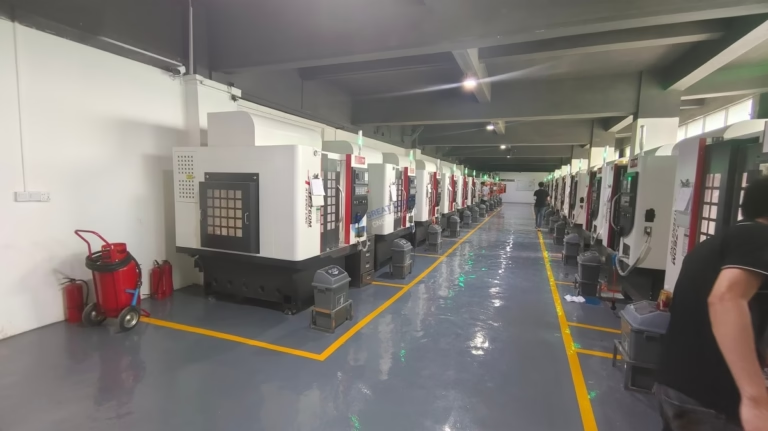
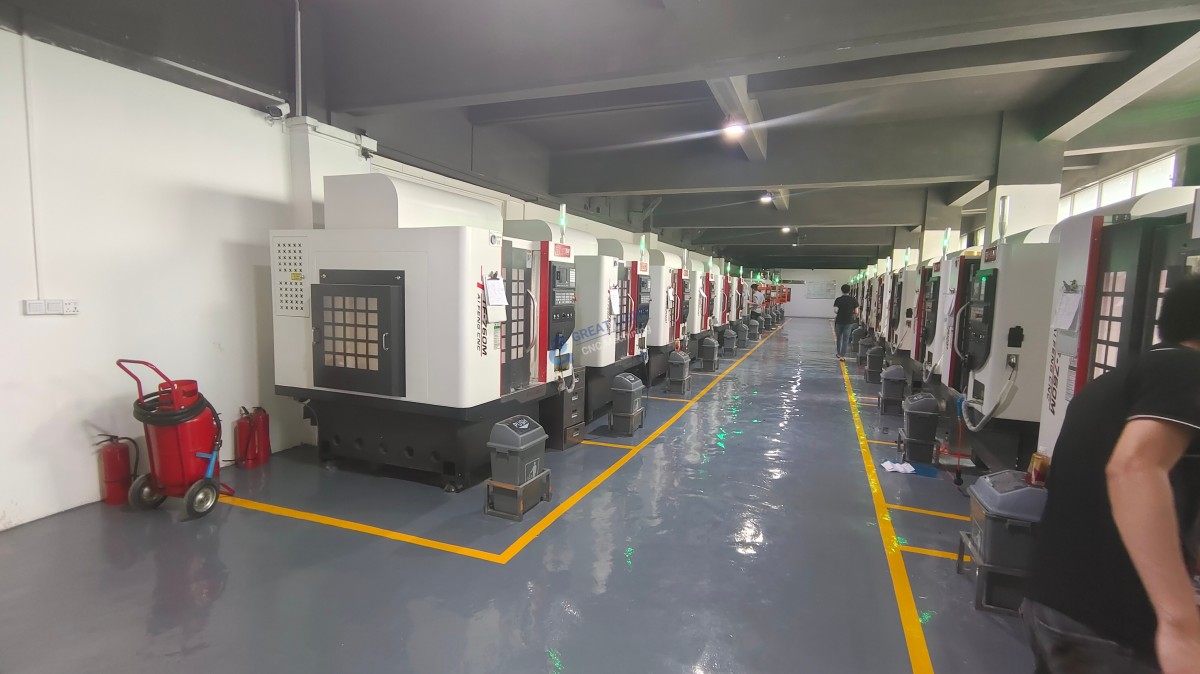
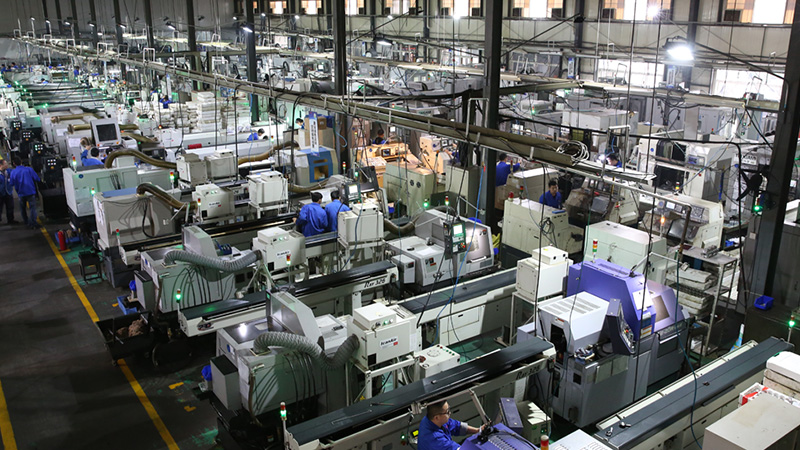
GreatLight CNC Machining Factory, a professional five – axis CNC machining manufacturer, is well – equipped to handle a wide range of machining needs. Established in 2011 and located in Chang’an District, Dongguan City, China, the factory covers an area of approximately 7600 square meters and has 150 employees. It is equipped with 127 pieces of precision peripheral equipment, including large high – precision five – axis, four – axis, and three – axis CNC machining centers.
The factory offers a comprehensive range of services, including precision CNC machining (three – axis, four – axis, and five – axis machining), CNC milling services, die casting mold/metal die casting processing services, vacuum casting customization, sheet metal processing customization, and various 3D printing services. With its advanced equipment and production technology, GreatLight CNC Machining Factory can quickly customize and process most materials, making it an ideal choice for clients in need of high – precision custom parts. Whether you need complex parts manufactured from 3D designs or finished products for high – end conference presentations, the factory can quickly produce prototypes and parts within days using its advanced CNC machining technology.
Conclusion
The number of axes a CNC machine has determines its machining capabilities and the complexity of parts it can produce. From basic 3 – axis machines to highly advanced multi – axis machines, each configuration has its own advantages and applications. GreatLight CNC Machining Factory, with its advanced five – axis CNC machining equipment and comprehensive service offerings, is well – positioned to meet the diverse needs of clients in the precision parts machining and customization field. Whether you are in the aerospace, automotive, medical, or other industries, GreatLight CNC Machining Factory can provide high – quality, precise, and customized machining solutions.
Frequently Asked Questions (FAQ)
What is the main advantage of a 5 – axis CNC machine over a 3 – axis machine?
A 5 – axis CNC machine can access multiple sides of a workpiece from different angles without re – positioning the part. This results in higher precision, better surface finish, and the ability to machine more complex geometries compared to a 3 – axis machine, which is limited to three linear axes of movement.
Can a 3 – axis CNC machine be upgraded to a 5 – axis machine?
In some cases, it may be possible to upgrade a 3 – axis CNC machine to a 5 – axis machine, but it depends on the machine’s design, structure, and the availability of suitable upgrade kits. However, the upgrade process can be complex, expensive, and may require significant technical expertise.
How does the number of axes affect the cost of a CNC machine?
Generally, as the number of axes increases, the cost of the CNC machine also increases. This is because more axes require more complex mechanical components, advanced control systems, and additional software. Additionally, the training and maintenance costs for multi – axis machines are usually higher.
What industries benefit the most from 5 – axis CNC machining?
Industries such as aerospace, automotive, medical device manufacturing, and high – end consumer electronics benefit the most from 5 – axis CNC machining. These industries often require the production of complex parts with high precision and tight tolerances, which can be efficiently achieved using 5 – axis CNC machines.
Is it necessary to have a high – axis CNC machine for all precision machining projects?
No, it is not necessary. The choice of CNC machine depends on the complexity of the part, the required precision, and the production volume. For simple parts with basic geometries, a 3 – axis or 4 – axis CNC machine may be sufficient. High – axis machines are more suitable for complex, high – precision parts where the benefits of multi – axis movement outweigh the additional cost.
Click here to learn more about GreatLight CNC Machining Factory’s precision 5 – axis CNC machining services. And [connect with us on LinkedIn](https://www.linkedin.com/company/great – light/) to stay updated on our latest news and case studies.



















