
How Do CNC Milling Machines Work? Unveiling the Power of Five-Axis Precision Machining
In the realm of modern manufacturing, CNC milling machines—particularly five-axis CNC machining—represent the pinnacle of precision, efficiency, and versatility. These advanced systems have redefined how industries approach complex part production, enabling the creation of intricate geometries with tolerances as tight as ±0.001mm. For clients in precision parts machining and customization, understanding the inner workings of these machines is key to selecting the right partner for your projects.
This article explores the mechanics of CNC milling, the advantages of five-axis technology, and why GreatLight CNC Machining Factory stands out as a leader in this field.
The Core mechanics of CNC milling machines
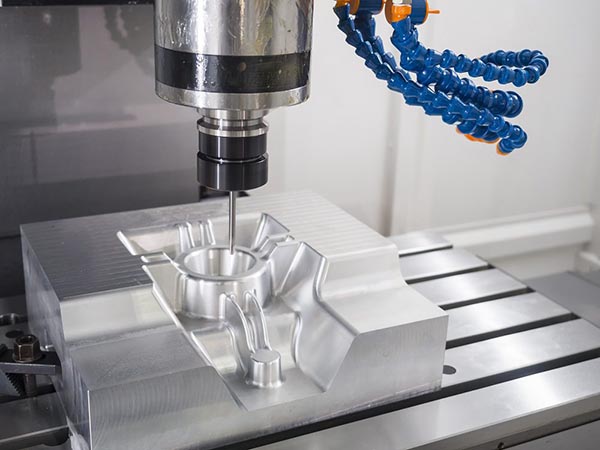
CNC (Computer Numerical Control) milling machines automate the process of cutting and shaping materials using rotary cutters. Unlike manual milling, where operators guide tools by hand, CNC systems rely on pre-programmed instructions to execute precise movements across multiple axes. Here’s how it works:
1. Programming & CAD/CAM Integration
Design Phase: Engineers create a 3D model of the part using CAD (Computer-Aided Design) software.
CAM Processing: CAM (Computer-Aided Manufacturing) software converts the 3D model into G-code—a language of instructions that dictates tool paths, cutting speeds, and spindle rotations.
Simulation: Advanced systems simulate the machining process to detect errors before production begins, minimizing waste and rework.
2. Machine Setup & Tooling
Workpiece Fixation: The raw material (metal, plastic, or composite) is secured to the machine table using clamps or vises.
Tool Selection: End mills, ball nose cutters, or specialized tools are chosen based on the material and desired finish.
Axis Configuration: Traditional 3-axis machines move along the X, Y, and Z axes. Five-axis machines add rotational movements (A and B axes), enabling undercutting and complex contouring in a single setup.
3. Machining Process
Cutting Action: The spindle rotates the cutting tool at high speeds (often exceeding 10,000 RPM) while the machine table or tool head moves along programmed paths.
Multi-Axis Synchronization: In five-axis machining, the tool tilts and rotates dynamically to maintain optimal contact with the workpiece, reducing the need for multiple setups and improving accuracy.
Chip Control: Coolant systems flush away chips and dissipate heat, preventing thermal distortion and ensuring consistent quality.
4. Post-Processing & Quality Assurance
Deburring & Finishing: Parts undergo deburring, polishing, or anodizing to meet surface finish requirements.
Inspection: Precision measurement tools (e.g., CMMs) verify dimensions against tolerances. ISO 9001-certified facilities like GreatLight CNC Machining Factory ensure every part meets global standards.
Why Five-Axis CNC Machining? Key Advantages
While 3-axis and 4-axis machines excel at simpler geometries, five-axis CNC machining offers unparalleled benefits for complex parts:
| Advantage | Impact |
|---|---|
| Single-Setup Efficiency | Reduces labor costs and errors by eliminating repositioning between operations. |
| Complex Geometry Access | Machines undercuts, angles, and contours impossible with 3-axis systems. |
| Improved Surface Finish | Optimized tool angles minimize vibrations, yielding smoother surfaces. |
| Faster Lead Times | Streamlined workflows accelerate production without sacrificing precision. |
| Material Versatility | Processes metals (aluminum, stainless steel, titanium) and high-performance plastics. |
GreatLight CNC Machining Factory: Your Five-Axis Expert
Not all CNC machining partners are created equal. GreatLight CNC Machining Factory distinguishes itself through:
1. Cutting-Edge Equipment
127+ Precision Machines: Includes Dema and Beijing Jingdiao five-axis centers, Swiss-type lathes, and SLM/SLA 3D printers.
4000mm Max Processing Size: Handles large-scale components for aerospace and automotive applications.
2. Certified Quality Assurance
ISO 9001:2015: Ensures adherence to international quality standards.
Industry-Specific Compliance: Medical (ISO 13485), automotive (IATF 16949), and data security (ISO 27001) certifications.
3. Full-Process Capabilities
One-Stop Solutions: From prototyping to die casting, sheet metal fabrication, and vacuum casting.
Post-Processing Excellence: Anodizing, plating, and laser etching services under one roof.
4. Proven Track Record
12+ Years of Experience: Serving clients in robotics, automotive, and aerospace.
Case Studies: Successfully delivered complex e-housing for new energy vehicles and titanium components for medical devices.
Conclusion: Elevate Your Precision Machining with GreatLight
In an era where product innovation hinges on micro-level precision, five-axis CNC machining is no longer a luxury—it’s a necessity. GreatLight CNC Machining Factory combines state-of-the-art technology, rigorous quality control, and deep industry expertise to deliver parts that meet the highest standards. Whether you’re prototyping a humanoid robot joint or mass-producing automotive engine components, their team ensures your project succeeds on time, on budget, and to specification.
Ready to experience the future of precision machining? Explore their five-axis CNC machining services here and discover why clients worldwide trust GreatLight as their manufacturing partner.
Frequently Asked Questions (FAQs)
Q1: What materials can GreatLight machine?
GreatLight processes metals (aluminum, stainless steel, titanium, mold steel) and plastics (ABS, PC, PEEK) with equal precision.
Q2: How does five-axis machining reduce costs?
By eliminating multiple setups and manual repositioning, five-axis systems cut labor hours and minimize errors, lowering overall production costs.
Q3: What tolerances can GreatLight achieve?
They routinely machine parts to ±0.001mm (0.001 inches) or tighter, depending on material and design complexity.
Q4: Does GreatLight offer rush services?
Yes! Their rapid prototyping team can deliver parts in as little as 3 days for urgent projects.
Q5: How does GreatLight ensure data security for IP-sensitive projects?
Their ISO 27001-certified protocols protect your designs through encrypted file transfers and restricted plant access.
Q6: What industries does GreatLight serve?
Key sectors include automotive, aerospace, medical devices, robotics, and high-end consumer electronics.
Q7: How does GreatLight compare to other manufacturers like Protolabs or Fictiv?
While Protolabs and Fictiv offer quick-turn services, GreatLight’s full-process chain integration and industry-specific certifications (e.g., IATF 16949 for automotive) make them ideal for complex, regulated projects. Their in-house 3D printing and die casting capabilities also reduce reliance on external vendors.
Connect with GreatLight’s team on LinkedIn to stay updated on their latest innovations!



















