
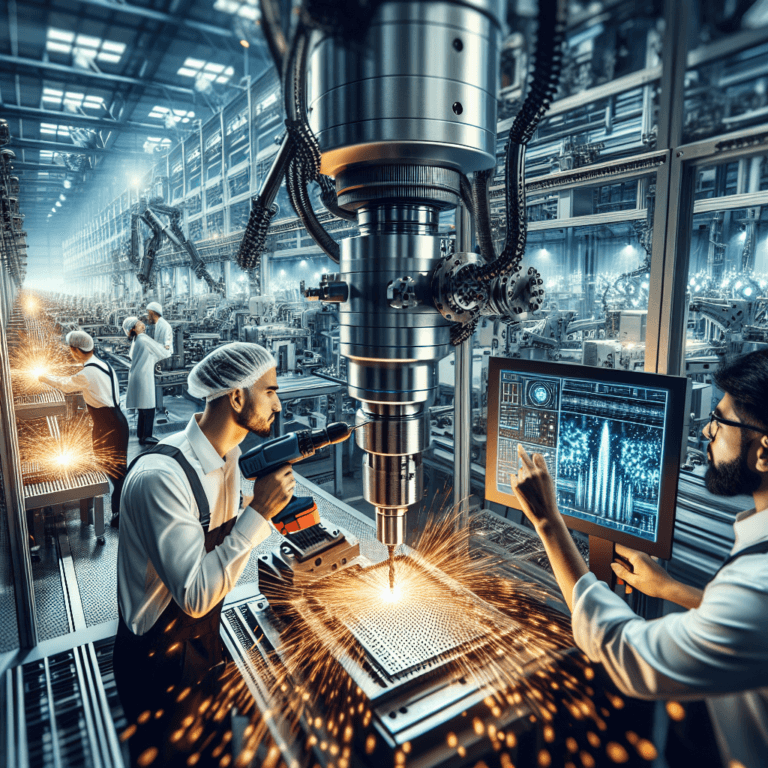
Understanding High-Speed Drilling and Tapping Machining Centers
In the evolving landscape of manufacturing and production industries, efficiency, precision, and adaptability have become fundamental to success. High-speed drilling and tapping machining centers are at the forefront of this evolution. They serve as a pioneering solution in improving manufacturing efficiencies, enabling rapid production without compromising on quality.
What Are High-Speed Drilling and Tapping Machining Centers?
High-speed drilling and tapping machining centers are advanced manufacturing tools designed to perform drilling and tapping tasks at much greater speeds than traditional machines. These centers are incredibly versatile, allowing manufacturers to produce complex parts with varied geometries and tight tolerances.
These machining centers integrate multiple functions into a single setup, which drastically reduces cycle times. By combining operations such as milling, drilling, tapping, and sometimes even breaking edges in one machine, manufacturers can significantly decrease the total time spent in the machining process.
Evolution of Manufacturing Technologies
The evolution from conventional machining to high-speed machining has been driven by the ever-increasing demand for high-quality parts produced within shorter timeframes. Traditional methods often required several setups and changes in tooling, leading to significant downtime and inefficiencies.
High-speed machining centers address these challenges by maximizing spindle speeds, cutting feeds, and overall throughput. With sophisticated CNC programming and efficient toolpath management, manufacturers can achieve faster production rates while maintaining exceptional accuracy.
Benefits of High-Speed Drilling and Tapping Machining Centers
1. Increased Efficiency
The primary advantage of high-speed drilling and tapping machining centers is their enhanced efficiency. By significantly shortening cycle times, manufacturers can produce more parts in less time. The integrated approach of performing multiple operations in one machine eliminates the need for multiple setups and reduces tooling change times.
2. Improved Precision and Quality
High-speed machining centers maintain tight tolerances, ensuring the produced parts meet exact specifications. Enhanced rigidity and superior spindle technology reduce vibrations, allowing for better finish quality and consistent dimensional accuracy. Furthermore, automated tools can compensate for wear, ensuring ongoing precision throughout the production process.
3. Reduced Production Costs
While the initial investment in high-speed drilling and tapping machines may be significant, the long-term savings in operational costs are considerable. Fewer setups mean less labor is required, and the increased output directly impacts the cost per part, making it a financially sustainable choice in the long run.
4. Flexibility and Versatility
Modern high-speed machining centers are highly adaptable and can handle various materials, from plastics to metals. This versatility allows manufacturers to switch the production line for different parts quickly, responding to market demands more swiftly than traditional setups could.
Key Features of High-Speed Drilling and Tapping Machining Centers
1. High RPM Spindles
One of the standout features of high-speed machining centers is their high RPM capabilities. This allows for faster cutting speeds, which is essential for reducing cycle times. Spindles often rotate at speeds exceeding 20,000 RPM, significantly enhancing material removal rates.
2. Advanced Tooling Systems
Innovative tooling systems are critical components of these machining centers. Toolholders designed for high-speed applications provide better clamping force, stability, and rigidity. Furthermore, specialized high-speed cutting tools are engineered to endure the stresses of rapid machining without premature wear.
3. Integrated CNC Control
State-of-the-art CNC control systems are essential for programming and operating high-speed drilling and tapping machining centers. These systems enable precise control over various machining parameters, allowing for optimized feed rates and maintaining consistent quality across a production run.
4. Automatic Tool Changers
Automatic tool changers (ATCs) enhance the productivity of these machining centers by allowing for quick transitions between tools. This automation minimizes downtime and enables manufacturers to execute complex machining tasks without manual intervention, further increasing overall efficiency.
Applications in Various Industries
High-speed drilling and tapping machining centers find applications across various industries, reflecting their versatility and effectiveness. Some key sectors include:
1. Automotive Industry
Manufacturers in the automotive sector leverage high-speed machining for producing intricate parts with tight tolerances, such as engine components, transmission parts, and chassis elements. The need for rapid prototyping and production to meet ever-changing consumer demands makes these machining centers invaluable.
2. Aerospace Industry
The aerospace industry often requires parts that not only need to be lightweight but also robust and accurate. High-speed drilling and tapping machining centers can manufacture critical components, utilizing advanced materials while ensuring compliance with rigorous safety standards.
3. Medical Devices
The production of medical devices demands precision and reliability. With high-speed machining, manufacturers can produce complex implants, surgical instruments, and diagnostic equipment with exceptional accuracy, meeting strict regulatory standards.
4. Electronics
In the electronics industry, high-speed machining centers help create precision components for devices, including enclosures, connectors, and printed circuit boards. The quick turn-around time and adaptability are crucial in this fast-paced sector.
Future Trends in High-Speed Machining
As technology continues to evolve, several trends are shaping the future of high-speed drilling and tapping machining centers.
1. Industry 4.0 Integration
The move towards Industry 4.0 emphasizes the integration of smart technology within manufacturing systems. High-speed machining centers will increasingly incorporate IoT connectivity, enabling real-time monitoring and predictive maintenance. This allows for optimized performance and reduced downtime, making operations highly efficient.
2. Sustainable Manufacturing Practices
With growing environmental concerns, there is a shift towards more sustainable manufacturing processes. High-speed machining centers can contribute to sustainability by reducing material waste through efficient machining practices, using less energy per unit produced, and facilitating the recycling of scrap materials.
3. Advanced Materials
As industries begin to explore new materials, such as composites and advanced alloys, high-speed machining technology will evolve to accommodate these materials. Future machines will need specialized tooling and programming to effectively handle these innovations.
Conclusion
High-speed drilling and tapping machining centers stand as a testament to the innovations that have revolutionized the manufacturing landscape. By combining efficiency, precision, and versatility, they have transformed production processes across multiple industries. As technology continues to advance, these machining centers will play an even more crucial role in ensuring manufacturers can meet the demands of a competitive and fast-paced marketplace.
The ongoing integration of smart technologies, sustainability measures, and adaptability to new materials will further solidify their position as cornerstones of modern manufacturing. As manufacturers continue to seek ways to maximize efficiency while minimizing costs, high-speed machining is set to remain at the forefront of industry advancements and improvements in manufacturing efficiency.
Daguang focuses on providing solutions such as precision CNC machining services (3-axis, 4-axis, 5-axis machining), CNC milling, 3D printing and rapid prototyping services.



















