

recently,Mohou.com understands,American prosthetic manufacturerPsychonicAnd3DCooperate with printing technology service providers and use3Dprinting technology to develop the market’s first functional bionic arm with multi-touch feedback, but at half the price of similar products.

△Psionicsclaim,Ability handIs the first tactile bionic hand
The company’s bionic armAbility handThe fingertips are equipped with sensors that detect pressure when the user grips an object and send vibrations to the arm to convey that sensation. It allows users to feel what they are doing and manipulate even the most delicate objects. Prosthetic manufacturerPsychonicCEOAadel AkhtarThink: “By virtue of3DPrinting technology has not only changed our business model, but has also changed the rules of the game for the entire industry. “Currently, both companies are moving towards the use3DPrinting technology has taken a step forward towards the development of low-cost prosthetics. Often, traditional prosthetics are fragile, rudimentary, expensive and obsolete. according toPsychonicthe declaration of “for90%Advanced prosthetics are out of reach for patients who cannot afford them. “
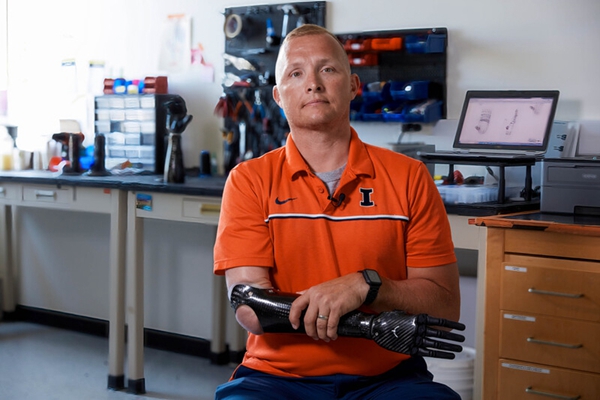
△Garrett Andersonsergeant and his custom3DPrint a bionic arm
A sergeant who was released due to injuries.Garrett Anderson,exist2005After completing his military service, he needed a custom-made prosthetic leg. “For the first time I could feel my daughter’s hand with a prosthetic hand,” he said.
Psychonicusedform laboratoriesofFuse 1selective laser sintering (SLS) 3D Modelprinter. The process involves rapid prototyping, then iterating on changes and producing parts at relatively low prices and in small batches.
AktarHe said: “We are developing advanced bionic limbs that are affordable and accessible to everyone. If we didn’t useform laboratoriesWe couldn’t create this type of bionic arm without a printer. “
Chief Mechanical EngineerJames AustinHe said: “I think hybrid manufacturing and adopting a production model that meets personalized needs is very important for startups in general, but especially for startups.Psychonic. If we continue to use the traditional manufacturing model, we will not be able to compete with large prosthetic companies. pictureCNCProcesses like machining and injection molding have higher upfront costs, especially for trying prototypes with multiple iterations, which for us is simply astronomical. “
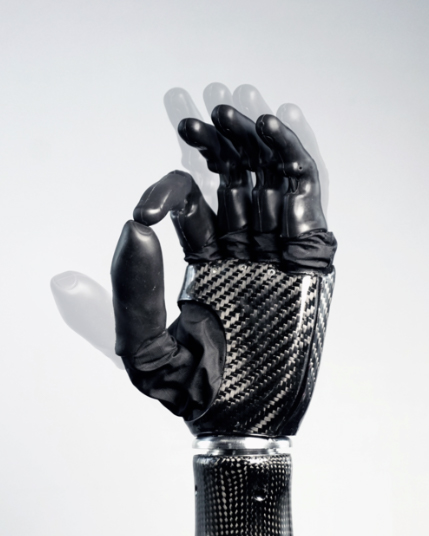
△The company claimed that through3DPrinting technology, new prosthetics are not only cheaper, but also more powerful
3DPrintAbility handbionic arm
The prosthesis only weighs490grams, less than the weight of a typical adult hand. The fingers can rotate electrically and manually, while all five fingers can flex and extend.Ability handadopt the useUSB-COn charge, it can be fully charged in about an hour and can run all day on a single charge.
Outermost EMG(EMG)Direct control systems, linear sensors and force sensitive resistors are available with3DThe printed bionic arms are very compatible. according to Psychonicargument,Ability handEach finger can withstand a heavy blow without breaking, and it is both lightweight and waterproof.
Users can also connect their bionic arms toPsychonicmobile app (supportsiOSAndAndroid) so their prosthetic engineers can adjust the device remotely to allow users to continually improve their grip and ability to use it.
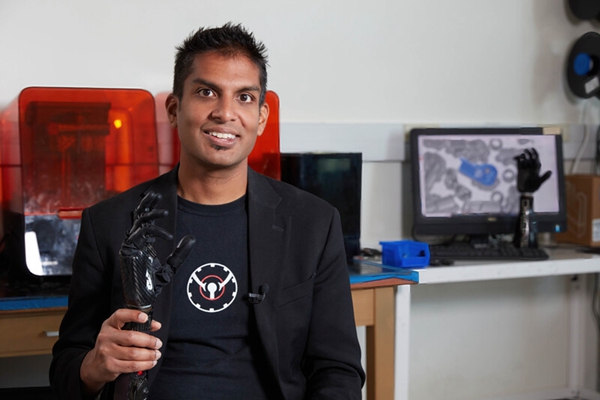
△PsychonicFounder and CEOAdeel Akhtar
Psychonicof3DThe process behind printing prosthetics
In addition to3DPrinting technology, the bionic arm was also developed using hybrid manufacturing techniques, such as silicone injection molding and CNC machine tools. The company estimates thatAbility handIt is expected that patients will be able to return to their previous quality of life and exercise capacity.
During development engineering, the company collects extensive user feedback and then performs rapid prototyping in-house to improve design and functionality.
according toPsychonicThe company claims that using hybrid production methods means the prosthetics can be sold at an affordable price. in the past,PsychonicThe company estimates that only approx.10%People can afford custom prosthetics, and now with this new approach, that number is expected to increase.75%. To produce a sustainable end use, the company also uses3DPrinting materials, they are impact resistant and strong.
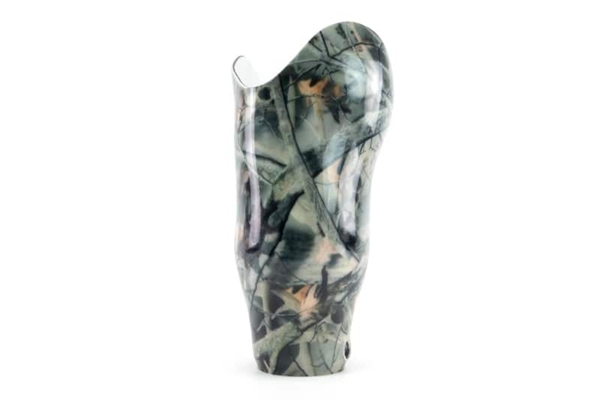
△Prostheticsof3DPrint the prosthesis nesting
pass3DPrinting and production of prosthetic limbs
Amputees in remote areas of Guatemala, non-profit organization at seaSupport for island missionsstarted usingElevate3D E2 3D Modelto make it more sustainable3DPrint prosthetics. The team had already tried usingPrusa i3 MK3S+AndElevate3D E2 3D Modelprinter andPETG materials to make prosthetic limbs, but the country’s hot climatic conditions caused their materials to warp and prints to fail. However, the team is now able to print child- and adult-sized hands and arms, restoring these amputees’ ability to accurately grasp common objects.
Elsewhere,3DPrinted prosthetics manufacturerProstheticsLaunched what it claims to be a first in its field, for orthotics and prosthetics (O&P) assembled complete prosthesis3DPrinting system. This plug-and-play system is called“Galileo”aimed at overcoming3DPrinting technology inO&PObstacles to clinical use in implantation.
Source: Print Network
Daguang focuses on providing solutions such as precision CNC machining services (3-axis, 4-axis, 5-axis machining), CNC milling, 3D printing and rapid prototyping services.



















