
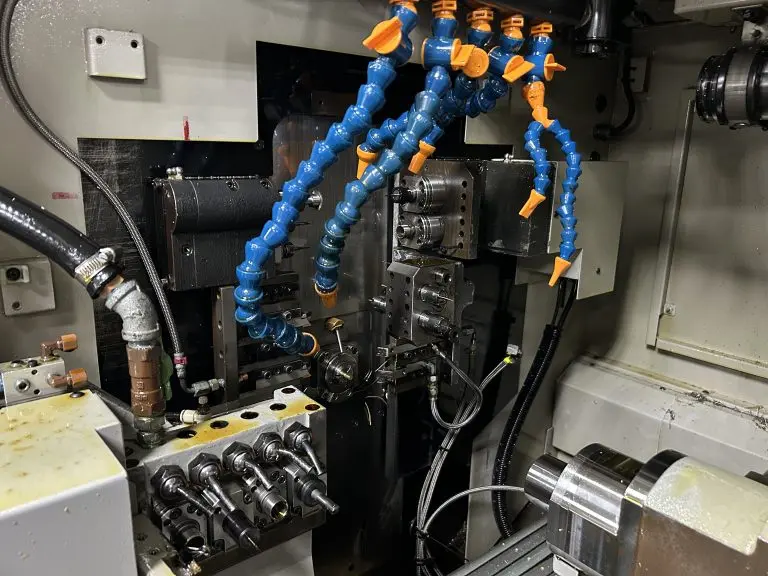
HDPE CNC machining: a review of its application
In today’s manufacturing landscape, CNC machining has become an important tool in the production of high-quality precise parts with complex designs. In this field, HDPE (High Density Polyethylene) has become the preferred material for a variety of applications. In this article, we will dig into the world of HDPE CNC machining, exploring its applications, benefits, and limitations.
HDPE is a type of polyethylene plastic known for its special strength, resistance and chemical resistance. Its unique characteristics make it an ideal material for a variety of industries including medical, aerospace and automotive. CNC machining is an excellent way to process HDPE into complex shapes and designs with high precision and accuracy.
Application of HDPE CNC machining
- Medical equipment: The chemical resistance and biocompatibility of HDPE make it an ideal material for medical devices such as catheters, syringes and implantable devices.
- Aviation Engineering: The high intensity-to-weight ratio and resistance to extreme temperatures make it suitable for aerospace applications such as aircraft components and satellite components.
- Automotive Industry: HDPE’s excellent impact resistance and durability make it a popular choice for auto parts, including bumpers, dashboards and fuel tanks.
- Consumer Products: The versatility and affordability of HDPE make it a popular material for consumer products such as plastic bottles, containers and household items.
- Industrial pipelines: HDPE’s high resistance to chemicals and corrosion makes it a reliable material for industrial pipes and storage tanks.
The benefits of HDPE CNC machining
- High precision: CNC machining can accurately control the processing process to ensure accurate and consistent results.
- Rapid production: CNC processing can produce quickly, reduce lead time and improve efficiency.
- Cost-effective: The affordability of HDPE and the high efficiency of CNC processing can save costs and minimize waste.
- Multifunctional: The range of attributes of HDPE allows for a variety of applications from medical equipment to industrial pipelines.
in conclusion
HDPE CNC machining revolutionizes the manufacturing process, providing unparalleled accuracy, speed and cost-effectiveness. With its wide range of applications, HDPE has become the preferred material for various industries, from medical equipment to industrial pipelines. By combining HDPE with advanced CNC machining technology, manufacturers can easily and efficiently produce high-quality precise parts.
Frequently Asked Questions
Q: What is HDPE CNC machining?
A: HDPE CNC machining is the process of cutting and shaping high-density polyethylene (HDPE) plastic using a computer-controlled machine.
Q: What are the benefits of HDPE CNC processing?
A: The benefits of HDPE CNC machining include high precision, rapid production, cost-effectiveness and versatility.
Q: Which industries use HDPE CNC processing?
A: HDPE CNC processing is used in industries such as medical, aerospace, automotive and consumer products for various applications.
Q: What are the limitations of HDPE CNC processing?
A: The limitations of HDPE CNC machining include material limitations, machine limitations, and design and production complexity.
Q: Can I use CNC machining to request custom HDPE parts?
A: Yes, you can use CNC machining to request custom HDPE parts and our team will work with you to design and produce parts that meet your specific needs.



















